← Exit
Module 3 · Preventing and Mitigating Risks0% complete · 16 slides left
Working at Height Course
Module 3
This course contains audio. Use headphones in public places.
Introduction
Introduction

In Module 1 we introduced the hierarchy of control, the order in which control measures must be chosen to eliminate or prevent a fall. Following that order is a legal requirement, not a preference, so it is important to know it. The order is:

  • Avoid work at height where possible.
  • Use an existing safe place of work.
  • Use collective equipment to prevent falls.
  • Use personal protective equipment to prevent falls.
  • Use collective equipment to minimise the distance and consequences of a fall.
  • Use personal protective equipment to minimise the distance and consequences of a fall.
  • Provide instruction, training and safe systems of work at every level.

This module explains the practical ways of achieving each of these steps. If you are not the person choosing the controls, you still need to know them, because you will be the one using them.
Topics to be Covered

The topics covered in this module are:

  • Avoiding work at height
  • Preventing falls
  • Reducing the consequences of a fall
  • Personal protective equipment
  • Selecting work equipment
  • Fragile surfaces
  • Vehicles
  • Falling objects
  • Training and competence
  • Inspection of work equipment
  • Emergency and rescue procedures
Avoiding Work at Height
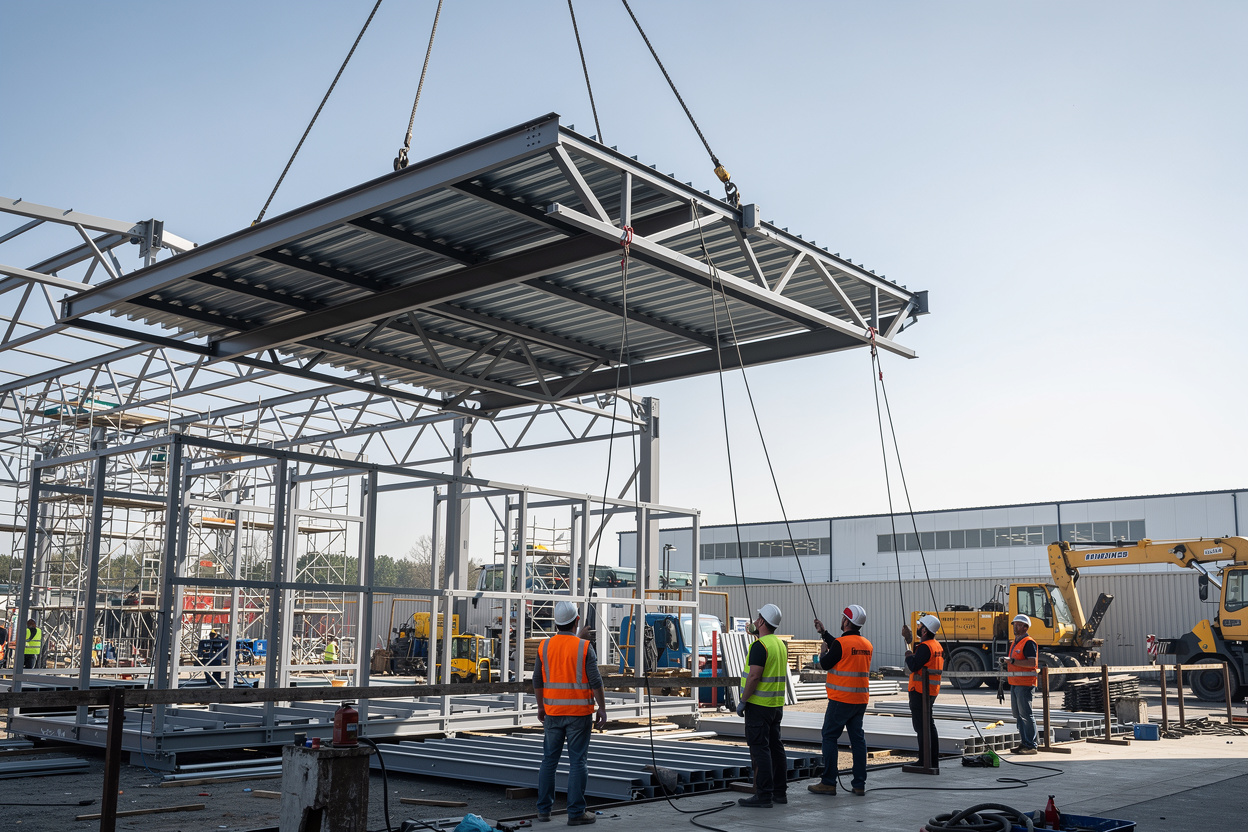
Assemble on the ground, lift into place
Avoiding Work at Height

Under the regulations, employers must avoid the need for work at height wherever it is reasonably practicable. That means planning every job before it starts and asking, first of all, whether it can be done from the ground. Ways of avoiding work at height include:

  • Using extension equipment to paint, clean and inspect structures from ground level.
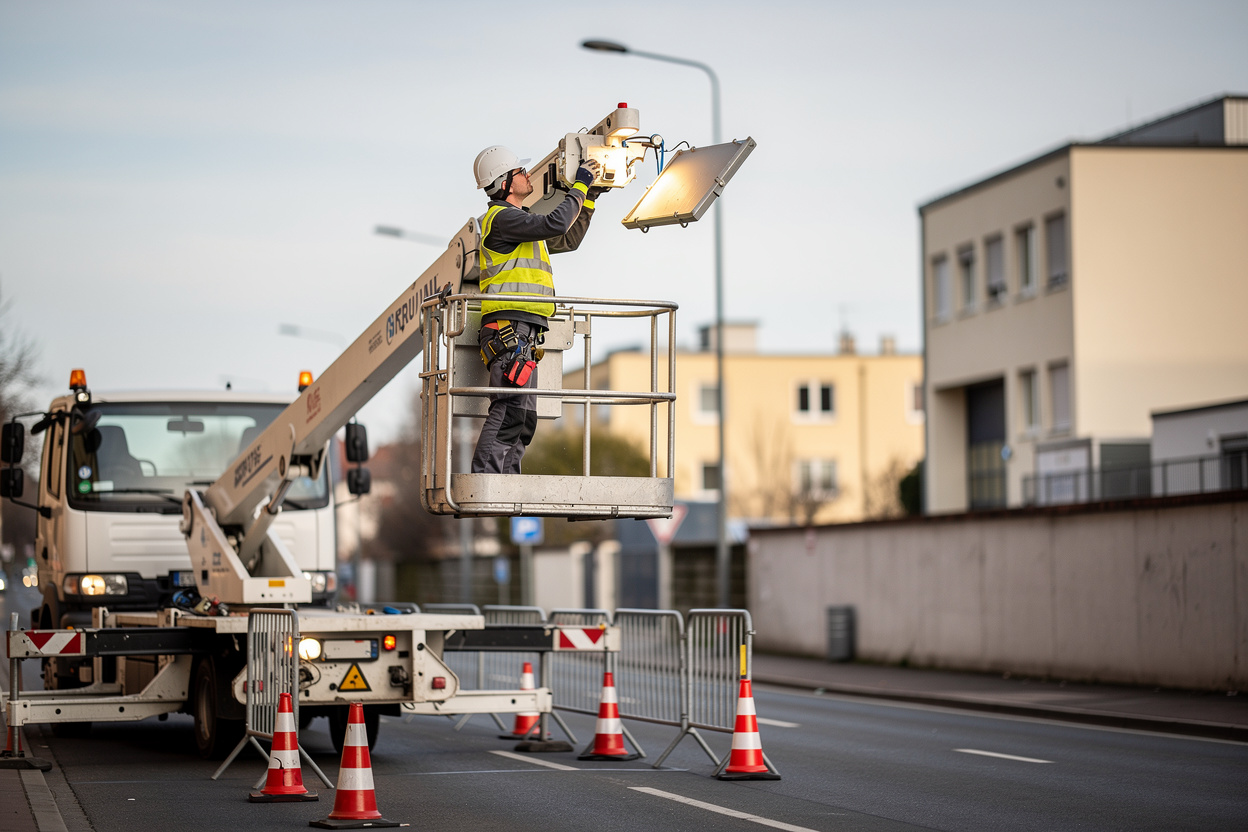
  • Fitting light fittings, signs and cameras that can be lowered to the ground for maintenance.
  • Assembling structures, plant and pipework at ground level and lifting them into position with a crane or a telehandler, rather than assembling them at height.
  • Locating valves, controls and gauges where they can be reached from the floor.
  • Using drones or pole cameras for roof and gutter surveys.

A job that never leaves the ground cannot end in a fall.

Preventing Falls
Guardrails + toe-boards = collective protectionWorks without any action by the user
Preventing Falls

If work at height cannot be avoided, the second step is to use an existing safe place of work, somewhere that already stops people falling, such as a flat roof with permanent guardrails or a plant platform with fixed edge protection.

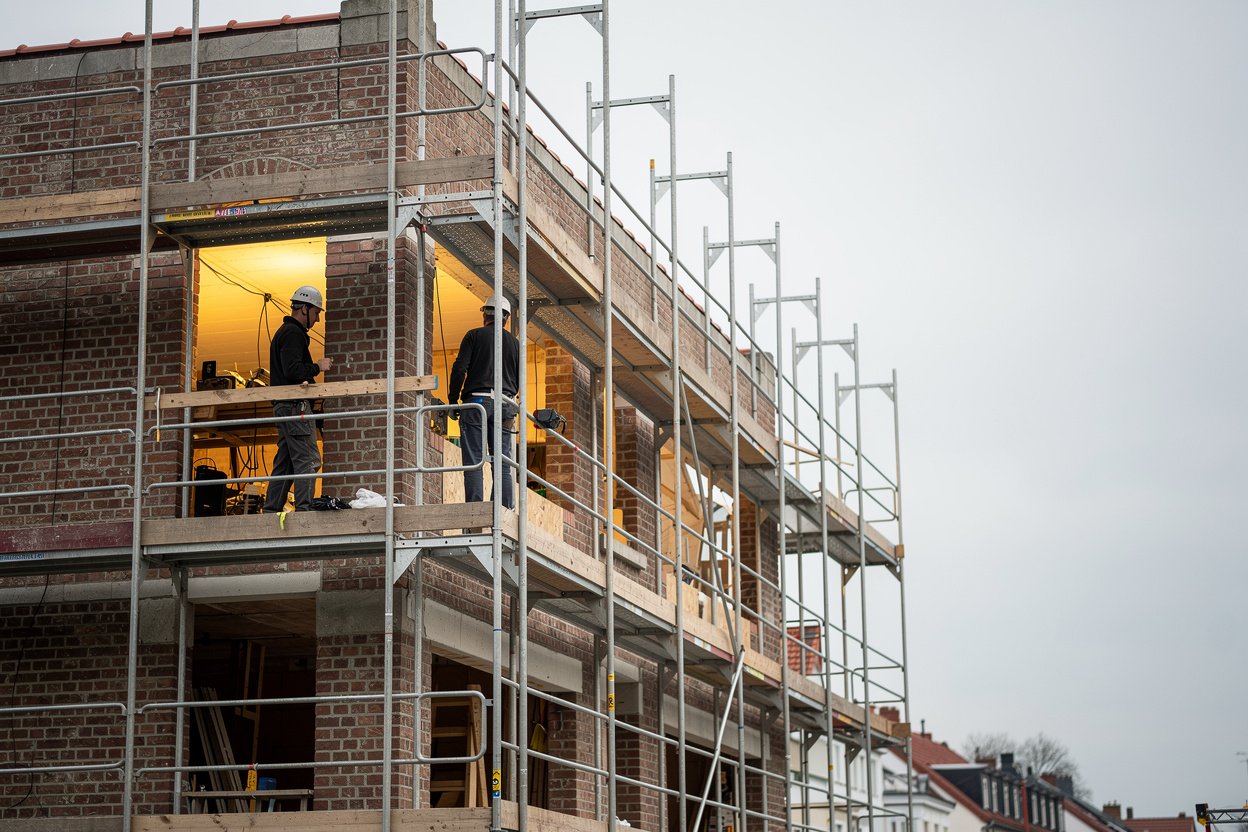
Where there is no existing safe place, collective equipment must be used to prevent falls. Collective equipment protects everyone in the work area and needs no action by the people using it to make it work. It provides a working platform with guardrails and toe-boards. Examples include:

  • Tube-and-fitting or system scaffolding.
  • Mobile scaffold towers.
  • Podium steps and low-level access platforms.
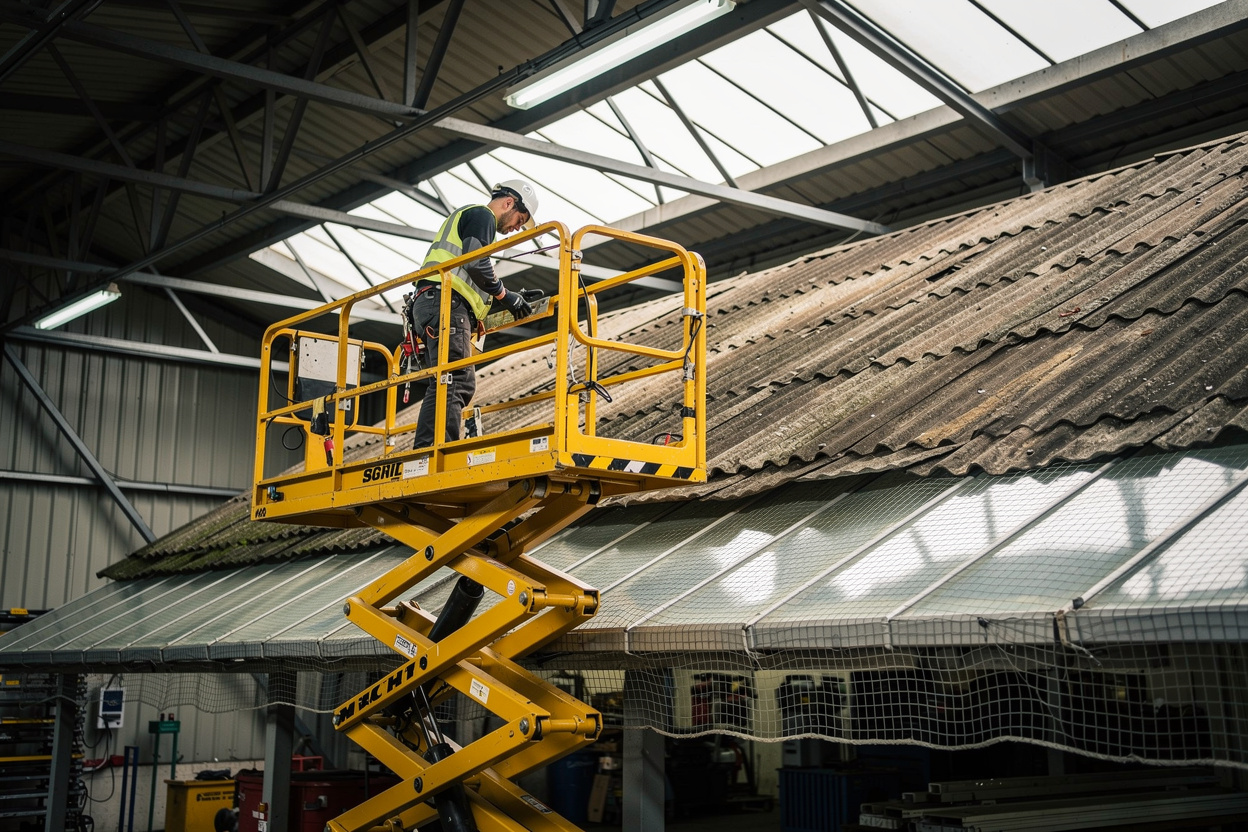
  • Mobile elevating work platforms (MEWPs): scissor lifts and boom lifts.
  • Temporary edge protection fitted to a roof or a floor edge.

Only if falls cannot be prevented with collective equipment should personal fall restraint be considered: a harness with a short lanyard, fixed to an anchor, that physically stops the person reaching the edge.

Reducing the Consequences of a Fall
Net close under the work, clearance below
Reducing the Consequences of a Fall

If a fall cannot be avoided or prevented and there is no safe place to work from, the next level is to choose equipment that minimises the distance and the consequences of a fall, should one happen.

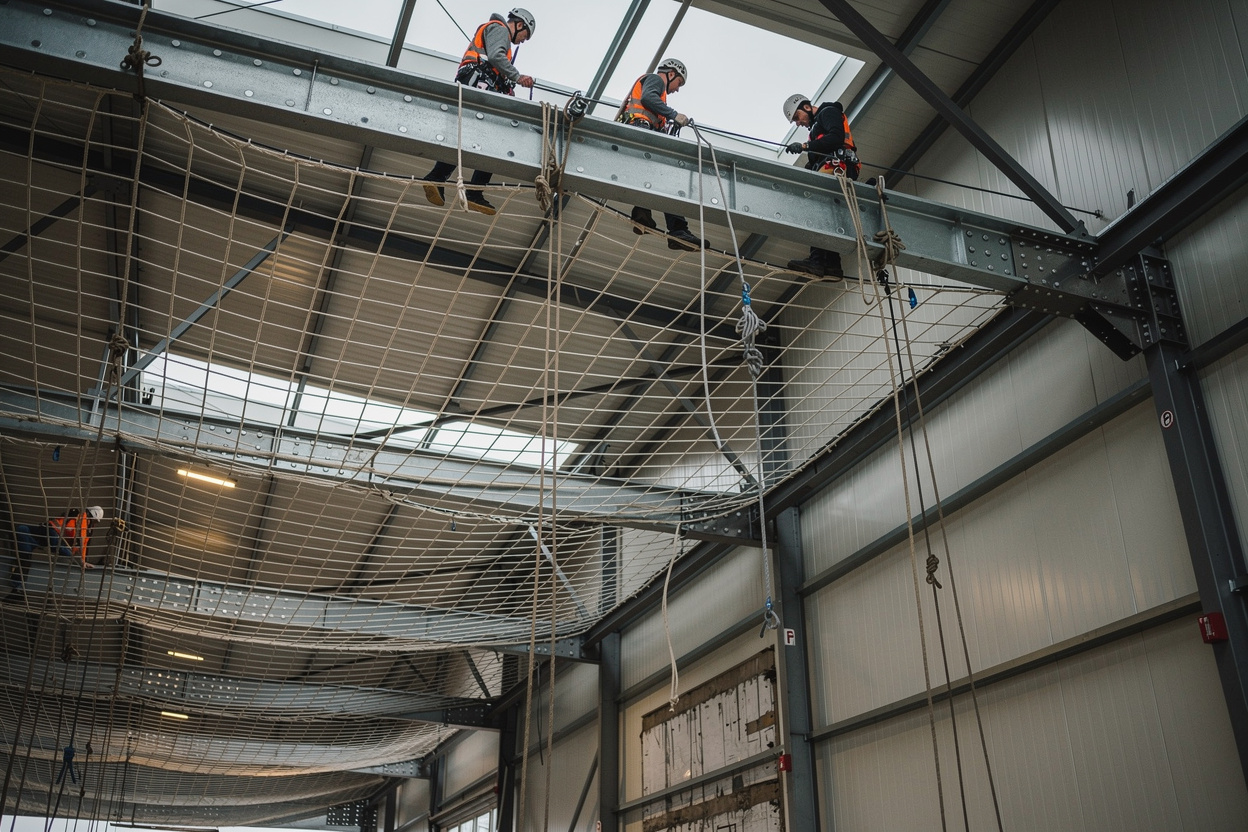
Mitigation is the lowest level of equipment selection and must only be used where it is not reasonably practicable to avoid or prevent the fall. These measures need careful planning, a high level of training, and regular inspection. They include:

  • Safety nets, rigged as close as possible beneath the working area, for example under fragile roofing or during steel erection. There must be enough clearance below the net for it to deflect without the person hitting anything.
  • Airbags and bean-bag systems, suitable for falls from lower heights, for example when loading and unloading vehicle trailers or working on a first-floor joist. They must be positioned tightly together, right under the work area, and used only for short fall distances.
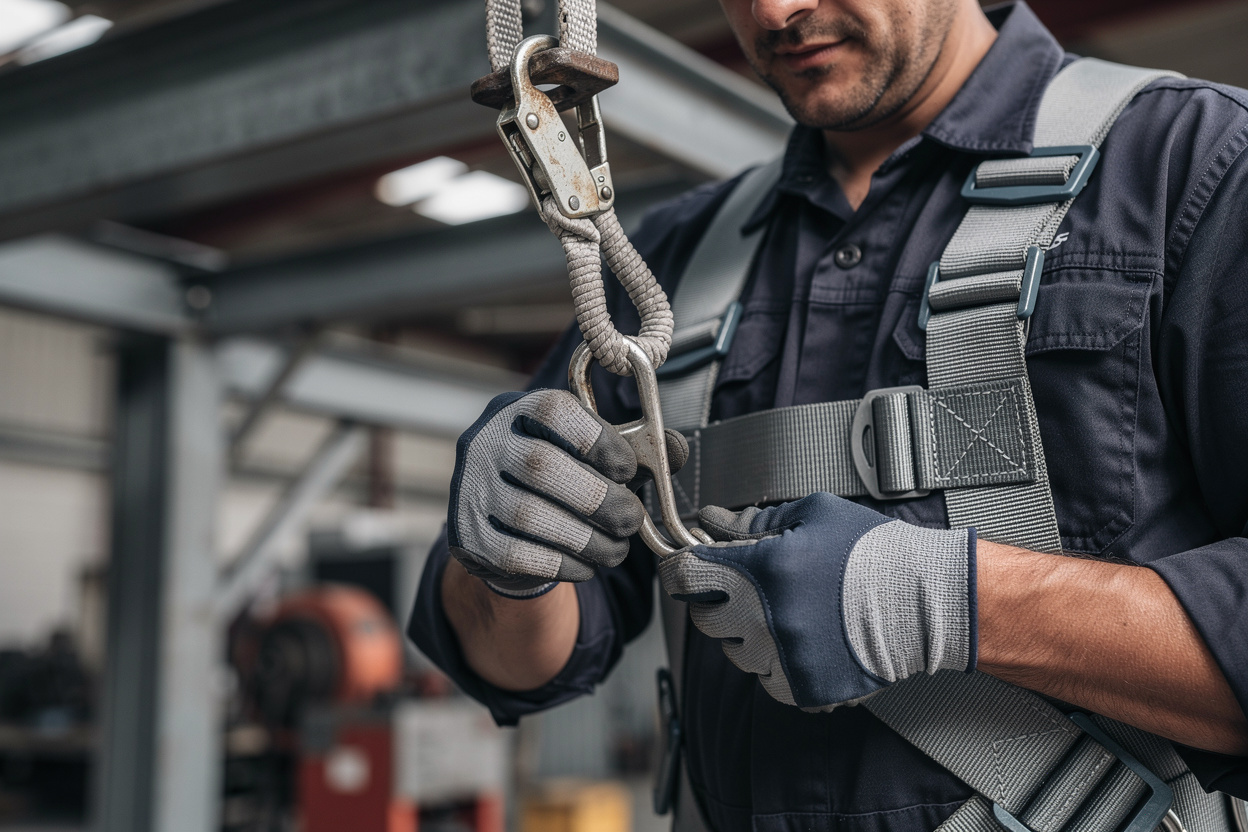
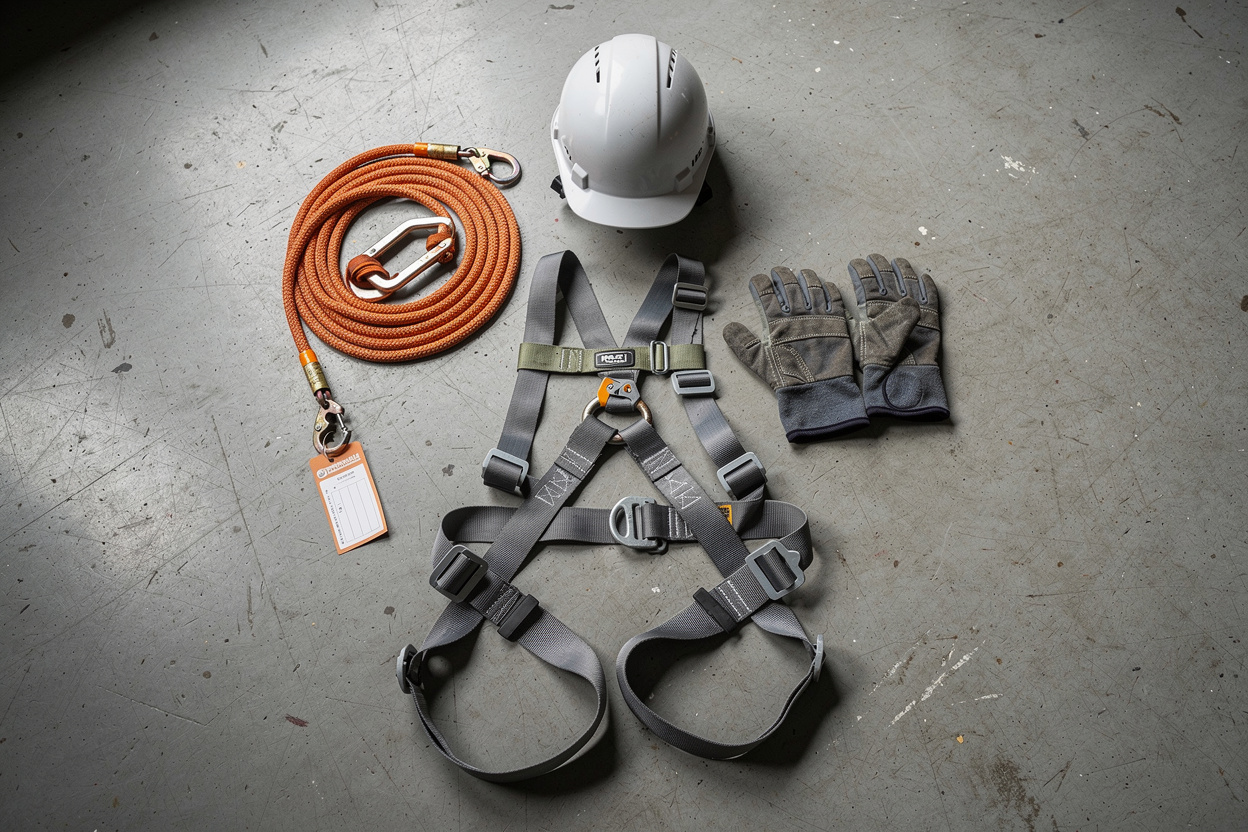
  • Fall arrest systems: a full body harness connected by an energy-absorbing lanyard or an inertia reel to a suitable anchor, which stops a fall that has already started.
Personal Protective Equipment
Anchor above · energy absorber · fall clearanceRescue plan BEFORE the work starts
Personal Protective Equipment

Once every other level of the hierarchy has been exhausted, fall arrest PPE can be considered. Fall arrest equipment does not stop a fall from happening; it catches the person after the fall has started, and it only works if every part of the system is right.

  • The harness must fit properly and be adjusted, with the leg straps and chest strap tight, and the attachment point in the correct position.
  • The lanyard must include an energy absorber, and it must be short enough that the person cannot hit the ground or a structure before the fall is arrested. Always check the fall clearance.
  • The anchor point must be strong enough to take the shock load of a falling person, and must be positioned above the user wherever possible to limit the fall distance.
  • Every component must be inspected before each use and formally examined at regular intervals, and any harness or lanyard that has arrested a fall must be taken out of service.
  • A rescue plan must be in place before the work starts, because a person left hanging in a harness can lose consciousness within minutes.

Anyone using work at height PPE, for restraint or arrest, must have practical and theoretical training and must be supervised while using it.

Selection of Work Equipment
Environment · space · clearance · load · weather
Selection of Work Equipment

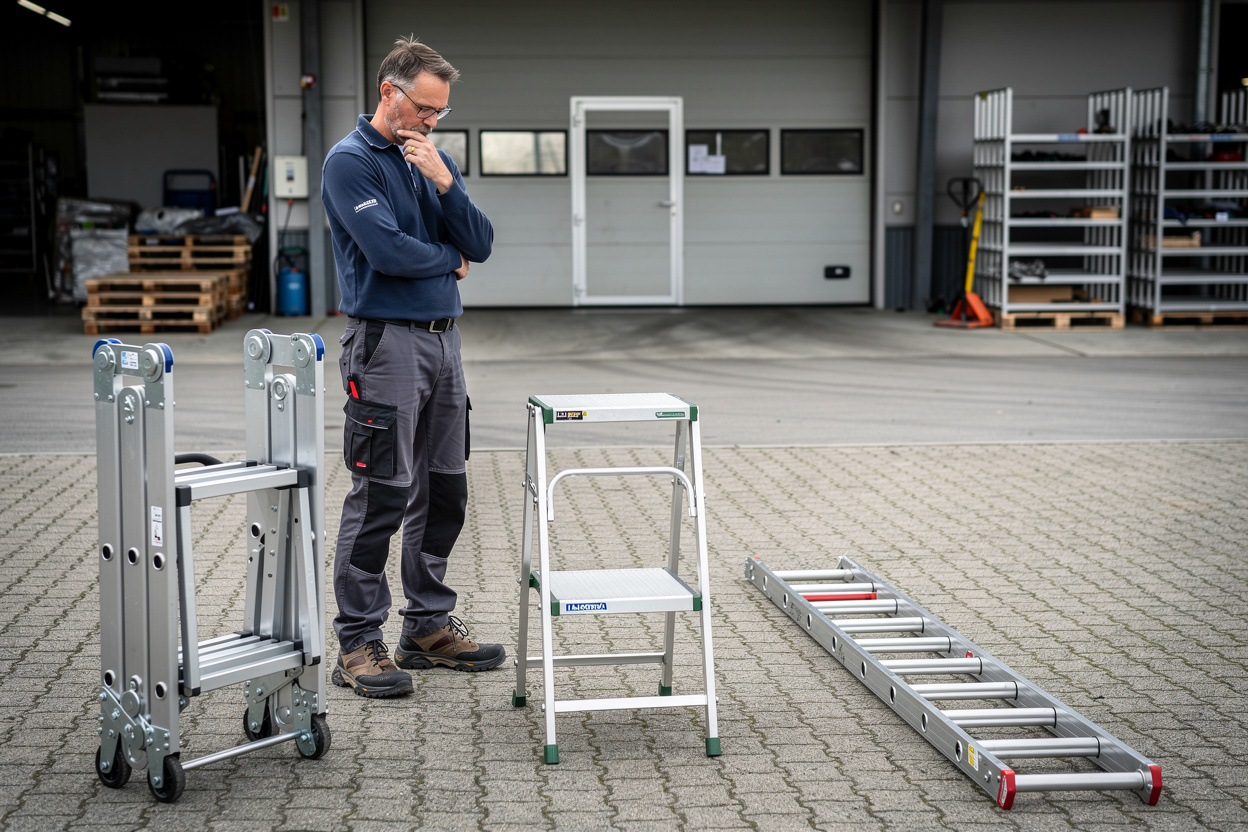
When planning work at height, employers must choose the most suitable work equipment for the job. They must consider:

  • The working environment: ground conditions, slopes, obstructions, other people working in the area, traffic and public access.
  • Space constraints: different equipment needs different amounts of space to be set up and used safely.
  • Clearance: for example enough distance from overhead power lines, and enough headroom for a platform to rise.
  • The type of work and the loads: the equipment must suit the task, carry the people, tools and materials safely, and never be overloaded.
  • The distance and consequences of a potential fall, the duration and frequency of use, and the number of people who will be working at height.
  • The additional risks created by installing, using, moving and dismantling the equipment itself.
  • The weather: wind, rain, ice and poor light, and the conditions in which the equipment must not be used.
Fragile Surfaces
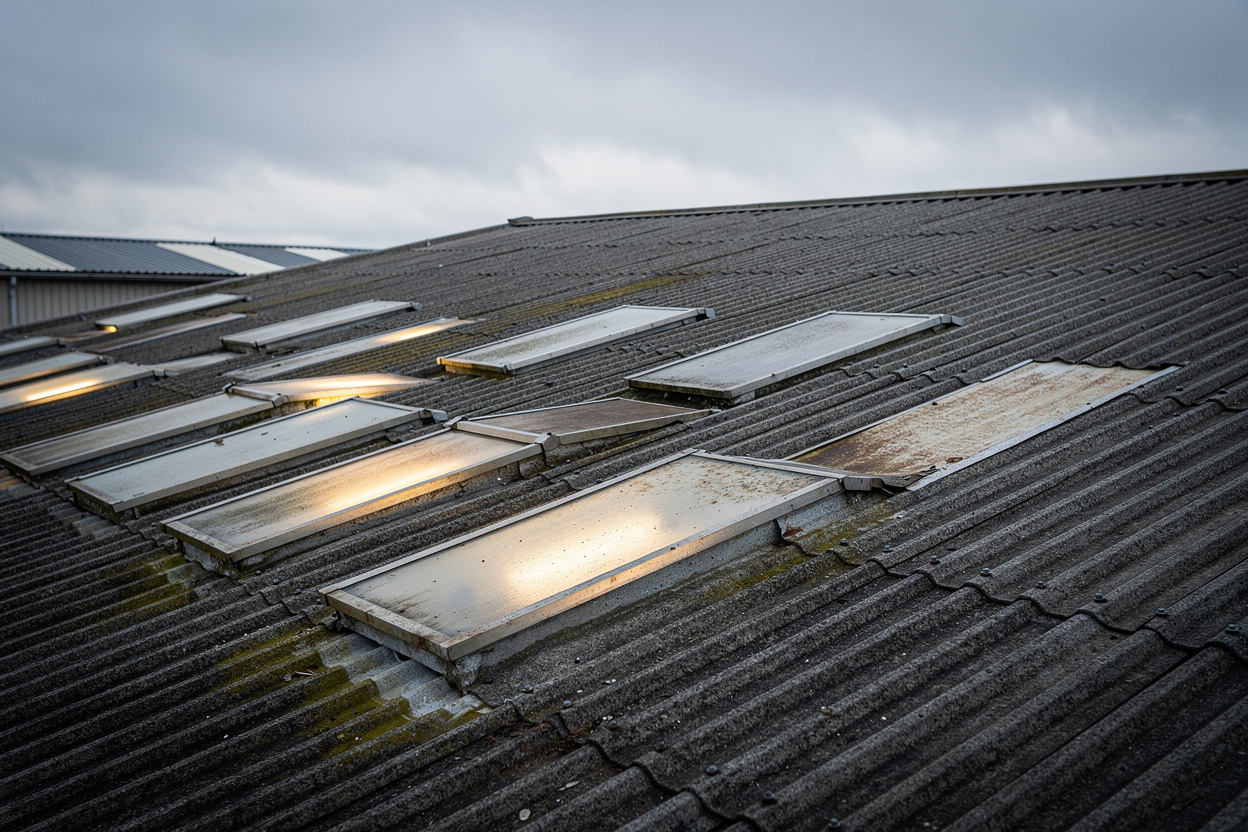
Looks solid — isn'tWeathered roof lights are almost invisible
Fragile Surfaces

Falls through fragile surfaces are one of the biggest causes of fatal and serious accidents in work at height. A fragile surface is any surface that would be liable to break if a person walked, worked or fell on it. Examples of fragile materials include:

  • Asbestos-cement and fibre-cement roof sheets.
  • Roof lights and skylights, especially old plastic ones that have discoloured or been painted over.
  • Liner panels on built-up metal roofs, before the outer sheet is fitted.
  • Corroded, rusted or damaged metal roof sheets.
  • Glass, wired glass and old slates, and any roof of unknown construction.

The danger is that a fragile roof often looks perfectly sound from above. Roof lights in particular can be almost invisible once they have weathered to the same colour as the sheets around them. Any work on or near a fragile roof carries a far higher risk than other work at height and must always be treated as high risk.

Fragile Surfaces — The Rules
Work beside it, not on it
Fragile Surfaces — The Rules

The regulations set out specific requirements for fragile surfaces:

  • 1. Nobody may work on, from or near, or pass across or near, a fragile surface where it is reasonably practicable to do the work safely without doing so, for example from a MEWP or a scaffold tower positioned beside the roof.
  • 2. Where work on or near a fragile surface cannot be avoided, suitable platforms, crawling boards, coverings, guardrails or similar means of support or protection must be provided and used, so that a person's weight is never carried by the fragile material.
  • 3. Where a risk of falling still remains, every reasonably practicable measure must be taken to minimise the distance and consequences of a fall, for example safety nets beneath the roof, in addition to the measures above.
  • 4. Prominent warning notices must be fixed at the approach to every fragile surface, and access must be prevented where it is not needed.

Treat every roof as fragile until a competent person has confirmed otherwise.

Vehicles
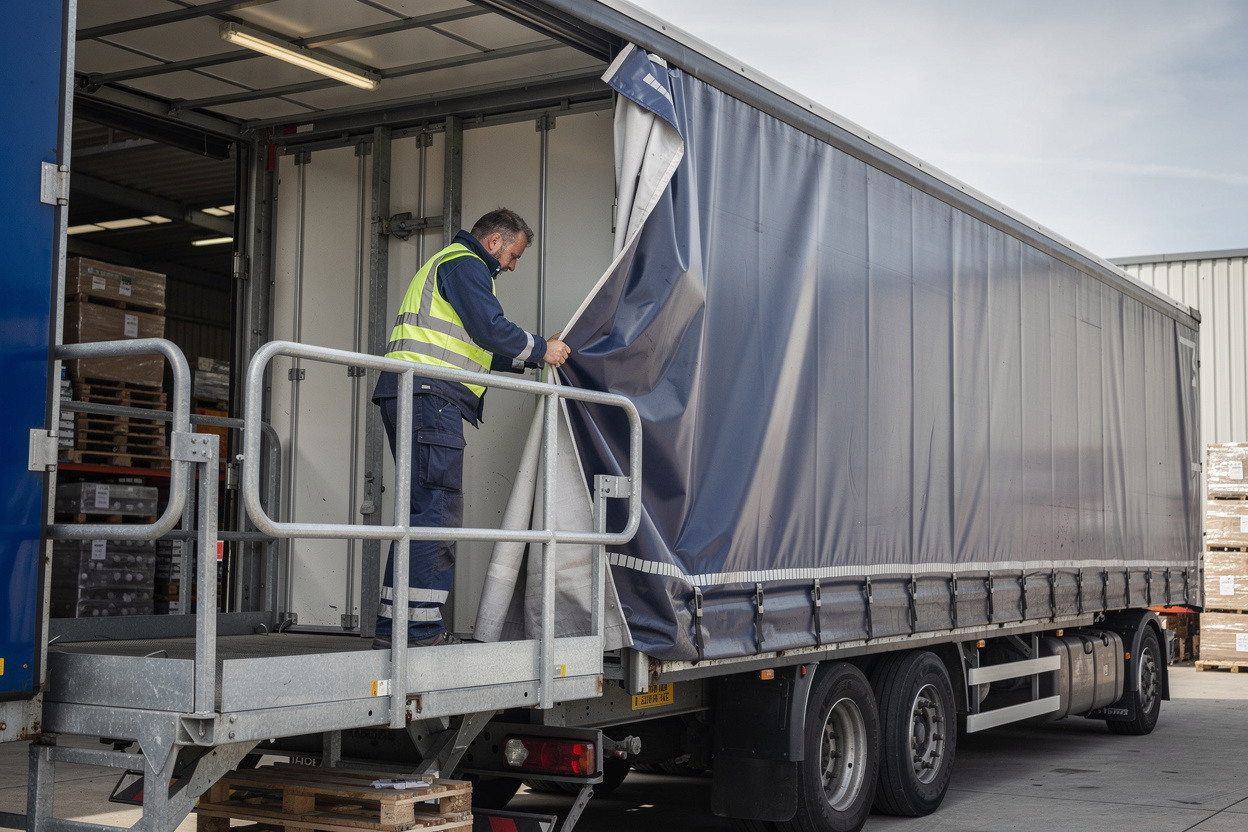
Gantry with guardrails — not the trailer bed
Vehicles

Falls from vehicles account for a large number of work at height accidents, most of them during loading and unloading, sheeting and unsheeting, and climbing on and off trailers and tankers. When work on vehicles cannot be avoided, apply the hierarchy:

  • Plan to avoid work at height on the vehicle wherever possible, for example by fitting sheeting systems that are operated from the ground and placing tank valves and controls at ground level.
  • Where it cannot be avoided, use equipment that prevents falls: loading bays and gantries with guardrails, vehicle-mounted platforms with handrails, and access steps rather than climbing on the wheels.
  • Give priority to equipment that protects everyone at risk over equipment that protects one person.
  • Where a fall cannot be prevented, use equipment that minimises its consequences, such as airbags around the trailer.
  • Only where none of that is practicable, use equipment that protects the individual, such as a restraint harness on an overhead running line.

Keep vehicle decks clean and free of straps and debris, never jump down from a trailer, and never climb on a load.

Falling Objects
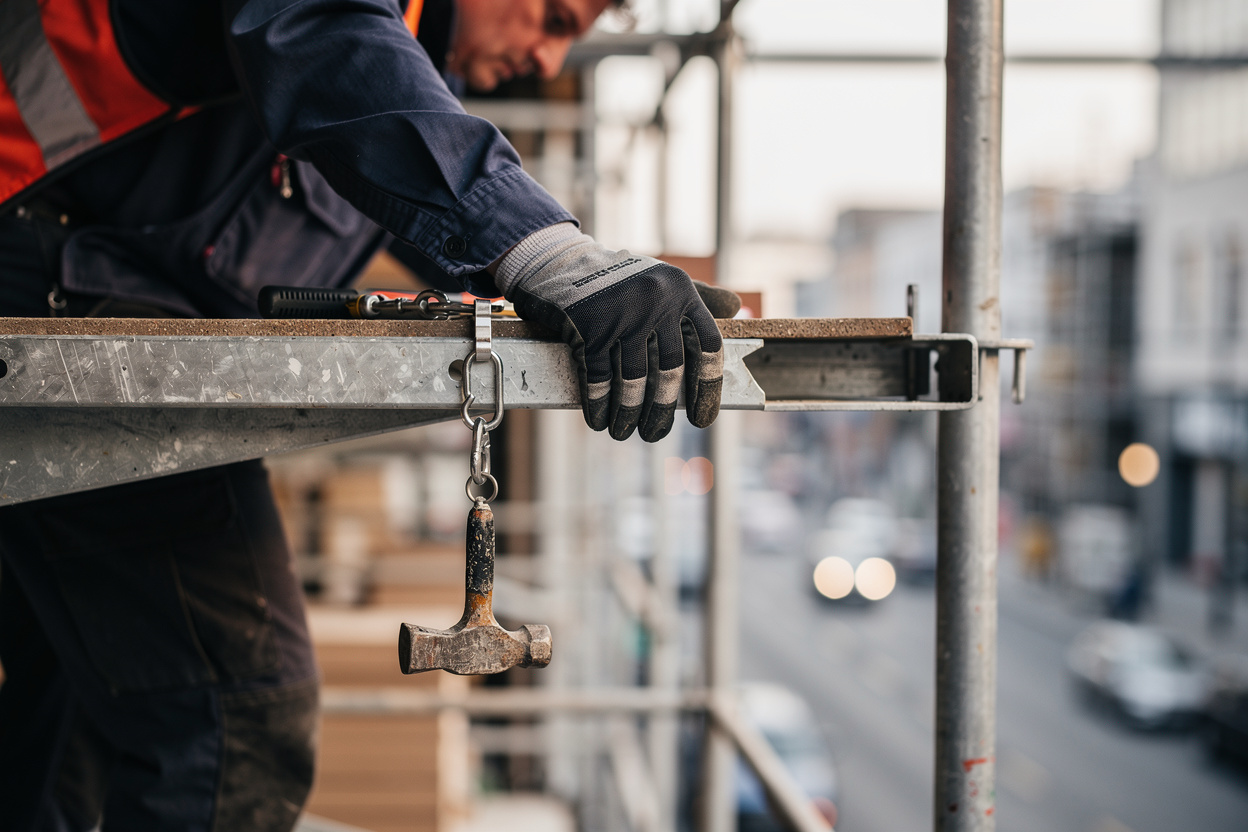
Tool lanyard · toe-board · brick guardNobody underneath
Falling Objects

The regulations do not only protect the person at height; they also protect everyone below. Every employer must take steps to prevent tools, materials and equipment from falling, and to keep people out of the area where they could land. The main measures are:

  • Toe-boards, brick guards and mesh panels on every working platform, so that nothing can roll or be kicked off the edge.
  • Debris netting and covered walkways on scaffolds beside public areas.
  • Tool lanyards and tool belts, and lifting bags or hoists for moving materials up and down instead of throwing or carrying them on ladders.
  • Exclusion zones and barriers beneath the work, with signs, so that nobody walks underneath.
  • Never throwing or tipping anything from height, and using enclosed chutes for waste.

A spanner dropped from ten metres can kill a person wearing a hard hat. Falling objects are treated with the same seriousness as falling people.

Training and Competence

Employers have a legal responsibility to make sure that the people who plan, supervise and carry out work at height are competent. Competence is a combination of training, skills, experience and knowledge, and it must match the equipment and the task. The risk of falls is managed through formal training, toolbox talks and briefings, and by giving every worker the instructions they need, including the manufacturer's manuals. Employees must be trained to:

  • Use and inspect the work equipment safely and correctly.
  • Assemble and dismantle equipment where that is part of their job; erecting a mobile tower, for example, needs specific training.
  • Use, inspect and maintain harnesses, lanyards and anchors where fall restraint or fall arrest is used.
  • Recognise the limits of the equipment and the conditions in which it must not be used.
  • Follow the rescue plan, and know what to do if someone falls or becomes stranded at height.

A person who is being trained must be supervised by someone who is already competent.

Inspection of Work Equipment
Before every use · every 7 days · after any change
Inspection of Work Equipment

Work at height equipment must be inspected so that faults are found before they cause a fall. As well as regular inspections, there must be a system for reporting faults and taking damaged equipment out of use until it is repaired or replaced.

The regulations require:

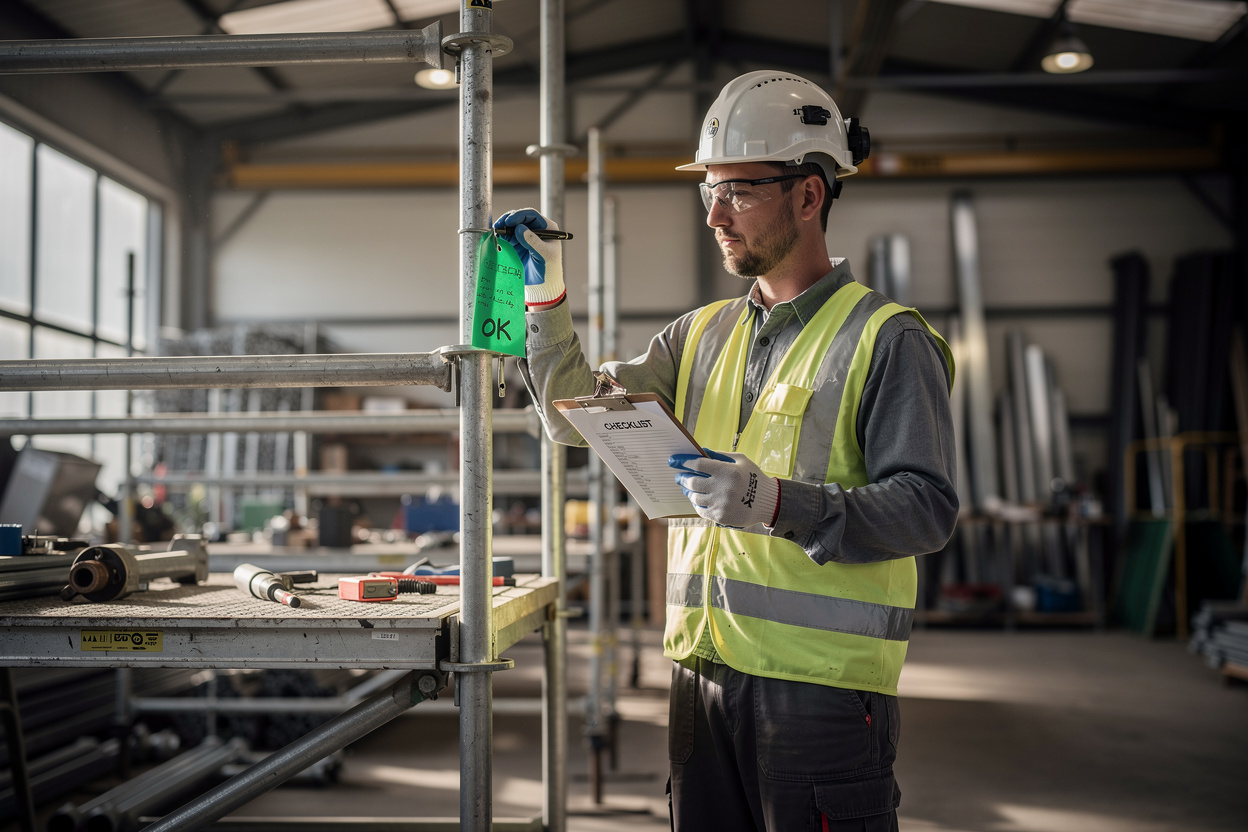
  • A visual check of the equipment, and of the place where it will be used, before every use: ladders, podiums, towers, MEWPs, harnesses and lanyards, roof surfaces, and the ground around openings and excavations.
  • A formal inspection of scaffolds and working platforms from which a person could fall two metres or more, before first use, after any alteration or event that could affect their stability, such as high winds, and at intervals of no more than seven days, with the results recorded.
  • Regular formal examination of harnesses, lanyards and other fall protection equipment by a competent person, as set out by the manufacturer, and a record of each examination.
  • Thorough examination of MEWPs and other lifting equipment at the intervals required for lifting equipment, with the reports kept available.
Emergency and Rescue Procedures
Suspension trauma in 10–15 minutesWritten · rehearsed · equipment on site
Emergency and Rescue Procedures

When planning work at height, employers must plan for emergencies and rescue, not just rely on the emergency services. Suitable arrangements must be in place before the work starts. For work involving fall arrest equipment these arrangements are set out in a rescue plan.

A rescue plan is a pre-planned strategy for bringing down safely anyone who has fallen and is suspended in their harness, or who is stranded at height, for example on a MEWP that has failed. It matters because a person hanging motionless in a harness can suffer suspension trauma, a dangerous loss of blood flow, within ten to fifteen minutes.

The rescue plan must be written down and rehearsed, and it must include the rescue equipment to be used, the people trained to use it, the anchor points available, the way the emergency services will be called and directed to the site, and what first aid will be given while the casualty is brought down. The rescuers must be trained, competent and aware of their responsibilities.

Summary

In this module you have learnt that:

Avoid work at height first; then use an existing safe place; then collective equipment that prevents falls, such as scaffolds, towers, podiums and MEWPs, which protect everyone without any action by the user.

Only when falls cannot be prevented should equipment that minimises a fall be used: safety nets, airbags, and fall arrest harnesses as the last resort, always with a rescue plan.

Fragile surfaces, vehicles and falling objects each need their own controls: never work on a fragile roof where it can be avoided, use gantries and platforms for vehicles, and keep tools tethered and people out from underneath.

Everyone who works at height must be competent, equipment must be checked before every use and formally inspected, and a written, rehearsed rescue plan must be in place before any fall arrest equipment is used. In the final module we look at the equipment itself: mobile towers, podiums, MEWPs, ladders and stepladders.

Knowledge Check
Which two of these measures minimise the consequences of a fall rather than preventing it?
Select one answer, then press Check.
Guardrails on a scaffold platform
Safety nets beneath the work area and a fall arrest harness
An extension pole used from the ground
A restraint lanyard that stops the worker reaching the edge
Correct — well done. You can continue.
Not quite. Think about what you have just learnt in this module, and try again.
Next Module →Answer the question to unlock the next module.
Page 1 of 17