← Exit
Module 2 · Assessing Risks in Work at Height0% complete · 13 slides left
Working at Height Course
Module 2
This course contains audio. Use headphones in public places.
Introduction
Assess → control → monitor
Introduction

A risk assessment is required for every work activity that could cause harm, and it matters most where the harm could be a fall. Statistics show, year after year, that a large share of workplace deaths and serious injuries come from unsafe work at height, and that most of them follow the same pattern: a job that was not planned, equipment that was not right, or a control that was skipped to save time.

Employers have a legal duty to make sure that the risks from work at height are assessed, controlled and monitored so that their employees, and anyone else affected, stay safe from harm.

This module takes you through each step of a risk assessment and gives you the knowledge you need to assess work at height in your own workplace. Even if you will never write a risk assessment yourself, understanding how one is done lets you give your employer the right information, spot when a control is missing, and know why the rules on site are what they are.

Topics to be Covered

The topics covered in this module are:

  • What a risk assessment is, and who should carry it out
  • The five main steps
  • Step 1: identifying the hazards
  • Step 2: deciding who might be harmed, and how
  • Step 3: evaluating the risks and choosing controls
  • Step 4: recording the findings and putting them into action
  • Step 5: reviewing and updating the assessment
What is a Risk Assessment?
How could someone — or something — fall?
What is a Risk Assessment?

A risk assessment is a careful look at what, in your work, could cause harm to people, so that you can decide whether you have done enough to prevent it or need to do more. For work at height the question is always the same: how could someone, or something, fall, and what will stop that happening?

Employers have overall responsibility for making sure that risk assessments are carried out, either by themselves or by another competent person: someone with sufficient training, knowledge, skills and experience of the kind of work at height involved.

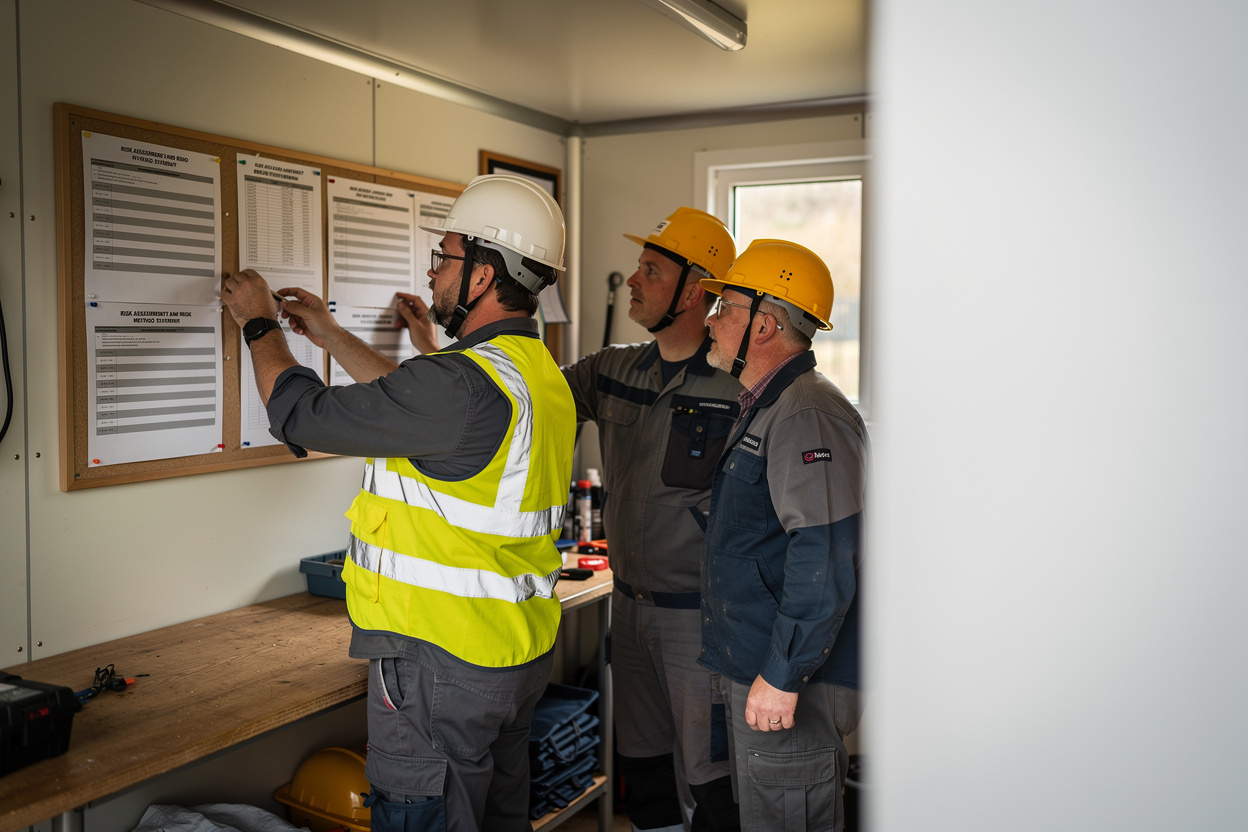
Once the hazards and risks have been identified, the person carrying out the assessment decides on the control measures, makes sure they are put in place and enforced, and records the findings as a written risk assessment.

The assessment must be reviewed regularly, and whenever circumstances change: new equipment, a change in the work, new people, or an accident or near miss.

The Main Steps
1 Identify hazards2 Who might be harmed3 Evaluate & control4 Record & act5 Review
The Main Steps

The main steps of a risk assessment are:

  • 1. Identify the hazards arising from the work.
  • 2. Decide who might be harmed by those hazards, and how.
  • 3. Evaluate the risks and decide on the control measures needed.
  • 4. Record the significant findings and put the changes into action.
  • 5. Review the assessment regularly and update it when necessary.

In Great Britain, if five or more people are employed the significant findings must be recorded in writing. With fewer than five a written record is not compulsory, but it is strongly recommended and it is the only practical way to show that the risks are being controlled.

The assessment must be reviewed and updated whenever there is a significant change to the work, the workplace or the people, or any other reason to think it is no longer valid, such as after an accident or a near miss.

Who Should Complete a Risk Assessment?
Competent: training + skills + knowledge + experienceResponsibility stays with the employer
Who Should Complete a Risk Assessment?

The assessment should be carried out by someone with sufficient training, skills, knowledge and experience of the work, its risks and the controls available. The competent person should:

  • Understand the HSE guidance on work at height and know how to apply it to the tasks being assessed.
  • Understand the purpose of a risk assessment and know how to carry one out.
  • Know where to find the information they need, including the manufacturer's instructions for the equipment and the rules on inspection and training.
  • Involve the people who will do the work, because they know how the job is really done.
  • Recognise the limits of their own knowledge, and know when to ask for specialist help, for example on scaffold design or rescue from height.

In every case the overall responsibility for the risk assessment stays with the employer, even when a competent person is appointed to carry it out.

Step 1: Identifying the Hazards
Fragile roof lightUnprotected edge
Step 1: Identifying the Hazards

The first step is to identify the hazards. For work at height they are the ways in which people and materials could fall. Ways of finding them include:

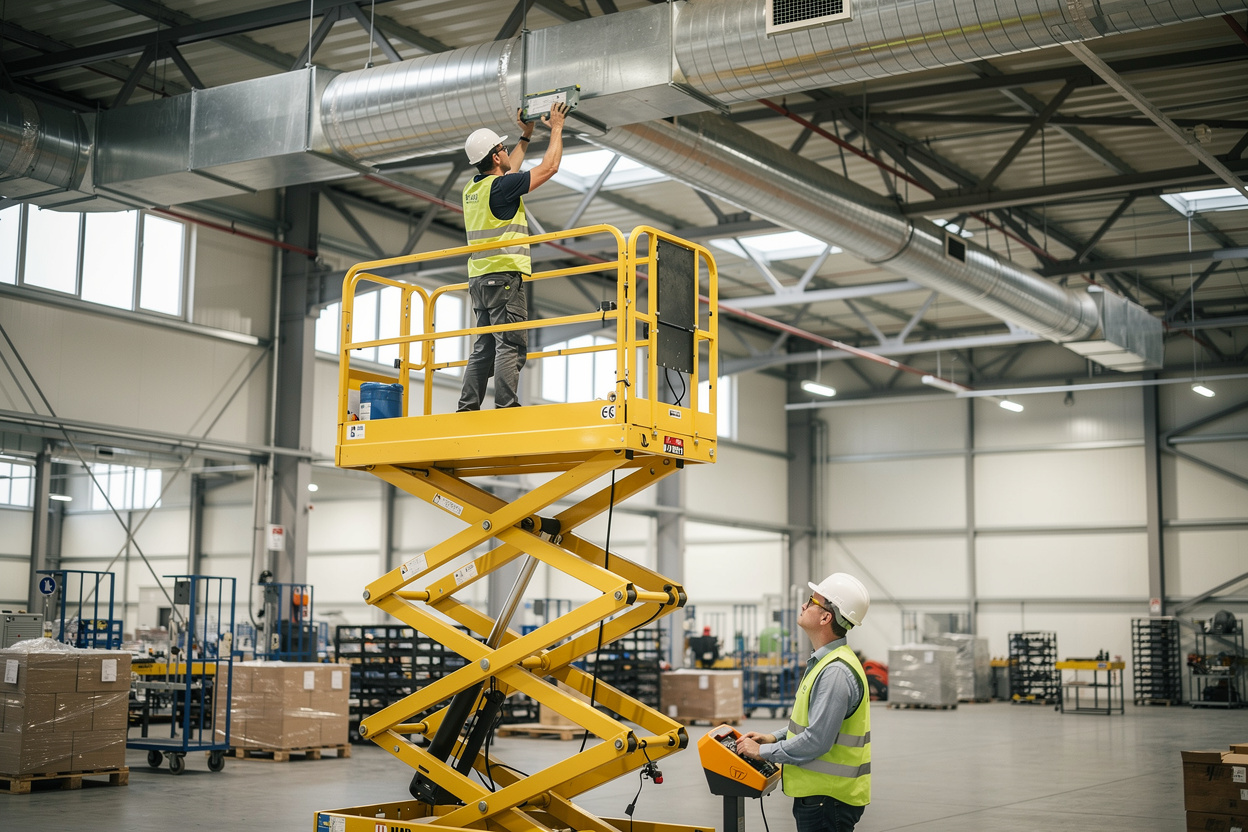
  • Walking the work area and looking at its layout: unprotected edges, openings, fragile roof sheets and roof lights, uneven or sloping ground, overhead power lines, and limited space around machinery.
  • Asking the employees about their work, including the infrequent jobs that are easy to forget: plant maintenance, cleaning high-level equipment, changing lamps, clearing gutters.
  • Reading the manufacturers' instructions and data sheets for the work at height equipment, which set out its limits and its inspection requirements.
  • Looking at accident, near-miss and ill-health records, which show where things have already gone wrong.
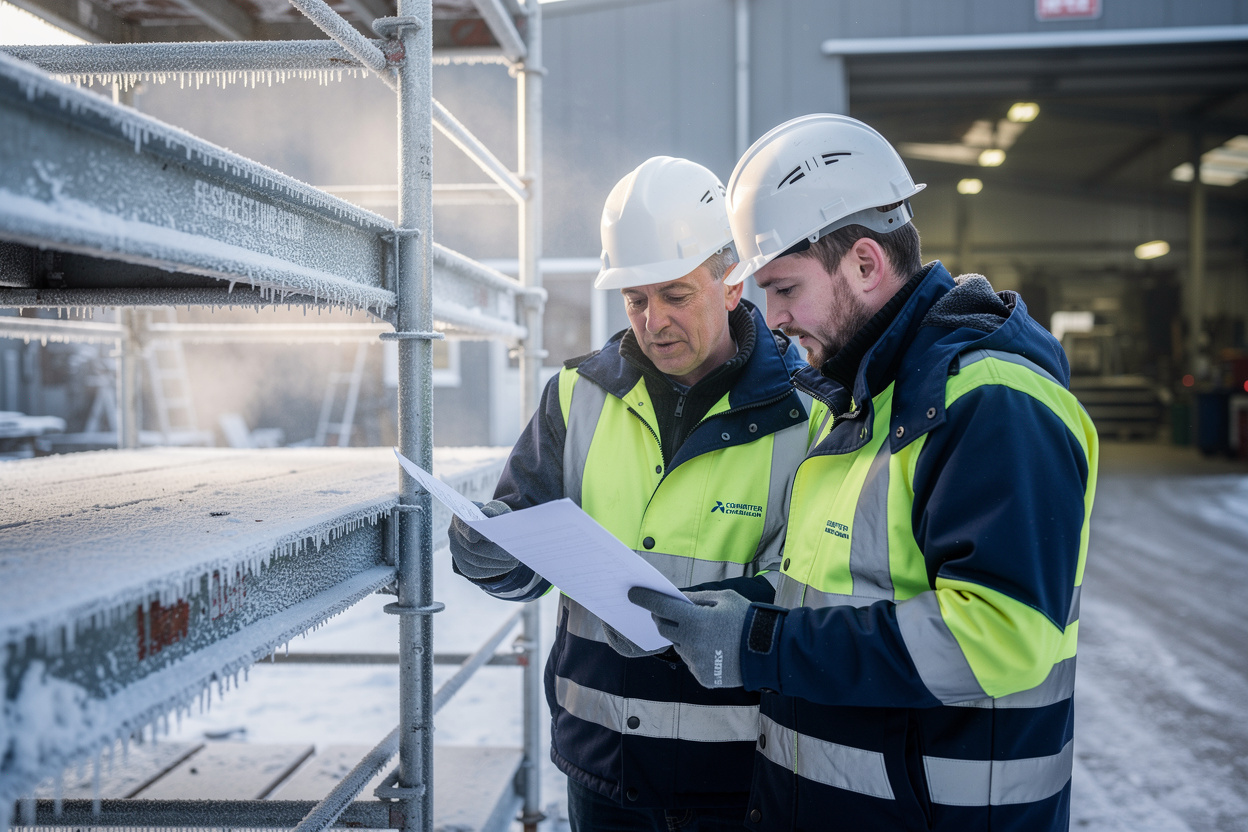
  • Considering the weather and the time of day: wind, rain, ice and poor light all make a fall more likely.
Step 2: Decide Who Might be Harmed and How
Protect the people below
Step 2: Decide Who Might be Harmed and How

This step looks at each hazard and identifies the people who could be harmed by it. They may be:

  • The people carrying out the work at height.
  • Other employees working nearby or passing underneath.
  • Customers in the workplace, for example in a shop or a warehouse open to the public.
  • Visitors, such as delivery drivers and inspectors.
  • Members of the public passing by, for example near scaffolding or ladders on a street.
  • Anyone who is more vulnerable: new or inexperienced workers, young workers, and people with a disability or a health condition that affects balance.

For every group, the controls needed to protect them must be identified and written down. That may mean covered walkways and debris netting for passers-by, barriers and signs to keep people out of the drop zone, and a lookout at blind corners.

Step 3: Evaluate the Risks
What is already in place? Is it enough?
Step 3: Evaluate the Risks

Having identified who may be harmed and how, the next step is to evaluate the risks and decide whether each hazard can be eliminated or must be controlled.

The competent person first identifies the controls that are already in place, for example the podium steps, mobile towers or edge protection that the workplace already has, and asks whether they are suitable and sufficient.

Any further controls are then decided and recorded. It is important to keep all the relevant information on each control measure together: the manufacturer's instructions, the training required, the inspection regime, and the reasons the control was chosen over the alternatives above it in the hierarchy.

Step 3: The Questions to Ask
Prevent the fall before you protect against itSomeone on the ground: rescue
Step 3: The Questions to Ask

For each task, the competent person needs to consider:

  • Can the work at height be avoided altogether, for example by cleaning windows from the ground with an extension pole?
  • If it cannot, what equipment will reduce the risk, applying the hierarchy of control? Fall prevention, such as a platform with guardrails, must be considered before any personal protective equipment.
  • Is there a safe way of getting to and from the place of work at height?
  • Are the people doing the work competent and physically able to do it?
  • Is the equipment safe, suitable for the task, and inspected as often as it should be?
  • What will be done in an emergency: how will a person who has fallen, or who is stranded at height, be rescued?

Under the regulations, personal protective equipment such as a harness is the lowest level of the hierarchy and may only be used where it is not reasonably practicable to use fall prevention measures.

Step 4: Record Your Findings and Implement Them
Written · shared · acted on
Step 4: Record Your Findings and Implement Them

The fourth step is to record the results of the assessment and to put the controls into action. A risk assessment that is written but not implemented protects no one.

The written assessment should clearly set out:

  • The hazards associated with each work at height activity.
  • The people who may be affected by them.
  • The control measures chosen to protect those people.
  • The actions still needed to complete the controls, who is responsible for them, and when they will be done.
  • The rescue arrangements, where fall arrest or work at height equipment is used.

The written assessment must be brought to the attention of every employee affected by it, in a form and language they understand, and a copy kept where it can be found.

Step 5: Review and Update
Review yearly — and after every change or incident
Step 5: Review and Update

The final step is to review the assessment regularly to make sure the controls are still working, and to update it whenever something changes. Review it, and update it if necessary, when there are:

  • New or changed processes, machinery, layouts or structures in the workplace.
  • New employees or contractors involved in the work at height.
  • Changes in the weather or the season that affect the work, for example winter ice on a roof or a platform.
  • Any accidents, near misses or dangerous occurrences that suggest the controls are not effective.
  • Changes in the law or in the guidance from the regulator.
  • A period of time since the last review; once a year is a sensible minimum.

The reviewed assessment must be communicated to those affected. Employers with five or more employees must update the written significant findings; smaller employers should keep a written record as good practice.

Summary

In this module you have learnt that:

Employers have overall responsibility for making sure risk assessments are carried out, by themselves or by another competent person, and the people doing the work should be involved.

Step 1 is to identify the hazards: for work at height, the ways in which people and materials could fall. Step 2 is to identify everyone who could be harmed, including the people below and passers-by.

Step 3 is to evaluate the risks and choose controls in the order of the hierarchy: avoid, prevent, then minimise, with PPE as the last resort.

Step 4 is to record the findings, compulsory for employers with five or more employees, and to put the controls into action. Step 5 is to review and update the assessment regularly and after any change or incident. In the next module we look at the practical ways of avoiding, preventing and minimising falls.

Knowledge Check
Who may carry out a work at height risk assessment?
Select one answer, then press Check.
Only the most senior manager in the company
A competent person with sufficient training, knowledge, skills and experience of the work
Only an inspector from the HSE
Anyone, as long as they are over 18
Correct — well done. You can continue.
Not quite. Think about what you have just learnt in this module, and try again.
Next Module →Answer the question to unlock the next module.
Page 1 of 14