← Exit
Module 2 · Welding Processes and Their Hazards0% complete · 12 slides left
Welding Safety
Welding Safety
Module 2
This course contains audio. Use headphones in public places.
Introduction
Introduction

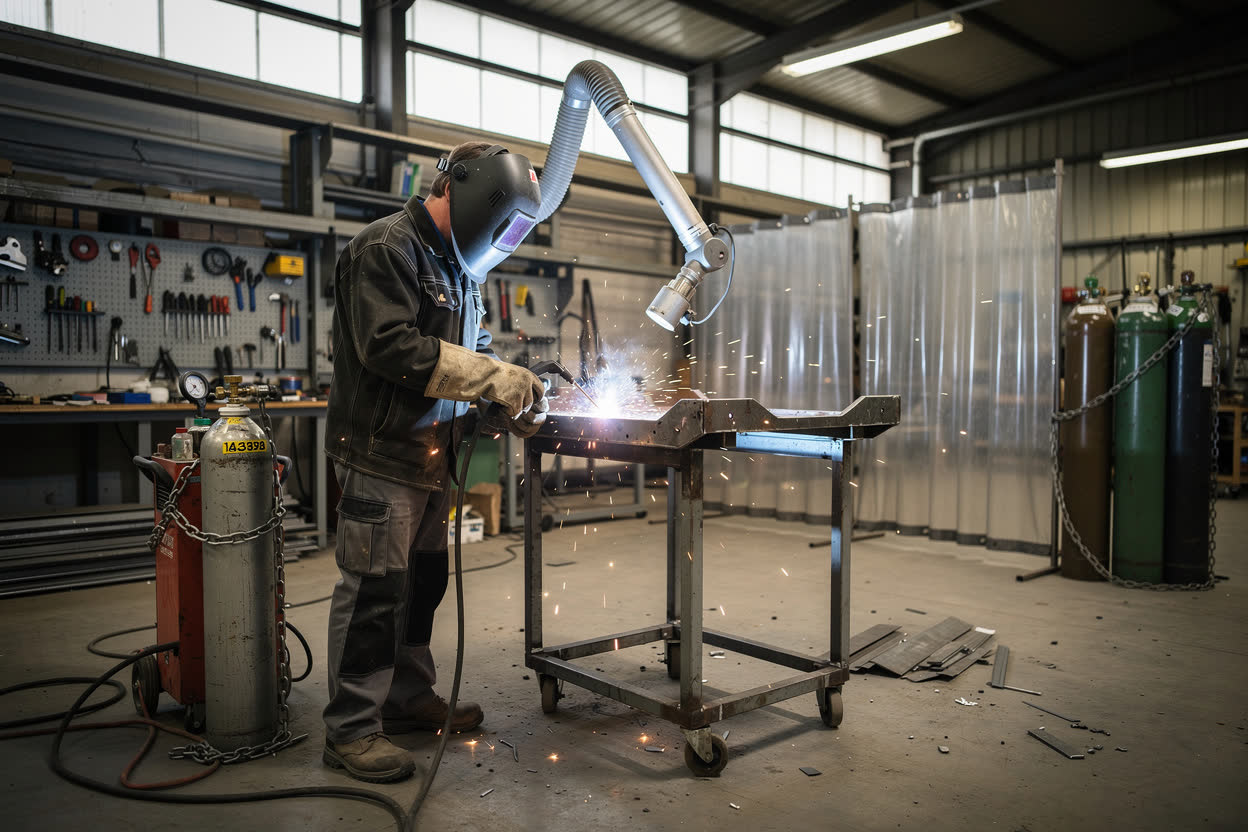
Different welding and cutting processes create different hazards. Understanding how each process works helps you to expect the risks it brings, and to control them.

This module reviews the most common processes, and the hazards that go with each one. It also looks at how the material and any coatings change the risk, and at the allied processes that go hand in hand with welding.
Learning Outcomes
Learning Outcomes

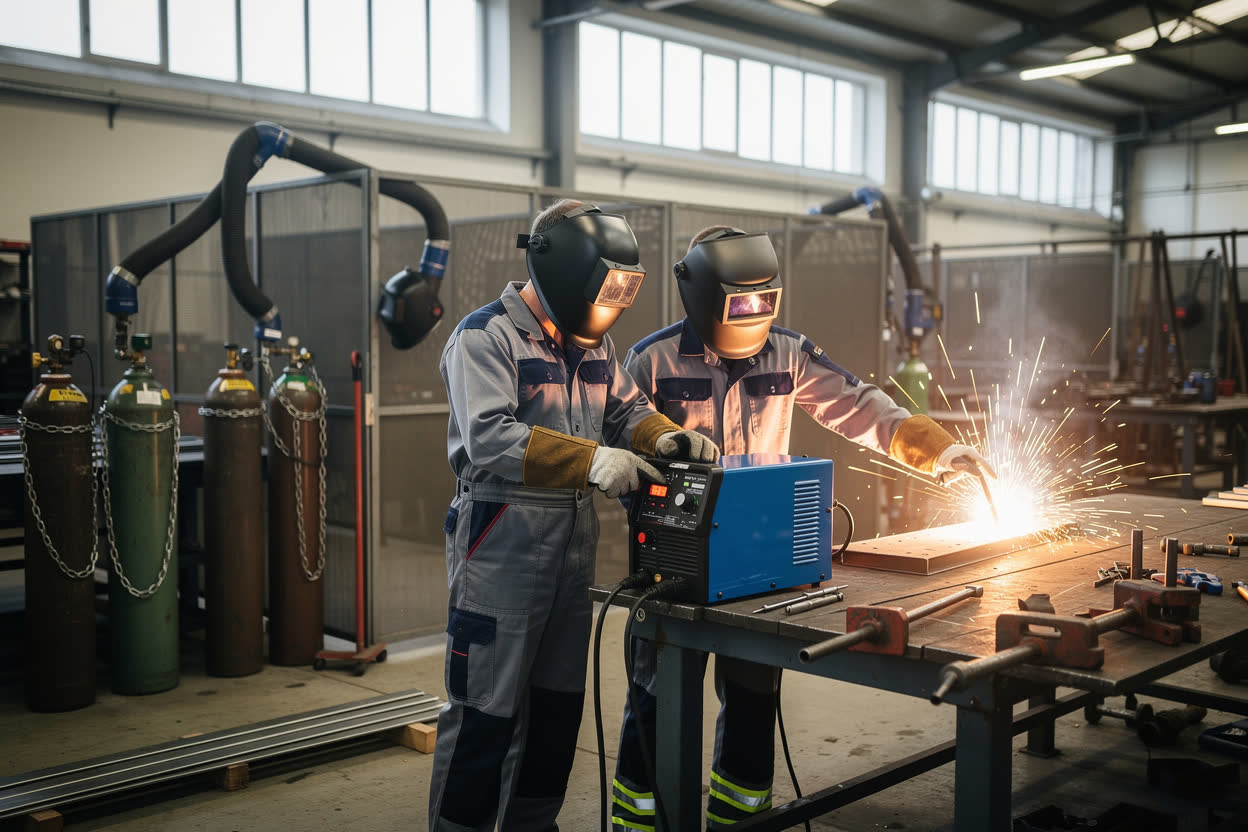
By the end of this module, you will be able to:

  • Describe the most common arc and gas welding processes.
  • Explain the particular hazards of each process.
  • Recognise how the material and surface coatings affect the risk.
  • Understand why allied processes, such as grinding, add further hazards.
Manual Metal Arc Welding

Manual metal arc welding, known as MMA or stick welding, strikes an arc between a flux-coated electrode and the workpiece.

It produces high levels of fume from the electrode and flux, intense ultraviolet radiation, and spatter. There is also a risk of electric shock, particularly when changing electrodes.

MMA is widely used on site and outdoors, where ventilation and fire control can be harder to manage.

MIG and MAG Welding
MIG and MAG Welding

Metal inert gas and metal active gas welding, known as MIG and MAG, feed a continuous wire through the torch, and use a shielding gas such as argon or carbon dioxide.

These processes produce large amounts of fume. The shielding gas is supplied from compressed gas cylinders.

Argon and carbon dioxide are heavier than air. They can collect in low or enclosed areas and push out the oxygen, creating a risk of suffocation.

TIG Welding
TIG Welding

Tungsten inert gas welding, known as TIG, uses a tungsten electrode that does not melt, and an inert shielding gas.

TIG produces less fume than MIG or MMA, but gives off very intense ultraviolet radiation. The ultraviolet light also creates ozone, a gas that irritates the lungs.

Some tungsten electrodes contain thorium, which is mildly radioactive. Grinding these electrodes produces radioactive dust, so use thorium-free electrodes wherever possible.

Oxy-Fuel Welding and Cutting

Oxy-fuel processes burn a fuel gas, such as acetylene or propane, with oxygen, to produce a very hot flame for welding, brazing or cutting.

The main hazards are fire and explosion, compressed gas cylinders, flashback, and hot metal.

Acetylene is unstable at high pressure, and too much oxygen makes materials burn fiercely. These gases demand particular care, and are covered in detail in Module 6.

Plasma Cutting and Gouging

Plasma cutting uses an electric arc and a jet of gas to cut through metal. Arc air gouging uses an arc and compressed air to remove metal, for example to cut out a faulty weld.

Both processes produce large amounts of fume, intense radiation, showers of sparks and molten metal, and very high noise levels. Hearing protection is usually needed, and the fire risk must be carefully controlled.

Materials and Coatings

The metal being welded, and any coating on it, strongly affect the fume hazard.

  • Stainless steel and other alloys produce fume containing chromium, nickel and manganese, which is highly toxic.
  • Paints, primers, oils and solvents can release dangerous gases when heated.
  • Lead-based paint and cadmium coatings are particularly hazardous.

Always know what you are welding. Where possible, remove coatings from the weld area first, and increase controls for coated or alloy materials.

Galvanised Steel and Metal Fume Fever

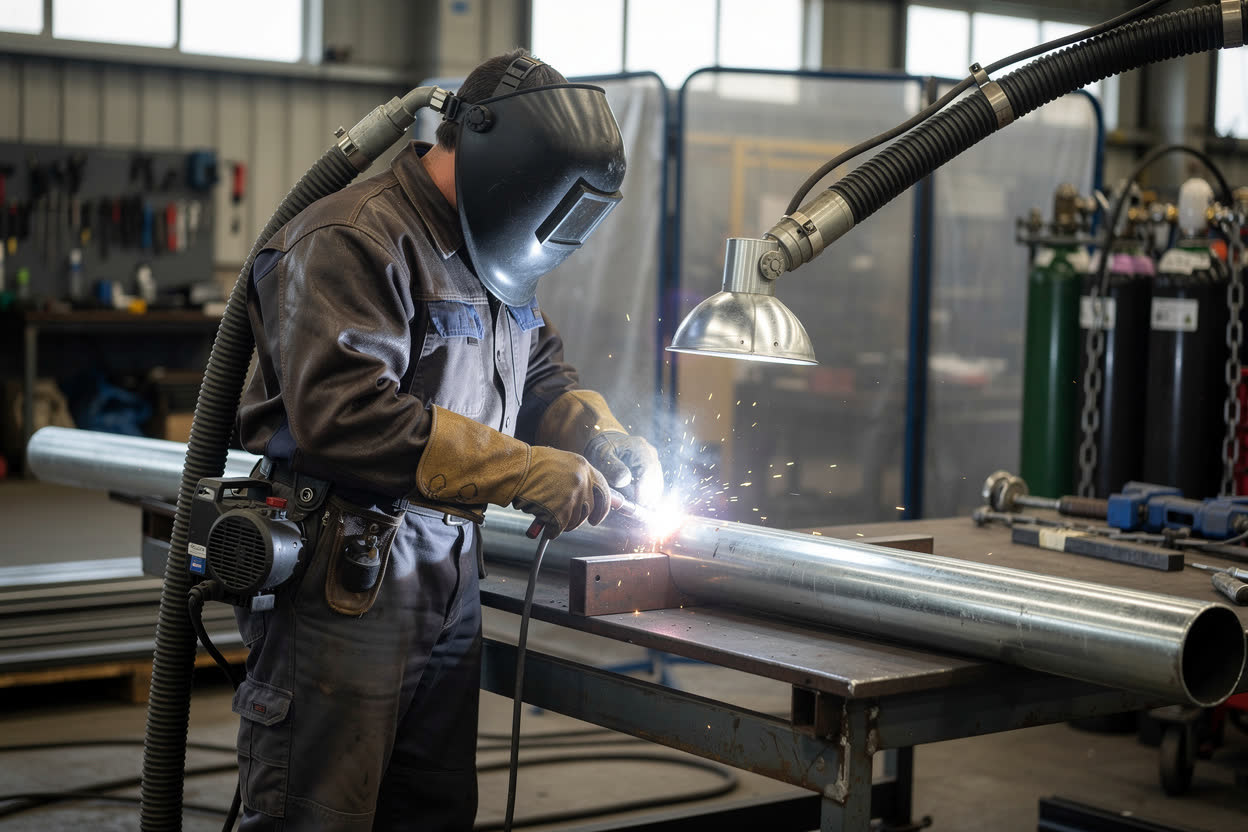
Galvanised steel is coated with zinc. When it is welded or cut, the zinc gives off a dense white fume.

Breathing this fume can cause metal fume fever, a flu-like illness with shivering, aches, a headache, a dry throat and a metallic taste. Symptoms usually start several hours after exposure.

It usually passes in a day or two, but repeated attacks are a sign that the controls are not working. Use good extraction, and suitable respiratory protection, when welding galvanised steel.

Allied Processes
Allied Processes

Welding rarely happens on its own. Allied processes add hazards of their own:

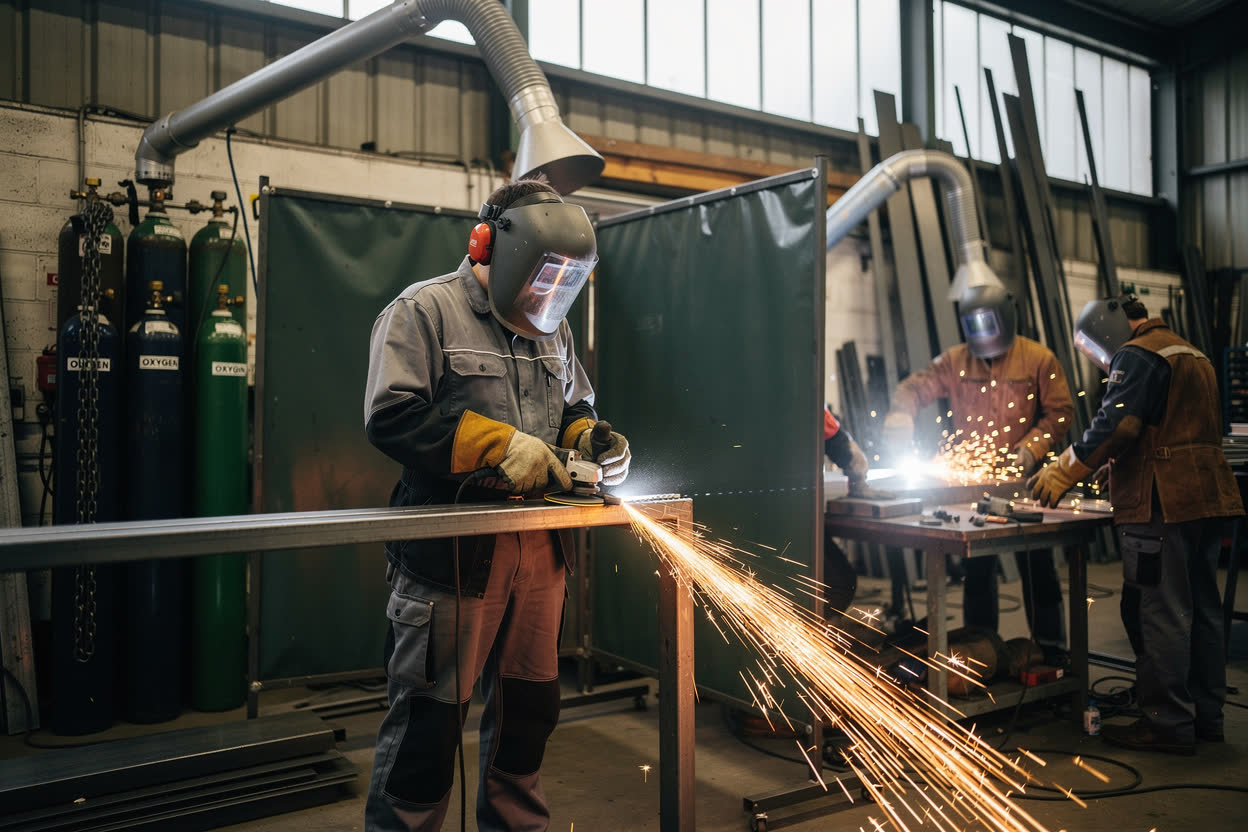
  • Angle grinding and surface preparation create sparks, dust, noise and vibration, and the risk of a disc shattering.
  • Gouging produces intense fume and noise.
  • Cleaning with solvents brings chemical and fire hazards.

Every allied process must be included in the risk assessment, because together they can expose workers to far more than welding alone.

Summary

In this module, you have learned that:

Each process, including MMA, MIG and MAG, TIG and oxy-fuel, brings its own mix of fume, radiation, gas and fire hazards.

The material and any coatings strongly affect the fume, and galvanised steel can cause metal fume fever.

Allied processes, such as grinding and gouging, add dust, noise and extra fume, and must be assessed too.

In the next module, we will look at hazardous fumes and gases.

Knowledge Check
What can welding galvanised, or zinc-coated, steel cause?
Select one answer, then press Check.
Metal fume fever, a flu-like illness
No effect at all
Better eyesight
Stronger welds only
Correct. Zinc fume from galvanised steel can cause metal fume fever.
Not quite. Heating zinc coatings releases fume that can make you ill. Try again.
Next Module →Answer the question to unlock the next module.
Page 1 of 13