← Exit
Module 4 · Handling and Working at Height0% complete · 22 slides left
Warehouse Safety
Warehouse Safety
Module 4
This course contains audio. Use headphones in public places.
Introduction
Introduction

Manual handling, mechanical handling and working at height all carry serious risks. Poorly managed handling causes strain and injury, often building up over time, while work at height puts people at risk of a fall.

In this module you will learn about:

  • Manual handling hazards and injuries.
  • Manual handling risk assessment, and safe handling.
  • Mechanical handling aids, and how to use them safely.
  • Working safely at height.
Manual Handling Hazards

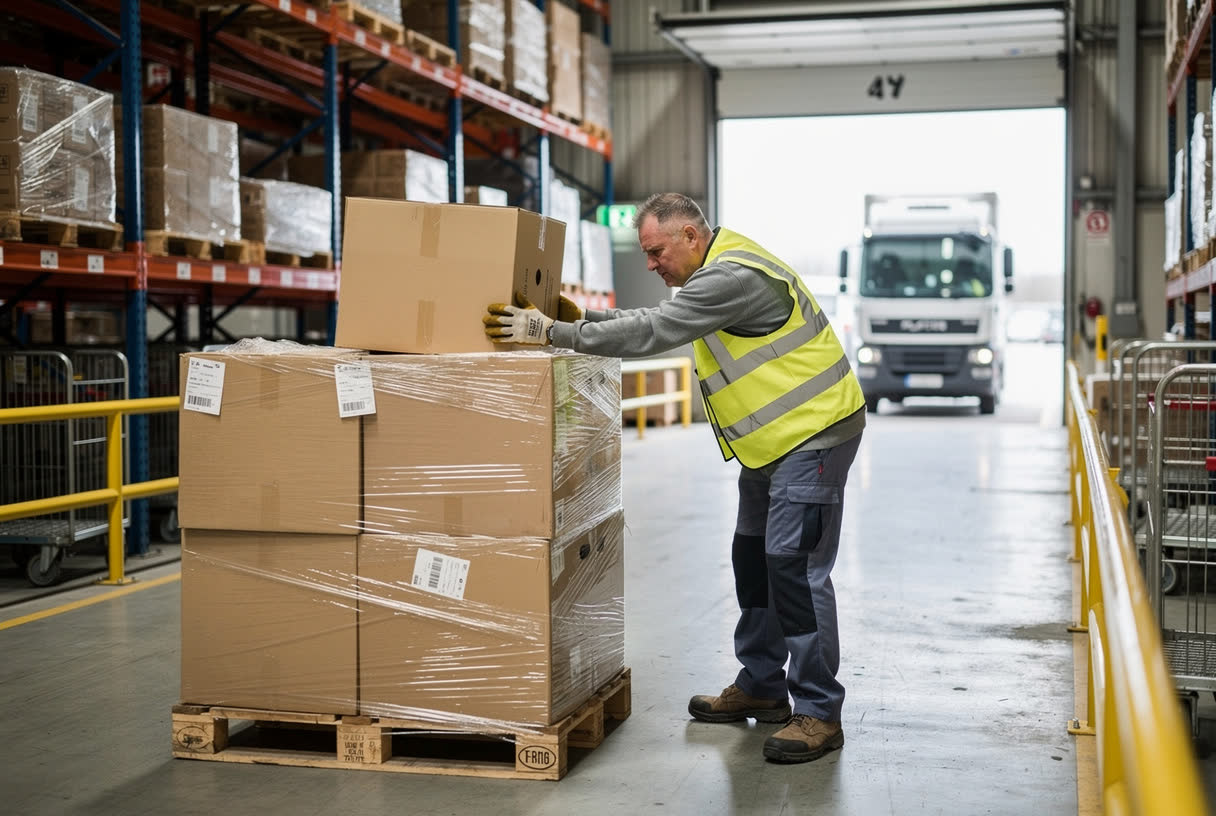
Manual handling means lifting, carrying, pushing or pulling a load by hand or by bodily force. In a warehouse, injuries can be caused by:

  • Heavy or awkward loads.
  • Bending, twisting and stretching too far.
  • Repetitive movements, and uncomfortable positions.
  • Using too much force, or poor technique.
  • Too few breaks.
  • A poor working environment.

Injuries often result from a combination of these. They may happen in a single incident, or develop over time from repeated strain.

Manual Handling Injuries

The most common injuries caused by poor manual handling are musculoskeletal disorders, or MSDs. These affect the back, the neck and shoulders, the arms and wrists, and the knees, ankles and feet.

The Health and Safety Executive, or HSE, estimates that hundreds of thousands of workers in Great Britain suffer from a work-related MSD every year.

Poor handling also causes strains, sprains, slipped discs, torn muscles, trapped nerves and fractures, and indirect injuries, such as cuts from a fall while carrying a load.

Assessing Manual Handling

The first step is to avoid manual handling where you can. Where it cannot be avoided, the Manual Handling Operations Regulations 1992 require you to assess the risks and reduce them. The assessment follows five steps:

  • Identify the risks, by watching the work and asking workers.
  • Decide who is affected, including anyone more vulnerable to injury.
  • Evaluate the risks, and put controls in place.
  • Record the findings. This is a legal requirement with five or more employees, and good practice in every case.
  • Review the assessment when tasks, equipment or people change.
The Load
The Load

To identify the hazards, look at four things: the load, the task, the individual and the environment.

For the load, consider its weight, size, shape and grip. Is it too heavy, bulky, slippery, sharp or unstable to handle safely?

As a general guide, a load above 20 to 25 kilograms is considered heavy, and should not be carried by one person without help or a handling aid. There is no single safe weight, though, and lighter loads can still cause injury.

Large loads, loads that are hard to grip, and liquids that shift can block the view and strain the body.

The Task
The Task

Look at how the task is done, and whether anything stops people moving safely. Poorly organised tasks cause strain, dropped loads and trips.

  • Frequent handling, or carrying loads too far, puts the body under strain. Allow time to rest and recover.
  • Twisting, overreaching, stooping and rushing all increase the risk.
  • Lifting above waist height, or reaching above the shoulders, weakens the grip.
  • Holding a load away from the body puts far more strain on the back. Keep it close to the waist.
The Individual
The Individual

People differ in their capability, so assess the individuals who do the work. Consider whether they have had enough training, and whether they have the strength and stamina the task needs.

Take extra care with people who may be more at risk, such as pregnant workers and new mothers, people with a medical condition or a history of back problems, and young workers. The risk of back problems also increases with age.

Check other factors too, such as PPE that restricts movement, or footwear that could cause a slip.

The Environment
The Environment

Look for features of the workplace that make handling more dangerous:

  • Tight spaces and narrow aisles, which force awkward postures.
  • Poor lighting, which hides slip and trip hazards.
  • Steep slopes, steps and changes in floor level.
  • Poor housekeeping, with spills and obstacles left in the way.
  • Very hot or cold conditions, which affect grip and concentration.

Improve the environment where you can: keep floors clear and even, provide good lighting, keep temperatures reasonable, and shorten the distance loads are carried.

Reducing the Risk
Reducing the Risk

Once you have found the hazards, choose suitable controls, and check regularly that they work and do not create new hazards. Options include:

  • Using mechanical aids to handle the load.
  • Job rotation, so that nobody does too much handling.
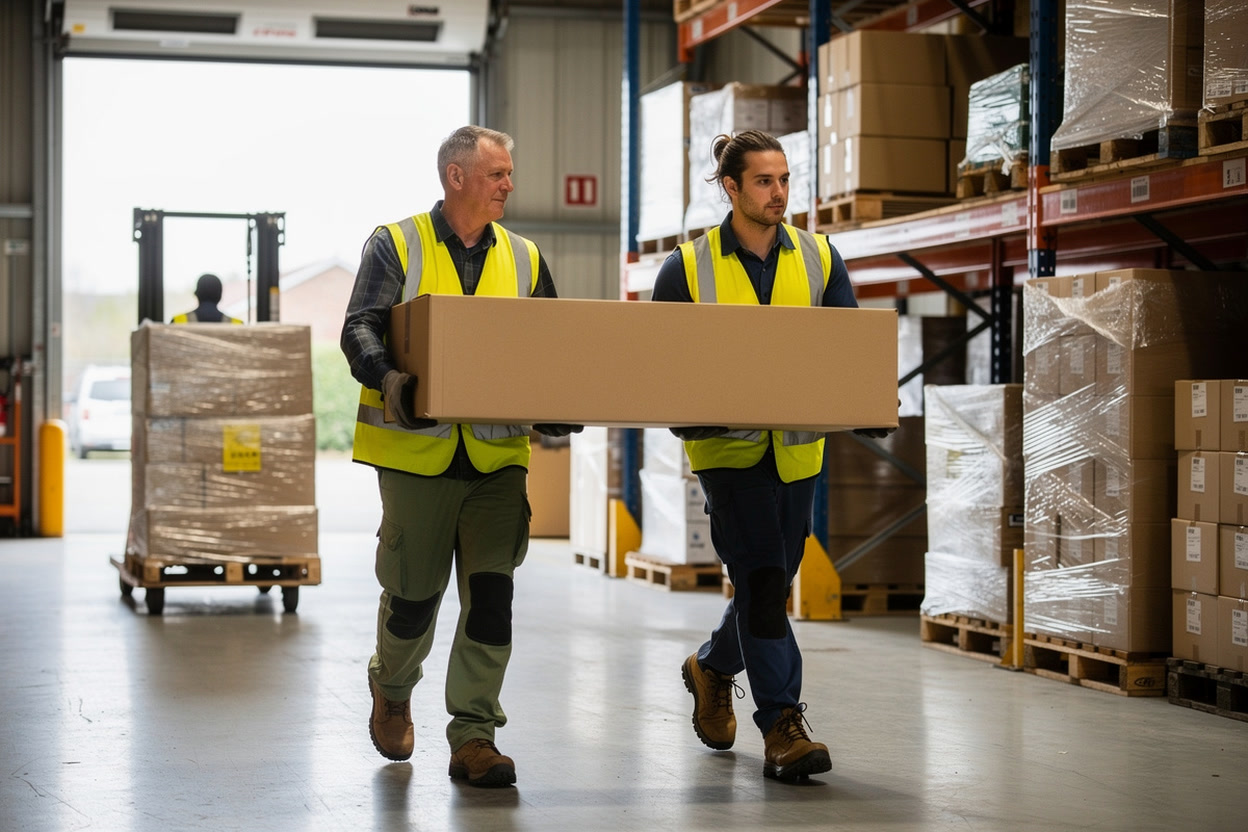
  • Team handling, for heavy or awkward loads.
  • Breaking loads into smaller, lighter loads.
  • Working with suppliers to change how goods arrive, such as on pallets, or in lighter packs.
  • Training, and health surveillance for people who do a lot of handling.
Suppliers, Rotation and Team Handling
Talk to suppliers if deliveries arrive unpalletised or in awkward shapes and weights.Rotate tasks so people have time to recover between lifts.Team lifting and splitting loads give better control of heavy or awkward items.
Suppliers, Rotation and Team Handling

Some of the most effective ways to reduce manual handling risk involve restructuring how the work is done, not just how people lift. Start with the supply chain. If goods regularly arrive loose instead of palletised, or in awkward shapes and weights, talk to the supplier about changing the way they are packed. If they cannot help, consider switching to a supplier whose deliveries are more suitable.

Next, look at the way work is shared. Job rotation moves people between tasks, which reduces repetitive strain and gives muscles time to recover between lifts. Team lifting shares the load between two or more workers and gives better control over items that are bulky or hard to grip, as long as the team plans the lift together. Splitting a heavy load into smaller ones makes each lift easier and safer. Whatever controls you choose, monitor them to make sure they work and do not create new problems, such as congestion in narrow aisles.

Safe Handling Technique

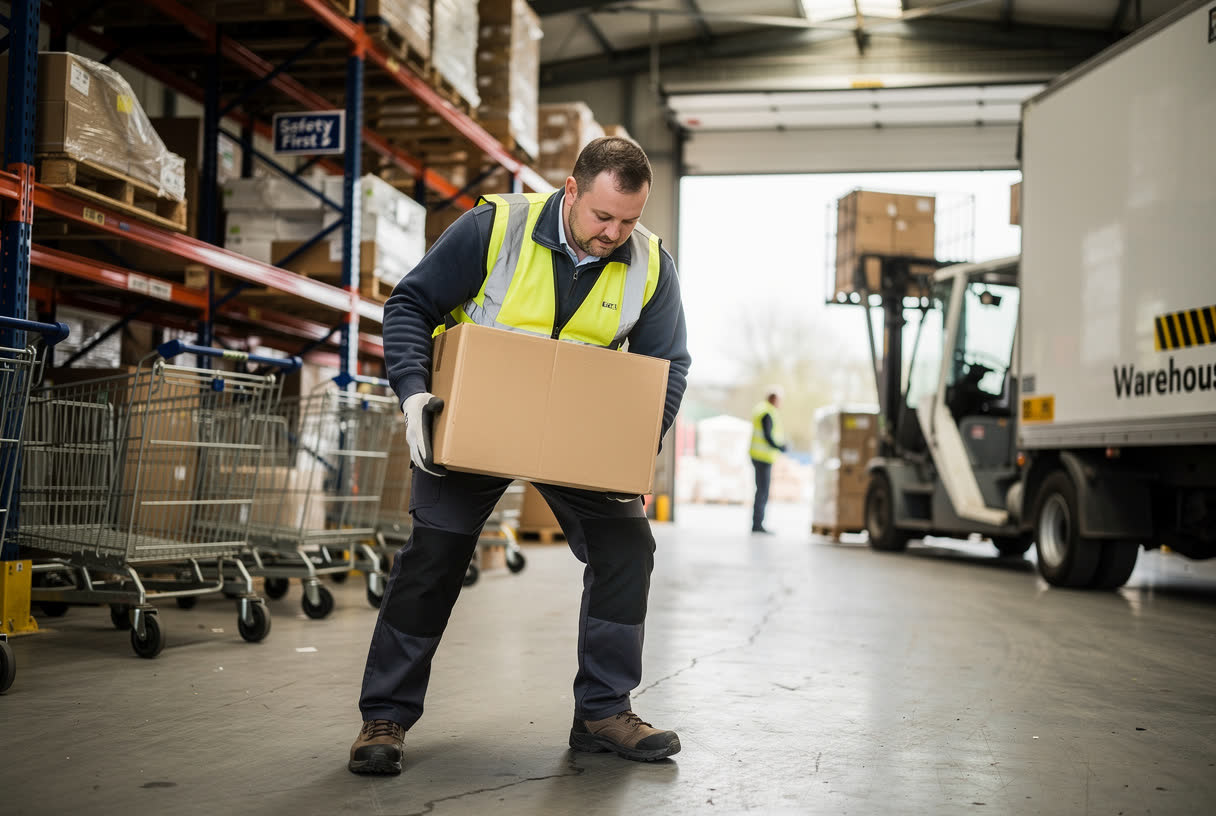
Training must teach safe technique for lifting, carrying, pushing and pulling:

  • Plan the lift. Know where you are going, and clear the route first.
  • Stand with your feet apart, around the load, and keep it close to your body.
  • Bend your knees, and use your legs rather than your back.
  • Do not twist. Turn by moving your feet, and keep looking ahead.
  • Move smoothly, and put the load down to adjust your grip if needed.
  • When pushing or pulling, use your body weight, keep a good footing and keep your back straight.
Mechanical Handling
Mechanical Handling

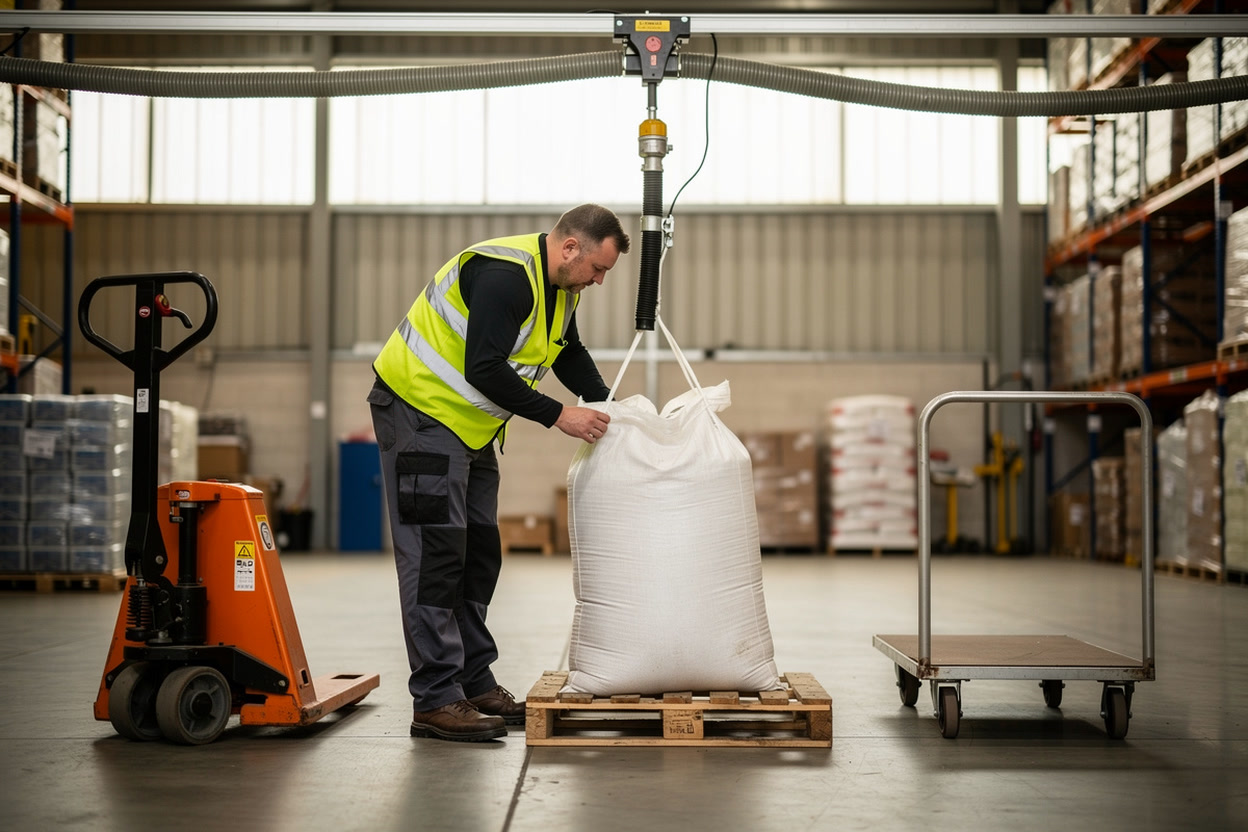
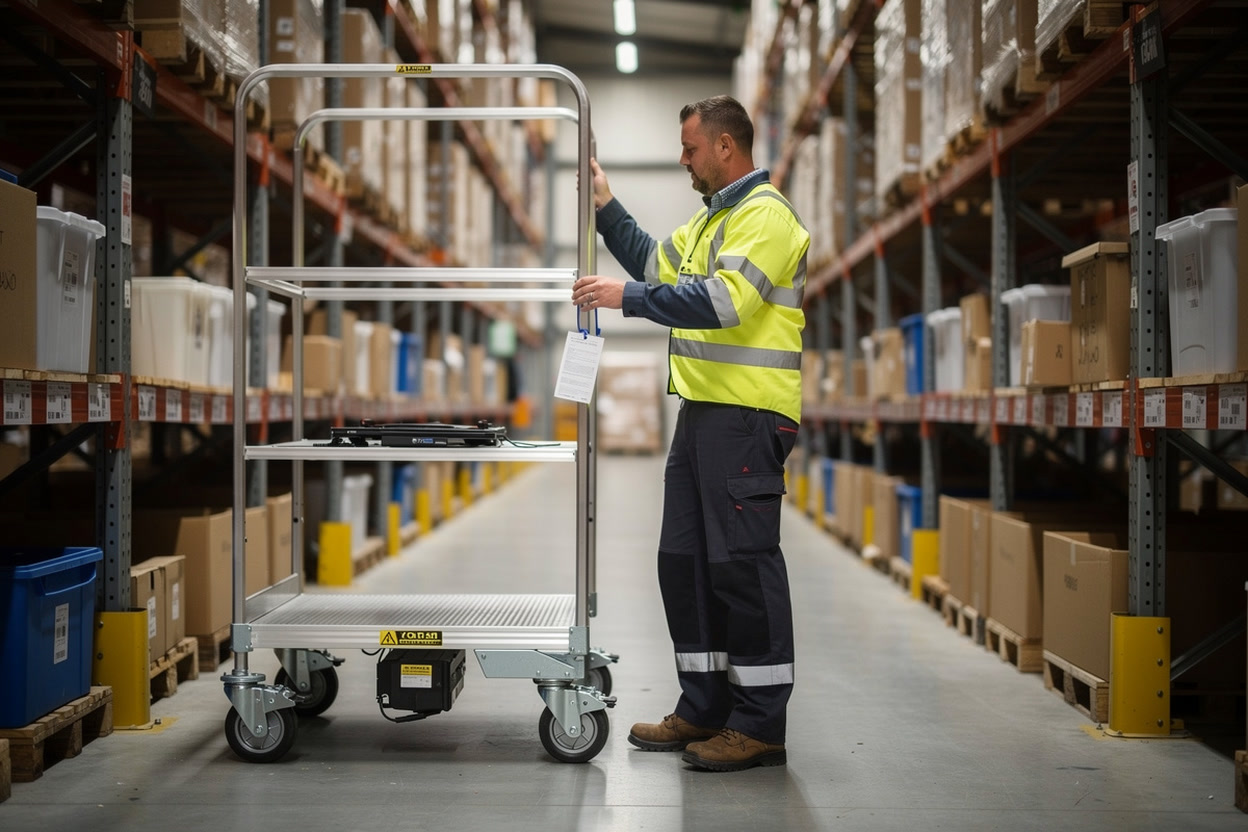
Where possible, replace manual handling with mechanical aids, such as roll cages, trolleys, pallet stackers, conveyors, vacuum hoists, tow tractors, reach trucks and forklift trucks.

Mechanical aids bring their own risks. Under the Provision and Use of Work Equipment Regulations 1998, known as PUWER, and the Lifting Operations and Lifting Equipment Regulations 1998, known as LOLER, you must make sure staff know how to use them safely, and that suitable controls are in place.

Roll Cages
Roll Cages

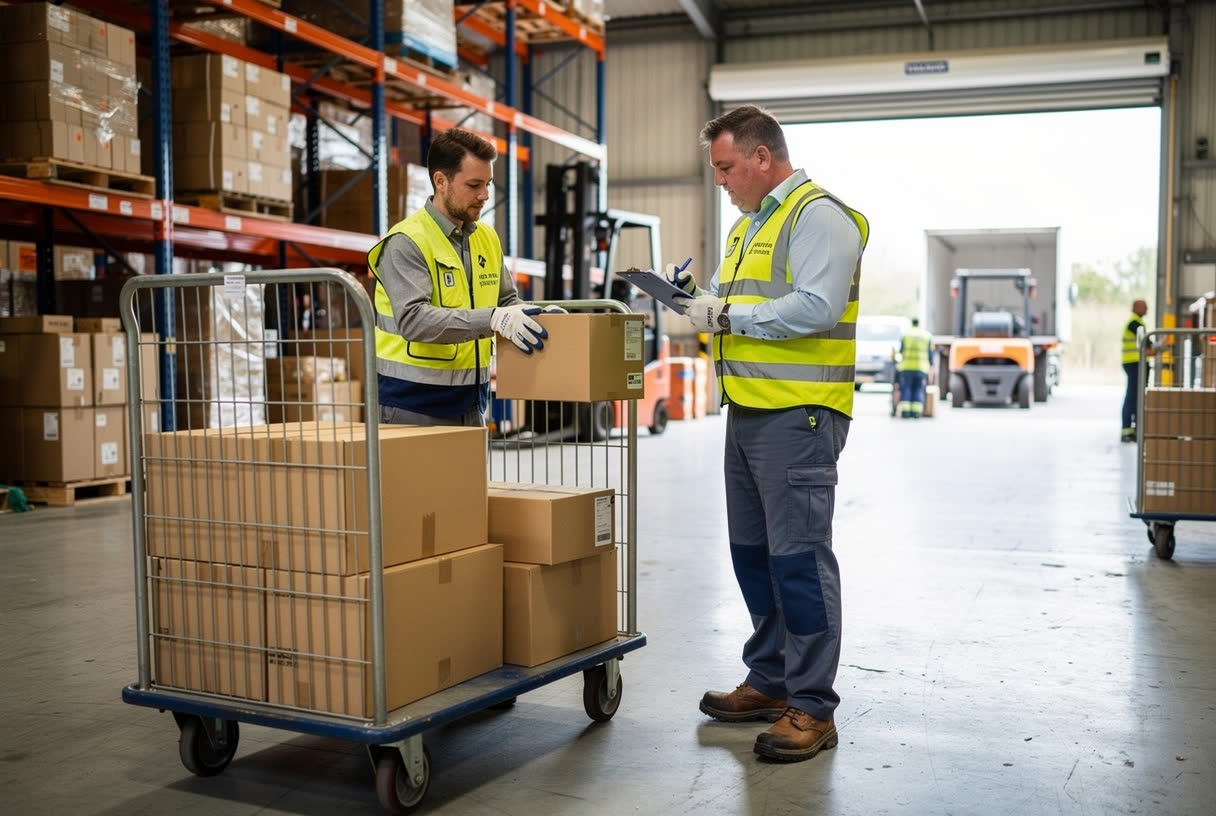
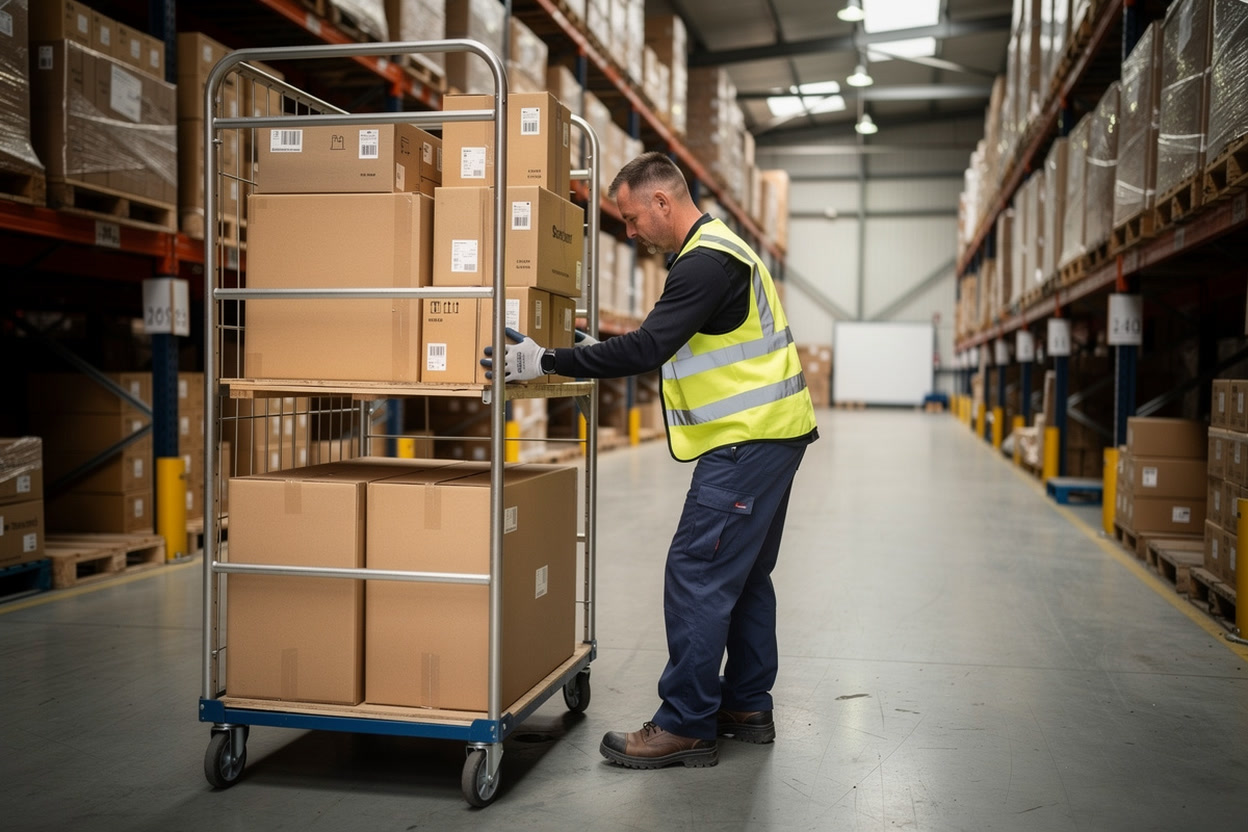
Roll cages can cause strain, crush injuries if they overbalance, trapped hands and feet, and falls from tail lifts. To use them safely:

  • Move one cage at a time, using the handles, at no more than walking speed.
  • Push rather than pull. Pushing causes less strain, and avoids running over your own feet.
  • Get help on ramps and uneven floors.
  • Put heavy items at the bottom, and never load above the load line.
  • Never climb on or ride a cage.

Choose cages with good handles, large well-maintained wheels, and a marked load height.

Choosing and Loading Roll Cages
A typical roll cage carries about 500 kg; never load beyond its limit or above eye level.Work in pairs on ramps and uneven ground, and wear gloves when assembling cages.Good cages have protective handles, marked load heights and large, well-maintained wheels.
Choosing and Loading Roll Cages

Roll cages are everywhere in warehouses, and small details make them much safer. A typical cage is designed to carry around 500 kilograms, although some carry more. Put heavier items at the bottom, never exceed the load limit, and never stack so high that the person pushing cannot see clearly ahead. Work in pairs when a cage has to go over a ramp or uneven ground, and where possible improve those surfaces so cages do not need to cross them at all.

Wear gloves when assembling cages, because fingers are easily trapped. Design matters too. Choose cages with clear markings showing the maximum load height, and handles that protect the hands and keep feet away from the wheels. Wheels made of materials such as nylon or polyurethane reduce noise, make the cage easier to move and protect the floor. High-quality castors with well-maintained bearings, placed near the corners, improve balance, and larger wheels need less force to move.

Other Handling Aids
Other Handling Aids
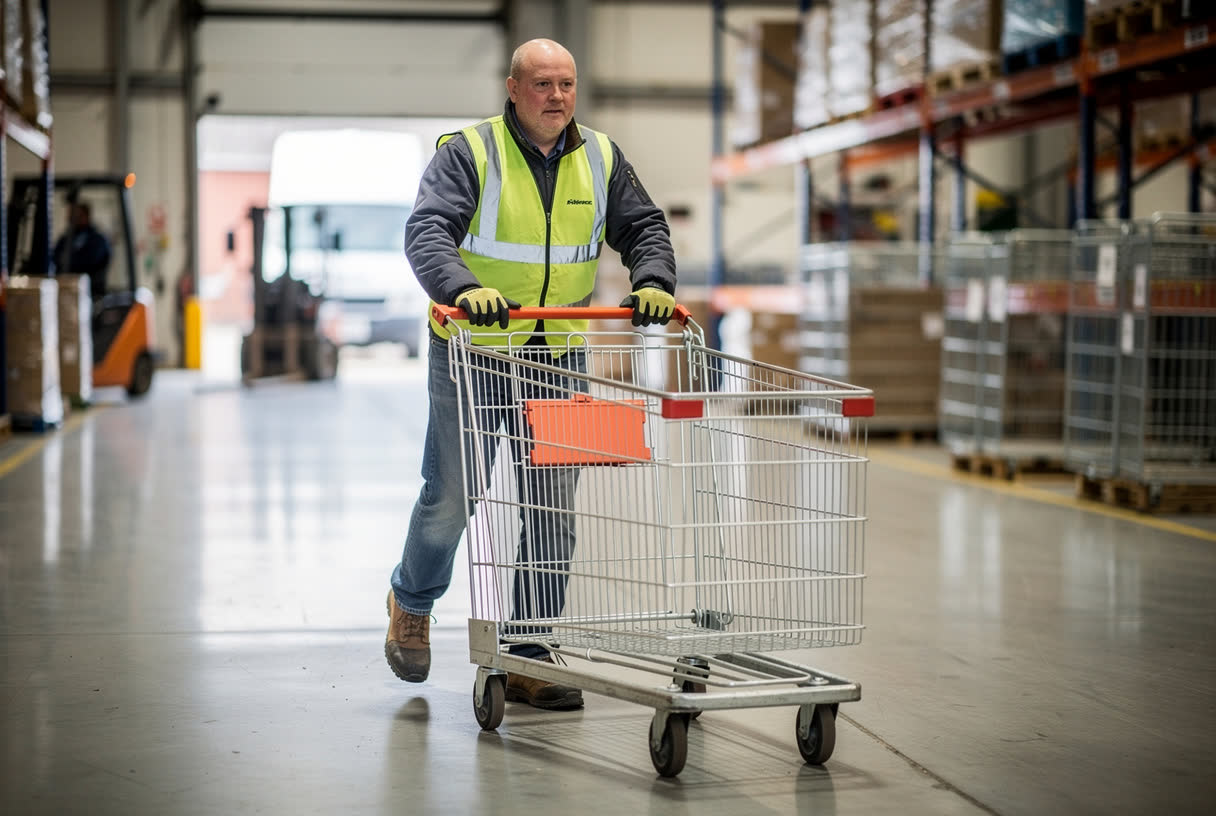
  • Trolleys: use them only on level surfaces, so they cannot run away, and never climb on them.
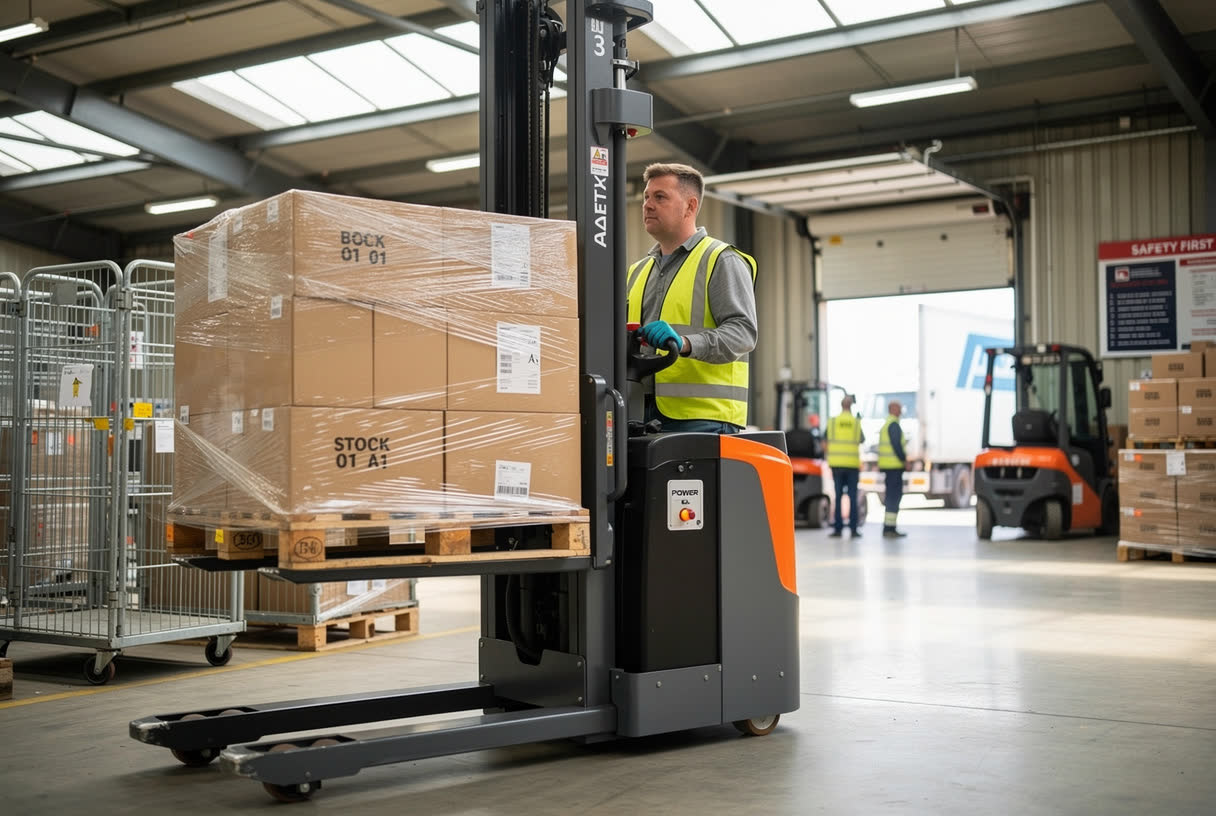
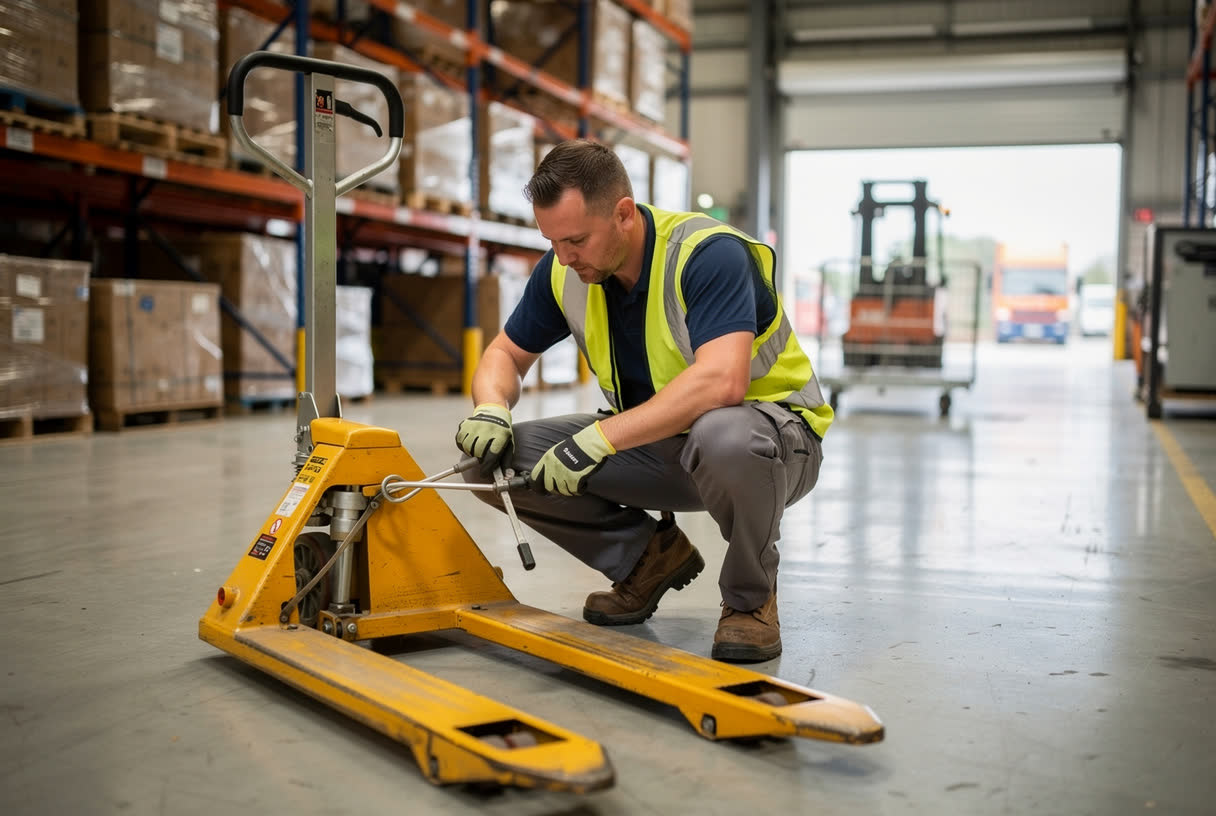
  • Pallet stackers: check the controls before use, secure the load, move slowly, and avoid loose clothing and jewellery.
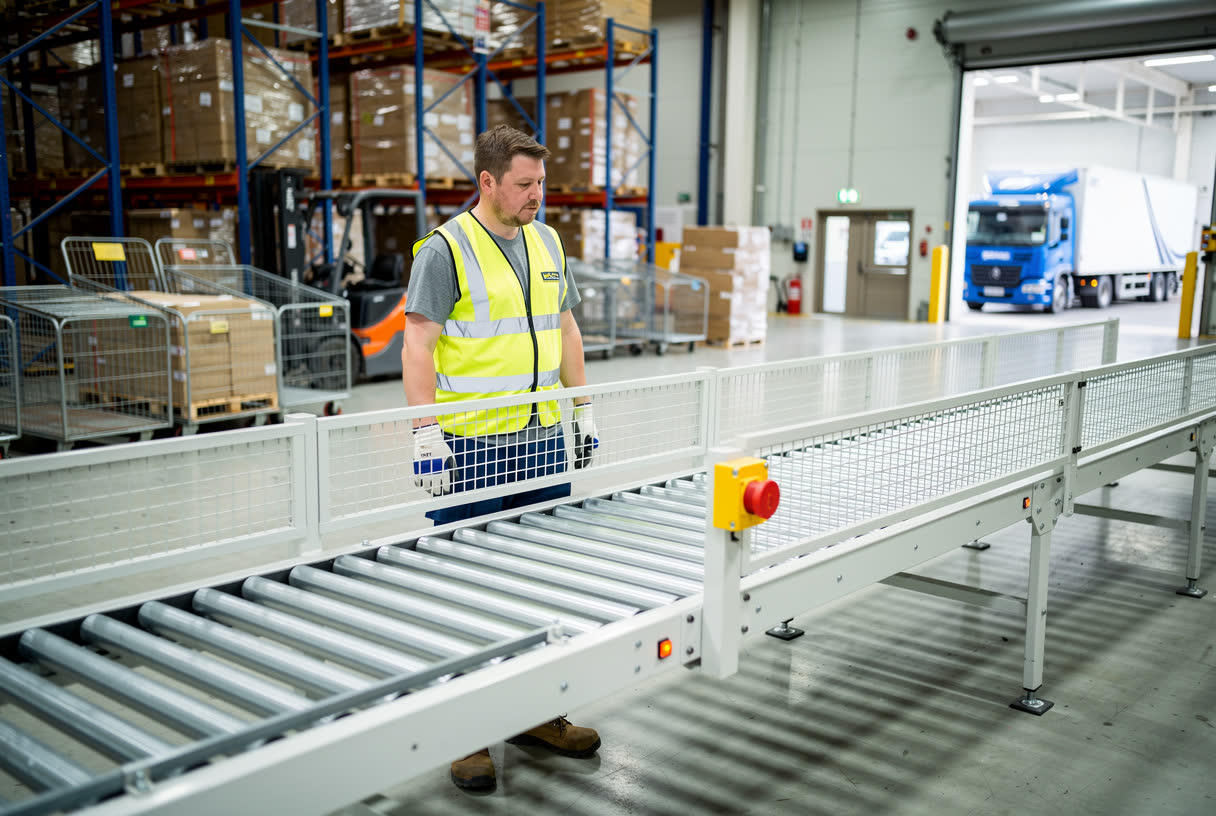
  • Conveyors: fit suitable guards, keep the emergency stop within easy reach, and never climb on or ride a conveyor.
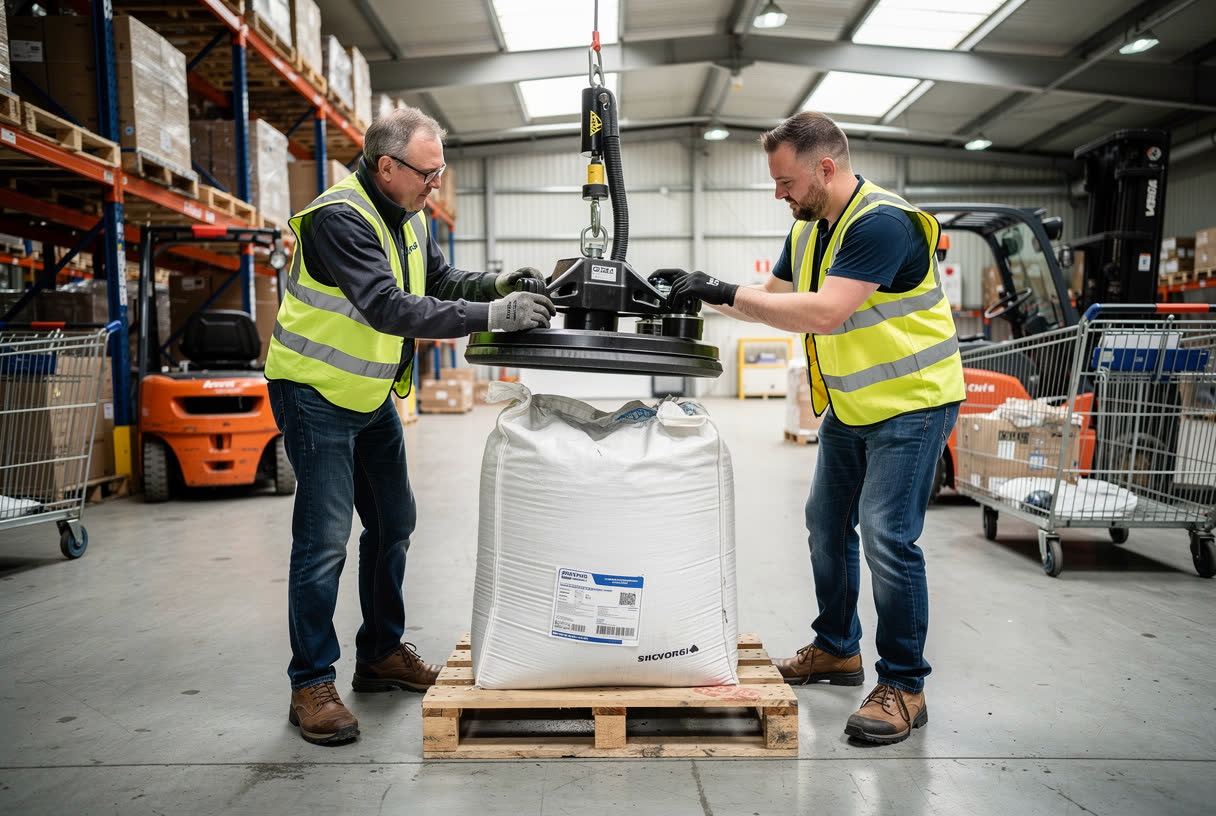
  • Vacuum hoists: train users to get a proper seal, inspect them regularly, and fit a warning device and a reservoir that holds the load if power fails.
  • Reach trucks, forklifts and tow tractors: only trained, authorised people may drive them.
Trolleys, Stackers and Vacuum Lifters in Detail
Strap loads securely and protect them from sharp edges.Never ride on trolleys or use them to gain height unless they are designed for it.Vacuum lifters need a warning indicator and a reserve that holds the load for five minutes if power fails.
Trolleys, Stackers and Vacuum Lifters in Detail

Each type of handling aid has its own points to watch. Trolleys must be designed for your environment and used only on flat, level floors, because on a slope they can roll away out of control. Workers must never ride on a trolley or stand on it to reach something, unless it was designed for that purpose. Before using a pallet stacker, check that the controls are working properly.

Strap loads securely with suitable accessories, and protect them from sharp edges, for example with shrink wrap. Move stackers slowly and carefully so the load does not shift, and keep loose clothing and jewellery away from the machine. Conveyors reduce lifting, but they can cause entanglement or throw objects off, injuring staff or damaging goods, so guards and an accessible emergency stop are essential. Vacuum lifting systems can drop a load if the seal fails, so they must have warning indicators and a backup reservoir able to hold the load for five minutes if the system fails.

General Rules for Mechanical Aids
  • Follow the manufacturer’s instructions.
  • Safe handling still matters: use good technique, keep routes clear and plan the move.
  • Make sure operators know the safe working load, and never exceed it.
  • Store and use lifting chains correctly, keep them dry, check them regularly, and never drive over them.
  • Check aids regularly for obvious faults, such as loose wheels, and know who to report faults to.
  • Arrange regular maintenance, and thorough examination of lifting equipment where the law requires it.
Working at Height
Working at Height

Falls from height are one of the biggest causes of deaths and serious injuries at work. The Work at Height Regulations 2005 cover all work at height, including using ladders and stepladders, working on mobile towers and platforms, working on the back of a lorry, and working near an edge, opening or fragile surface.

Work at height must be included in your risk assessment, and properly planned. Everyone who plans or does it must be competent, and trained to use the equipment.

Working Safely at Height

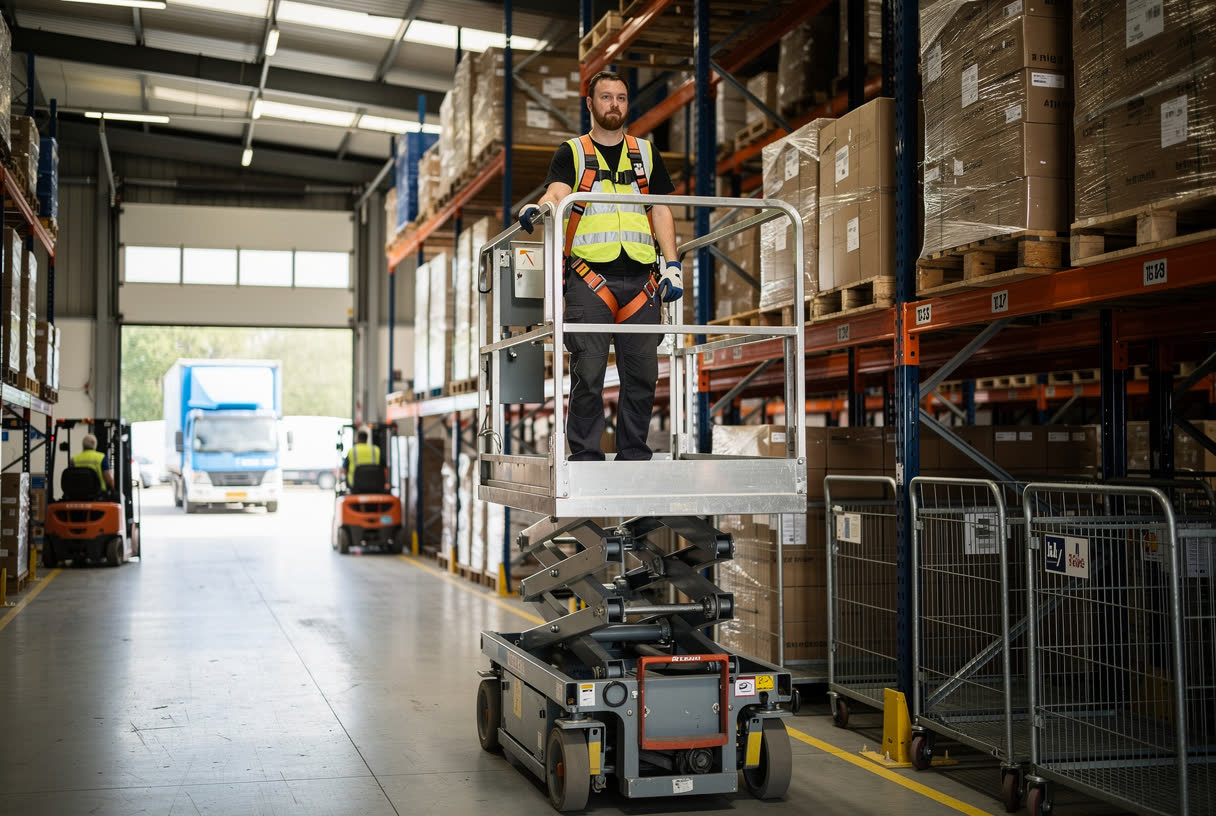
Avoid work at height where you can, for example by using equipment that reaches high shelves. Where it is needed:

  • Never climb racking, or ride on equipment not designed to lift people.
  • Use platforms with guardrails, and fit guardrails to tail lifts.
  • Do not overstock high shelves, and stop tools and items from falling.
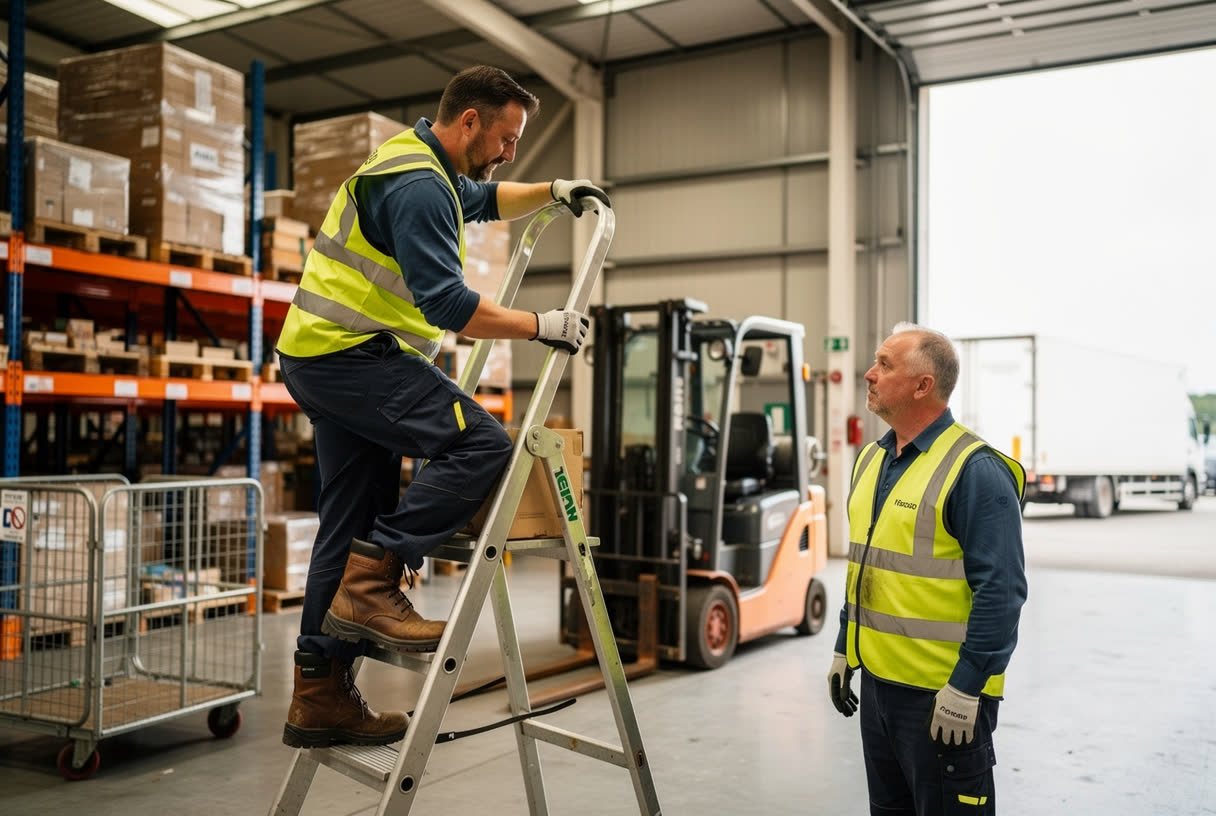
  • Use ladders only for short tasks, maintain three points of contact, and stay off the top three rungs of a leaning ladder.
  • Use equipment that is properly made, with the UKCA or CE mark where required.
Equipment That Must Carry a Conformity Mark
MEWPs, suspended platforms and cradles must carry a conformity mark.So must lifting accessories used to lift people, and harnesses and connectors.The mark shows the item meets essential health and safety requirements.
Equipment That Must Carry a Conformity Mark

Certain types of work at height equipment must display a conformity mark, the UKCA or CE mark, showing that the item was manufactured to essential health and safety requirements and is supplied with a declaration of conformity. This applies to mobile elevating work platforms, suspended access platforms and cradles, lifting tools and accessories used to lift people, and personal protective equipment such as safety harnesses and connectors.

Check for the mark when equipment is bought or hired, and do not use any of these items without it. Good practice at height goes beyond the equipment. Secure tools when working at height, for example with a tool belt. Provide proper means of access, such as stepladders or industrial stairs with secure handrails. Avoid carrying loads up ladders or stairs, and use mechanical lifting instead.

Keep time on a ladder short, under about thirty minutes, and when working on the back of a lorry, make sure no one stands underneath a tail lift platform.

Summary

In this module, you have learned that:

Musculoskeletal disorders are the most common injury from poor manual handling, and loads over 20 to 25 kilograms are considered heavy.

Mechanical aids reduce handling, but must be used correctly: push roll cages, one at a time.

Work at height must be avoided where possible, and properly planned and controlled where it is not.

In the next module, we will look at onsite vehicle safety.

Knowledge Check
What is the safe way to move a roll cage?
Select one answer, then press Check.
Pull it, so you can see where it is going
Move two cages together to save journeys
Ride on it along long, level aisles
Push it rather than pull it, one cage at a time
Correct. Push one cage at a time. Pushing puts less strain on the body and keeps the cage away from your feet.
Not quite. Think about which method puts the least strain on your body and keeps you in control. Try again.
Next Module →Answer the question to unlock the next module.
Page 1 of 23