← Exit
Module 9 · Cleaning and Disinfection0% complete · 13 slides left
Level 2 Food Hygiene and Safety for Manufacturing
Module 9
This course contains audio. Use headphones in public places.
Introduction
Introduction

Cleaning removes the dirt, grease and food residues that bacteria and pests feed on. A clean site reduces the risk of contamination, and helps the business meet the law.

This module explains the difference between cleaning and disinfection, the six stages of cleaning, cleaning schedules, and how to recognise and prevent pests.
In This Module
In This Module

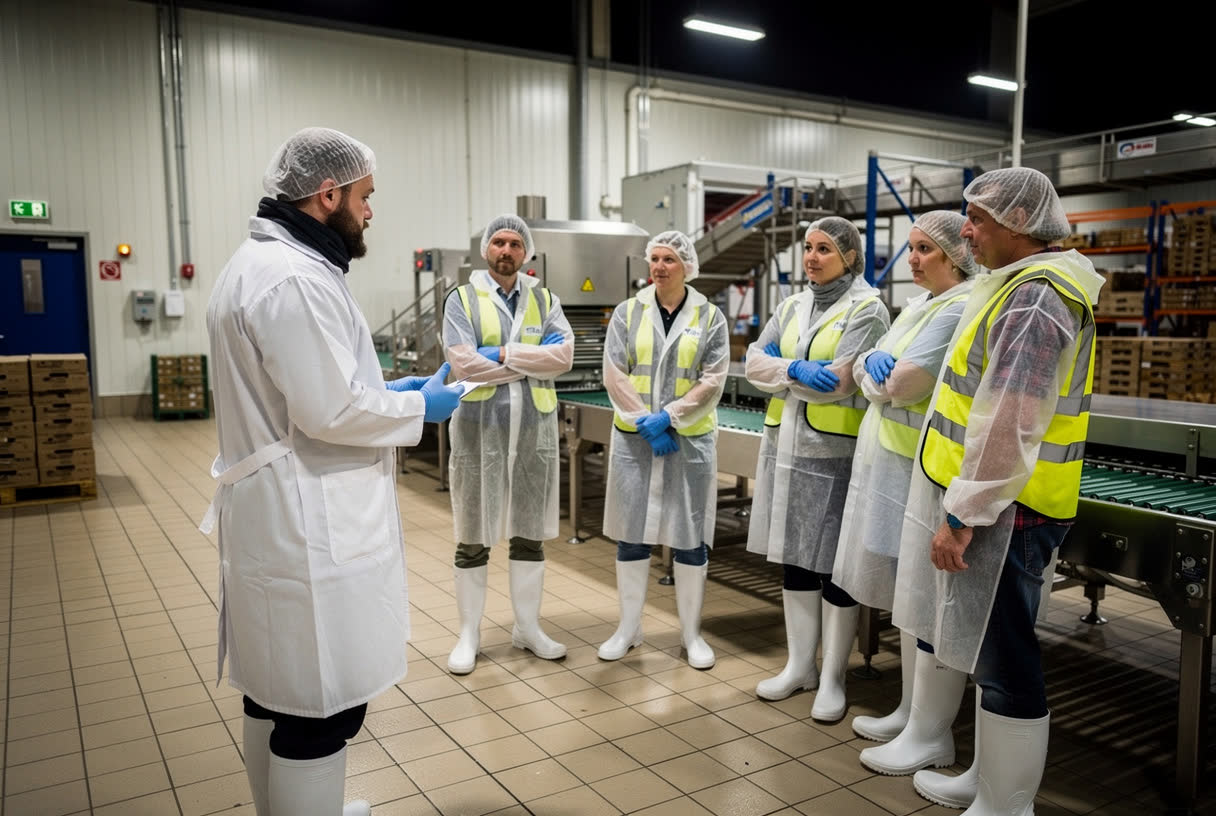
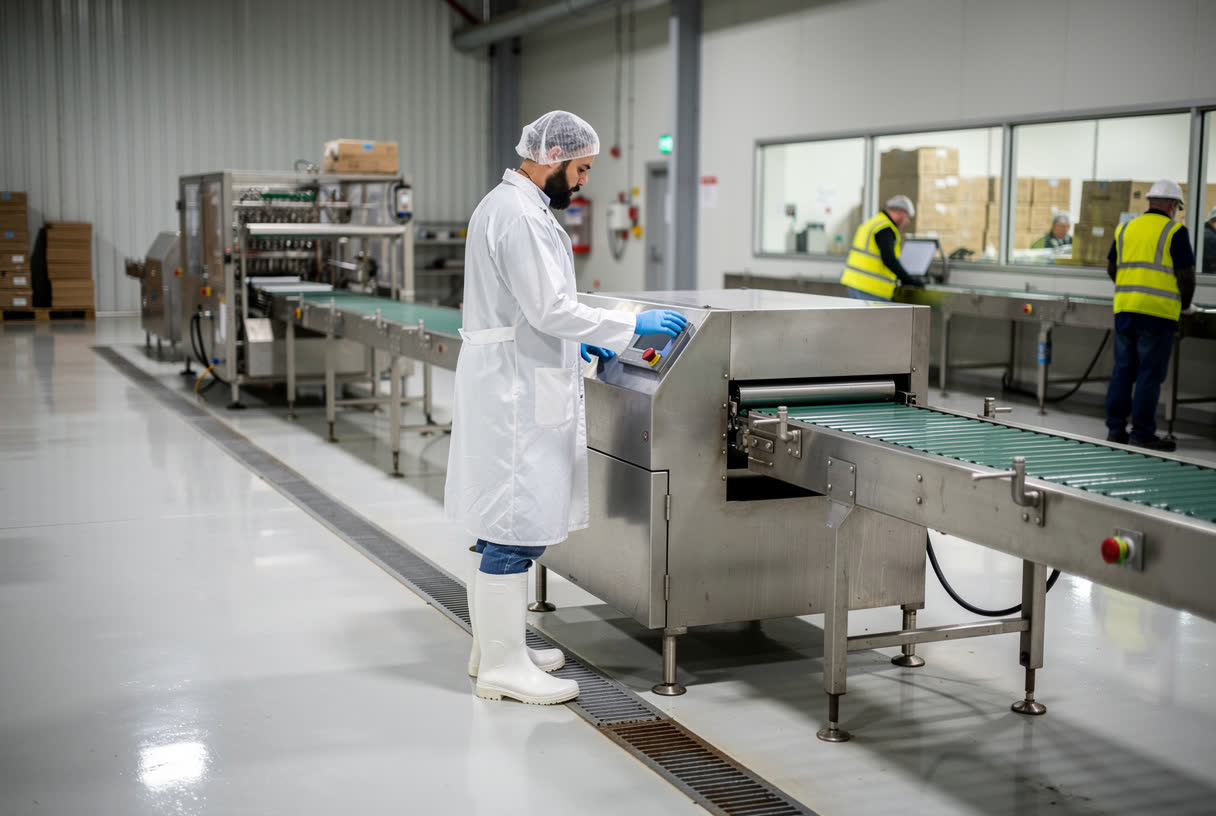
Cleaning is a team effort, whether you work in production or on a dedicated hygiene team. This module covers:

  • Why we clean.
  • Cleaning and disinfection.
  • The six stages of cleaning.
  • Using cleaning chemicals safely.
  • Clean as you go.
  • Cleaning schedules and checks.
  • Washing equipment.
  • Pests, and how to keep them out.
Why We Clean
Why We Clean
  • To remove dirt, grease and food residues, so bacteria cannot grow.
  • To prevent cross-contamination, including allergen cross-contamination between products.
  • To remove the food debris that attracts pests.
  • To reduce the risk of physical contamination.
  • To keep the site safe and pleasant to work in.
  • To meet the law, and pass inspections and customer audits.
Cleaning and Disinfection

Cleaning and disinfection are not the same:

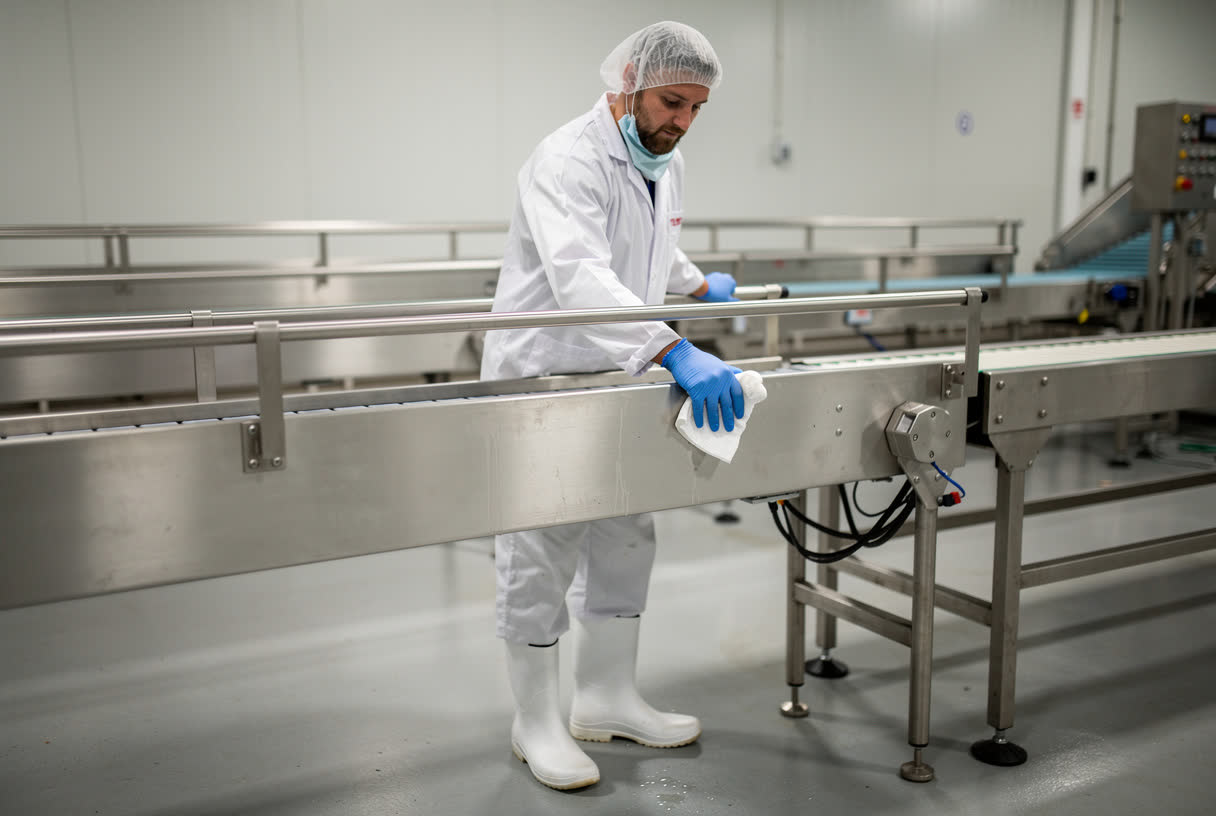
  • Cleaning removes visible dirt, grease and food debris, using hot water and detergent.
  • Disinfection reduces bacteria to a safe level, using heat or chemical disinfectants.

Disinfectant cannot work properly through dirt and grease, so food contact surfaces must be cleaned first, then disinfected. Always follow the correct contact time, which is how long the disinfectant must stay on the surface to work.

The Six Stages of Cleaning
  • Pre-clean: remove loose debris and food waste.
  • Main clean: wash with hot water and detergent to remove grease and dirt.
  • Rinse: remove the detergent and loosened dirt.
  • Disinfect: apply disinfectant, or heat, for the correct contact time.
  • Final rinse: remove the disinfectant, where the instructions require it.
  • Dry: allow to air dry, or use disposable paper towels.

Equipment must be switched off and isolated before it is taken apart for cleaning.

Using Cleaning Chemicals Safely
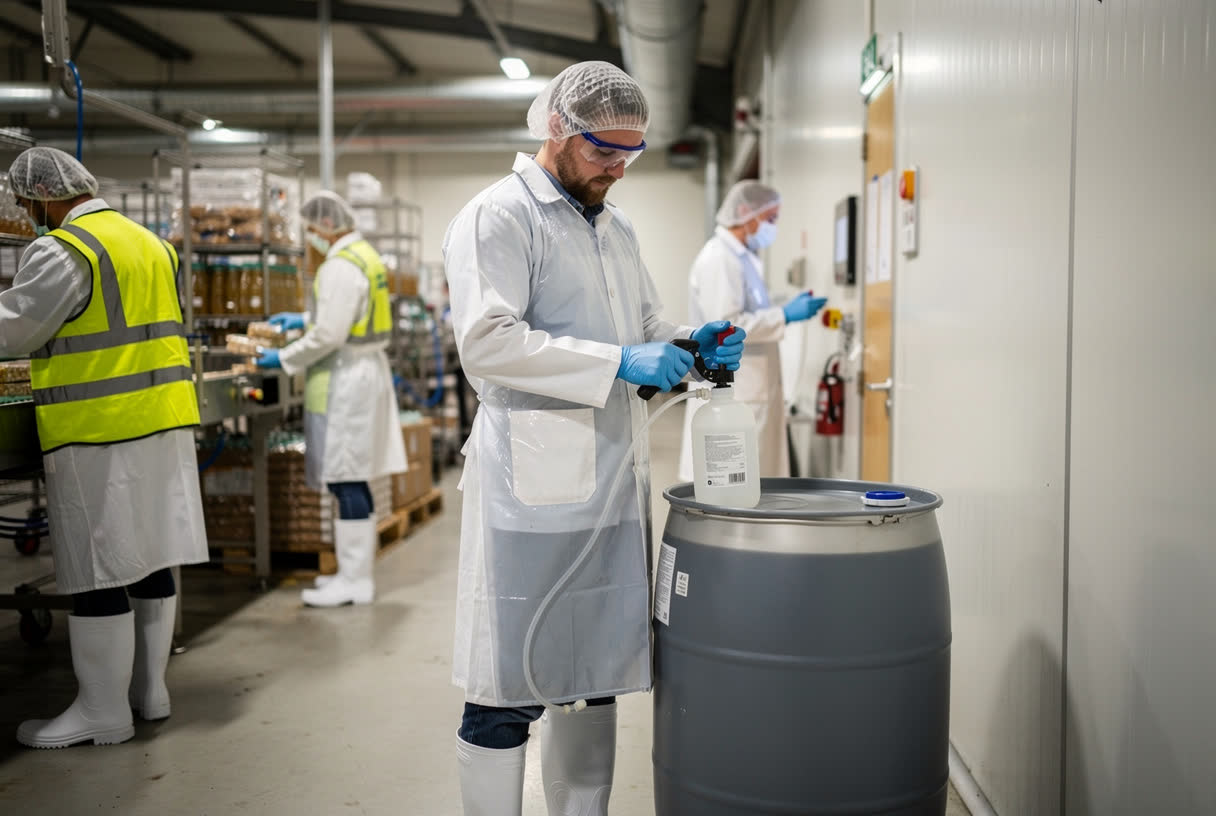
  • Use only the approved chemicals for each task, at the correct dilution.
  • Wear the protective equipment shown on the label and the safety data sheet, such as gloves, goggles or a face visor.
  • Never mix chemicals, as some combinations give off dangerous gases.
  • Keep chemicals in their original, labelled containers, and store them away from food.
  • Cover or remove food and packaging before cleaning nearby.
  • Report any spill or leak straight away.
Clean As You Go
Clean As You Go

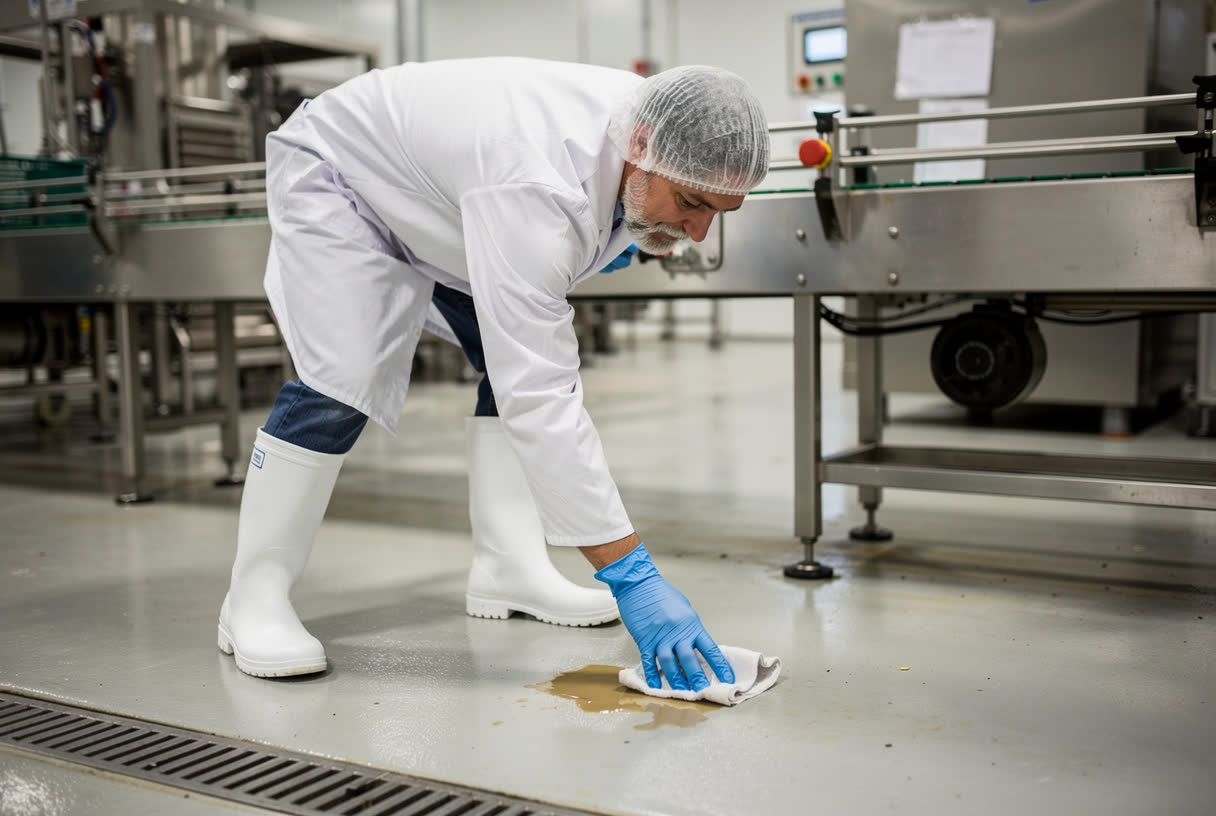
Clean as you go means cleaning and tidying continuously while you work, rather than leaving it all to the end of the shift.

Deal with spills straight away, remove waste regularly, and keep your work area tidy.

Cleaning as you go keeps surfaces and equipment hygienic, prevents a build-up of dirt, reduces slips, and lowers the risk of cross-contamination.

Cleaning Schedules and Checks

A cleaning schedule sets out what must be cleaned, how, how often, with which chemicals and equipment, and by whom.

It makes sure nothing is missed, and the signed records support the business’s due diligence.

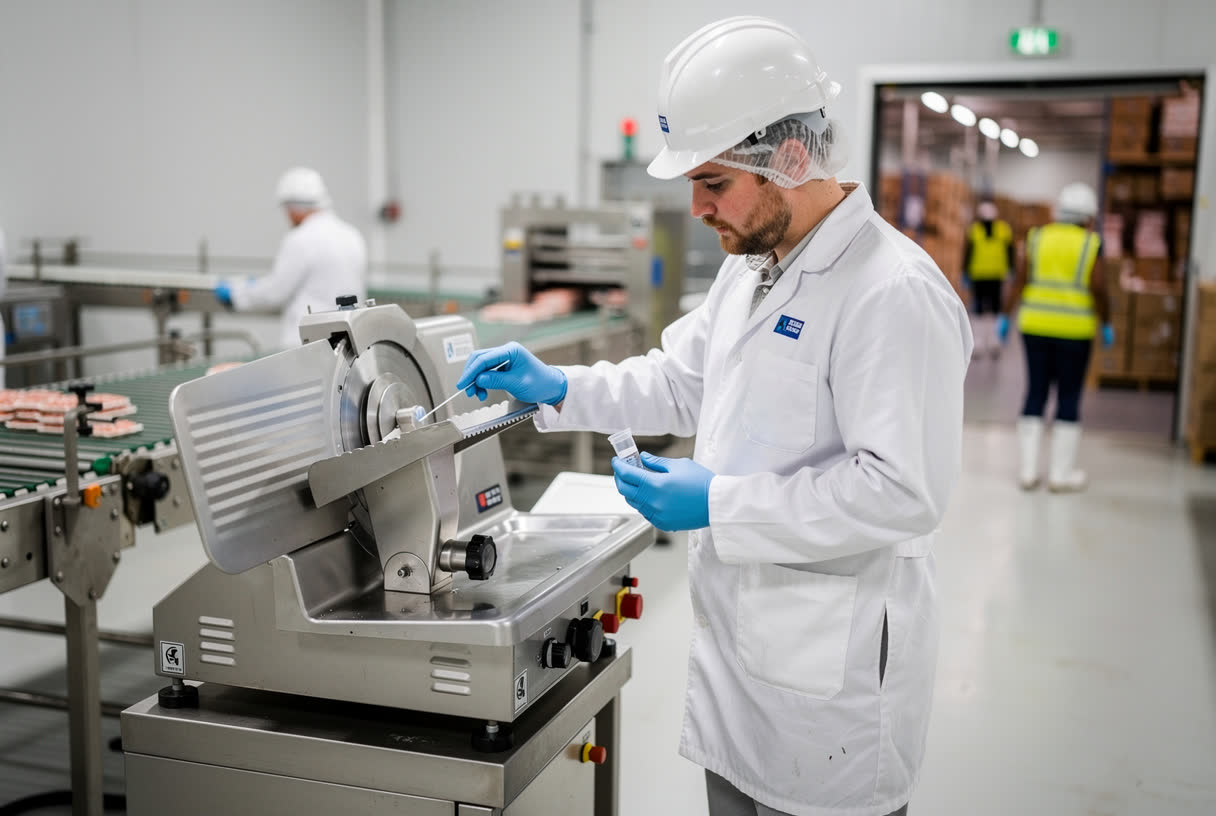
Cleaning is then checked. A supervisor or technician inspects the area before production starts, and surfaces may be swabbed to confirm they are clean, especially after an allergen clean-down.

Washing Equipment
Washing Equipment

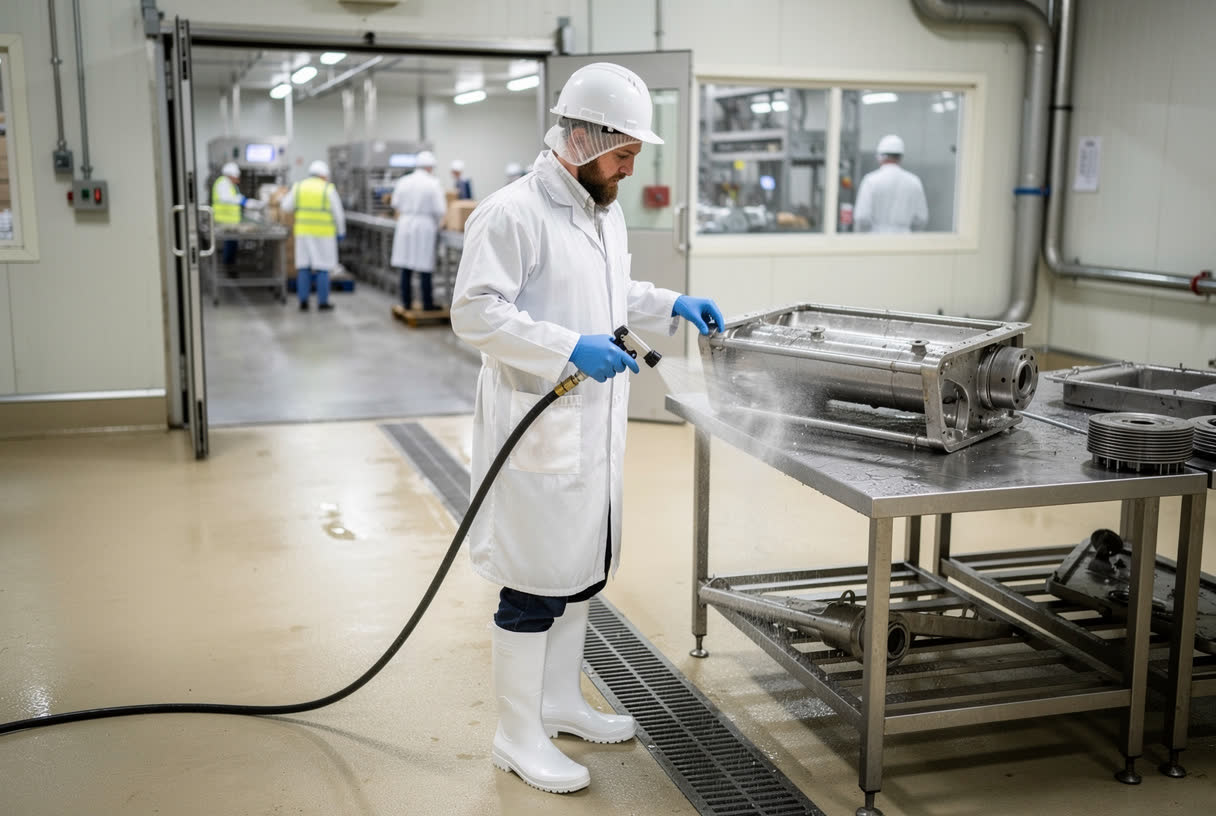
Equipment washers and dishwashers clean and disinfect using high temperatures. Some production equipment, such as tanks and pipework, is cleaned in place by automatic systems.

When washing by hand, use hot water and detergent, then disinfect, and leave items to air dry, rather than using cloths or tea towels.

Use colour-coded cleaning equipment for different areas, and never take it from a raw area into a ready-to-eat area.

Pests
Pests

Pests such as rats, mice, cockroaches, flies, stored-product insects and birds spread disease and contaminate food. Look out for:

  • Droppings, gnaw marks or smear marks.
  • Damaged packaging, spilt food or holes in sacks.
  • Nests, webbing, larvae or dead insects.
  • Feathers, or birds inside the building.
  • Unusual smells or noises.
Preventing Pests
Preventing Pests
  • Keep the site clean, and free of food debris and spillages.
  • Store food covered, off the floor and away from walls.
  • Keep bins covered, and remove waste regularly.
  • Keep doors shut, and fly screens in place.
  • Report gaps, holes and damage to the building.
  • Check deliveries for signs of pests.
  • Report any sign of pests to your supervisor immediately, and never move bait stations.

Most manufacturers use a professional pest control contractor, who visits regularly.

Summary

In this module, you have learned that:

Cleaning removes dirt and grease, and disinfection reduces bacteria to a safe level. Food contact surfaces need both, in that order.

Clean as you go, and follow the written cleaning schedule, so nothing is missed and due diligence can be shown.

Pests spread disease, so keep the site clean, store food correctly, manage waste, and report any signs at once.

You have now completed all 9 modules. When you are ready, go to the final test.

Knowledge Check
Which of these correctly describes cleaning and disinfection?
Select one answer, then press Check.
They are exactly the same thing.
Cleaning removes dirt, and disinfection reduces bacteria to a safe level.
Disinfection removes dirt, and cleaning kills all bacteria.
Neither is needed if a surface looks clean.
Correct. Cleaning removes dirt and grease, then disinfection reduces bacteria to a safe level.
Not quite. Remember the order: clean first to remove dirt, then disinfect to deal with bacteria. Try again.
Go to the Test →Answer the question to unlock the test.
Page 1 of 14