← Exit
Module 1 · Introduction to Lifting Operations0% complete · 26 slides left
LOLER
LOLER
Module 1
This course contains audio. Use headphones in public places.
Introduction
Introduction

Lifting equipment is found in almost every type of workplace: factories, construction sites, warehouses, shops, care homes, hospitals, offices and catering kitchens.

Used correctly, it brings real benefits. It removes or greatly reduces the need to handle heavy loads by hand, which lowers the risk of manual handling injuries.

But lifting equipment that is chosen, used or maintained badly can kill or seriously injure people. The law applies to every lifting operation carried out at work, including work by charities and other not-for-profit bodies, and lifting done by people working in private homes.

Course Aims
Course Aims

By the end of this course, you will understand:

  • The main duties under LOLER, and other relevant legislation.
  • The main risks of lifting operations and equipment, and how to control them.
  • How to carry out a risk assessment of lifting operations.
  • How to select, position and install lifting equipment safely.
  • How lifting operations should be planned and supervised.
  • Safe working loads, and why they must never be exceeded.
  • Thorough examinations, inspections and pre-use checks.
What Is LOLER?
What Is LOLER?

LOLER stands for the Lifting Operations and Lifting Equipment Regulations 1998. It is the main law on the safety of lifting operations and lifting equipment in Great Britain.

It requires employers, and others who have control of lifting equipment, to ensure:

  • Safe selection, strength and stability of lifting equipment and accessories.
  • Correct marking, examination and maintenance.
  • Proper organisation, planning and supervision of lifting operations, to keep users and other people safe.
In This Module
In This Module

In this module, you will learn about:

  • Key terms: lifting operation, lifting equipment and load.
  • Who has duties under the law.
  • The general duties of employees.
  • Other relevant legislation.
  • Lifting equipment and lifting accessories.
  • Equipment that falls outside the lifting rules.
  • The main risks of lifting operations.
Key Terms
Key Terms

There are three key terms you need to know:

  • A lifting operation is an operation concerned with the lifting or lowering of a load.
  • Lifting equipment is any work equipment used for lifting or lowering loads. This includes the accessories and attachments used for anchoring, fixing or supporting it.
  • A load is anything lifted or lowered by lifting equipment. It may be materials, people or animals, or a combination of these.
Who Has Duties?
Who Has Duties?

The law places duties on employers, and on others such as contractors, who have any control over lifting equipment, the way it is used, or the people who use it.

  • This includes every business whose employees use lifting equipment, whether the equipment is owned or hired.
  • Self-employed people have duties for the lifting equipment and accessories they use at work.
  • If an employee brings their own lifting equipment to work, the legal duty still rests with their employer.

The aim is that lifting equipment is safe, so that people at work and anyone else who could be affected are protected.

Further Legal Requirements

LOLER also requires that:

  • Lifting operations are properly planned and supervised by a competent person, meaning someone with suitable qualifications, training, experience and skills.
  • Reports of thorough examinations are provided and kept, and any defects reported are put right within the time stated in the report.
  • Where a defect involves an existing or imminent risk of serious personal injury, the competent person sends a copy of the report to the enforcing authority: the Health and Safety Executive, or HSE, or the local authority.
Duties of Employees
Duties of Employees

LOLER places duties on employers rather than employees. However, under the Health and Safety at Work etc. Act 1974, every employee must take reasonable care of their own safety and that of others. Employees must:

  • Co-operate with the health and safety procedures and controls their employer puts in place.
  • Use work equipment correctly, in line with the training and instructions given.
  • Never misuse or interfere with anything provided for safety, such as guards or protective equipment.
  • Report any hazard or defect to their employer or line manager straight away.
Other Relevant Legislation

The Health and Safety at Work etc. Act 1974 sets out the general duties for all work activities. Employers must ensure, so far as is reasonably practicable, the health, safety and welfare of their employees, and of other people affected by their work, such as members of the public.

The Act also places duties on manufacturers and suppliers, including suppliers of lifting equipment and accessories.

The Management of Health and Safety at Work Regulations 1999 require every employer to assess the risks and put suitable controls in place. This is the risk assessment, which we look at in the next module.

PUWER
PUWER

Lifting equipment is work equipment. So it must also meet the Provision and Use of Work Equipment Regulations 1998, known as PUWER.

PUWER requires all work equipment to be:

  • Suitable for its intended use.
  • Properly maintained in a safe condition.
  • Used, supervised or managed only by people who have received adequate information, instruction and training.

Where you need to know more about these duties, a dedicated PUWER course is available.

Examples of Lifting Equipment

The lifting rules cover a wide range of equipment. Examples include:

  • Cranes, such as mobile cranes, overhead travelling cranes and tower cranes.
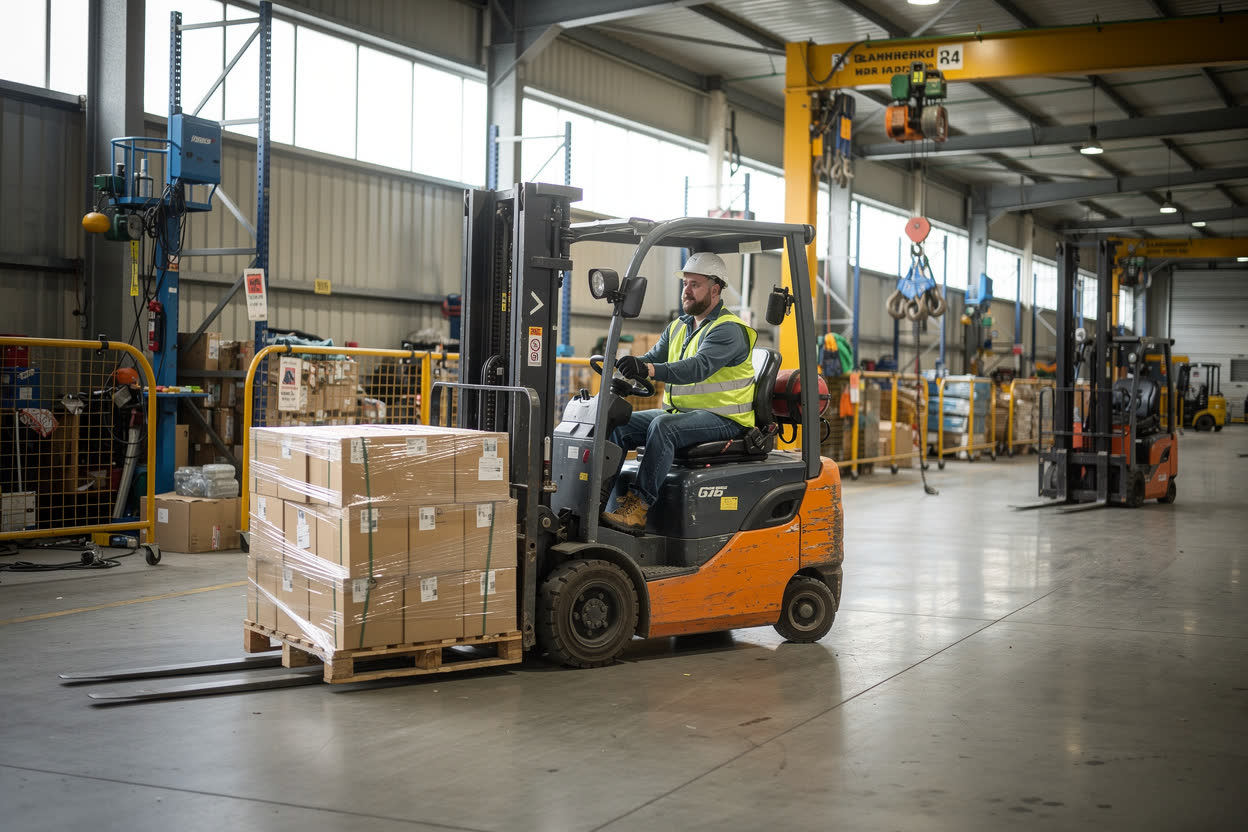
  • Hoists, and forklift trucks of all types.
  • Simple systems, such as a rope and pulley used to raise a bucket on site, or a dumb waiter in a restaurant.
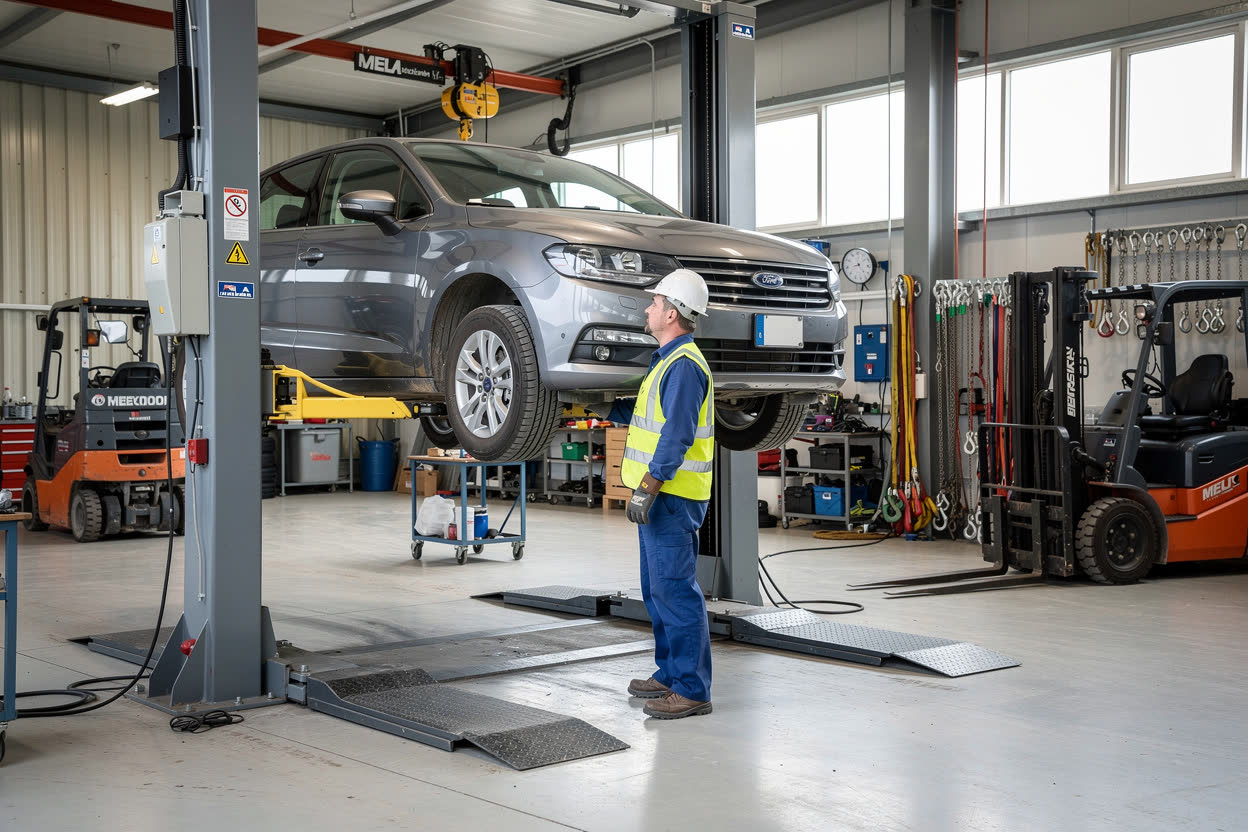
  • Vehicle inspection hoists, and vehicle tail lifts.
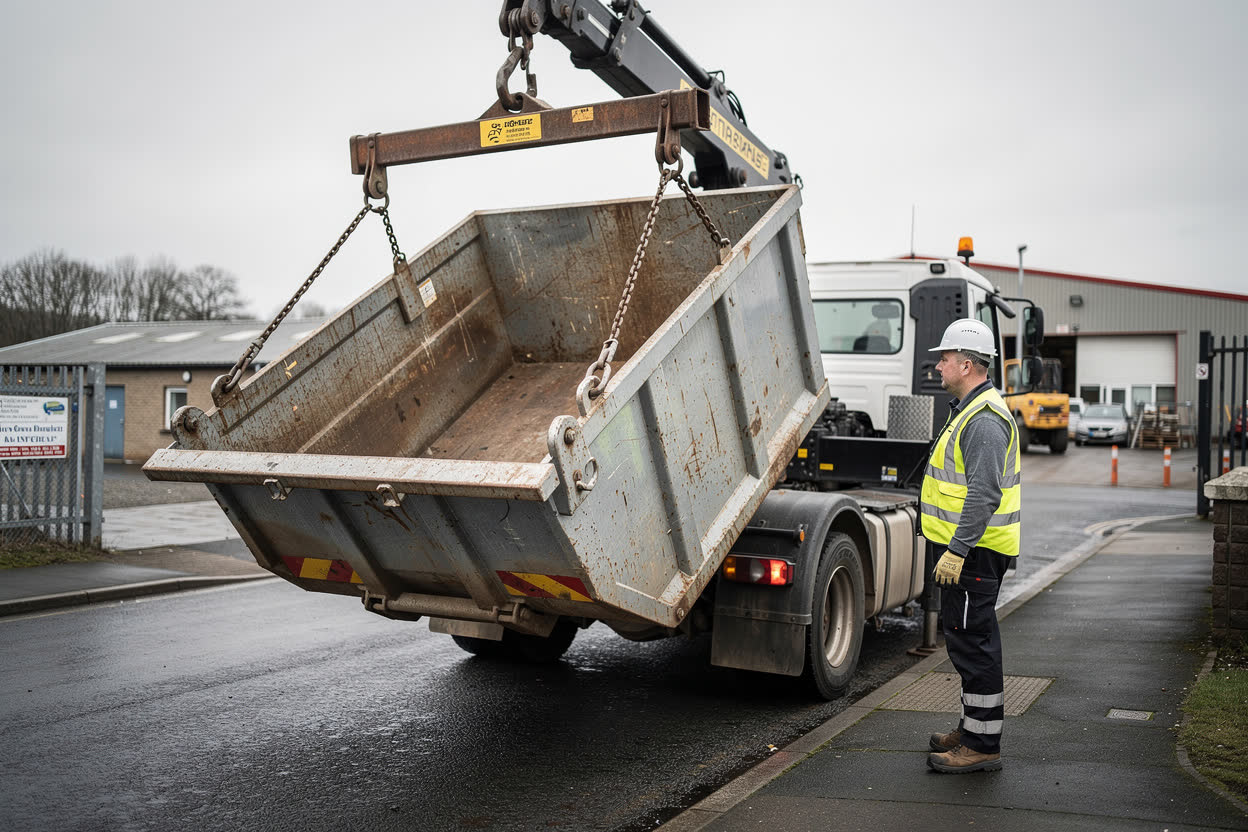
  • Lorry-mounted loading cranes.
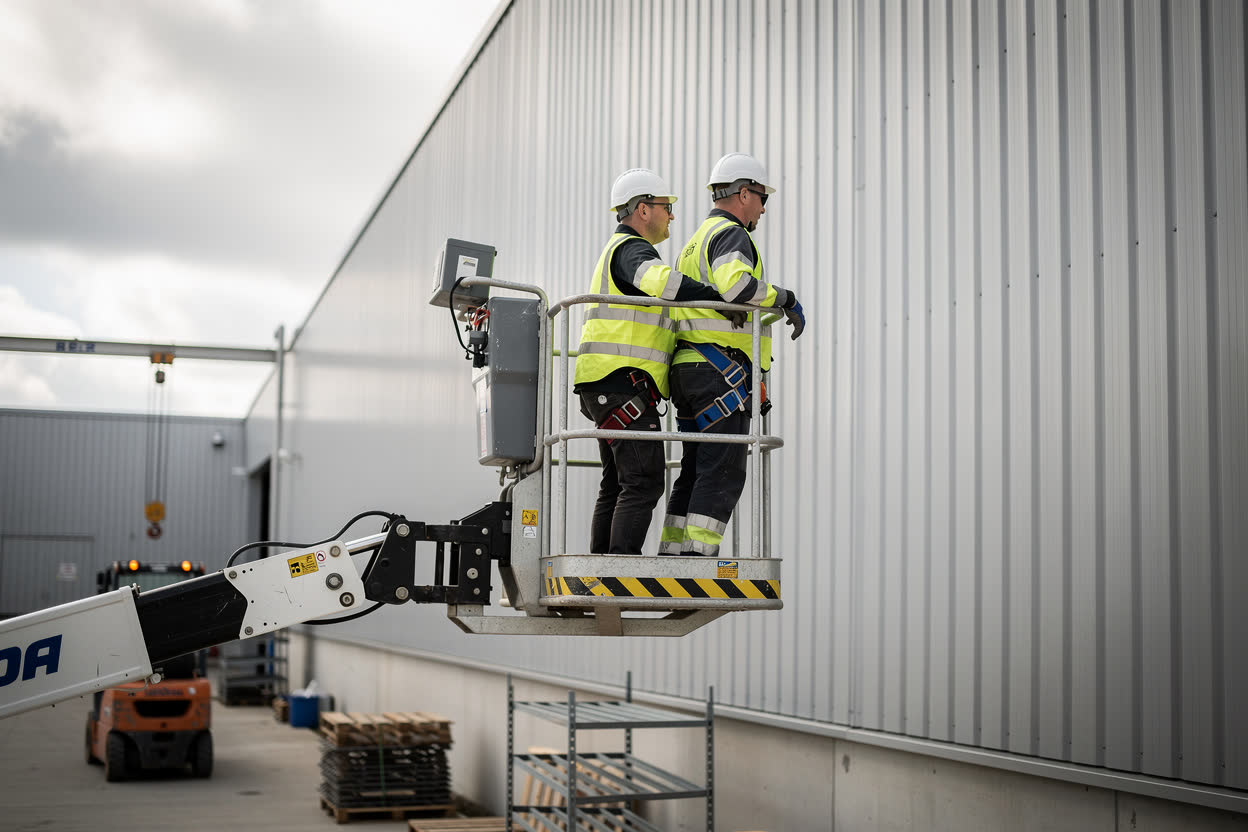
  • Mobile elevating work platforms, or MEWPs, and building cleaning cradles.
  • Goods and passenger lifts, and patient hoists.
  • Winches used for lifting, but not for pulling loads along the ground.
Forklift Trucks as Lifting Equipment
Read the rated capacity plate before every lift.Capacity falls as the load centre moves forward or the mast rises.Travel with the forks low and tilted back.
Forklift Trucks as Lifting Equipment

Forklift trucks are among the most common pieces of lifting equipment, and among the most frequently involved in serious accidents. Every truck has a rated capacity plate showing how much it can lift, at a stated load centre and lift height. The capacity is not a single fixed figure. If the load is longer than standard, so its centre of gravity sits further out on the forks, or if it is raised higher, the truck can lift less before it tips forward.

Fitting an attachment, such as a clamp or a side shift, also changes the capacity, and the truck must then carry a revised plate for that attachment. Keep loads tight against the load backrest, travel with the forks low and tilted back, and never raise or lower a load while turning. Only trained, authorised operators may drive a forklift, and the truck must be checked at the start of every shift.

Telehandlers and Changing Configurations
Each attachment and boom position has its own load chart.Never override the load moment indicator.Fitting a hook or jib turns the telehandler into a crane.
Telehandlers and Changing Configurations

Telescopic handlers, or telehandlers, combine a reach truck and a crane. Their boom can extend forwards and upwards, which makes them very useful on construction sites and farms, but also easy to overturn. The safe load depends on how far the boom is extended and how high it is raised, so every telehandler has load charts for each attachment it can carry. Many have a load moment indicator, which warns the operator as the machine approaches its limit.

This device must never be overridden or disabled. When a hook, jib or winch is fitted to lift suspended loads, the telehandler is being used as a crane, and the lift must be planned, with a trained slinger-signaller where needed. Use stabilisers where fitted, set up on firm, level ground, and never travel with the boom raised or extended unless the manufacturer allows it. Operators need training for the specific machine and attachments they use.

Patient Hoists in Care Settings
Use the right sling, in the right size, for each person.Check the hoist and sling before every use.Never leave a person unattended in the hoist.
Patient Hoists in Care Settings

In care homes, hospitals and people's own homes, hoists are used to move people who cannot move themselves. Because the load is a person, a failure can cause serious injury, and these hoists and their slings must be thoroughly examined at least every six months. Each person should have their own assessment, stating which hoist, which type of sling and which size to use. A sling that is too big can let the person slip through, and one that is too small can cause discomfort and injury.

The sling must also be compatible with the hoist's spreader bar. Before each use, check the hoist moves smoothly, the battery is charged, the emergency lowering works, and the sling has no fraying, damaged stitching or missing label. Follow the care plan and the workplace procedure on how many staff are needed. Talk to the person throughout, and never leave them unattended while suspended in the hoist.

Vehicle Tail Lifts
Keep your feet clear of the platform edge and hinge.Raise the roll stops before moving cages onto the platform.Keep members of the public away while the platform moves.
Vehicle Tail Lifts

Tail lifts fitted to delivery vehicles are lifting equipment, and they cause a surprising number of injuries. The main dangers are falling from the platform edge, feet being trapped between the platform and the vehicle body or the ground, and roll cages or trolleys rolling off the platform. Operators must be trained, and should stand where the manufacturer's instructions direct, usually clear of the platform edge and away from the hinge.

Roll stops at the outer edge of the platform must be raised before cages or trolleys are moved onto it. Never exceed the marked safe working load, and keep members of the public away from the platform while it moves, especially on busy streets. If people travel on the platform as part of the work, it is being used to lift people and needs thorough examination at least every six months. Check the controls, warning devices and roll stops at the start of each shift.

Goods Lifts and Dumb Waiters
Never ride in a lift built only for goods.Never defeat a gate interlock.Never reach into a lift shaft.
Goods Lifts and Dumb Waiters

Goods lifts and dumb waiters move materials between floors in shops, warehouses, restaurants and hospitals. A goods-only lift is not designed to carry people, and it must be clearly marked so. Never ride in one, even for a short trip, because it may lack the safety features that protect passengers. The landing gates or doors are fitted with interlocks, so that the lift cannot move while a gate is open and a gate cannot open unless the lift is at that floor.

Never try to defeat an interlock, and report any gate that opens when the car is not there. With a dumb waiter, never put your head, arm or hand into the shaft, and never use it to send anything heavier than its marked limit. Keep the loading area clear, close the hatch properly, and report unusual noises or jerky movement. These lifts need regular thorough examination, like any other lifting equipment.

Chain Blocks and Lever Hoists
Know that the anchor point is strong enough.Check the chain, hooks and safety catches before use.Never extend the lever to gain more force.
Chain Blocks and Lever Hoists

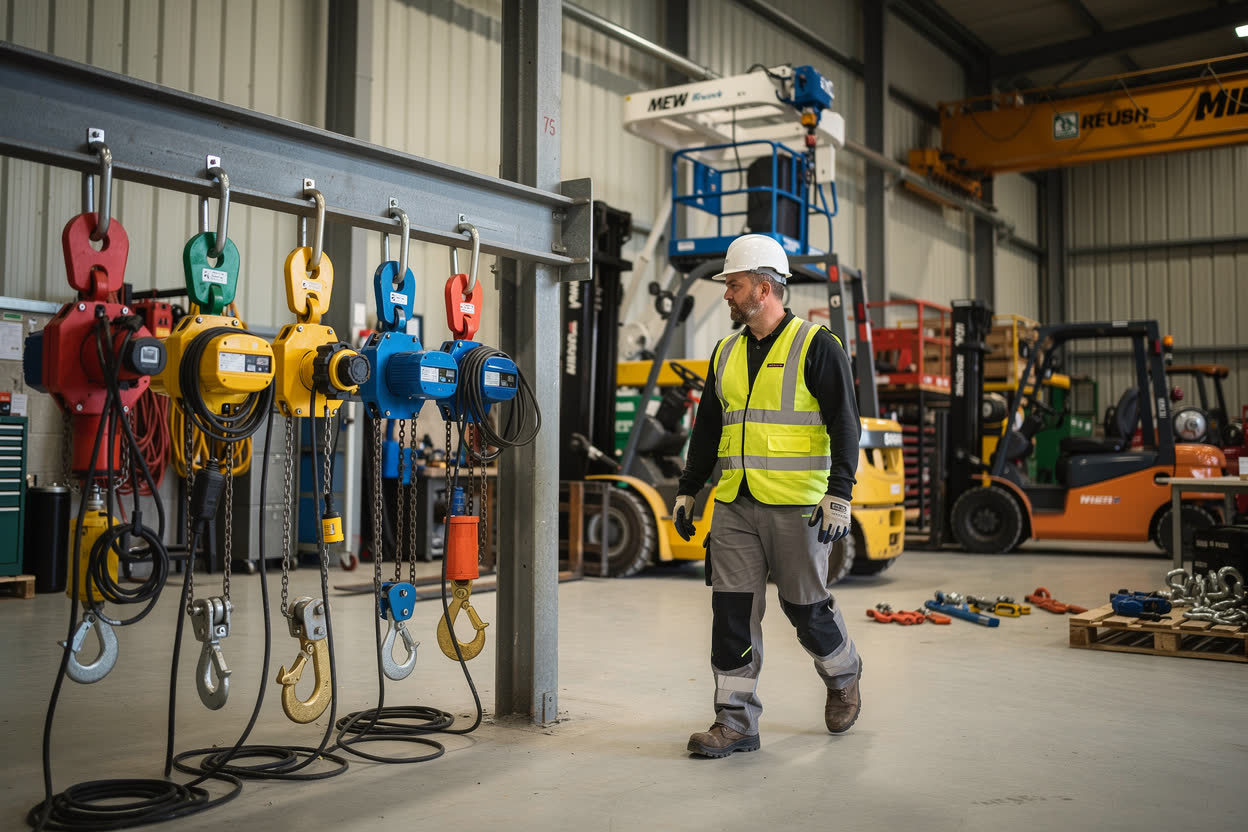
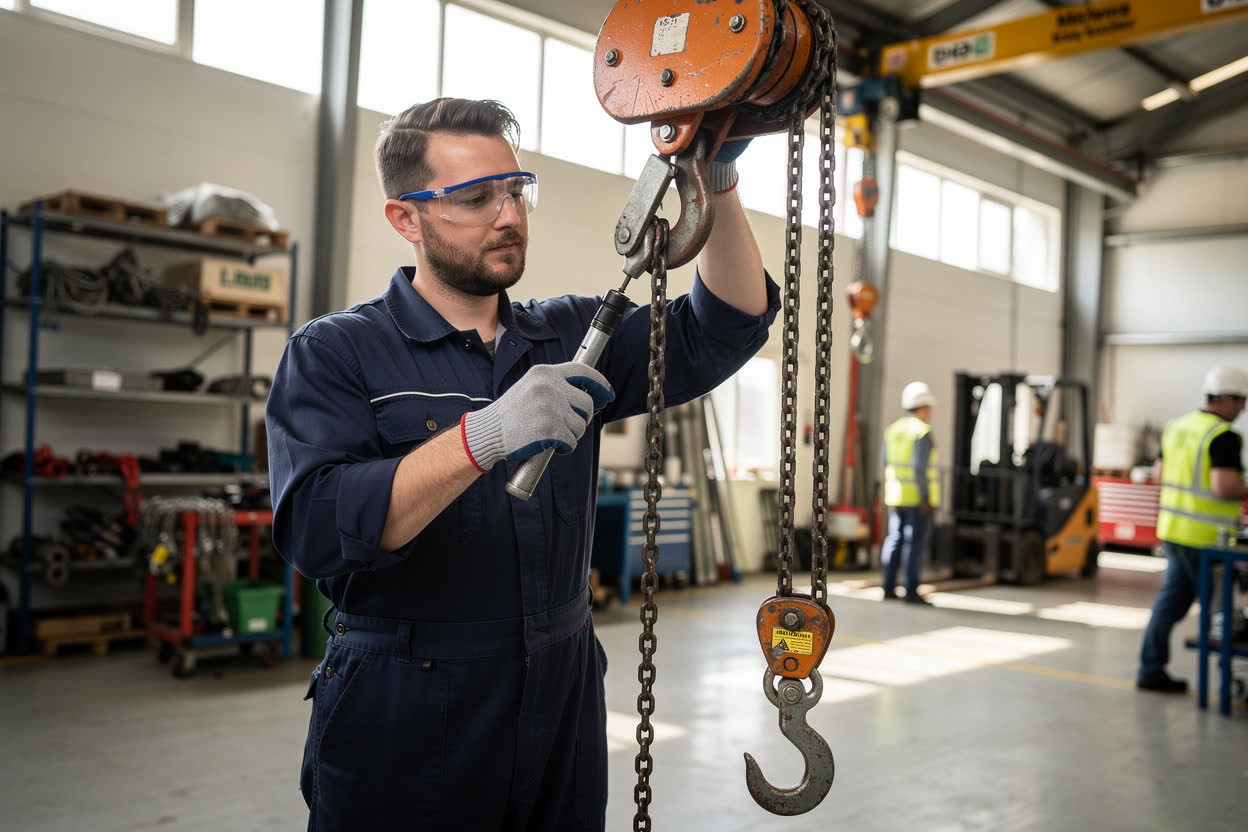
Manual chain blocks and lever hoists are simple, portable and widely used in workshops, on construction sites and in maintenance work. Their simplicity can lead to careless use. A chain block is only as safe as the point it hangs from, so the beam, eye or structure it is attached to must be known to be strong enough for the load and the block together. Never hang a block from pipework, cable trays or roof members unless an engineer has confirmed they are suitable.

Before use, check the chains for damage, the hooks for opening or distortion, and the safety catches. On a lever hoist, never fit a length of pipe or bar to the lever to get more force; if it will not move by hand, the load is probably too heavy or snagged. Keep the load chain straight and free of twists, and never wrap it around the load.

Overhead Cranes With Pendant Controls
Test the limit switch and emergency stop at the start of each shift.Walk beside or behind the load, never under it.Never leave a load hanging when you leave the controls.
Overhead Cranes With Pendant Controls

Many factories and workshops use overhead travelling cranes controlled by a pendant hanging from the crane, so the operator walks along with the load. This makes the operator part of the danger area. At the start of each shift, check that the controls are clearly labelled, the emergency stop works, and the upper limit switch stops the hook before it reaches the crane. Before lifting, look along the travel path for people, obstructions and other cranes on the same track.

Lift the load just clear of the floor, then travel slowly, walking beside or behind the load, never in front of it or underneath it. Keep the pendant cable clear of the load. Avoid sudden starts and stops, which make the load swing. Never leave a load hanging when you walk away from the controls. Only people trained on that crane should operate it, and the crane must be marked with its safe working load.

Lifting Accessories
Lifting Accessories

Lifting accessories are used to attach the load to the lifting equipment. They are also covered by the law, and they must be included in the risk assessment, as they are a core part of every lift.

Examples of lifting accessories include:

  • Chains, with one or more legs.
  • Fibre and rope slings.
  • Eyebolts, shackles and hooks.
  • Spreader beams.
  • Magnetic and vacuum lifting devices.
Vacuum and Magnetic Lifters
Loss of power or vacuum can drop the load instantly.Capacity depends on the surface and the material.Never stand under a load held this way.
Vacuum and Magnetic Lifters

Vacuum and magnetic lifters hold a load by suction or by magnetic force, without slings. They are fast and efficient, but if the vacuum or the magnetism is lost, the load can fall instantly. Vacuum lifters should have a reserve tank or other device that holds the vacuum for long enough to lower the load, and a warning that sounds if the vacuum drops. Electromagnets should have a battery backup and an alarm if the power fails.

The holding force depends on the load itself. A rough, porous, curved, oily or painted surface reduces the grip of a vacuum pad. A magnet holds less on thin, hot or coated steel, or where there is an air gap. So the marked capacity is only achieved in the conditions the manufacturer states. Check pads and seals for damage before use, keep the load low, and never let anyone stand under a load held this way.

What Is a Load?
What Is a Load?

Anything raised, lowered or moved with lifting equipment is a load, whether it is living or not. Examples include:

  • Sacks, bags, boxes and crates.
  • Machinery, and work equipment lifted into or out of position.
  • Skips, pallets and stillages.
  • People and animals.

Lifting points that are permanently or semi-permanently fixed to a load, such as the lugs on the side of a skip, are treated as part of the load.

Equipment Outside the Lifting Rules

Some equipment is not covered by LOLER, although PUWER still applies. Examples include:

  • Tipper trucks.
  • Roller shutter doors and conveyor belts.
  • Escalators and moving walkways.
  • Fall arrest equipment.
  • Dentist chairs.

Passenger lifts used mainly by the public, such as in shopping centres, may also fall outside LOLER. However, section 3 of the 1974 Act still applies, and these lifts must still be maintained and examined. Ships’ own equipment is covered by merchant shipping law instead.

What Are the Risks?
What Are the Risks?

Whether it is a forklift in a warehouse, a crane on site, a dumb waiter in a restaurant or a patient hoist in a care home, every lifting operation involves hazards. Typical risks include:

  • Mechanical hazards, such as moving parts, sharp edges, hot or cold parts, and trapping points.
  • Choosing the wrong equipment or accessories, often because untrained people make the selection.
  • Failing to plan or supervise the lift.
  • Faults or failures in the equipment or accessories.
  • Falling loads, from misuse or equipment failure.
Further Risks
Further Risks

Other risks include:

  • Falls from height when lifting people, for example in care settings, or when using MEWPs and cherry pickers.
  • Crushing injuries, when lifting equipment is not properly managed and controlled, because of poor training, poor supervision or misuse.
  • Equipment deteriorating, and tripping hazards, when equipment is not used and stored properly.

In the rest of this course, we look at these risks in more detail, and at how they can be controlled.

Summary

In this module, you have learned that:

LOLER covers the safe selection, marking, examination and use of lifting equipment in almost every workplace.

Duties fall on employers and anyone who controls lifting equipment. Employees must work safely, follow instructions and report hazards.

Lifting equipment and accessories include cranes, hoists, forklifts, MEWPs, chains, slings and shackles. Tipper trucks and escalators are not covered.

In the next module, we will look at risk assessment for lifting operations.

Knowledge Check
Which of these is covered by LOLER?
Select one answer, then press Check.
A tipper truck
An escalator
A vehicle inspection hoist
A conveyor belt
Correct. Vehicle inspection hoists are lifting equipment. Tipper trucks, escalators and conveyor belts fall outside the specific lifting rules.
Not quite. Tipper trucks, escalators and conveyor belts are not covered by the specific lifting rules. Look for the equipment that lifts and lowers a load.
Next Module →Answer the question to unlock the next module.
Page 1 of 27