← Exit
Module 4 · Inspection, Maintenance and Storage0% complete · 18 slides left
Ladder Safety
Ladder Safety
Module 4
This course contains audio. Use headphones in public places.
Introduction
Introduction

A ladder is only as safe as the last check someone gave it. Employers must make sure that everyone who uses a ladder or stepladder knows how to check it, look after it and store it.

In this module, you will learn about:

  • The checks you make yourself before every use.
  • Detailed visual inspections, and the records they produce.
  • What to do when you find a defect.
  • Maintenance, repairs and safe storage.
Pre-Use Checks: When and Why

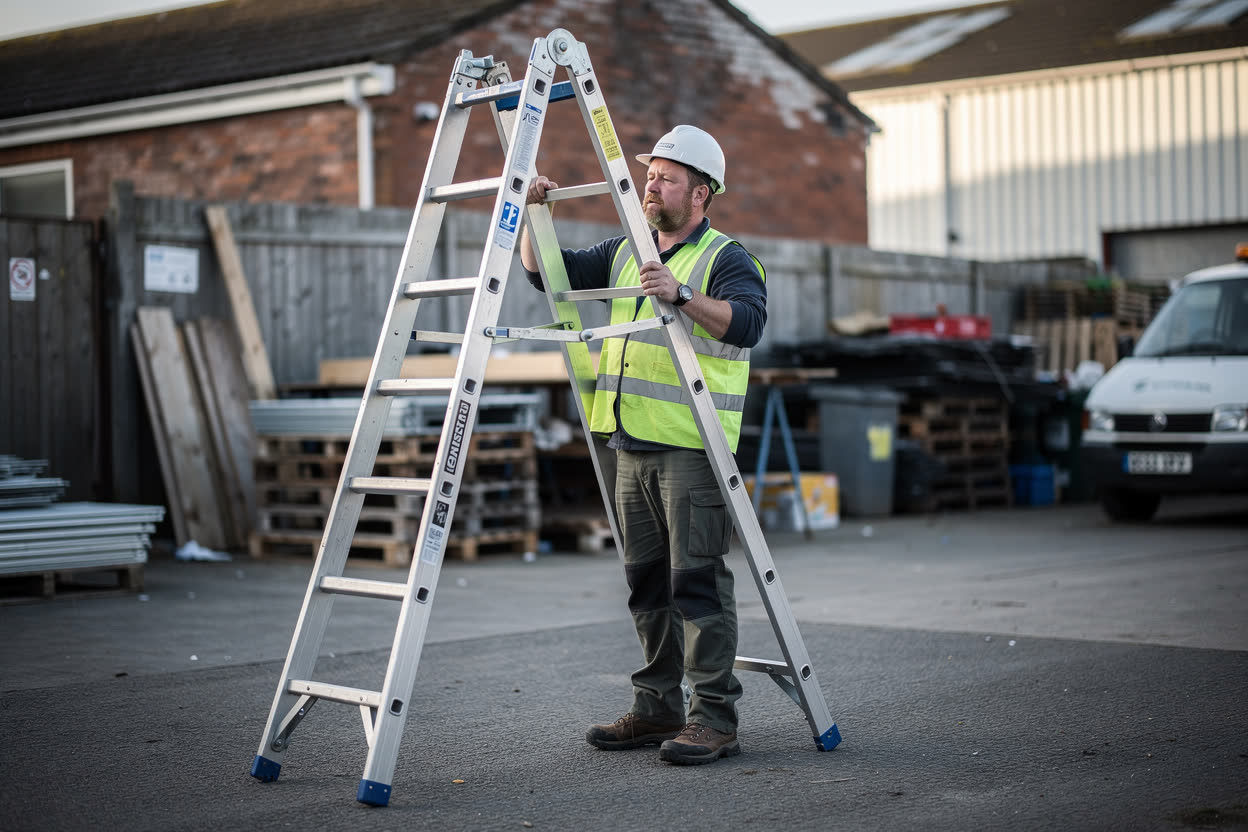
Before every use, the user must give the ladder a pre-use check. Do it at the start of each working day, and every time you are about to use the ladder.

Check it again whenever something has changed. For example, if the ladder has been moved to another place, or has been dropped.

The purpose is simple: to find anything unsafe before you climb. The check takes a minute or two. A fall can last a lifetime.

Pre-Use Checks: Leaning Ladders

Check the ladder from top to bottom:

  • Suitability. Is this the right ladder for the job?
  • General condition. Look for twisting, damage and missing parts.
  • Stiles. Check for bending, splitting or cracks. A damaged stile can collapse.
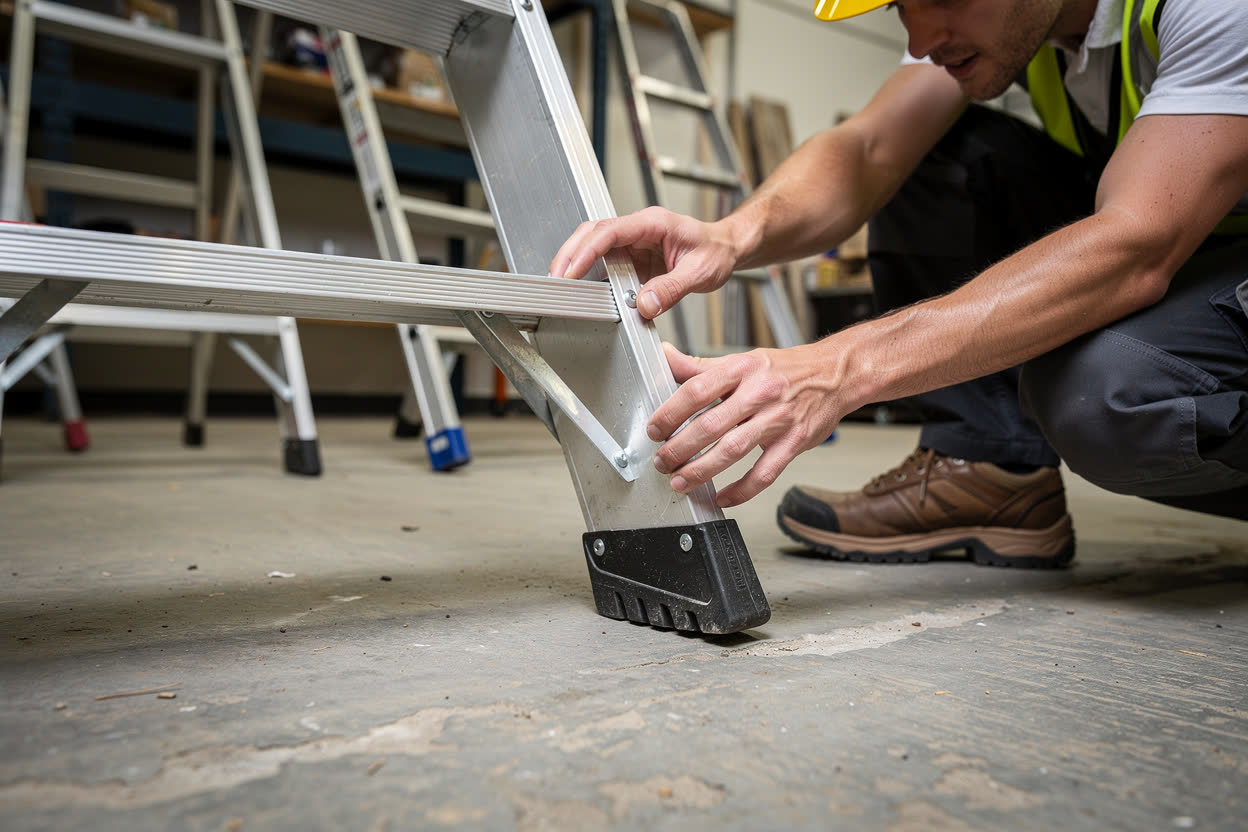
  • Feet. Check they are present, not worn smooth and not damaged.
  • Rungs. Check each one is straight, secure and free of grease, paint or mud.
  • Locking devices and hooks. Check they are not bent or worn, and engage fully.
Pre-Use Checks: Stepladders

A stepladder needs the same checks, and a few more. Make sure that:

  • The locking bars or spreaders are straight, and lock fully.
  • Their fixings are not worn. A worn fixing can let the stepladder fold under you.
  • The platform is not split or buckled.
  • The steps are level, and their fixings are tight.
  • The stiles and feet are not damaged, and not coming away.
  • The treads are clean and not slippery.
Common Defects to Look For

Some defects turn up again and again. Learn to spot them:

  • Anti-slip feet that are missing, worn or damaged.
  • Feet caked with dirt from an earlier job.
  • Bent or damaged stepladder treads.
  • Loose, damaged or missing nuts, bolts and rivets.
  • Locking mechanisms that are damaged or do not work properly.
  • Frayed ropes on extension ladders, and stiff or loose hinges on stepladders.

Check accessories, such as stabilisers and straps, too.

Tie Rods and Fixings
On wooden ladders, metal tie rods beneath the rungs hold the stiles together.A missing or unsound tie rod lets the ladder loosen and spread under load.Nuts and bolts must be tight, undamaged and fitted the right way round.
Tie Rods and Fixings

Two defects are easy to miss unless you know where to look. On wooden ladders, metal tie rods run beneath the rungs to hold the two stiles together. If a tie rod is missing or no longer sound, the ladder can loosen and spread under load, so check each one during your pre-use check, not only at the formal inspection. On any ladder or stepladder, look closely at the nuts and bolts.

They should be tight and undamaged, and they must be fitted the right way round. A bolt fitted back to front may look secure but may not hold the part properly. If you find either of these defects, the ladder comes out of use and is reported, exactly as for any other fault.

If a Ladder Fails Its Check

If you find a defect, do not use the ladder. Take these four steps straight away:

  • Take it out of use.
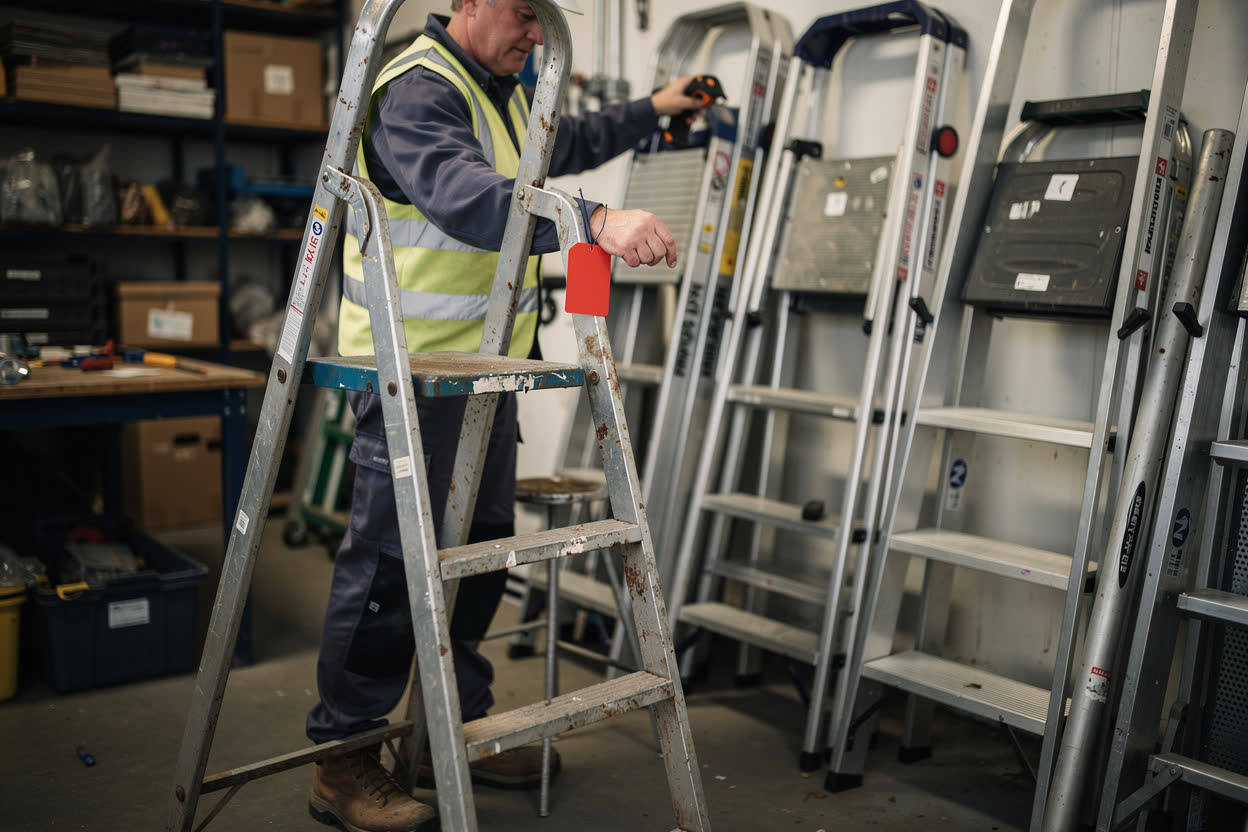
  • Keep it apart from the sound ladders, so it cannot be picked up by mistake.
  • Tag or label it clearly as faulty, with a warning not to use it.
  • Report it to your supervisor or manager.

Arranging for a competent person to examine and repair the ladder is your manager’s job, not yours. Never patch a ladder with tape or wire.

Knowledge Check
Who should carry out the pre-use check on a ladder?
Select one answer, then press Check.
An outside specialist
The person who is about to use it
The ladder manufacturer
No one, if the ladder is new
Correct. The pre-use check is the user’s job, before every use.
Not quite. The pre-use check belongs to the person about to climb. Try again.
Detailed Visual Inspections

As well as pre-use checks, ladders need regular detailed visual inspections. These are formal checks, made at set intervals by a competent person who has been trained to do them, following the manufacturer’s instructions.

A record of these inspections must be kept.

Where a ladder forms part of a scaffold, the scaffold inspection rules also apply. A competent person must inspect it at least every seven days, and after anything that could affect its safety, such as bad weather.

What the Inspection Covers

The competent person checks every ladder against a set list, including:

  • Stiles that are bent, dented or twisted.
  • Rungs that are bent, worn, split or loose.
  • Bent or damaged treads.
  • Missing or faulty tie rods.
  • Cracked welds, loose rivets and damaged stays.
  • Bent or damaged locking devices.

They also confirm that each ladder suits the work it is used for, and is being maintained and stored as the manufacturer directs.

Inspection Records
Inspection Records

Each detailed inspection produces a written report. It should record:

  • Who the inspection was for.
  • Where the equipment is kept or used.
  • A description of the equipment, so it can be identified.
  • The date and time of the inspection.
  • Any defect that could put people at risk.
  • What has been done about it, and anything still to do.
  • The name and job title of the competent person.
Maintenance and Repairs

Employers need a routine for maintaining ladders. Much of it is simple, and everyone who uses the equipment shares in it:

  • A dirty or contaminated ladder is taken out of use until it has been cleaned.
  • Moving parts and locking mechanisms on stepladders are lubricated, so they work smoothly and do not rust.
  • Badly damaged ladders are destroyed, so they cannot creep back into use.
  • Repairs are carried out only by a competent person, or by the manufacturer, supplier or a specialist firm.
What Can Be Fixed on Site, and What Cannot
Simple matters, such as tightening nuts and bolts, can be settled on site.Genuine damage needs a competent, technically qualified person or a specialist firm, or the ladder is replaced.The person told about a fault carries it forward and follows the workplace procedure.
What Can Be Fixed on Site, and What Cannot

Once a fault has been reported, the supervisor or manager who was told, or the competent person who spotted it, takes the problem forward and follows the procedure the workplace has set down. Not every fault needs a specialist. Some matters can be settled on site, such as tightening nuts and bolts that have worked loose. Where the equipment is genuinely damaged, for example with a bent stile or a split rung, the employer has to arrange a repair by a competent, technically qualified employee or by a specialist firm, or else replace the ladder.

The person who found the fault should never attempt the repair themselves. Careful handling is part of maintenance too, because faults caused by dropping or dragging equipment never needed to happen.

Safe Storage: Preventing Misuse

The safest place for ladders is a separate room that can be locked, so that people who have no business using them cannot take them.

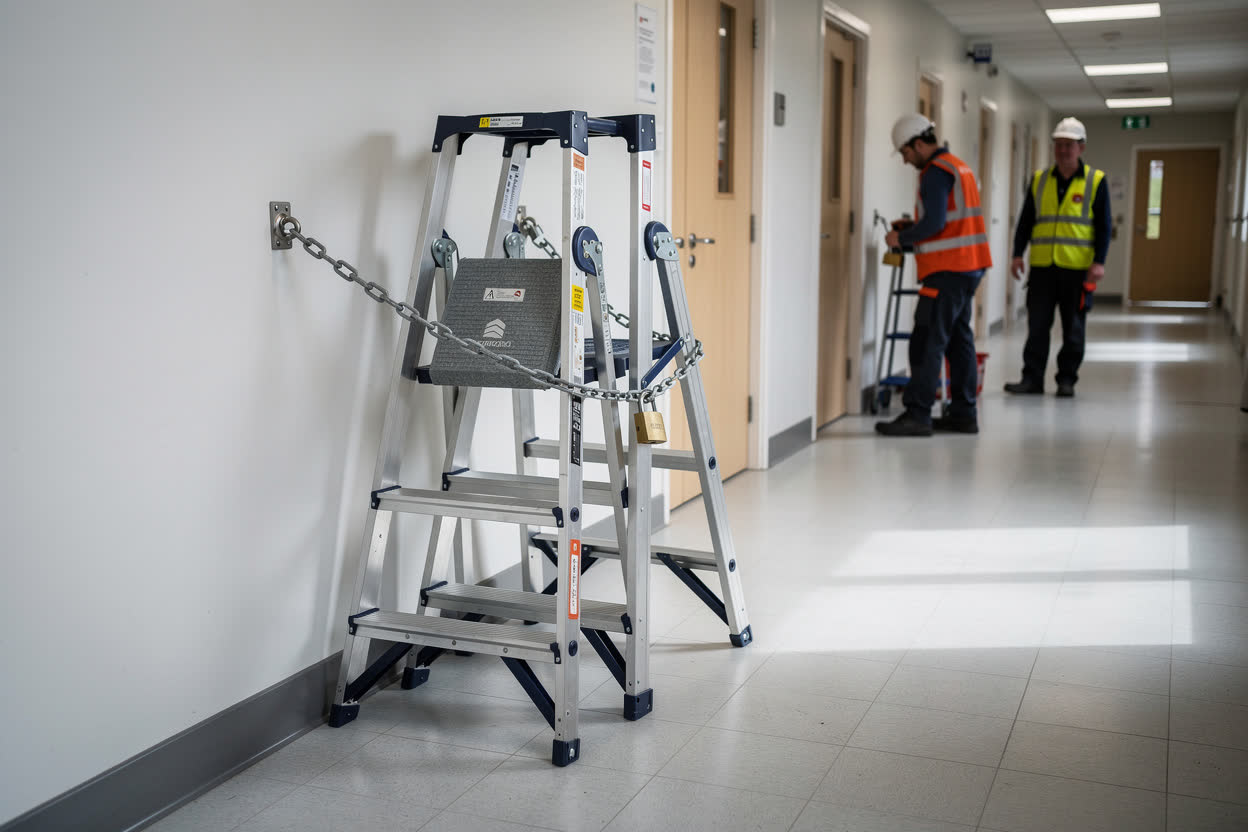
Where ladders must be stored somewhere others can reach, such as a corridor or workroom, chain and lock them, and give the key to an authorised person.

No one should take a ladder from storage unless they have been trained to inspect and use it safely.

Safe Storage: The Storage Area

The storage area should:

  • Be well ventilated, to avoid damp and extreme heat, which damage ladders.
  • Be dry, secure and protected from the weather.
  • Let ladders be stored flat on horizontal racks, with enough supports to stop them sagging.
  • Make it easy to put ladders away and take them out safely.

Never hang a ladder by its rungs or a stile, and never use a stored ladder to hang other things from.

Racking and Returning Ladders
Secure the ladder at every supporting point on the rack.Make sure ladders can be moved in and out of storage safely and without a struggle.Trained users return ladders to their proper place after every job.
Racking and Returning Ladders

Good storage only works if people use it properly. When you place a ladder on a horizontal rack, take care at every supporting point to leave it held securely, so that it cannot slip, sag or fall when someone takes out the ladder next to it. Employees must be able to move ladders into storage and back out again safely and without a struggle, so the layout of the store matters as much as its racks.

A cramped store invites people to leave ladders propped against walls or lying across floors instead. Training closes the loop on all of this. Someone who has been taught properly brings the ladder back when the job is done and stores it where it belongs, rather than leaving it in a corridor where it can be damaged or used by someone untrained.

Summary

In this module, you have learned that:

The user gives every ladder a pre-use check before each use.

A ladder that fails its check is taken out of use, tagged as faulty and reported.

Detailed visual inspections are carried out and recorded by a competent person, and ladders are stored flat, dry and secure.

In the next module, we will look at choosing, carrying and setting up ladders and stepladders.

Knowledge Check
During a pre-use check, you find that one rung is bent. What should you do?
Select one answer, then press Check.
Use it, but take extra care
Put it back in the store and take another one
Straighten the rung with a hammer
Take it out of use, keep it apart, label it as faulty and report it
Correct. Take it out of use, isolate it, label it and report it, so no one else can use it.
Not quite. Putting it back or repairing it yourself leaves a faulty ladder where someone could use it. Try again.
Next Module →Answer the question to unlock the next module.
Page 1 of 19