← Exit
Module 3 · Risk Assessment0% complete · 21 slides left
Ladder Safety
Ladder Safety
Module 3
This course contains audio. Use headphones in public places.
Introduction
Introduction

Every job on a ladder should begin with a judgement about what could go wrong. That judgement is the risk assessment.

This module walks through the risk assessment process, one step at a time, and applies it to ladder and stepladder work. By the end, you will know what a risk assessment must contain, and how the dangers of ladder work are controlled.

If your job includes carrying out risk assessments or supervising others, a dedicated risk assessment course will take you further.

What Is a Risk Assessment?

Every employer must look at the risks in their workplace and plan how to control them. In practice, a risk assessment has five steps:

  • Step 1: identify the hazards.
  • Step 2: decide who might be harmed, and how. Remember contractors, visitors and members of the public.
  • Step 3: evaluate the risks, and decide on precautions.
  • Step 4: record the findings, and put the controls in place.
  • Step 5: review the assessment, and update it when things change.
Who Should Carry It Out?

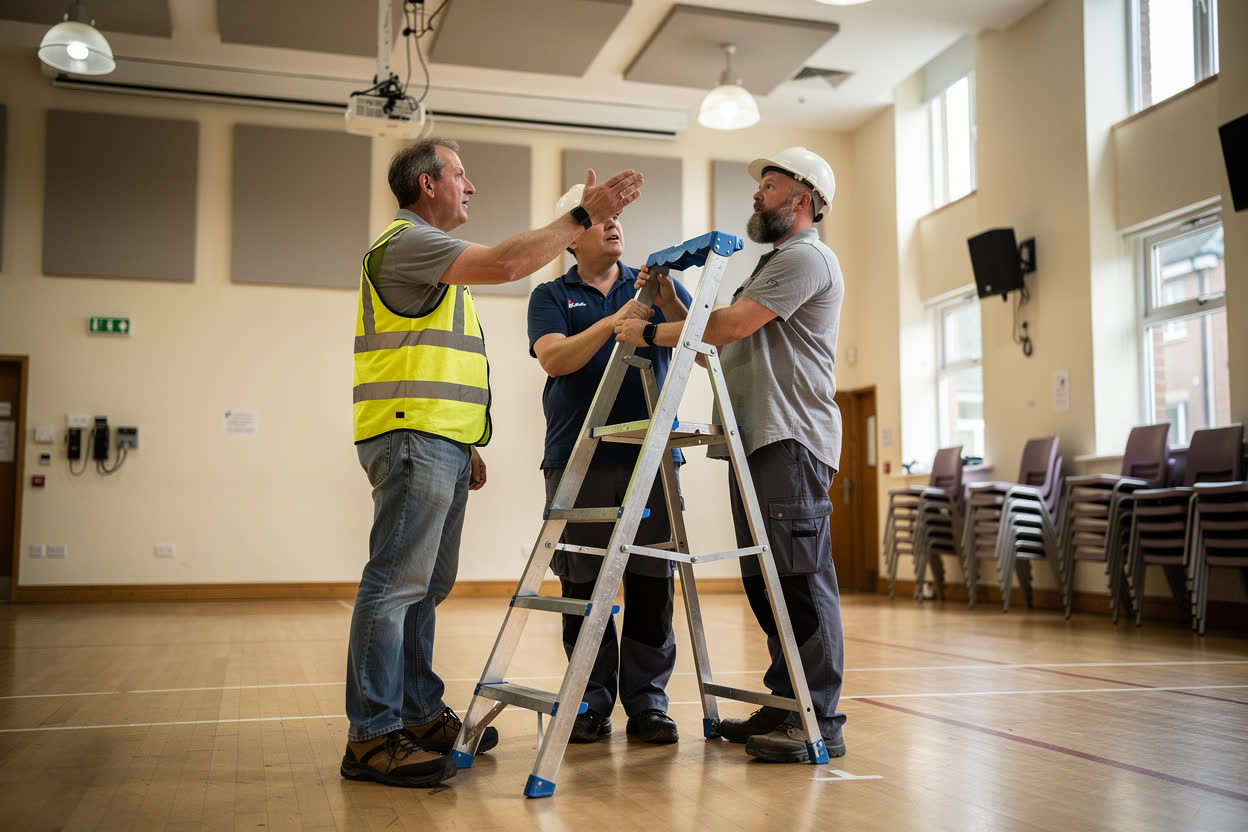
The employer is responsible for making sure risk assessments are done. They can do it themselves, or appoint a competent person: someone with the right skills, knowledge, training and experience. A competent person should:

  • Understand the purpose of a risk assessment.
  • Recognise the usual hazards of ladder work.
  • Have enough practical experience of the work to make sound judgements.
  • Know the limits of their own competence, and when to get specialist help.

Involve the people who do the job. Their experience is invaluable.

What Else a Competent Assessor Does
A competent assessor can interpret information supplied by others, such as manufacturers' instructions.They know good practice and the standards their industry works to.They deal with the most immediate risks first, and share the results with everyone involved.
What Else a Competent Assessor Does

Beyond understanding the purpose of a risk assessment and the usual hazards of ladder work, a competent assessor brings several further skills. They know which information has to be gathered, and they can read what other people supply, such as manufacturers' instructions or inspection reports, and interpret it correctly. They are familiar with good practice and with the standards their industry works to. When the hazards are listed, they rank the controls in order of importance and deal with the most immediate risks first, rather than working through the list in the order it was written.

And once the assessment is finished, they pass the results on to everybody with a stake in the job, so that the people who climb know exactly what has been decided and why.

Step 1: Identify the Hazards

Look carefully for anything that could cause harm:

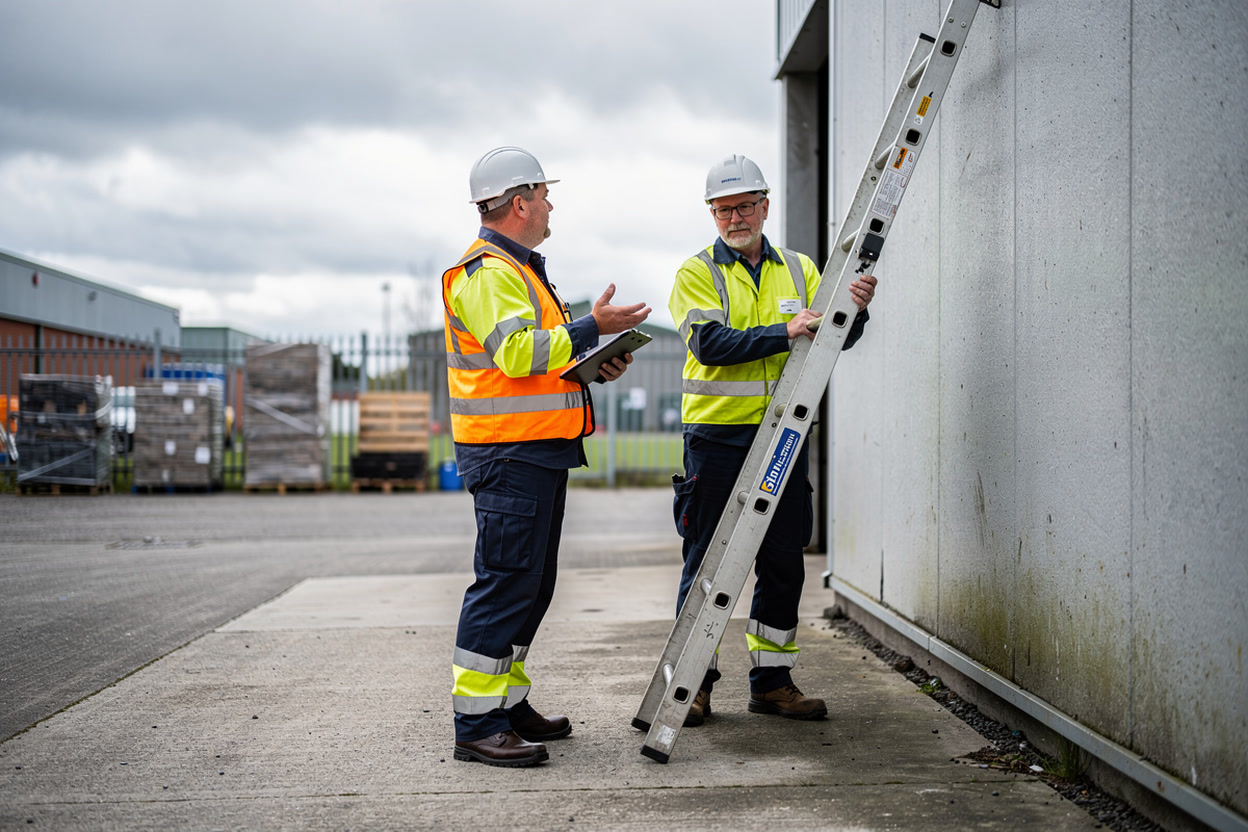
  • Walk around the workplace, and look at how ladders are actually used.
  • Talk to the people who use them. They know where the problems are.
  • Check that users are trained, confident and fit to work at height.
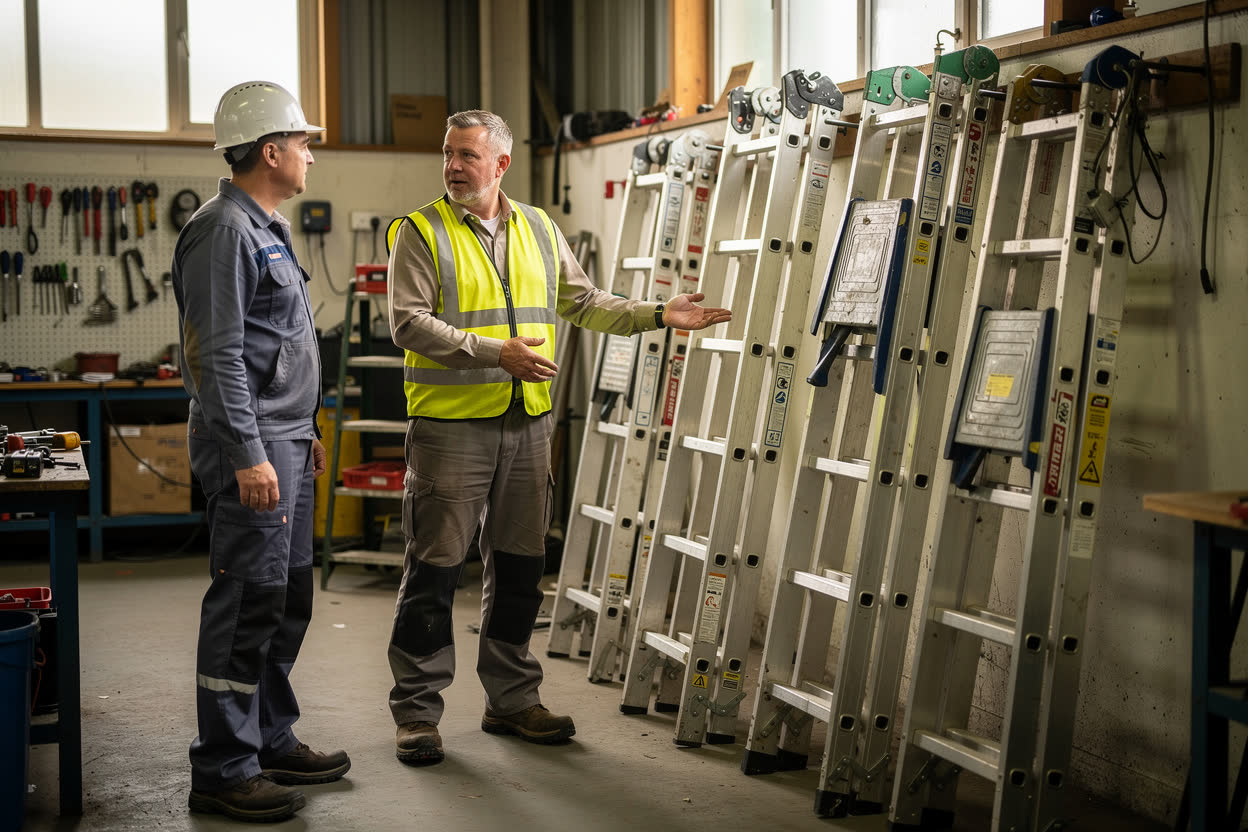
  • Find out who inspects and maintains the ladders, and whether they are trained.
  • Read the accident book and first aid records for past ladder incidents.
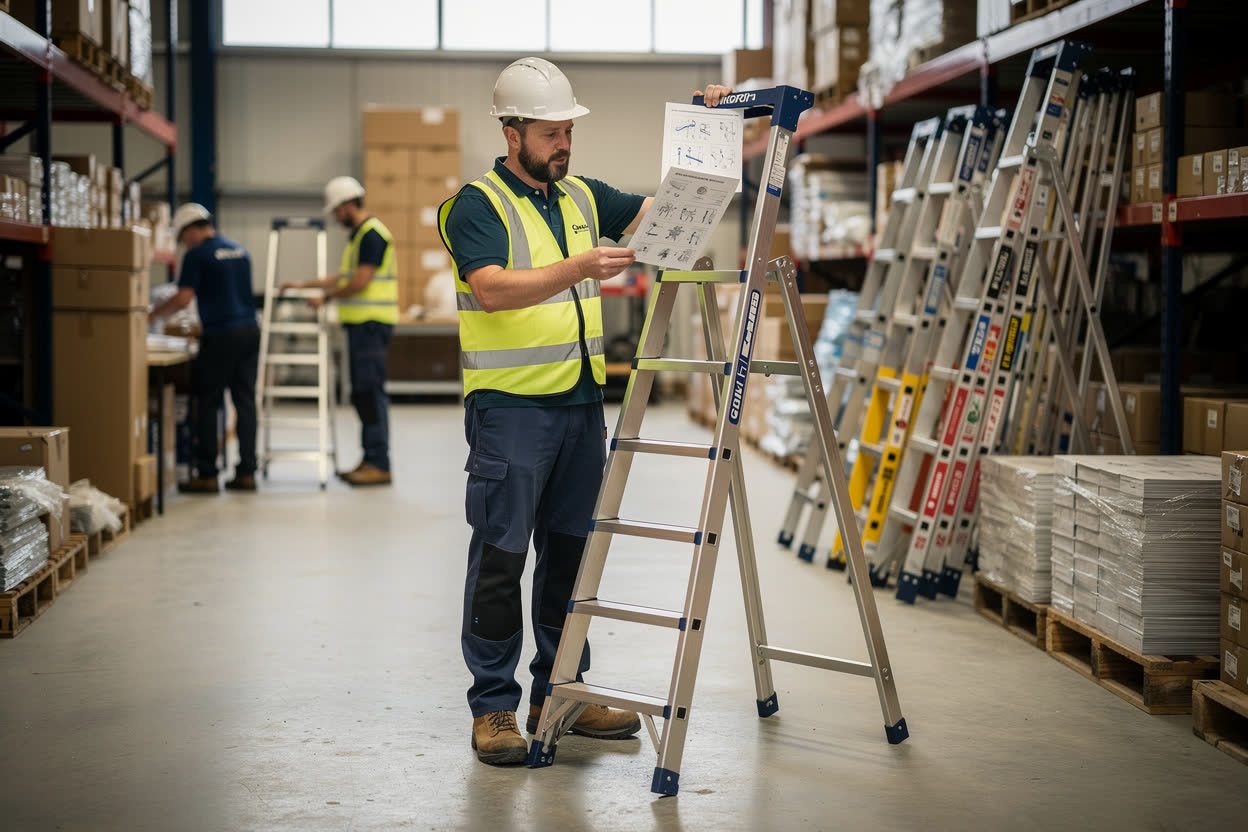
  • Read the manufacturer’s instructions for the ladders you use.
  • Ask whether something safer, like fixed stairs or a permanent platform, would serve better.
Step 1: Is a Ladder Justified?

Where a ladder seems the right choice, answer these questions before the work starts:

  • How long will the job take? As a guide, if the task in one position takes longer than about 30 minutes, use something safer, such as a mobile tower or podium steps.
  • Is it low risk? Low risk means the ladder can be secured, and you can keep three points of contact, working with one hand while the other holds the ladder.
  • What danger does the work create for other people nearby?
  • How high must you climb? If the height makes the ladder unsteady, use a tower or a mobile elevating work platform instead.
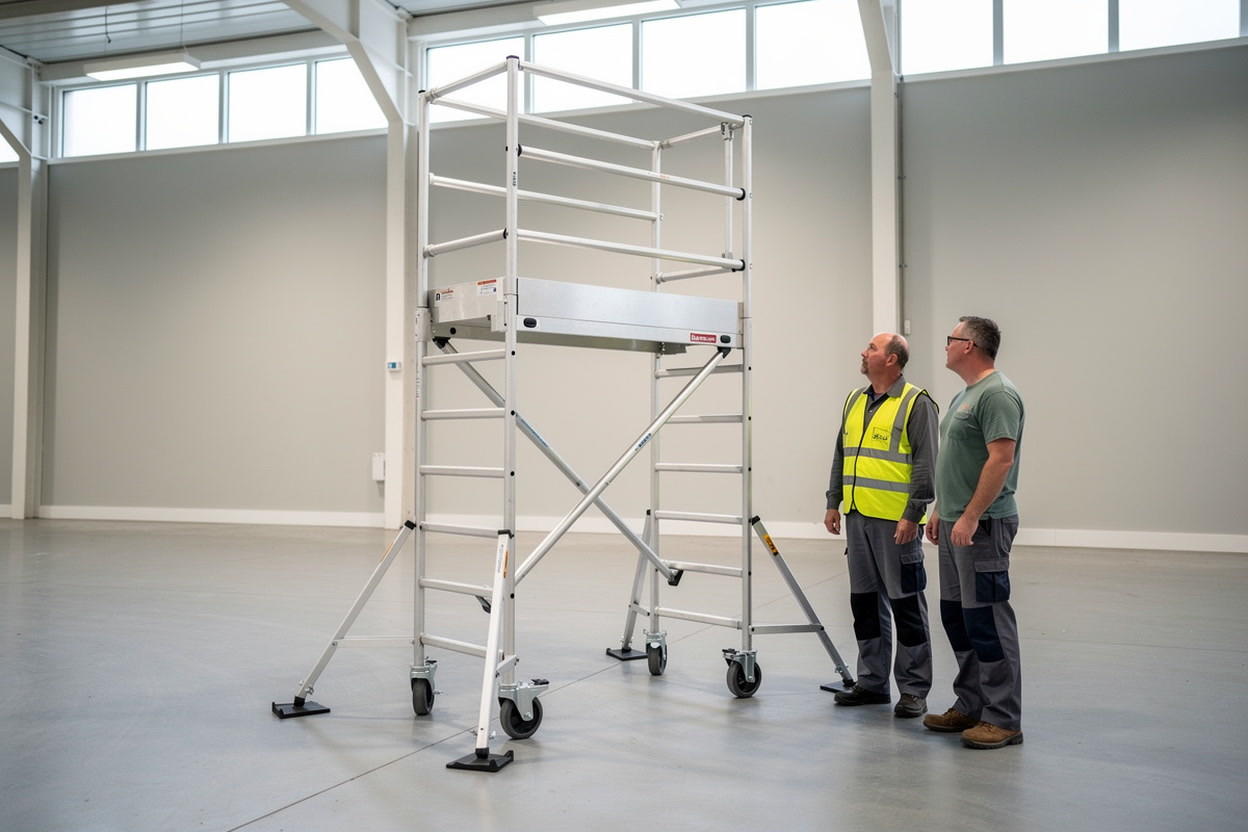
Mobile Towers
Only a trained person may build or alter a tower.Lock the castors and fit the stabilisers before climbing.Never move a tower while anyone is on it.
Mobile Towers

When a task at height will take longer than a ladder allows, a mobile access tower is often the next choice. A tower gives you a working platform with guardrails and toe boards, so you can use both hands and move around safely. Its safety depends entirely on how it is built and used. A tower must be assembled, altered and taken down only by someone trained to do it, following the manufacturer's instructions for that model.

Stabilisers or outriggers must be fitted where the instructions require them, and the castors must be locked before anyone climbs. Always climb up the inside, using the built-in ladder or stairs, never the outside frame. Never move a tower while anyone is on it, and check overhead for power lines and obstructions before you move it. The tower must stand on firm, level ground, and work should stop in strong wind. Inspect it after it is built, and again after any change.

Podium Steps and Low-Level Platforms
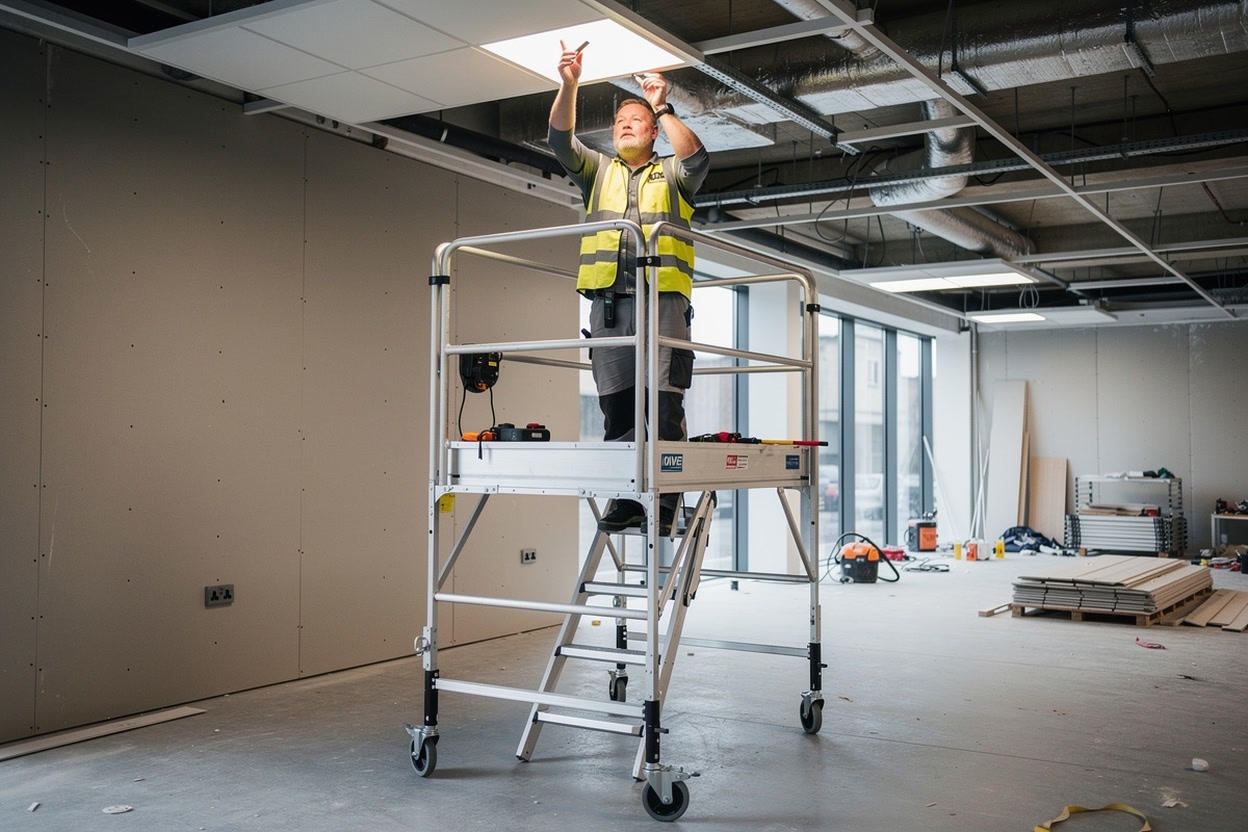
A podium is a small platform with guardrails on all sides.Lock the wheels before you step on.Move the podium rather than leaning out.
Podium Steps and Low-Level Platforms

Many indoor jobs, such as fitting ceiling tiles, installing lighting or decorating, are done at a height that suits a stepladder, but take far longer than a stepladder should be used for. Podium steps and other low-level work platforms fill that gap. A podium is a small platform surrounded by guardrails, often with a gate, so the user is enclosed while working. Most have castors, so they can be moved between positions without the user having to climb down and carry anything.

Before use, check that the guardrails are in place and the gate closes, and that the wheels or brakes lock firmly so the podium cannot roll. Only step onto it once it is locked, and never stand on the guardrails or lean out over them to reach further. Move the podium rather than stretching. As with any equipment, follow the manufacturer's instructions, check it before each use, and report any damage straight away.

Mobile Elevating Work Platforms
Only trained, authorised people may operate a MEWP.Check the ground and look up before you start.Have a rescue plan in place before work begins.
Mobile Elevating Work Platforms

For work that is high, long or heavy, a mobile elevating work platform, or MEWP, may be the right choice instead of a ladder. Scissor lifts raise a platform straight up, and boom lifts reach up and out over obstacles. Only people who have been trained and authorised for that type of machine may operate one. Before use, check the ground: soft ground, slopes, covers and hidden voids can cause a MEWP to overturn.

Look up for power lines and structures that the platform could strike or trap the operator against. In a boom lift, occupants normally wear a harness with a short restraint lanyard attached to the anchor point in the basket, to stop them being thrown out. Never climb on the guardrails, and never stand a ladder or stepladder inside the basket to gain extra height. A plan for rescuing someone from the raised platform must be in place before work starts.

Common Hazards: Ground, Reach and Side Loading
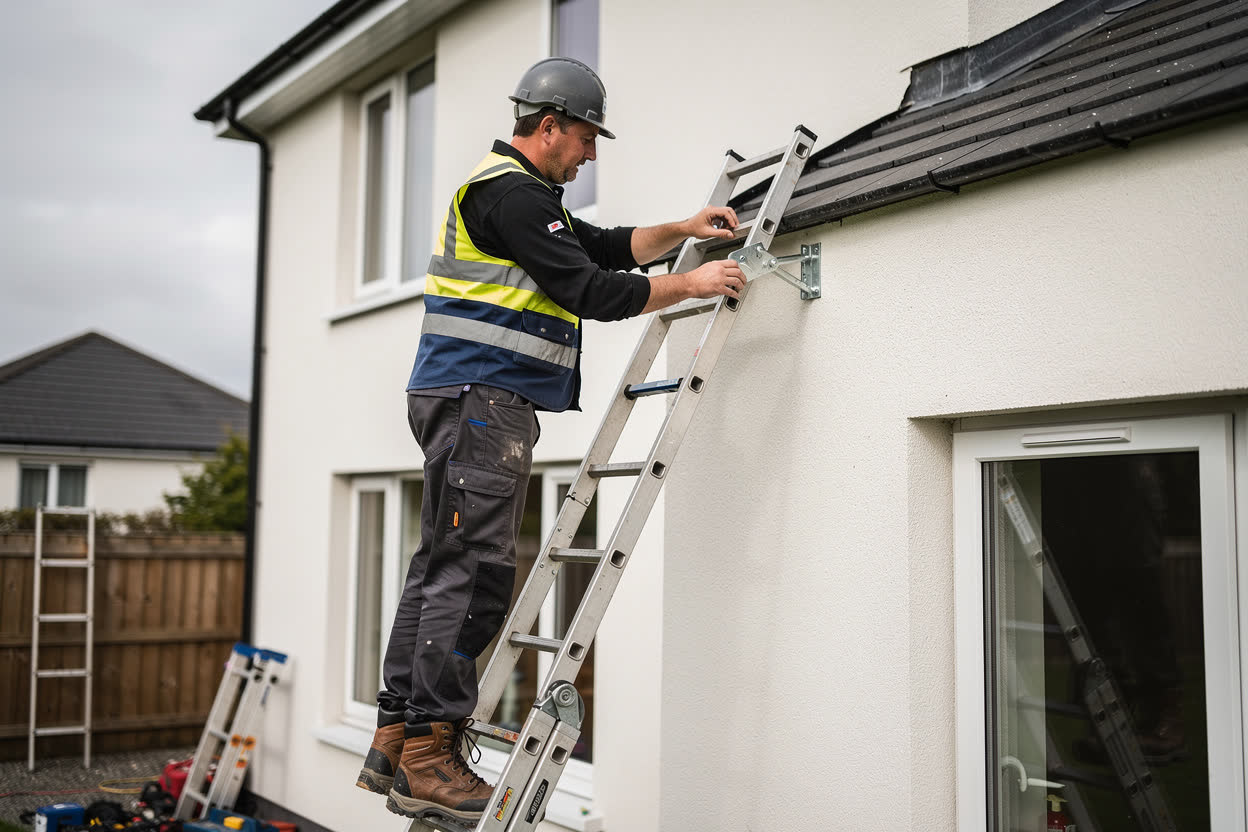
  • Ground that is not firm and level. Unsecured equipment on poor ground is a major cause of accidents. A ladder should be tied wherever possible, and footing it is the last resort.
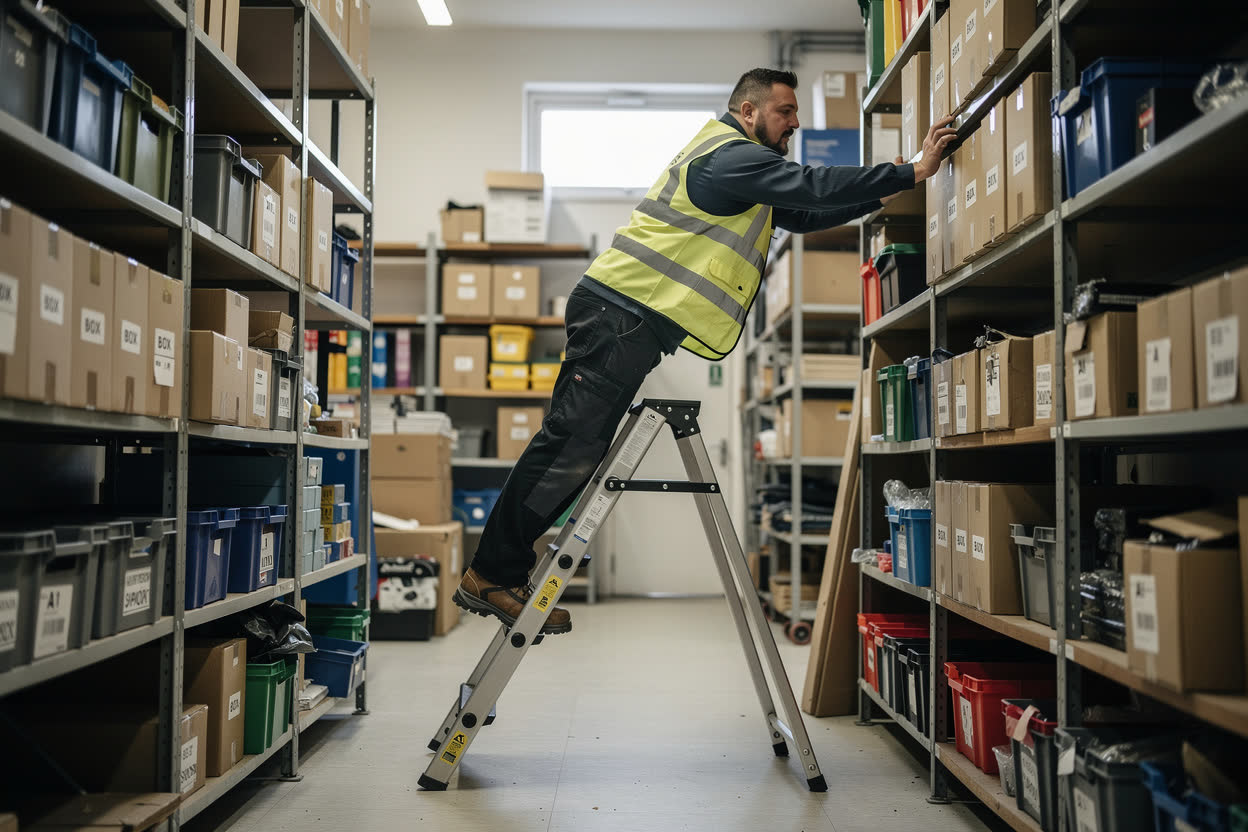
  • Overreaching. Stretching up or out to the side moves your weight off centre, and the ladder can slide or tip. It usually happens because the ladder is too short, or is in the wrong place.
  • Side loading. If a stepladder does not face the work, the user twists and pushes sideways. The steps can tip over, and the twisting posture can cause muscle injuries.
Further Ladder Hazards
  • Ladder bounce. A ladder that is too long, untied or on poor ground can flex and spring as someone climbs, throwing them off balance.
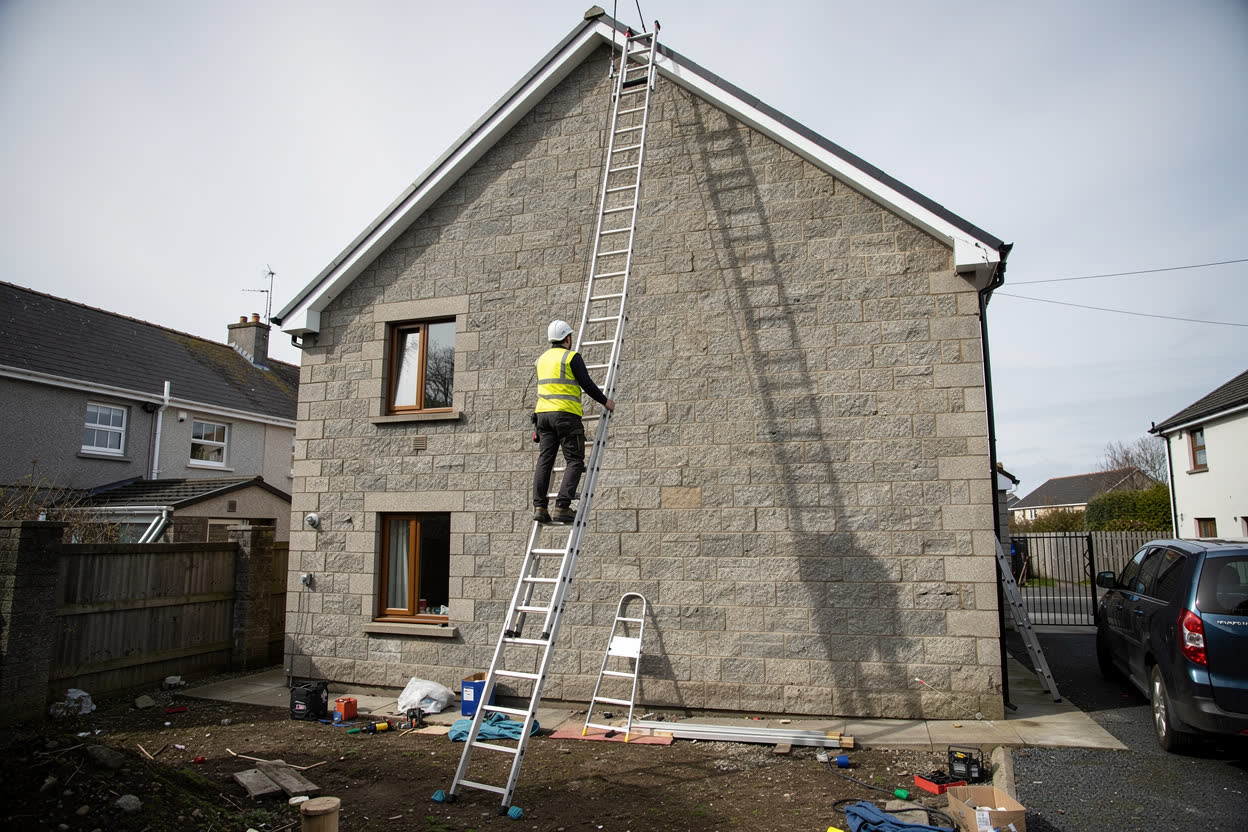
  • The wrong length. Too short, and the user overreaches. Too long, and the ladder becomes less stable, especially in wind.
  • Overloading. The user, their clothing, their tools and any materials must stay within the ladder’s maximum load. A rung that gives way can cause a fatal fall.
Hazards in the Surrounding Area
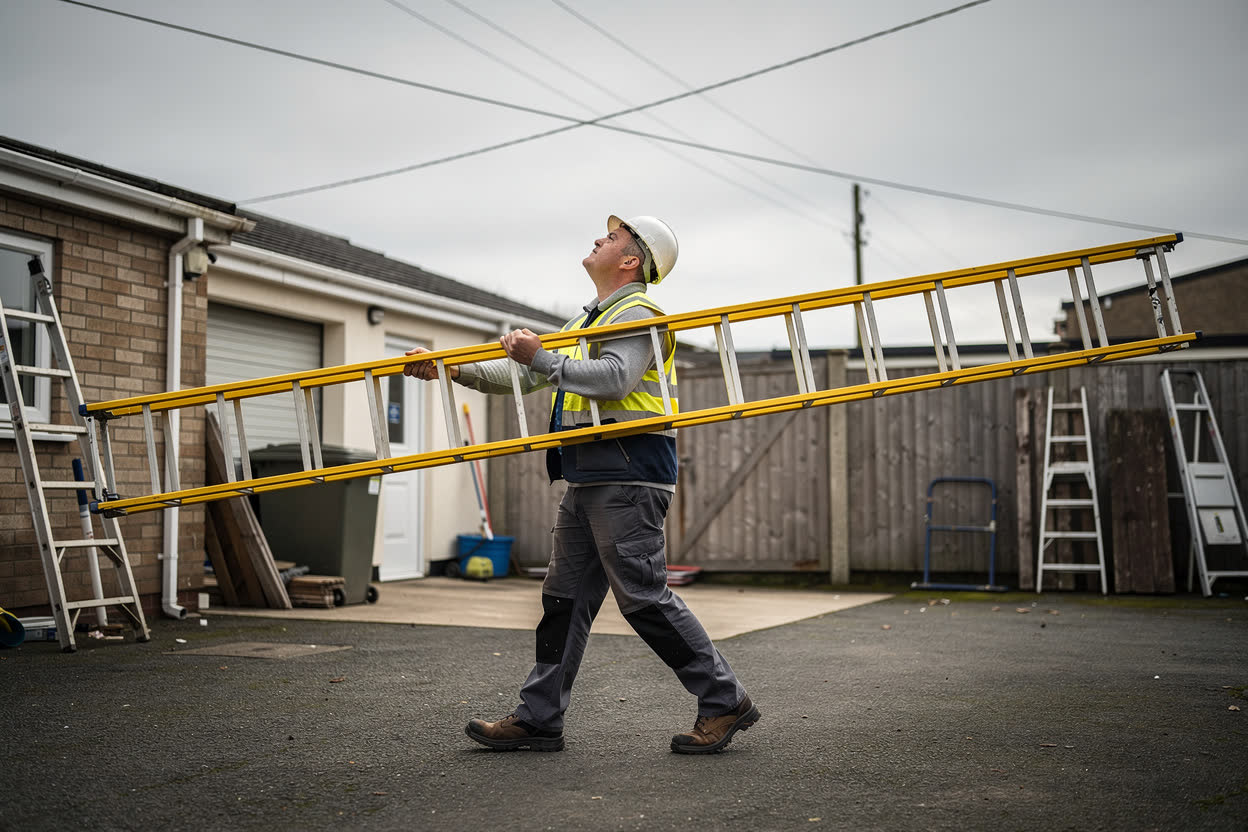
  • Overhead power lines. Look up before you move a ladder into position. Overhead lines are often bare, and any ladder, metal or not, can bring you into contact with one.
  • Surfaces. The ground under the feet and the surface at the top must be solid and level, and free of oil, leaves or other slippery material.
  • The environment. Keep ladders away from vehicles, doors in use and walkways. Strong wind or other severe weather rules out ladder work.
Knowledge Check
Which of these is a good way to find the hazards of ladder work?
Select one answer, then press Check.
Telling colleagues to take more care
Testing every ladder by climbing it yourself
Waiting for an accident to happen
Observing the work and reading the manufacturer’s instructions
Correct. Watching how the work is done, and reading the manufacturer’s instructions, both reveal real hazards.
Not quite. Hazards are found by looking carefully, asking people and checking information. Try again.
Step 2: Who Could Be Harmed, and How

Name the groups of people at risk, and how they could be hurt. Writing just employees is not enough.

  • The people who climb. Everyone who uses, maintains or repairs ladders must be trained. Some face extra risk, such as young or inexperienced workers, night workers, subcontractors and anyone with a medical condition.
  • Everyone else. Someone walking into a ladder work area may not see the danger. Keep ladder work apart from other activities, and cordon off the area so that no one can wander in.
Step 3: Decide on Precautions

The law does not expect every risk to be removed. It does expect the main risks of ladder work to be understood and properly managed.

For each hazard, ask two questions. First, what controls are already in place? Second, what more could reasonably be done to reduce the risk?

Always start with the most effective controls, such as avoiding work at height or using safer equipment, before relying on training and care.

Step 3: Testing Existing Controls

Most workplaces already have some controls, such as secure dry storage, a maintenance routine, training, and manufacturers’ instructions kept to hand. Test each one:

  • Is it enough to remove the risk, or at least reduce it?
  • Is it actually working? Are ladders really maintained, and do users know the right way to use them?
  • Is anything missing? Check the manufacturer’s guidance is being followed.
  • Has anything new come to light about the hazard?
Step 4: Record and Implement

In the UK, an employer with five or more employees must record the significant findings. Smaller employers are wise to do the same. The record should cover:

  • The significant risks of the ladder work.
  • Who is at risk, naming the most vulnerable.
  • How employees were involved.
  • The information, instruction and training people need.
  • The controls in place for each significant hazard.

Keep it to hazards where harm is foreseeable and something can be done.

An Assessment Written for Work at Height
Work at height is high risk, so an assessment written specifically for it is advisable.Its findings drive the choice of access equipment and training.Published regulator guidance and a standard template help structure the record.
An Assessment Written for Work at Height

Work at height falls into the high-risk category, so a risk assessment written specifically for it is advisable, rather than a single line in a general workplace assessment. Whatever that assessment turns up then drives the choice of control measures, from the type of access equipment to the training people need. The Health and Safety Executive publishes guidance on the safe use of ladders and stepladders, and it is worth reading in full for a wider picture of what is expected.

A standard workplace risk assessment template gives you a ready-made structure for setting your findings down, so that nothing important is missed and the record is easy for others to read and act on.

Step 5: Review and Update

Review the risk assessment at least once a year, and straight away when something changes. For example:

  • A new type of ladder, or a change to how ladders are stored.
  • Improvements that were agreed but not yet made.
  • Comments from employees.
  • A recent accident or near miss.
  • New plant or equipment that someone will need to reach.
  • New staff who have not yet been trained.

Record any changes, and tell the workforce what they now need to do.

Summary

In this module, you have learned that:

Risk assessment has five steps: identify hazards, decide who could be harmed, decide on precautions, record, and review.

A ladder is justified only for low risk work, where you can keep three points of contact, and for short tasks of about 30 minutes or less in one position.

Review the assessment at least once a year, and whenever anything changes.

In the next module, we will look at inspecting, maintaining and storing ladders and stepladders.

Knowledge Check
For which of these jobs would a ladder be a sensible choice?
Select one answer, then press Check.
Carrying load after load of heavy roof tiles up to a roof
Reaching the second floor of a building that stands on soft, muddy ground
Clearing a few leaves from a short stretch of gutter, with the ladder tied
Spending all day painting a high ceiling
Correct. Clearing a short stretch of gutter is low risk and short duration, so a secured ladder is reasonable.
Not quite. Heavy loads, poor ground and long jobs all rule a ladder out. Look for the short, low risk task.
Next Module →Answer the question to unlock the next module.
Page 1 of 22