← Exit
Module 1 · Health and Safety Law0% complete · 21 slides left
Health and Safety
Health and Safety
Module 1
This course contains audio. Use headphones in public places.
Introduction
Introduction

Every year, thousands of people are injured at work, and many more become ill because of the work they do. Most of these accidents and illnesses could have been prevented.

This course gives you a practical understanding of health and safety at work: the law, risk assessment, workplace safety and welfare, and the most common hazards you are likely to meet. It is suitable for employees, supervisors and managers in any type of workplace.


The Scale of Work-Related Harm
Many thousands of people suffer work-related illness and injury every year.Falls from height, moving vehicles and objects, trapping and moving machinery cause most fatal accidents.Good health and safety practice is essential to bring these numbers down.
The Scale of Work-Related Harm

Health and Safety Executive data show that around 1.6 million people were dealing with work-related illness in 2019/20, whether new or long-standing. Asbestos-related diseases alone cause over 5,000 deaths in the UK each year, and respiratory conditions, musculoskeletal injuries and workplace stress are also major contributors to poor health. HSE provisionally reported 126 worker deaths in work-related accidents in Great Britain in 2025/26. The main causes of those deaths were falls from height, being hit by moving vehicles or objects, being trapped by something collapsing or overturning, and contact with moving machinery.

Following effective health and safety practice is essential to reduce these numbers. This course gives you a sound understanding of the key issues, so that you can keep your workplace safe and protect yourself and others from harm.

In This Module
In This Module

In this module you will learn about:

  • Why health and safety matters.
  • The main causes of ill health and accidents at work.
  • The main health and safety law, and the duties of employers and employees.
  • Who enforces health and safety law.
  • Reporting accidents and dangerous occurrences.
Why Health and Safety Matters

Good health and safety brings real benefits:

  • People go home safe and well at the end of every working day.
  • Fewer accidents, less sickness absence and lower staff turnover.
  • Lower costs from damage, lost production, insurance claims and fines.
  • A better reputation with customers, and better morale among staff.
  • Compliance with the law.

Accidents and ill health cause pain and suffering to the people involved and their families, and can cost a business far more than prevention would have.

Causes of Ill Health and Accidents

The most common causes of work-related ill health are:

  • Stress, depression and anxiety.
  • Musculoskeletal disorders, such as back pain, often caused by manual handling and poor posture.

The most common causes of injuries are slips, trips and falls, manual handling, and being struck by moving objects. Falls from height, and being struck by vehicles or caught in machinery, are among the leading causes of deaths at work.

Causes of Ill Health and Accidents in Detail
Stress, depression and anxiety, and musculoskeletal disorders are the leading causes of work-related ill health.The most serious accidents involve falls from height, moving vehicles and objects, and being trapped.The most common accidents are slips and trips, handling and lifting, being struck by objects and violence.
Causes of Ill Health and Accidents in Detail

In 2019/20, stress, depression and anxiety made up 51 per cent of all work-related ill health, and musculoskeletal disorders accounted for 30 per cent. Other major causes were occupational lung disease, which is responsible for an estimated 12,000 deaths a year, skin diseases such as dermatitis, hand-arm vibration syndrome and noise-induced hearing loss. These conditions can arise in any workplace, so they must be controlled. About 65,000 non-fatal injuries were reported by employers under RIDDOR in 2019/20, although the Labour Force Survey recorded 693,000 workers reporting a non-fatal injury.

The most serious accidents come from falls from height, being struck by moving vehicles and objects, and being trapped by something overturning or collapsing. The most common are slips and trips on the same level, handling, lifting and carrying, being struck by a moving object, and acts of violence.

Environmental and Human Factors
Environmental factors affect everyone in an area and are hard to avoid: dust, extreme temperatures, noise, toxic substances and radiation.Human factors relate to how people behave and work, such as rushing or lacking training.Many accidents happen because people do not know how to work safely or ignore instructions.
Environmental and Human Factors

Health and safety is influenced by two broad kinds of factor. Environmental factors relate to the working environment itself. They usually affect everyone in that environment and can be difficult to avoid. Dust, extreme temperatures and noise are environmental factors, and so is working around toxic substances or ionising radiation. Human factors relate to how a person behaves or performs tasks at work. Examples are rushing a task, or having had no proper training.

Every task needs proper training, instruction and information so that it can be done safely. Many accidents happen because people do not know how to do their work safely, or because they choose to ignore the training and instructions they were given. All employers must make sure risks are assessed, controlled and monitored so that employees are kept safe from harm.

The Main Health and Safety Law

In Great Britain, the main law is the Health and Safety at Work etc. Act 1974. It applies to every employer, employee and self-employed person, in every workplace.

It is supported by regulations, such as the Management of Health and Safety at Work Regulations 1999, which require risk assessment, and specific regulations on topics such as manual handling, display screen equipment, work at height, electricity, hazardous substances, noise and vibration.

The Main Law and "Reasonably Practicable"
The main workplace safety Act requires employers to ensure the health, safety and welfare of employees as far as is reasonably practicable.Where a risk is more than negligible, suitable measures must be taken.Employers need not act only if the cost in time, effort and money is grossly out of proportion to the risk.
The Main Law and "Reasonably Practicable"

The Health and Safety at Work etc Act 1974 is the primary health and safety legislation in Great Britain. Section 2 requires employers to ensure, so far as is reasonably practicable, the health, safety and welfare of their employees. "As far as is reasonably practicable" means that where a risk is more than negligible, appropriate measures must be taken to manage it. In practice, employers must put in place the control measures needed to reduce risk unless they can show that the risk is small compared with the time, effort and money needed to control it.

The Act is supported by regulations that deal with particular hazards, and by the Management of Health and Safety at Work Regulations 1999, which place the duty to assess risk on the employer.

Duties of Employers
Duties of Employers

Under section 2 of the 1974 Act, employers must ensure, so far as is reasonably practicable, the health, safety and welfare at work of their employees. This includes:

  • A safe place of work, with safe access and exit.
  • Safe equipment, and safe systems of work.
  • Safe handling, storage and use of articles and substances.
  • Information, instruction, training and supervision.
  • Welfare facilities, and protective equipment where risks cannot be avoided.
  • Emergency plans, and consultation with employees on safety.
Duties of Employees
Duties of Employees

Under sections 7 and 8 of the 1974 Act, employees also have legal duties. You must:

  • Take reasonable care of your own safety and health, and that of anyone affected by what you do.
  • Co-operate with your employer on health and safety.
  • Use equipment, protective clothing and safety devices correctly, as you have been trained.
  • Report hazards, defects and unsafe practices as soon as possible.
  • Never interfere with or misuse anything provided for safety.
  • Not put yourself or others at risk, for example by working under the influence of alcohol or drugs.
What Employers Must Provide
A safe workplace, safe systems of work, and safe access and exit.Supervision so that staff understand and follow safe systems of work.Information, instruction and training, and a working environment where hazards are removed or reduced.
What Employers Must Provide

Section 2(2) of the Health and Safety at Work Act lists what employers must provide to keep employees safe and healthy. The first is a safe workplace and safe systems of work for all employees, with the arrangements and procedures for safe working considered for every activity. The second is safe access and egress, so that staff can move around and leave the premises safely at all times.

The third is supervision, to make sure staff understand and follow safe systems of work. The fourth is information, instruction and training, so that employees understand their roles and get the support they need. The fifth is a safe working environment in which hazards and risks are eliminated or minimised. Employees have duties too: to take reasonable care of themselves and others, to report shortcomings in protection arrangements, not to interfere with safety measures, and to cooperate with their employer.

Risk Assessment and the Safety Policy

Every employer must carry out a suitable and sufficient risk assessment, covered in the next module. If there are five or more employees, the significant findings must be recorded.

An employer with five or more employees must also have a written health and safety policy. It sets out the employer’s commitment, who is responsible for what, and the arrangements for managing health and safety. It must be brought to the attention of all employees.

Competent Persons and the Wider Set of Regulations
Employers must carry out "suitable and sufficient" risk assessments and record significant findings.A competent person has the training, skills, experience and knowledge to do the job safely.Many other regulations cover specific topics, and all those relevant to your workplace must be followed.
Competent Persons and the Wider Set of Regulations

One of the main requirements of the Management of Health and Safety at Work Regulations is that suitable and sufficient risk assessments are carried out in every workplace. The employer has the duty to do this, and only competent people should carry them out. A competent person is someone with adequate training, skills, experience and knowledge to carry out the process safely. Employers must evaluate the risks to employees and anyone else affected by the work, record the significant findings, and plan, organise, control, monitor and review the preventive and protective measures.

Many other regulations deal with specific topics, including the Control of Substances Hazardous to Health Regulations 2002, the Display Screen Equipment Regulations 1992, the Manual Handling Operations Regulations 1992, the Work at Height Regulations 2005, the Control of Asbestos Regulations 2012 and the First Aid Regulations 1981. Those relevant to your workplace must be followed.

Who Enforces Health and Safety Law?

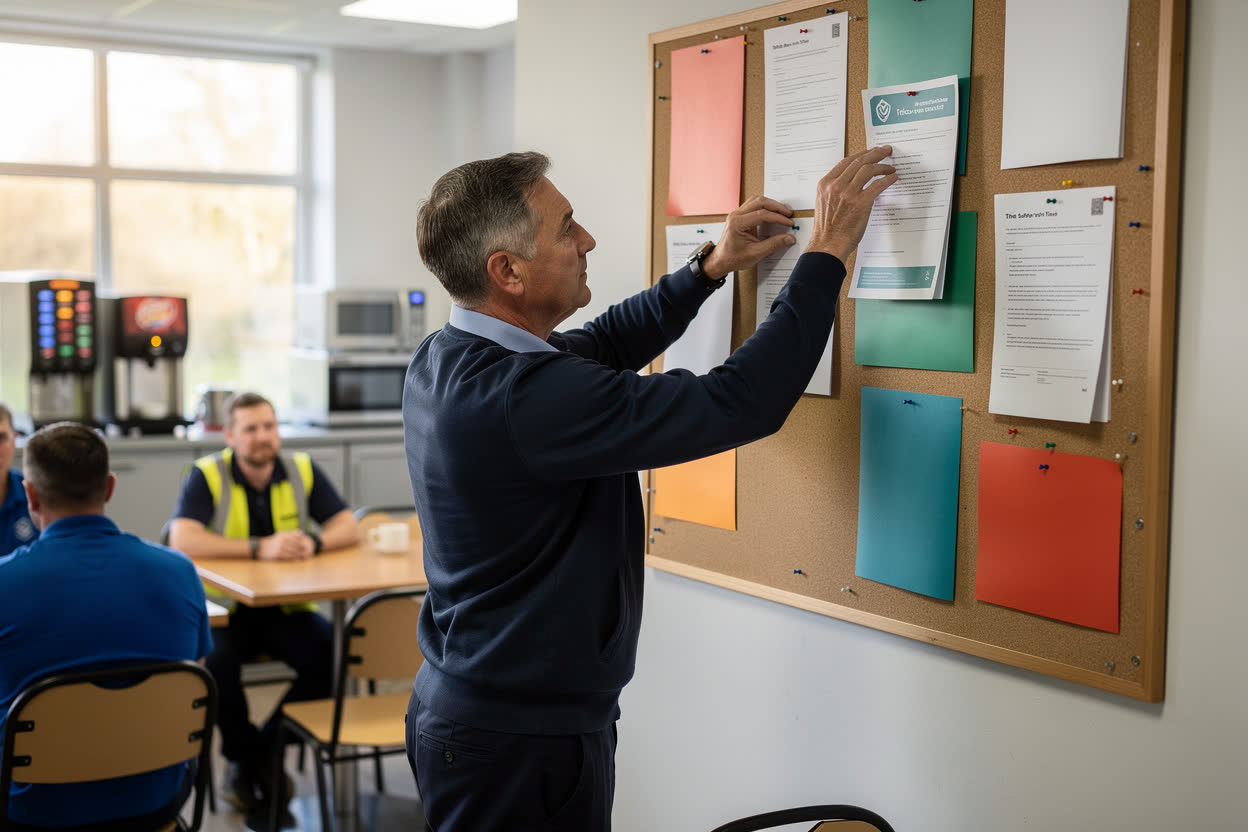
In Great Britain, health and safety law is enforced by the Health and Safety Executive, or HSE, and by local authorities. Inspectors can enter workplaces, investigate accidents, and take samples and photographs. Where they find problems, they can:

  • Give verbal or written advice.
  • Serve an Improvement Notice, requiring the problem to be put right.
  • Serve a Prohibition Notice, stopping a dangerous activity immediately.
  • Prosecute. Courts can impose unlimited fines and, for serious offences, prison sentences of up to two years.
The Regulator and Its Powers
The regulator gives advice, investigates serious accidents and inspects workplaces.Inspectors can enter without notice, issue improvement and prohibition notices, and prosecute.A prohibition notice stops an activity until the risk is controlled.
The Regulator and Its Powers

The Health and Safety Executive is the government body responsible for workplace health and safety in the UK. It gives advice, which you can ask for at any time, investigates serious accidents, and inspects workplaces such as offices, shops and warehouses. For some premises, Environmental Health Officers carry out the inspections. HSE inspectors have strong legal powers. They can demand entry to a workplace without notice, prosecute any company, employer or employee, issue improvement or prohibition notices that must be obeyed, and charge a Fee for Intervention where they find a breach.

Usually they give verbal or informal written advice first. If a business fails to comply with the law, they can issue an improvement notice requiring action within a set time. If there is imminent risk, a prohibition notice stops the activity until the risk is controlled. Serious breaches can be prosecuted whether or not an accident has happened.

Hazards in Different Types of Workplace
Construction: work at height, structural stability, moving machinery, lifting, manual handling, asbestos and demolition.Offices: display screen equipment, fire safety, slips, trips and falls, and ergonomics.Clinical settings: hazardous substances, infection control and moving patients.
Hazards in Different Types of Workplace

Every job and occupation has its own health and safety hazards. Construction sites must give priority to working at height, the stability of structures, moving machinery, lifting operations, manual handling, asbestos and demolition. Office environments focus more on display screen equipment, fire safety, slips, trips and falls, and ergonomics. Clinical settings need to deal with hazardous substances, infection control and the ergonomics of moving patients.

This is why a risk assessment of your own workplace is needed, because it picks out the hazards that actually apply to you. You can contact your health and safety regulator or look at its website for information about specific workplaces and detailed guidance on a wide range of health and safety topics.

Reporting Accidents
Reporting Accidents

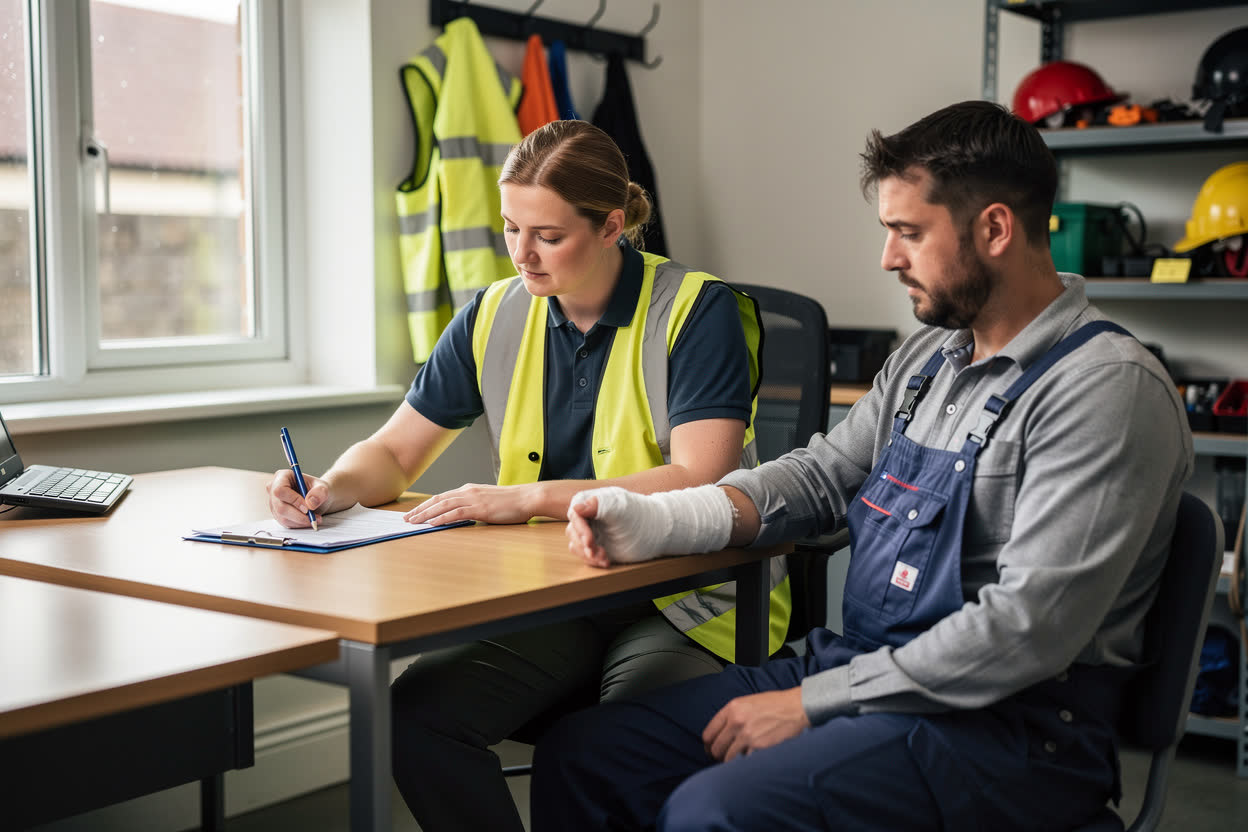
Under the Reporting of Injuries, Diseases and Dangerous Occurrences Regulations 2013, known as RIDDOR, employers must report to the HSE:

  • Deaths, and certain specified serious injuries.
  • Injuries that keep a worker off work, or unable to do their normal work, for more than seven consecutive days, not counting the day of the accident.
  • Certain occupational diseases, and dangerous occurrences.

Injuries causing more than three days’ incapacity must be recorded. All accidents should be recorded and investigated, so that they do not happen again.

Reporting Accidents and Illness
Employers must report and record certain injuries and dangerous occurrences.An injury that keeps a worker off work for a set number of days must be reported.Report any accident at work to your supervisor or employer immediately.
Reporting Accidents and Illness

In some situations the law requires workplace accidents and illnesses to be recorded and reported, under the Reporting of Injuries, Diseases and Dangerous Occurrences Regulations 2013, known as RIDDOR. Employers and others in control of premises must report and keep records of specified serious injuries, diagnosed industrial diseases and certain dangerous occurrences, which are near-miss incidents. A report is required when someone is injured at work and is off work for more than seven consecutive days, not counting the day of the accident.

Specified injuries must be reported promptly, and they include most fractures, amputations, injuries likely to cause loss of sight, crush injuries to the head or torso, and serious burns. Reports are also needed for injuries to members of the public or non-employees who are taken from the scene to hospital. If you have an accident at work, tell your supervisor, manager or employer immediately.

Summary

In this module, you have learned that:

The Health and Safety at Work etc. Act 1974 places duties on employers and employees alike.

The HSE and local authorities enforce the law, with powers including Improvement and Prohibition Notices and prosecution.

Injuries causing more than seven days’ absence must be reported under RIDDOR.

In the next module, we will look at risk assessment.

Knowledge Check
Which of the following is a legal duty of every employee?
Select one answer, then press Check.
To carry out the workplace risk assessment
To write the safety statement
To report hazards, defects and unsafe practices
To inspect the workplace once a year
Correct. Employees must take reasonable care, co-operate with their employer, and report hazards and defects as soon as possible.
Not quite. Risk assessment and the written safety arrangements are the employer’s job. Think about what every employee must do, and try again.
Next Module →Answer the question to unlock the next module.
Page 1 of 22