← Exit
Module 5 · Food Storage0% complete · 21 slides left
Food Safety in Catering
Module 5
This course contains audio. Use headphones in public places.
Introduction
Introduction

Storing food correctly is an essential part of food safety. Food that is stored incorrectly can quickly spoil and become a contamination hazard.

This module explains how to receive deliveries safely, store chilled, frozen and dry food correctly, understand date labels and stock rotation, and keep the records the law requires.

In This Module
In This Module

We will cover the key areas of safe food storage:

  • Deliveries & storage: How to check and accept deliveries safely, and store dry, fruit and vegetable stock correctly.
  • Chilled & frozen: Correct fridge and freezer temperatures, storage order, and how to handle frozen food.
  • Dates & records: Use-by and best before dates, stock rotation, labelling and traceability.
Key Terminology
Key Terminology

The danger zone is the temperature range between 5°C and 63°C, where bacteria multiply most rapidly. Chilled and frozen storage keeps food out of this range.

Traceability means being able to track a food product or ingredient through all stages of production, distribution and sale.

Suppliers and Deliveries

Check the condition of all frozen and chilled food before accepting it. This involves checking:

  • The temperature, freshness, colour and smell.
  • The labelling, packaging and the use-by / best before dates.
  • For any signs of pests.

If the food passes, store it appropriately within a maximum of 20 minutes. Always keep records of food deliveries. If you are concerned about anything — such as the temperature — the delivery must be rejected and reported to your manager immediately.

Why Correct Storage Matters

Food stored incorrectly can quickly spoil and cause contamination hazards, including:

  • Mould and discolouration.
  • Pest activity and staleness.
  • The multiplication of pathogenic bacteria.

Crucially, if pathogenic bacteria have multiplied to dangerous levels, the food may still look, taste and smell completely normal.

Food Preservation
Food Preservation

Preserving food restricts the growth of pathogenic and spoilage bacteria. Common methods include pasteurisation, dehydration, vacuum packing, pickling and smoking. Whichever method is used, the packaging must be in good condition.

Once opened, preserved food must be refrigerated. Pasteurised, smoked or vacuum-packed food must be refrigerated whether open or not. Never sell spoilt or unfit preserved food, and always follow the manufacturer’s instructions.

Dry Food Stores
Dry Food Stores

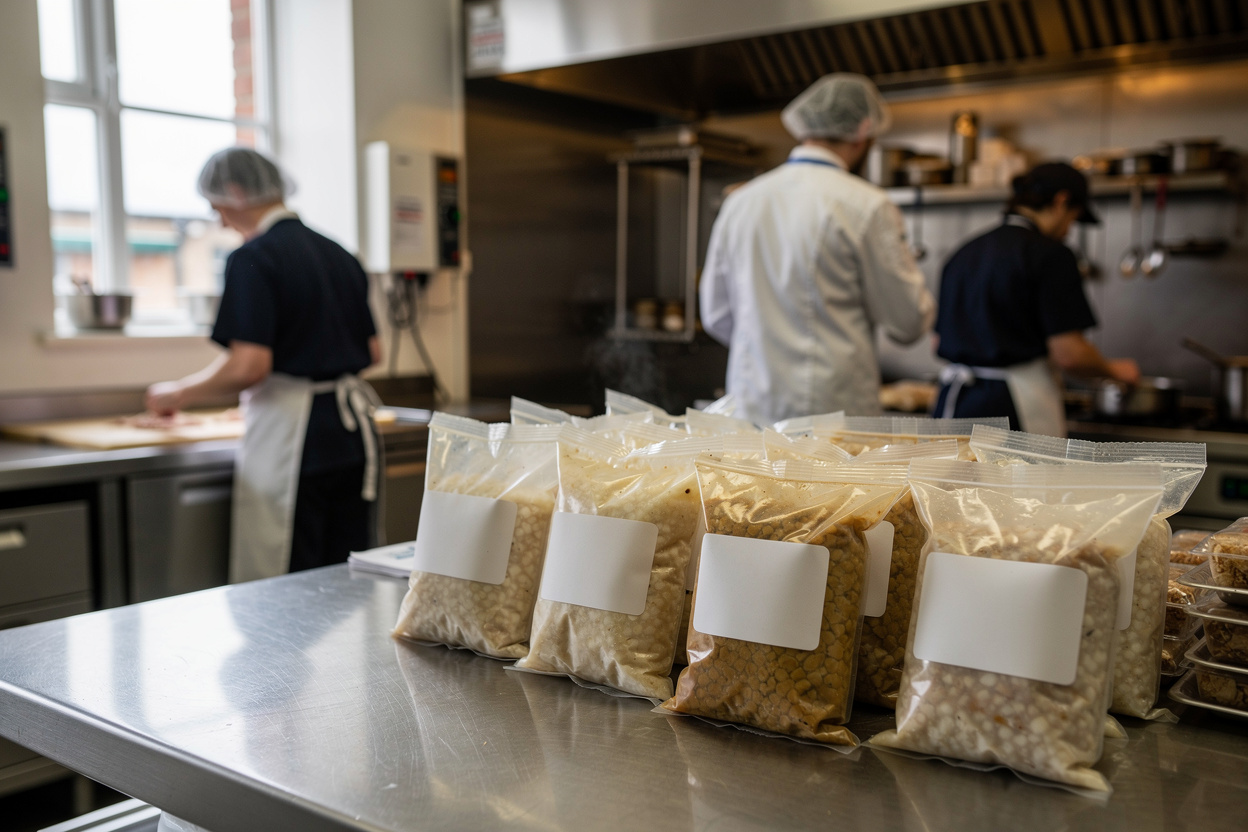
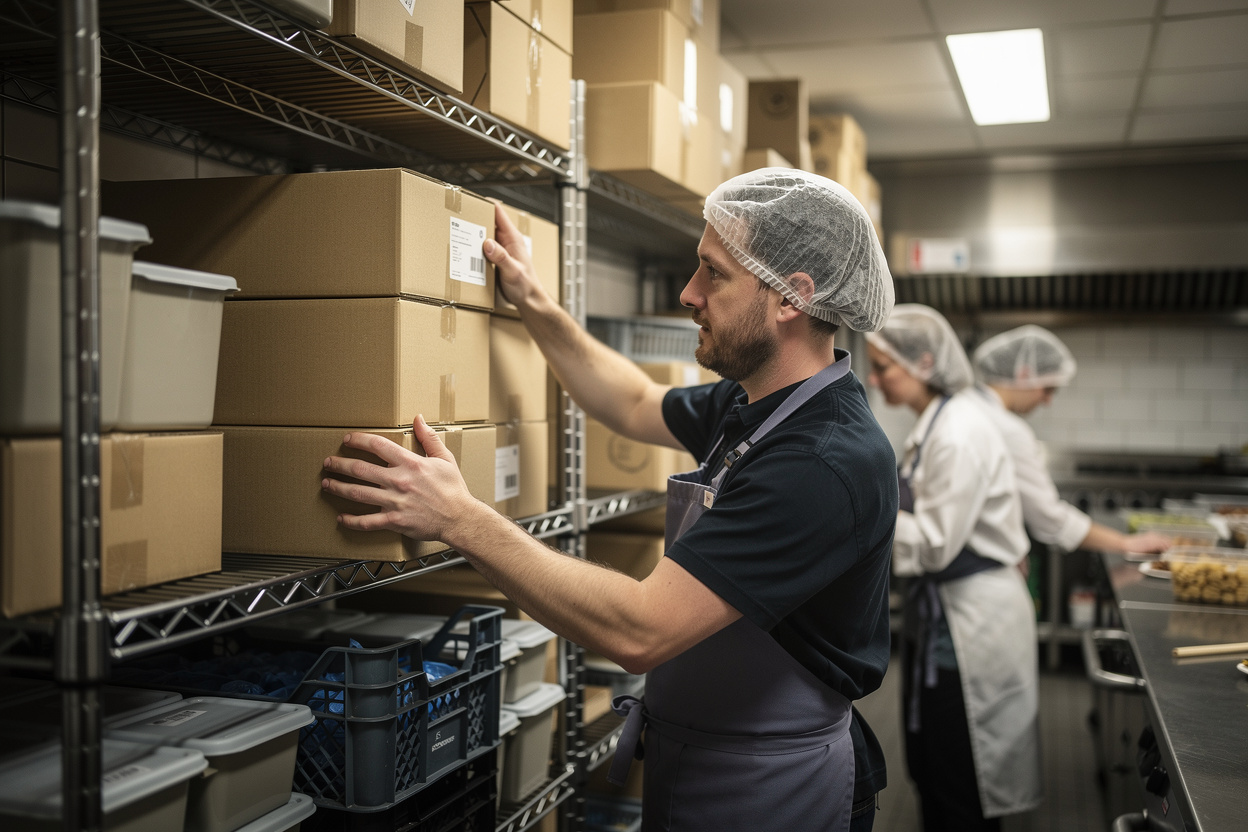
Dry stores hold low-risk foods kept at ambient temperature. To be fit for purpose they must:

  • Be cool, well-ventilated, cleaned and tidied regularly.
  • Have good lighting and pest-proof doors, windows and containers.
  • Have shelving or racking so no food is stored on the floor.
  • Be checked so all food is in date, with damaged or out-of-date stock removed.
Fruit and Vegetable Storage

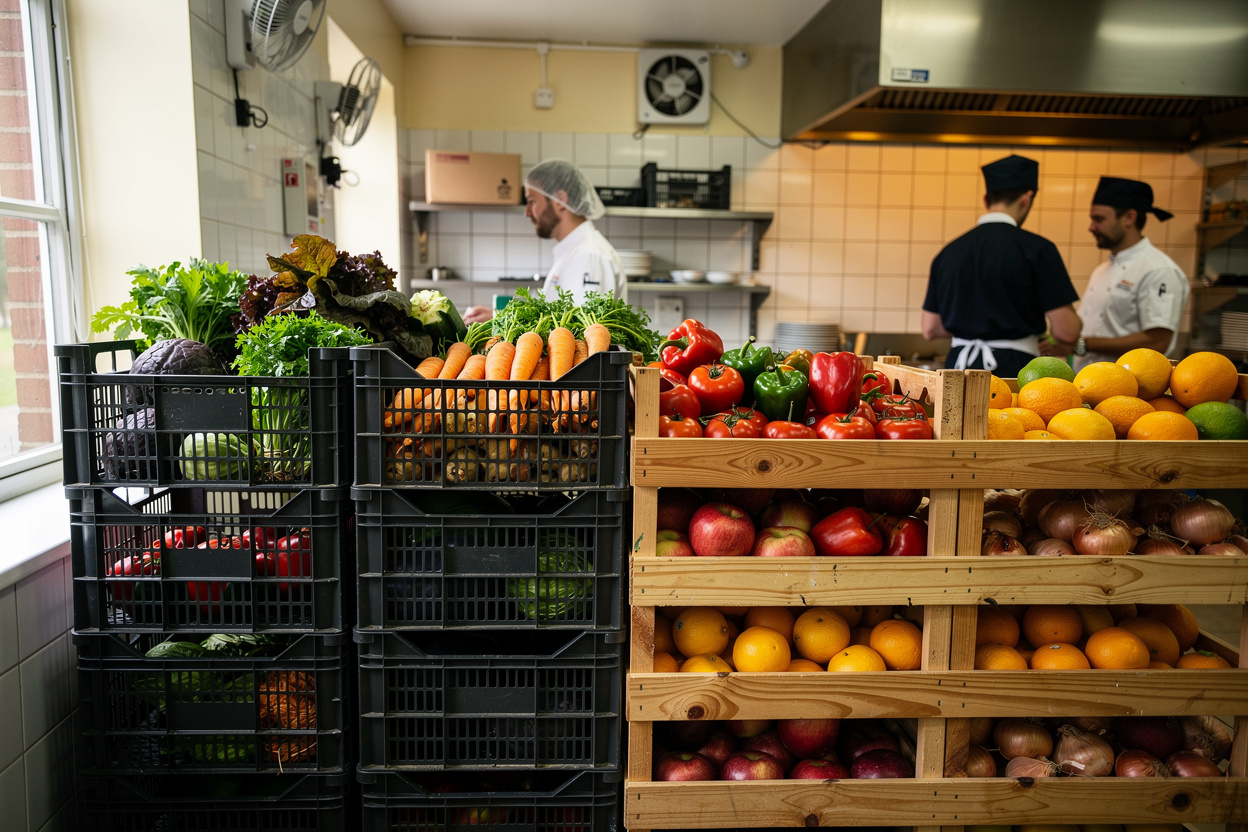
Store fruit and vegetables away from other foods and check them for mould regularly. Keep bananas away from other fruit so they don’t ripen it too quickly.

Store dirty vegetables contaminated with soil (such as potatoes or lettuce) below fruits and clean vegetables. Keep potatoes in the dark to stop them turning green, sprouting or producing the toxic chemical solanine.

Refrigerator Temperatures

Fridges must operate consistently at the right temperature. High temperatures may be caused by:

  • Overloading, or storing food in front of the cooling units.
  • The thermostat being set too high, or faulty door seals.

The legal maximum for chilled food is 8°C, but best practice is to set fridges between 1°C and 5°C. Scotland has no legal maximum but no higher than 8°C is recommended. Every temperature check must be recorded as evidence for a due diligence defence — records must never be falsified. A missed check must be left blank, highlighted and reported.

Chilled Food Storage

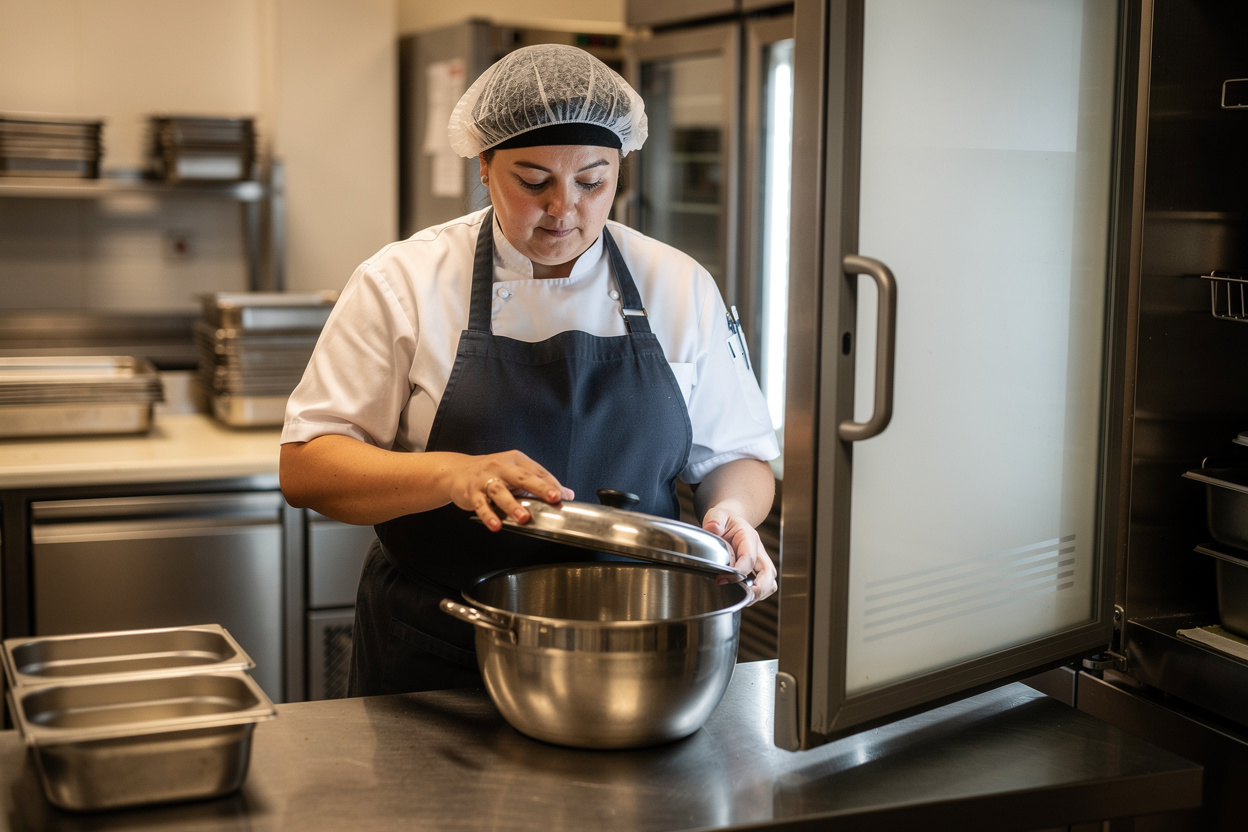
Many foods, such as dairy and raw or cooked meat, must be kept in the fridge. You should:

  • Never put food in front of the cooling unit, as this stops cool air circulating.
  • Never put hot food in the fridge, as it raises the internal temperature.
  • Cover, label and date strong-smelling food to avoid tainting.
  • Avoid storing open cans, and place partly used food in non-metallic containers.

Partly used food should be covered, labelled and given a use-by date of no more than 48 hours.

Fridge Storage Order

Store food from top to bottom so raw food can never drip onto ready-to-eat food:

  • Top — ready-to-eat: Cooked and ready-to-eat foods go on the top shelves, away from any drips.
  • Middle — dairy & prepared: Dairy products and prepared items sit in the middle.
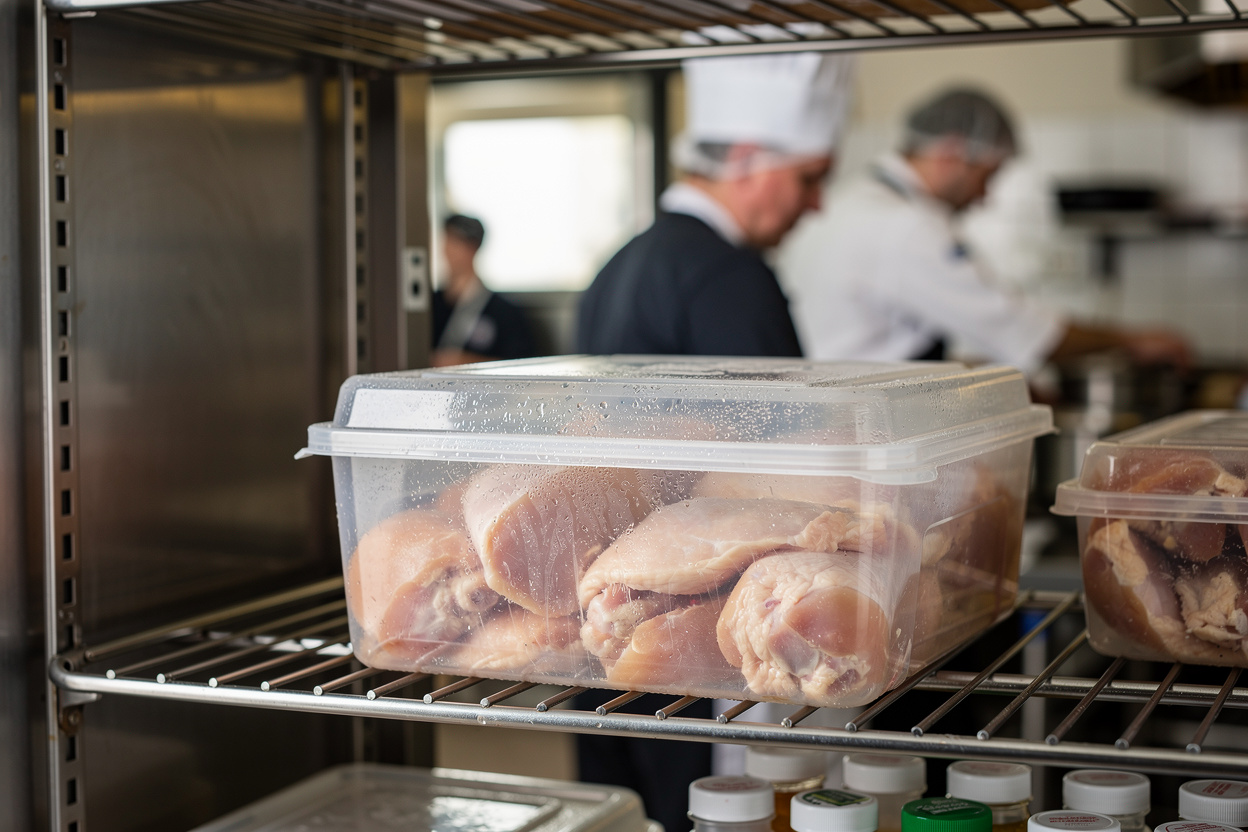
  • Bottom — raw meat: Raw meat, poultry and fish go on the bottom shelf so juices cannot contaminate other food.

Where possible, keep raw and ready-to-eat foods in separate fridges.

Egg Storage
Egg Storage

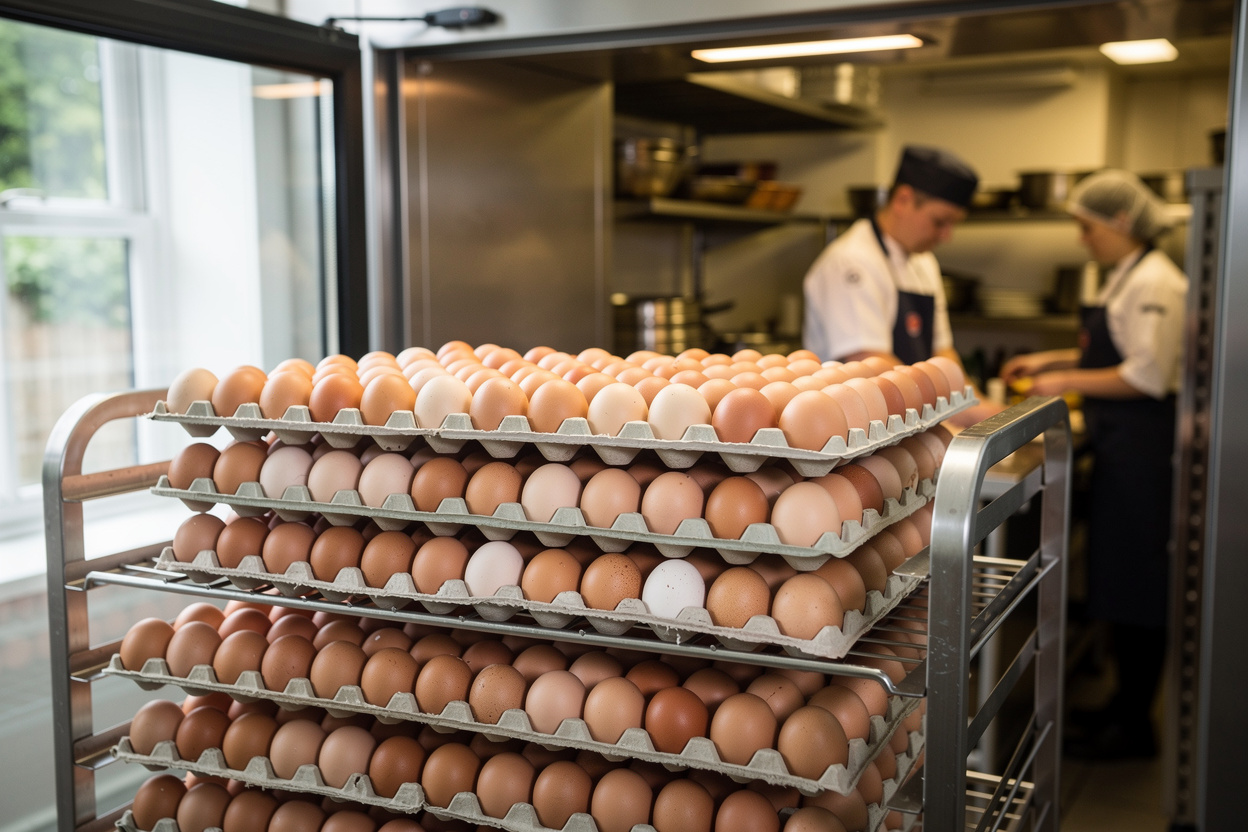
To maintain freshness and reduce bacterial growth, it is best practice to store eggs in the fridge. In the UK, businesses are encouraged to use eggs carrying the red Lion mark, introduced under the British Lion scheme in 1998 to reduce salmonella.

Avoid washing eggs (it removes the shell’s protective coating), keep them in their original carton, and check for freshness. Eggs stored out of the fridge must be kept below 20°C to reduce the risk of salmonella.

Frozen Food Storage
Frozen Food Storage

Commercial freezers must operate between -18°C and -22°C to stop bacteria growing. Spores and pathogenic bacteria are not destroyed — they become dormant and grow again once thawed, so thawed food should be treated as fresh and cooked immediately. Moulds and yeasts can grow above -10°C, so they may start growing while food defrosts.

Pack frozen food tightly but never above the freezer load line, and keep raw and ready-to-eat foods separate, as you would in a fridge.

Freezing and Thawing

Over time, food still deteriorates in the freezer. A guide for maximum storage is:

  • Food item: Maximum storage
  • Frozen vegetables: 8–12 months
  • Frozen fruit: 6–8 months
  • White fish: 6–8 months
  • Beef, pork, chicken, lamb, turkey, duck: 4–6 months
  • Ham, bacon joints and oily fish: 3–4 months
  • Sliced bacon, cured meats, mince and shellfish: 2–3 months
  • Bread and cakes: 4–6 months
  • Pastries: 3–4 months
Use-By and Best Before Dates

Use-by dates are found on high-risk foods and state the date up to which the food is safe to eat. They must be checked daily — once passed, the food is unsafe and it is illegal to use, sell or display. It is illegal to alter a use-by date.

Best before dates are used for low-risk foods and indicate quality, not safety. Food can legally be sold after its best before date (with the exception of eggs).

Stock Rotation
Stock Rotation

All food premises should follow the FIFO (First In, First Out) system so older food is used before newer food. Poor stock rotation can cause:

  • Food spoilage and wastage.
  • Unacceptable levels of bacterial contamination.
  • Pest activity.

Check use-by dates daily and best before dates at least weekly. You must never alter use-by dates, as doing so can result in prosecution.

Food Labelling
Food Labelling

By law, all pre-packed foods must be labelled with certain information, including:

  • The name and contact details of the manufacturer, and the product name and weight.
  • An ingredients list in descending order of weight, with allergens emphasised.
  • Cooking / heating and storage instructions, and a use-by or best before date.
  • The place of origin and nutritional information.

Food must never be labelled, advertised or presented in a misleading way.

Traceability
Traceability

All food businesses must have records in place to trace foods in the event of an incident — for example, if a product must be recalled during a food poisoning investigation. This could be an invoice or a delivery note from the supplier.

For pre-packaged foods, traceability is identified through a batch or lot number. For unpackaged food or food packaged on-site, it is up to the business to decide on a system, such as barcodes.

Alba’s Delivery
Alba’s Delivery

Alba orders frozen chicken from a new supplier. The delivery van is refrigerated and clean, and the driver only opens the doors briefly. However, when Alba checks the chicken it is 4°C and partially defrosted.

Alba asks the driver if it is safe. He tells her that as long as she puts it in the freezer as soon as possible, it will re-freeze and be perfectly safe.

Summary

In this module, you have learned that:

Deliveries must be checked and stored within 20 minutes, and rejected if there is any concern such as temperature.

Chill food at 1–5°C (legal max 8°C) and freeze at -18 to -22°C; store raw below ready-to-eat food.

Follow FIFO stock rotation, never alter use-by dates, and keep records for traceability and due diligence.

In the next module, we will build on these foundations.

Knowledge Check
Based on the scenario, what should Alba do next?
Select one answer, then press Check.
Accept the delivery but report her concerns to her supervisor.
Accept it — the driver assures her it will be fine if she freezes it quickly.
Reject the delivery and report it to her supervisor.
Accept it and re-check the temperature 90 minutes after freezing.
Correct — if food is not at the correct temperature on delivery it must be rejected, even if the driver insists it is safe. You can now continue.
Next Module →Answer the question to unlock the next module.
Page 1 of 22