← Exit
Module 4 · Physical, Chemical and Allergenic Hazards0% complete · 19 slides left
Food Safety in Catering
Module 4
This course contains audio. Use headphones in public places.
Introduction
Introduction

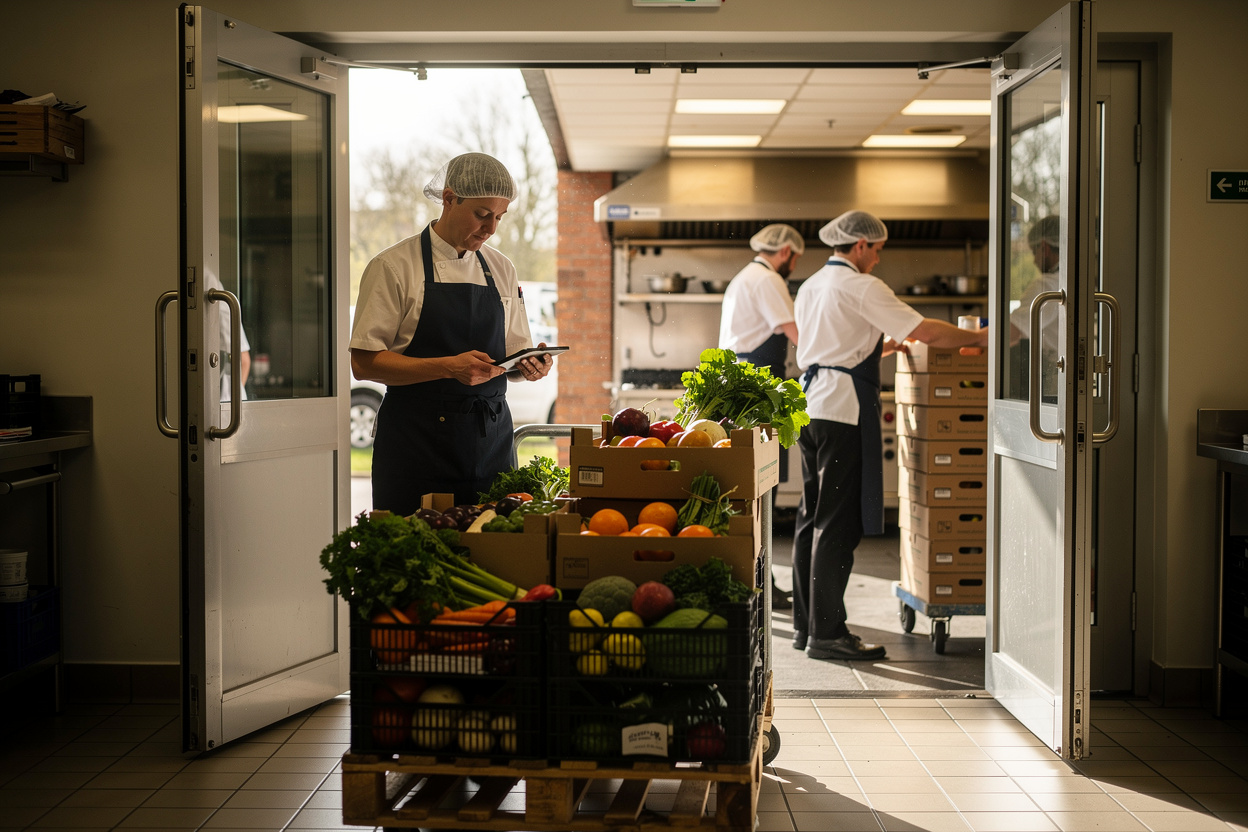
Not every food safety hazard is a bacterium you cannot see. Food can also be made unsafe by physical objects that fall into it, by harmful chemicals, and by allergens that can seriously harm — or even kill — certain customers.

In this module you will learn what physical, chemical and allergenic hazards are, how each type contaminates food, the practical controls you must follow, and the law surrounding the 14 named allergens.
In This Module
In This Module

We will cover three groups of hazards and how to control each one:

  • Physical hazards: How to control the risk of contamination from foreign objects such as glass, metal, hair and packaging.
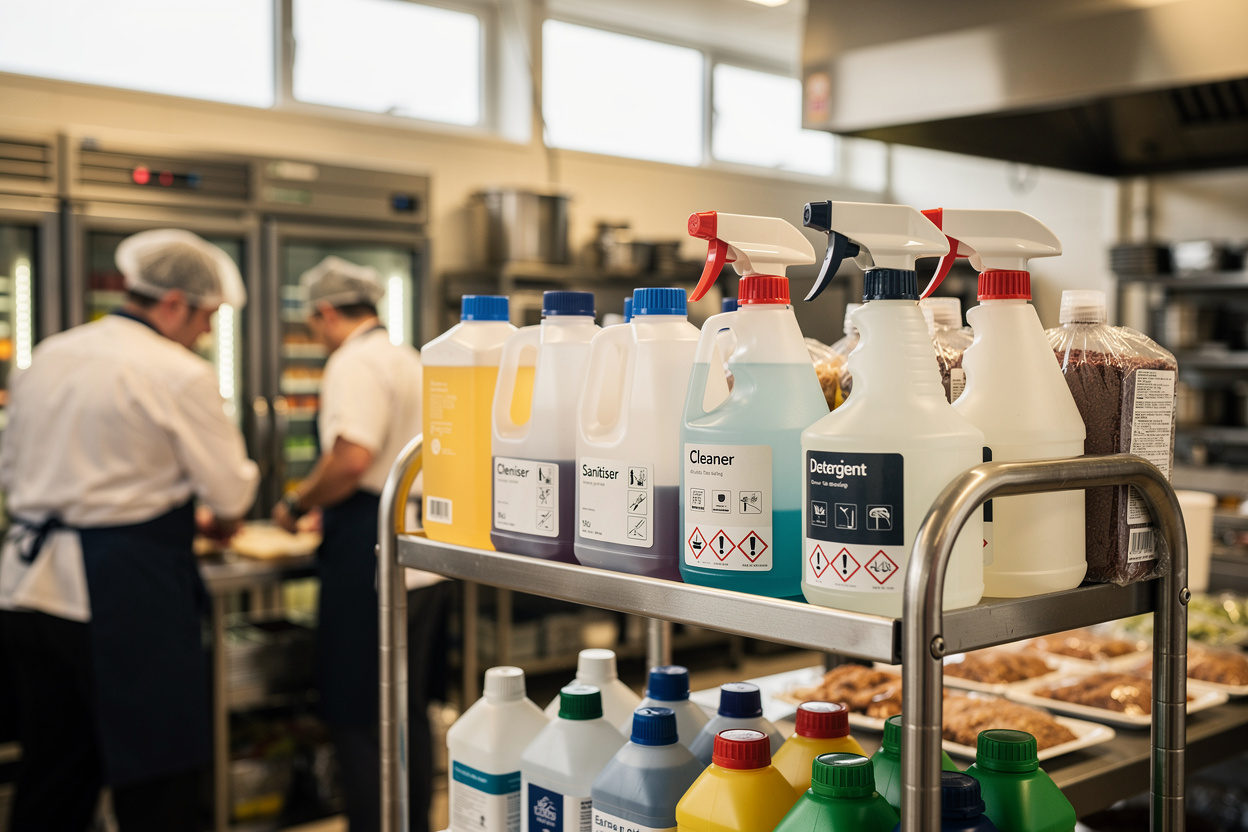
  • Chemical hazards: How to use and store cleaning chemicals safely so they never come into contact with food.
  • Allergenic hazards: How to control allergens, give accurate allergen information and comply with labelling laws.
Physical Hazards
Physical Hazards

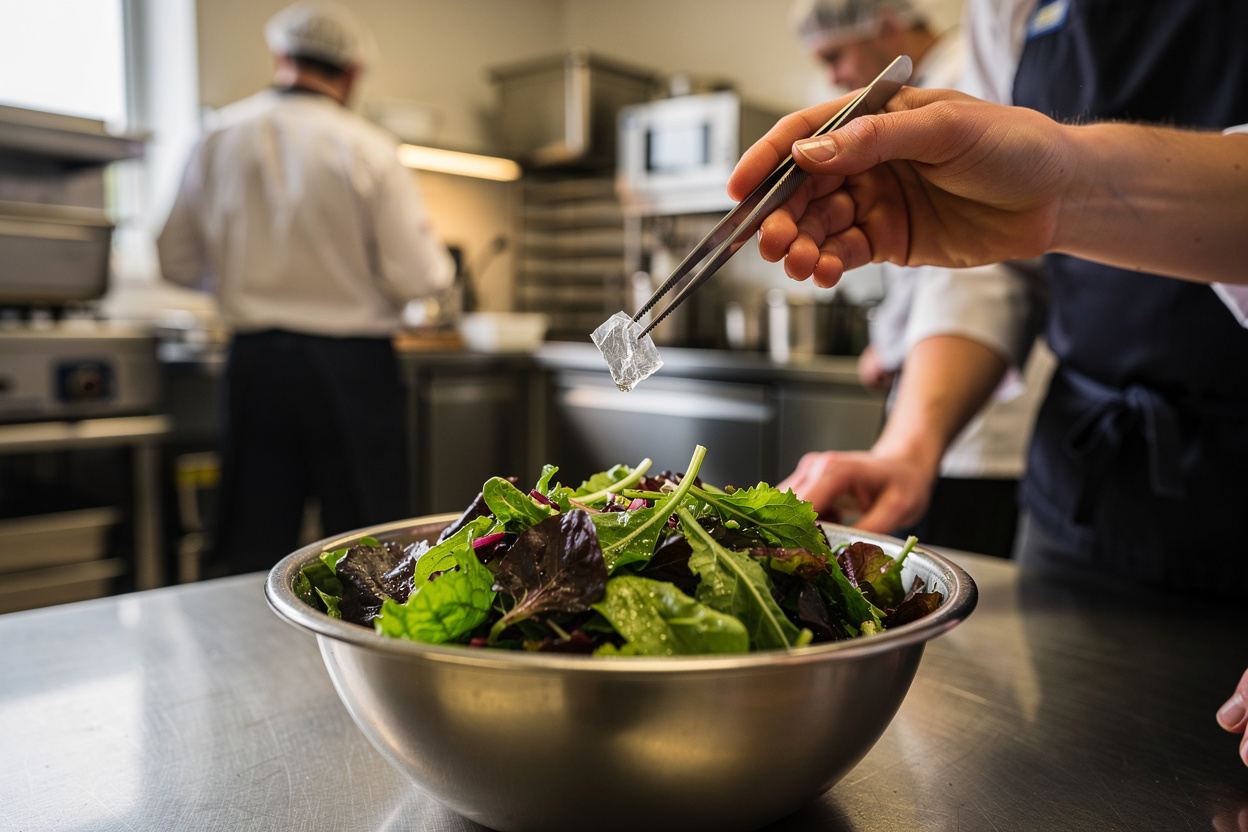
Physical hazards are items in food that should not be there. They can cause serious harm such as choking, cuts to the mouth or broken teeth, and they can also carry bacteria.

The most common sources of physical contamination are known as the ‘6 Ps’.

The 6 Ps of Physical Contamination

The most common sources of physical hazards are:

  • People: Items such as jewellery, hair, fingernails, buttons or plasters accidentally falling into food.
  • Packaging: Cardboard, plastic, string, splinters of wood or staples that are not removed or disposed of correctly.
  • Product: Stones, dirt, vegetable stalks, feathers and bones naturally found in raw food coming into contact with prepared food.
  • Pests: Pest bodies, droppings, eggs and feathers. Pests are also a microbial hazard because they carry harmful bacteria.
  • Premises: Materials from the building or fittings, such as flaking paint, wood, rust or plaster.
  • Plant: Hazards from machinery and equipment, such as loose nuts and bolts, bristles, or bits of cloth from cleaning materials.
Controlling Physical Contamination

There are simple ways you can help control the risk. You must:

  • Report worn and damaged equipment to your manager as soon as you notice it.
  • Use equipment correctly and for its intended purpose.
  • Follow any glass breakage policy your workplace has.
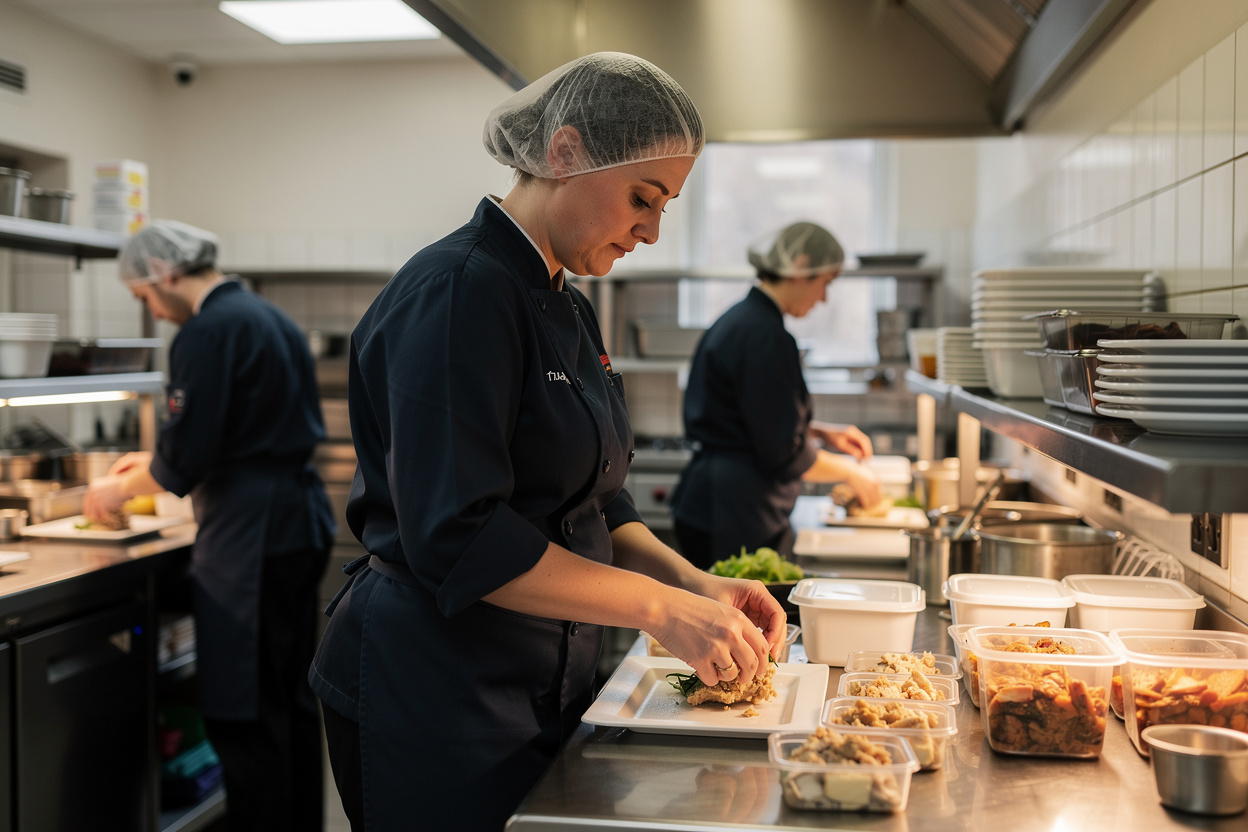
  • Wear the correct PPE and clothing — make sure hair nets or hats cover your hair completely.
  • Remove jewellery and use blue detectable plasters on cuts.
  • Follow your workplace’s pest control policies.
Chemical Hazards
Chemical Hazards

Chemical hazards can contaminate food at any stage of production or preparation. For example, through chemical residue left on worktops after cleaning, chemicals being sprayed near open food, cleaning products stored in unlabelled containers, food stored in old chemical containers, or the misuse of pesticides on vegetables.

Controlling Chemical Contamination

To control chemical contamination you must:

  • Keep food and chemical deliveries separate.
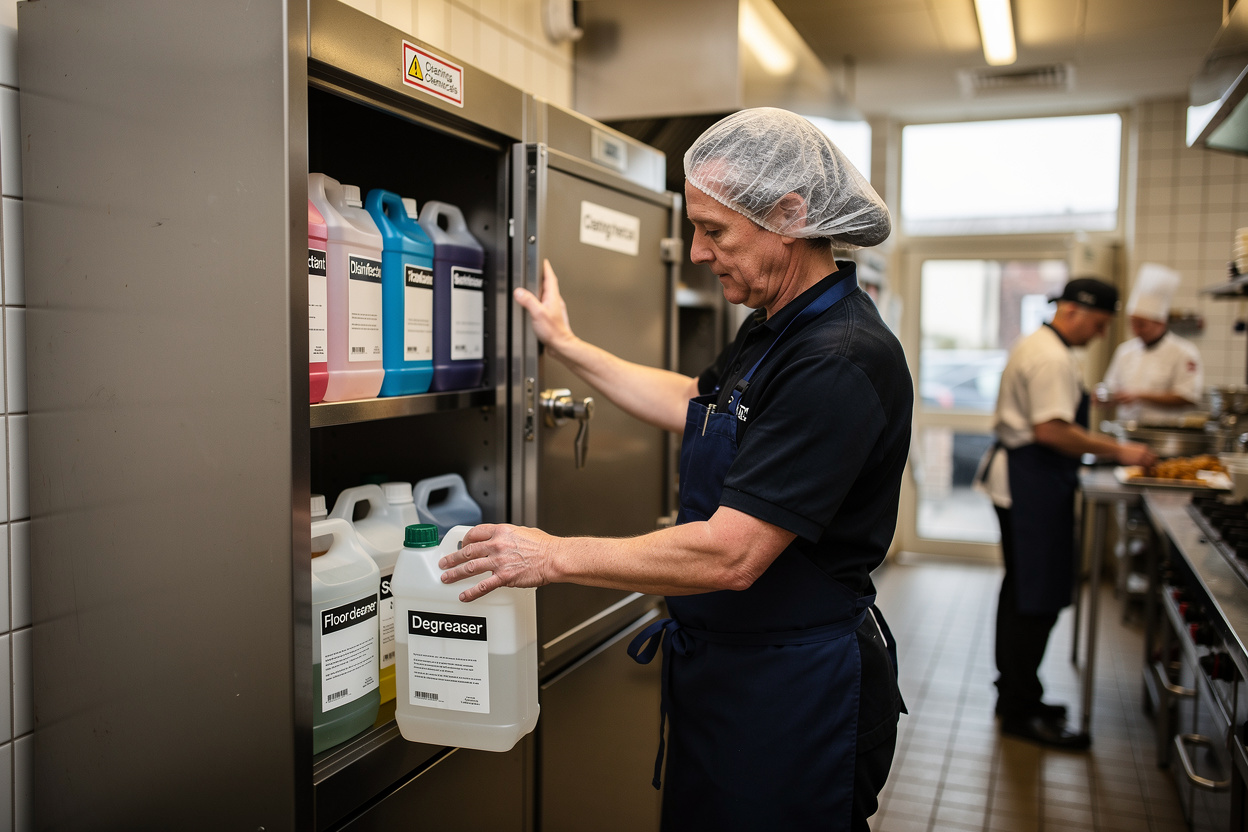
  • Store chemicals away from food, ideally in a locked storage area.
  • Never store food in old chemical containers.
  • Only use food-grade packaging for food.
  • Always follow the manufacturers’ instructions when using chemicals.
  • Keep food covered or safely put away during cleaning.
Allergenic Hazards
Allergenic Hazards

A food allergen is an ingredient that causes an adverse reaction in the body. Some reactions are mild, but for some people food allergies can be life-threatening.

Typical signs include itchy, red or watery eyes, sneezing, a blocked or runny nose, coughing, wheezing, and a red, itchy rash. People can also be intolerant to ingredients such as dairy or wheat; intolerances are different to allergies but cause similar symptoms. Coeliac disease is an autoimmune reaction to gluten.

Anaphylactic Shock
Anaphylactic Shock

In serious cases, contact with an allergen can cause a severe, life-threatening reaction called anaphylaxis. Signs include:

  • Breathing difficulties, such as fast, shallow breathing.
  • A dangerous drop in blood pressure.
  • Trouble swallowing or speaking.
  • Feeling dizzy, lightheaded or faint.
  • Confusion, anxiety and severe distress; an increased heart rate.

Even the smallest quantity can be fatal — for some sufferers, just 1/44,000th of a peanut can cause a reaction.

Emergency Situations

If a customer is having a severe allergic reaction, you should:

  • Keep the person comfortable — if breathing is difficult, help them sit up.
  • Find out if they have an adrenaline auto-injector (such as an EpiPen) and help them use it. Used promptly, it could save their life.
  • Call 999 for an ambulance and say clearly that it is a severe allergic reaction — mention anaphylaxis.
  • If symptoms persist five minutes after the first dose, a second dose can be given in the opposite thigh.
  • Reassure the person and keep them calm.
The 14 Food Allergens

Any food can be an allergen, but 14 must, by law, be declared if used in a food product:

  • Celery · Cereals containing gluten · Crustaceans · Eggs · Fish · Lupin · Molluscs
  • Milk · Mustard · Nuts · Peanuts · Sesame seeds · Soya · Sulphur dioxide / sulphites (above 10 mg/kg or 10 mg/L)
Controlling Allergenic Contamination

Controlling allergens is essential, as the consequences could be fatal. You must:

  • Keep foods containing any of the 14 allergens segregated from those that don’t.
  • Keep preparation areas, equipment and utensils for allergenic foods separate.
  • Keep ingredient labels and recipe cards, and tell staff if an ingredient changes.
  • Be aware of ‘hidden’ allergens, such as eggs in mayonnaise or sesame in hummus.
  • Clearly label allergens and read labels carefully — never guess.
Food Allergen Policies

Your workplace must have an allergen policy that provides information on how to handle allergenic products safely. It proves to customers and enforcement officers that you have considered the hazards and put controls in place.

Everyone in your workplace should be familiar with the allergen policy, and you must be kept up to date on any changes to the policy or the law.

Allergen Labelling Laws

By law, all food businesses must provide allergen information for the foods they make, sell and serve — both with and without packaging. All catering businesses must be able to declare the allergens of any given food when asked by a customer.

If a customer asks whether a dish contains a certain ingredient, you must answer accurately and knowledgeably. Never guess.

Foods Prepacked for Direct Sale (PPDS)

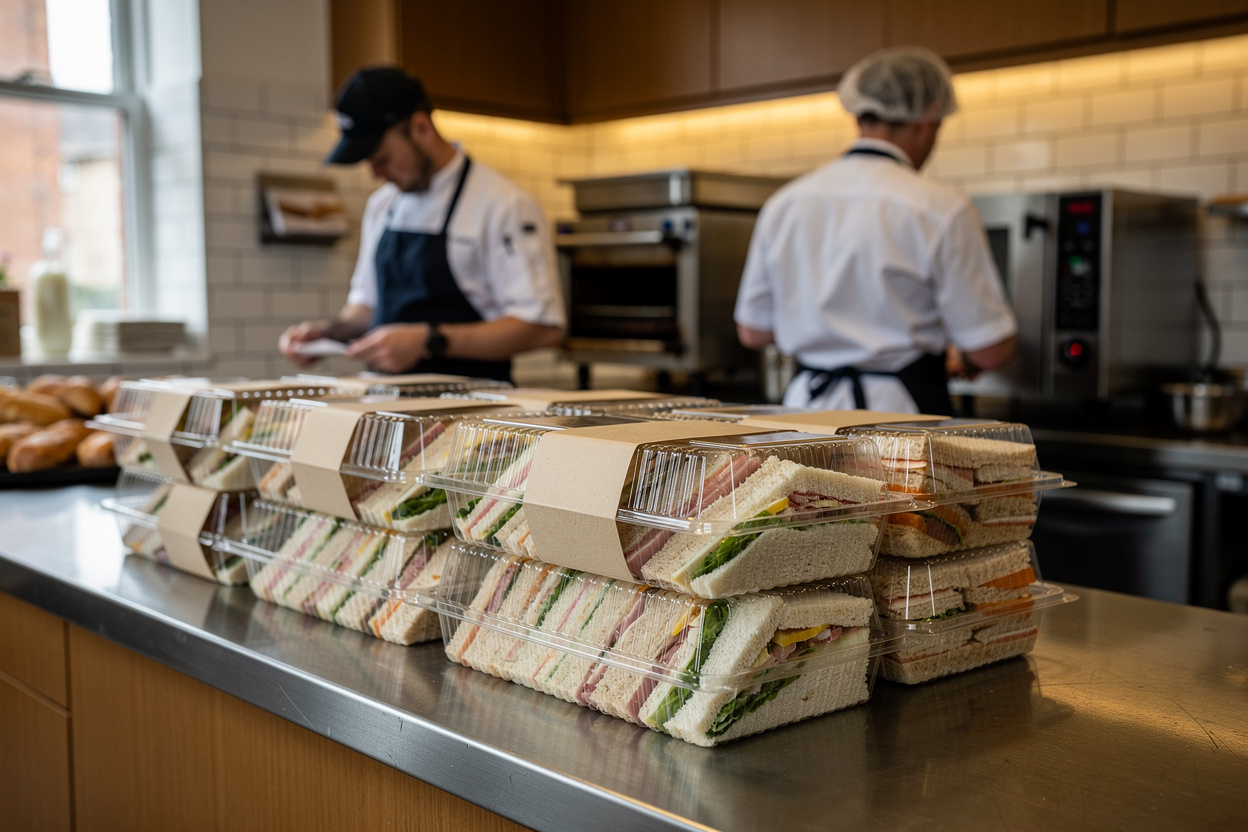
PPDS refers to food packaged on the same premises where it is made and then sold — for example sandwiches, baguettes, cakes and muffins, paninis, pre-dispensed soup with a lid, and smoothies made and bottled on site.

All of these products need a complete list of ingredients on their label, with allergens emphasised.

Natasha’s Law
Natasha’s Law

In October 2021 the UK Government introduced new legislation requiring food businesses to include full ingredients labelling on all PPDS food products.

It followed the death of 15-year-old Natasha Ednan-Laperouse in 2016, after eating a baguette containing sesame seeds where the packaging carried no reference to the allergen. Natasha’s Law means foods prepared, packed and sold on the same premises, such as sandwiches and salads, must carry an allergen label.

Natasha’s Law — In Practice

As it is a legal requirement, all PPDS products must be labelled correctly. Any ‘may contain’ allergens should also be declared, but only where there is no guarantee the process is free from cross-contamination.

If an allergen is added to a product, the label must be updated immediately. Labels must also be reviewed when a supplier changes, when a supplier alters an ingredient’s allergen profile, or when a recipe changes.

Summary

In this module, you have learned that:

Physical hazards (the 6 Ps) and chemical hazards must be kept out of food by using equipment correctly and storing chemicals away from food.

There are 14 named allergens; for allergic customers even a trace can cause anaphylaxis, a severe and potentially fatal reaction.

You must give accurate allergen information, prevent cross-contact, and comply with labelling laws including Natasha’s Law for PPDS food.

In the next module, we will build on these foundations.

Knowledge Check
A customer asks whether a prepacked sandwich contains nuts, but you know the bread supplier has recently changed and the label has not yet been updated. What should you do?
Select one answer, then press Check.
Tell the customer it is fine, as the recipe has not changed.
Check the current allergen information and verify with the new supplier before giving an accurate answer.
Give the customer the old label information and say it is likely the same.
Reassure them it is nut-free, as the previous supplier’s bread was nut-free.
Correct — food allergies can be fatal, so you must verify with the new supplier to give accurate allergen information. You can now continue.
Next Module →Answer the question to unlock the next module.
Page 1 of 20