← Exit
Module 3 · Microbiological Hazards0% complete · 20 slides left
Food Safety in Catering
Module 3
This course contains audio. Use headphones in public places.
Introduction
Introduction

Microbiological hazards are the single most common cause of food poisoning. They are also the hardest to spot — you usually cannot see, smell or taste the harmful microbes that make food unsafe.

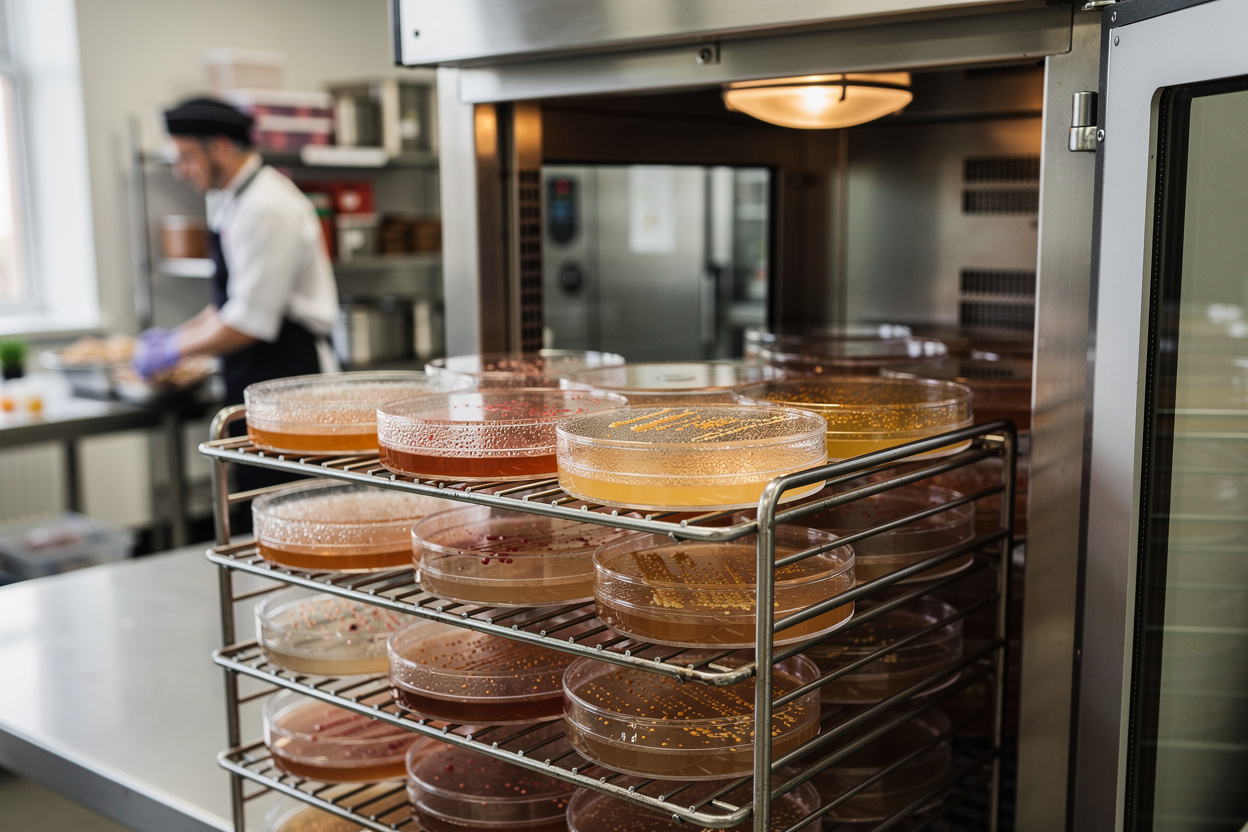
A microbe (or micro-organism) is a tiny living thing, far too small to see with the naked eye. Millions can be present on a chopping board, a cloth or an unwashed hand. Under the right conditions, a single bacterium can multiply into millions within hours.

This module explains the main types of microbe you need to control, how they spread, and the simple, reliable steps that keep them in check — the knowledge at the very heart of safe food handling.
In This Module
In This Module

This module builds a complete picture of microbiological hazards and how to control them. You will cover:

  • Types of Microbe: The bacteria, viruses and moulds that can cause food poisoning, and the conditions they need to grow.
  • High-Risk Foods: The difference between low-risk and high-risk foods, and why some need extra care.
  • The Danger Zone: How temperature controls bacterial growth, and how to keep food out of the danger zone.
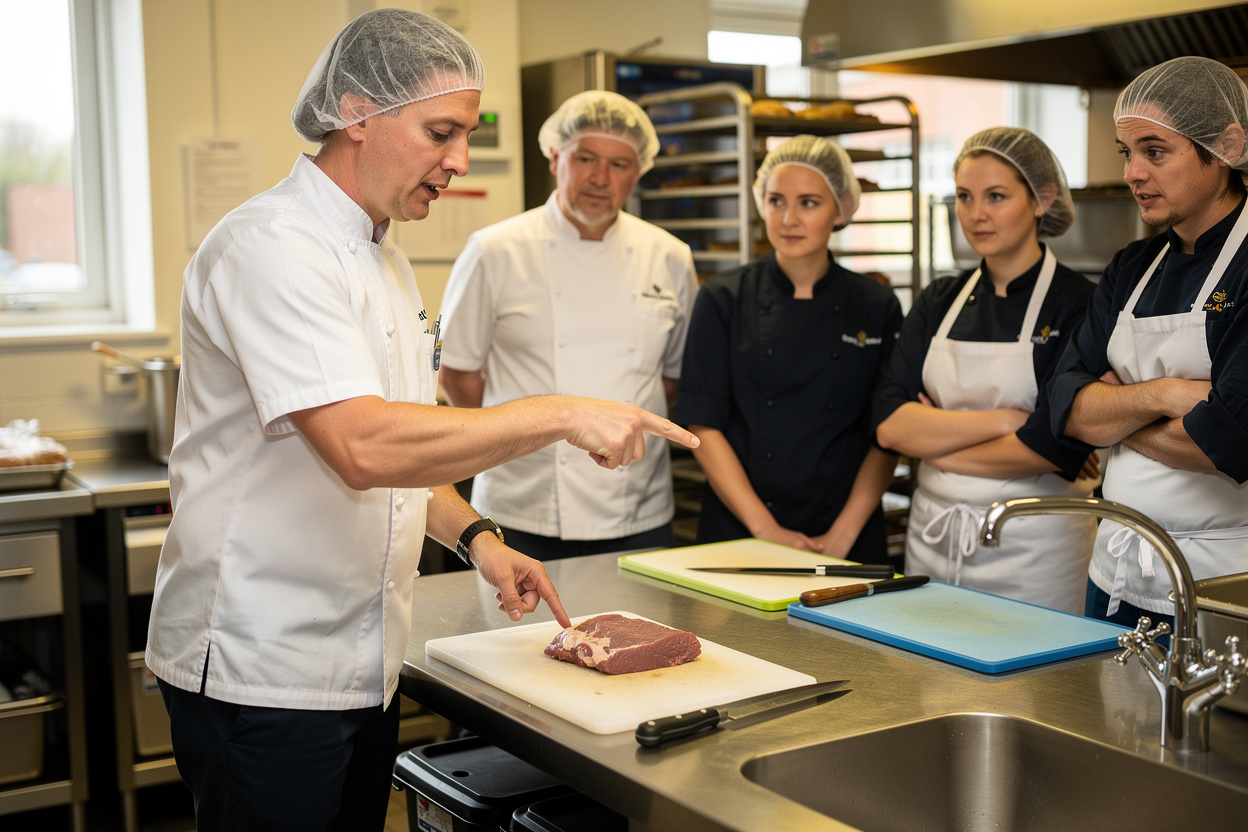
  • Cross Contamination: How microbes spread from one place to another, and the ways to prevent it.
Microbial Contamination

Microbial contamination is the most common reason behind both food poisoning and food spoilage. It can be found at any stage of the food handling process, from receiving ingredients through to serving the final dish.

Microbial contamination includes contamination from bacteria, viruses and moulds. Because these microbes are invisible, the only reliable defence is good practice at every step — not relying on being able to spot a problem.

Food Poisoning
Food Poisoning

Food poisoning is caused by eating food that is contaminated with harmful bacteria, viruses or toxins. It can happen for many reasons, including holding food at the wrong temperature, cooling it too slowly, failing to thaw or reheat food properly, undercooking, buying from unreliable suppliers, cross contamination, and poor personal hygiene.

Having high standards of food safety prevents food poisoning. In practice that means controlling the growth of harmful bacteria, cooking and processing food correctly, disposing of unfit food immediately, and following effective cleaning and disinfection procedures.

Symptoms & Who Is Most at Risk

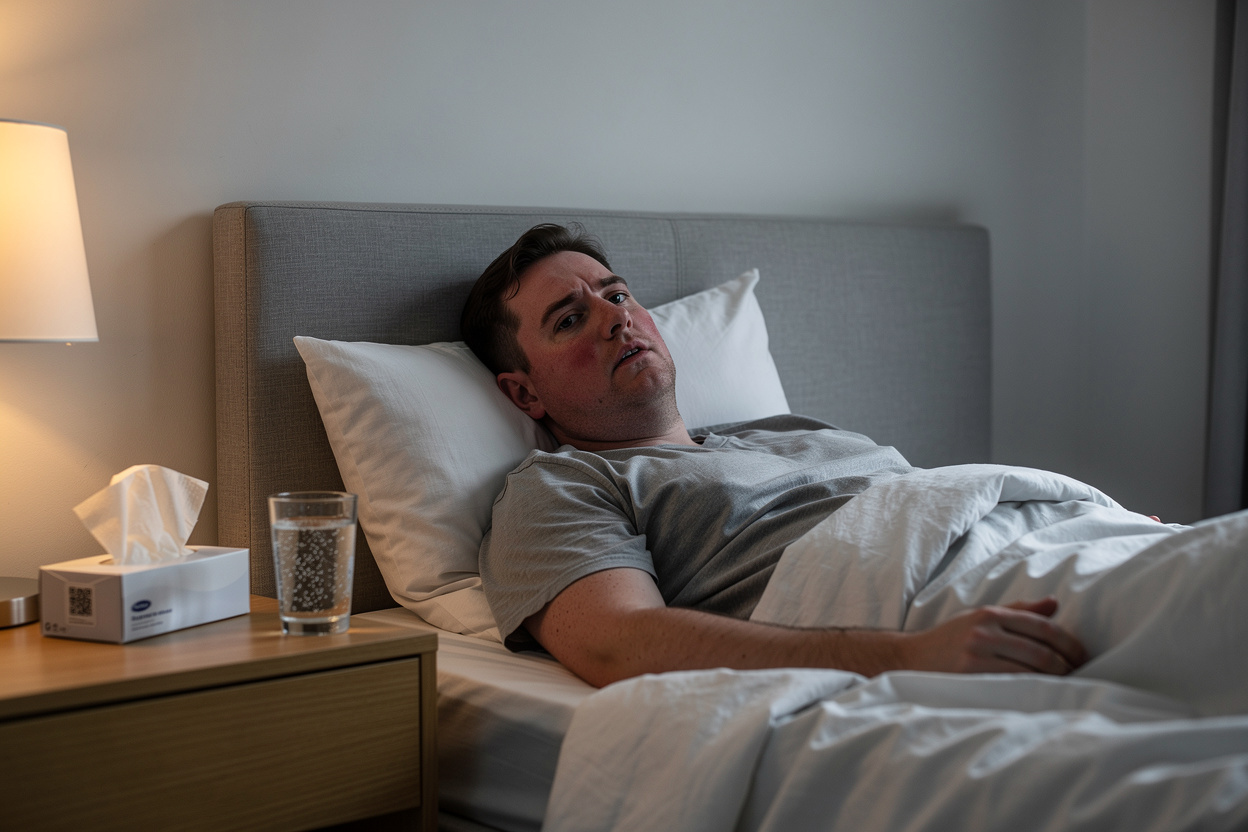
Food poisoning symptoms can appear immediately, or hours, days or even weeks after eating contaminated food. They may include:

  • Diarrhoea and abdominal pain.
  • Vomiting and nausea.
  • Fever.
  • In severe cases, dehydration and collapse.

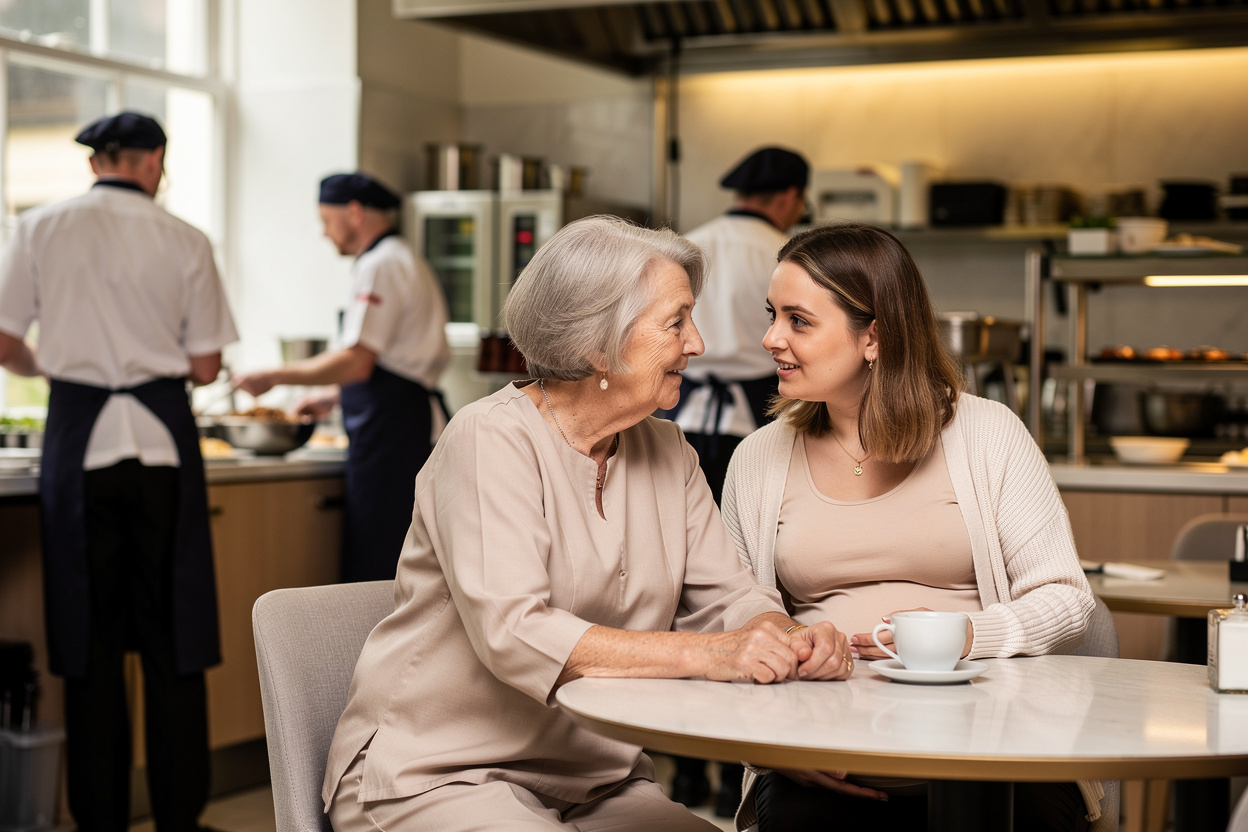
Most people recover fully, but it can be severe or even life-threatening for young children, the elderly, people who are ill or recovering, and pregnant women, their unborn babies and nursing mothers.

Bacteria
Bacteria

Bacteria, viruses and moulds can all cause food spoilage and illness. Bacteria need four conditions to multiply, easily remembered as time, warmth, food and moisture — remove any one and their growth slows or stops.

There are two types of bacteria you must control. Pathogenic bacteria cause illness and cannot be detected by sight, smell or taste. Spoilage organisms cause food to discolour, become slimy or smell bad — unpleasant, but they warn you the food is going off.

Pathogenic Bacteria
Pathogenic Bacteria

Pathogenic bacteria cause many health problems, ranging from flu-like symptoms to serious illness. These four are the most important to know:

  • Campylobacter: The most common cause of food poisoning in the UK, typically spread by cross contamination from raw poultry. Never wash raw chicken — it splashes bacteria onto hands, surfaces and equipment.
  • Salmonella: Most often found in raw meat, undercooked poultry and eggs. Thorough cooking destroys it.
  • E. coli: Often passed on through raw or undercooked minced red meat such as burgers, and through unwashed vegetables or unpasteurised milk.
  • Listeria: Found in ready-to-eat foods like soft cheeses, pâté and cold cooked meats. Causes listeriosis, which can be fatal to those with weak immunity or during pregnancy.
Viral Contamination
Viral Contamination

Viruses can also cause food poisoning. Unlike bacteria they do not grow on food, but they can be carried on it and passed to the people who eat it. The two most common are:

Norovirus — spread through close contact with an infected person, eating food handled by someone with the virus, or touching contaminated objects and surfaces. Good hand hygiene and keeping ill staff away from food are the key controls.

Hepatitis E virus (HEV) — spread through contact with the faeces or vomit of an infected person or animal, and linked to undercooked pork. Thorough cooking is the main defence.

Food Spoilage
Food Spoilage

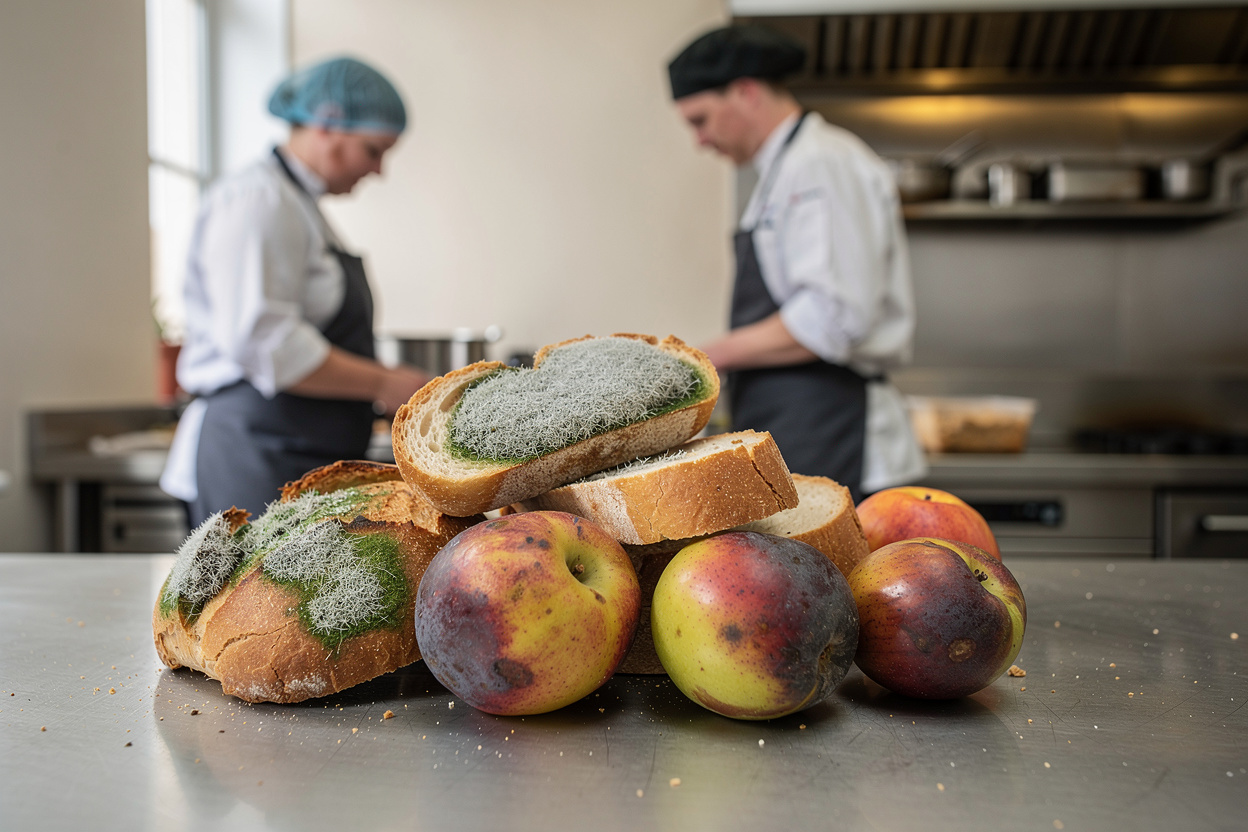
Unlike pathogenic bacteria, the effects of food spoilage can be seen, tasted and smelled. Common indicators include:

  • Sour smells, or stickiness and slime.
  • Strange textures, tainting or unusual tastes.
  • Mould — even if surface mould is removed, it is still present in the food.
  • Gas production, bulging or blown cans, or leaking packages.
  • Discolouration.

Light, oxygen, heat, humidity and temperature all encourage spoilage. Storing food at the wrong temperature, poor pest control or damaged packaging all speed the process up.

The Danger Zone
The Danger Zone

The danger zone is the range of temperatures between 8°C and 63°C in which harmful bacteria multiply most rapidly. Bacteria grow fastest at around body temperature, 37°C.

The aim of temperature control is to keep food out of the danger zone as much as possible — keeping cold food cold, hot food hot, and moving food through the zone quickly when cooking, cooling or reheating.

Temperature Control
Temperature Control

Controlling temperature is one of the most powerful ways to control bacteria. As a food handler you should:

  • Keep chilled food at 5°C or below (the legal maximum is 8°C), and frozen food at −18°C.
  • Cook food so the core reaches at least 75°C (or an equivalent time-and-temperature combination).
  • Keep hot food being held for service at 63°C or above.
  • Cool cooked food quickly — ideally within 90 minutes — before refrigerating.
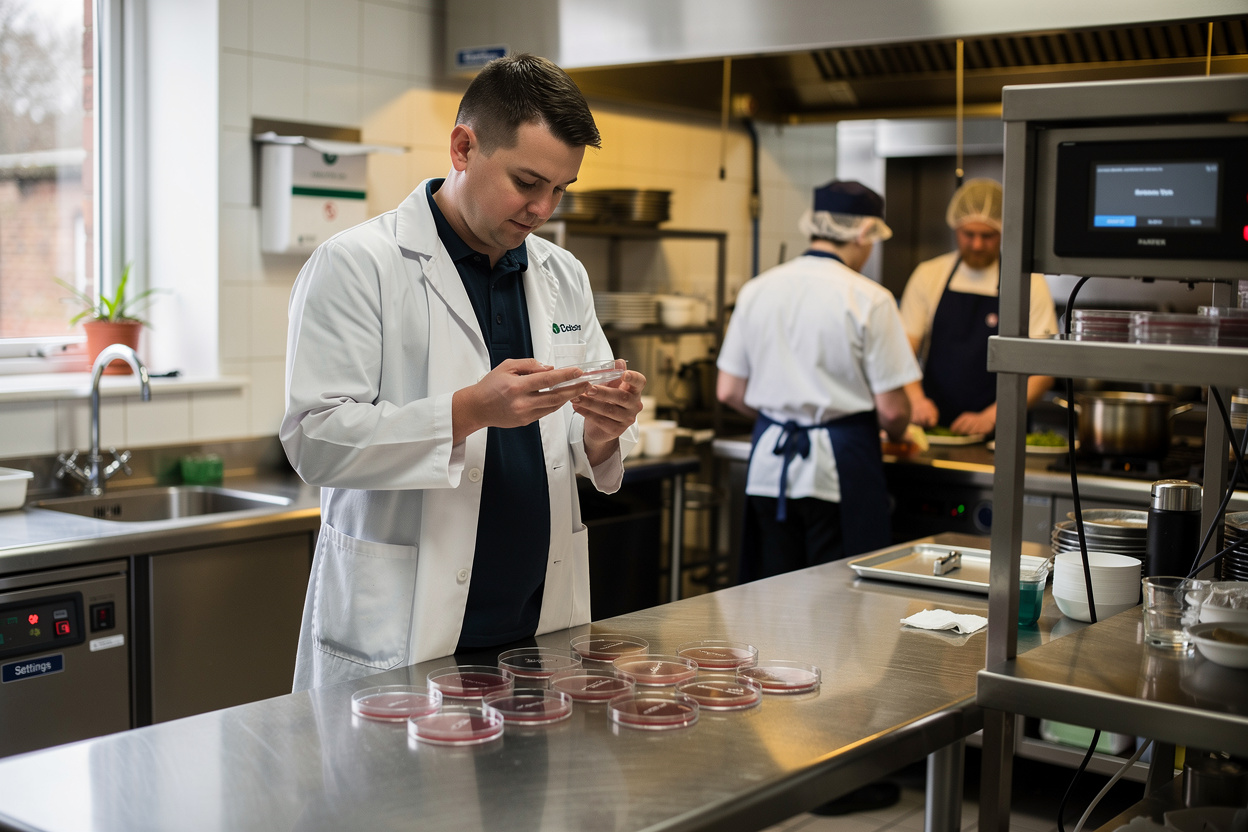
  • Check and record temperatures with a clean, calibrated probe.
High-Risk Foods
High-Risk Foods

High-risk foods are ready-to-eat foods that will not be cooked (or cooked again) before serving, and that provide the moisture and nutrients bacteria love. They must be handled with extra care and kept out of the danger zone.

Examples include cooked meat and poultry, cooked rice and pasta, dairy products, eggs, shellfish, gravies and sauces, and prepared salads and sandwiches. Because nothing further will kill the bacteria, keeping these foods chilled and away from raw food is essential.

Low-Risk Foods
Low-Risk Foods

Low-risk foods are foods that do not readily support the growth of harmful bacteria, usually because they are dry, high in sugar or salt, acidic, or preserved in some way.

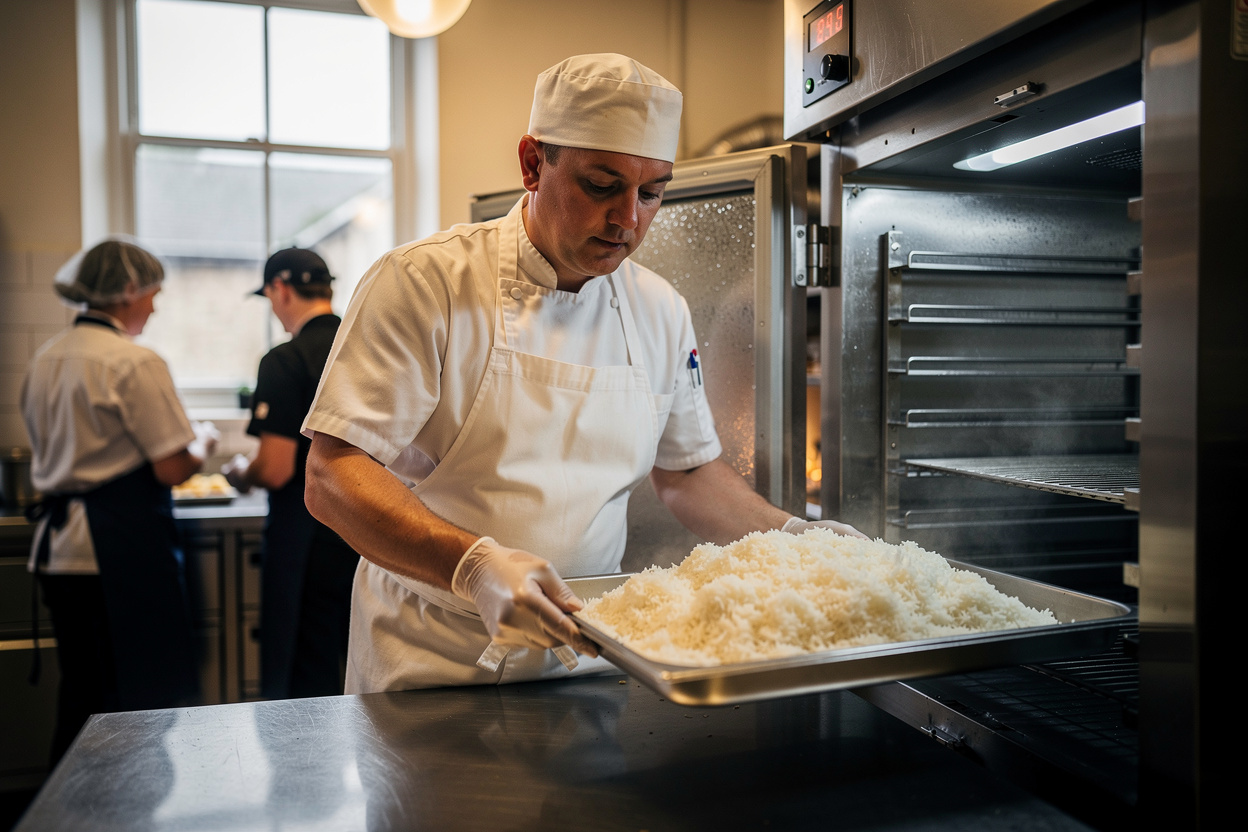
Examples include dry goods such as pasta, rice, flour and cereal, tinned foods, and preserves. They keep well at room temperature — but remember that once a low-risk food is opened, rehydrated or cooked (for example, cooked rice), it can quickly become high-risk.

Spores and Toxins
Spores and Toxins

Some bacteria have extra survival tricks that make them especially dangerous. Certain types can form spores — a tough, protective coating that lets them survive cooking temperatures and lie dormant until conditions are right for them to grow again.

Others produce toxins (poisons) as they multiply. Some toxins are heat-resistant, which means that even if thorough cooking kills the bacteria, the toxin can remain and still cause illness. This is exactly why temperature control, quick cooling and not leaving food in the danger zone matter so much — you must stop the bacteria multiplying in the first place.

Raw Foods
Raw Foods

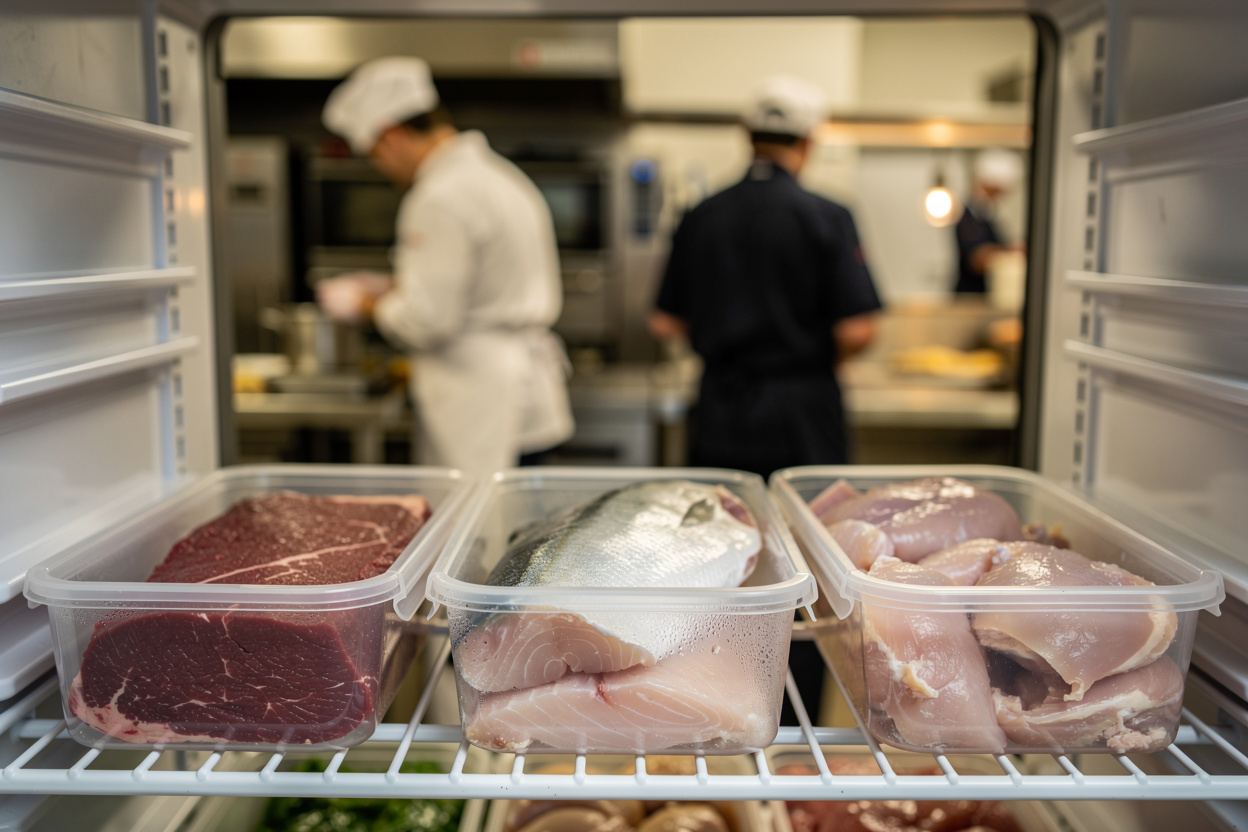
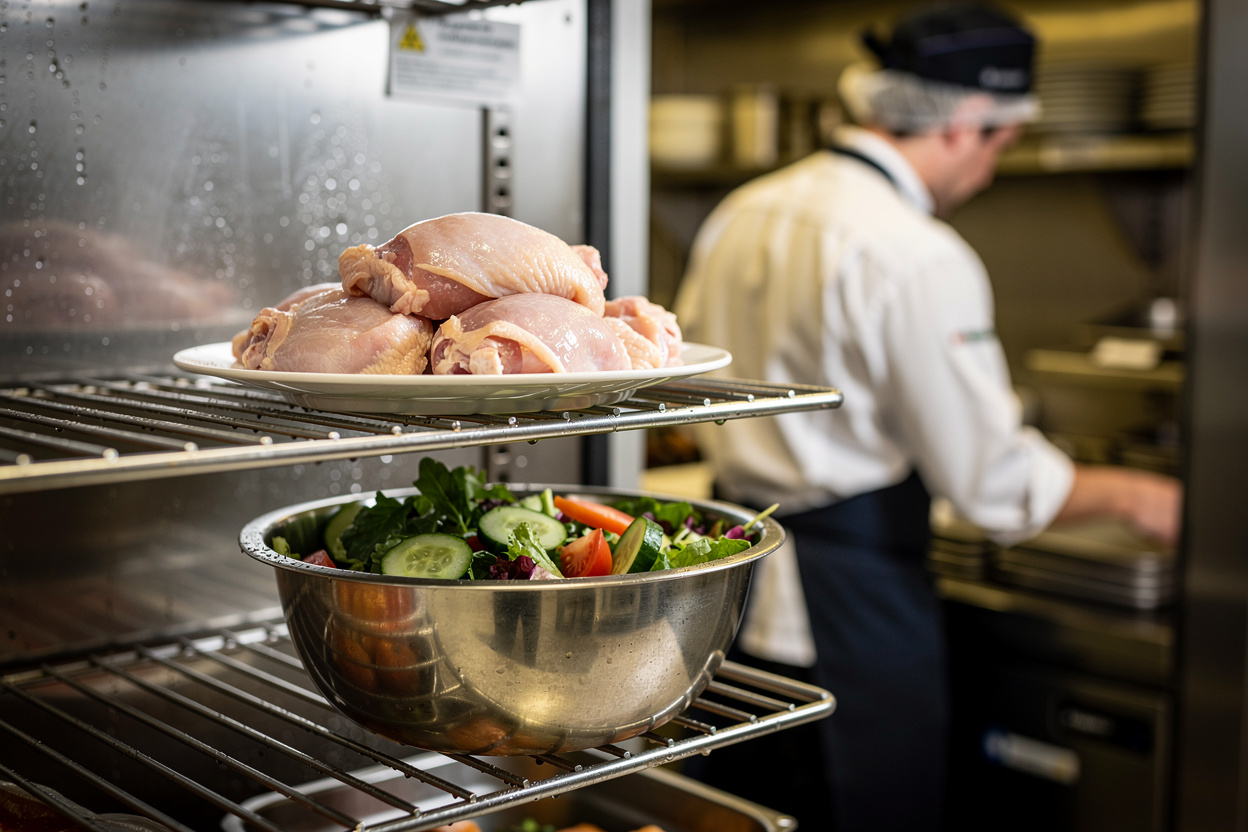
Any raw food is likely to be contaminated with large numbers of bacteria. Raw foods must always be kept separate from ready-to-eat foods, both in storage and in preparation areas.

Ready-to-eat raw foods such as salad vegetables must be washed thoroughly under clean running water before use, as they may carry bacteria and viruses; alternatively, an approved salad sanitiser can be used. Thorough cooking will destroy most organisms found in raw foods that cause food poisoning.

Cross Contamination
Cross Contamination

Cross contamination is when bacteria or other contaminants are transferred onto food. It can occur at any stage of the food handling process — for example through:

  • People — unwashed hands, or working on raw and ready-to-eat food without washing in between.
  • Surfaces, cleaning cloths or gloves.
  • Raw food touching or dripping onto ready-to-eat food.
  • Insects, pests and animals.
  • Dust, soil and dirt.
  • Dirty or contaminated clothing and PPE.
Controlling Microbial Hazards

Everyone in the kitchen has a role in controlling microbial hazards and preventing bacteria from multiplying. To keep food safe you must:

  • Rotate stock correctly, and never use or display food past its use-by date.
  • Store all food correctly and never overload fridges and freezers.
  • Separate raw and ready-to-eat foods at all times.
  • Follow all pest control measures.
  • Dispose of any unfit or contaminated food immediately.
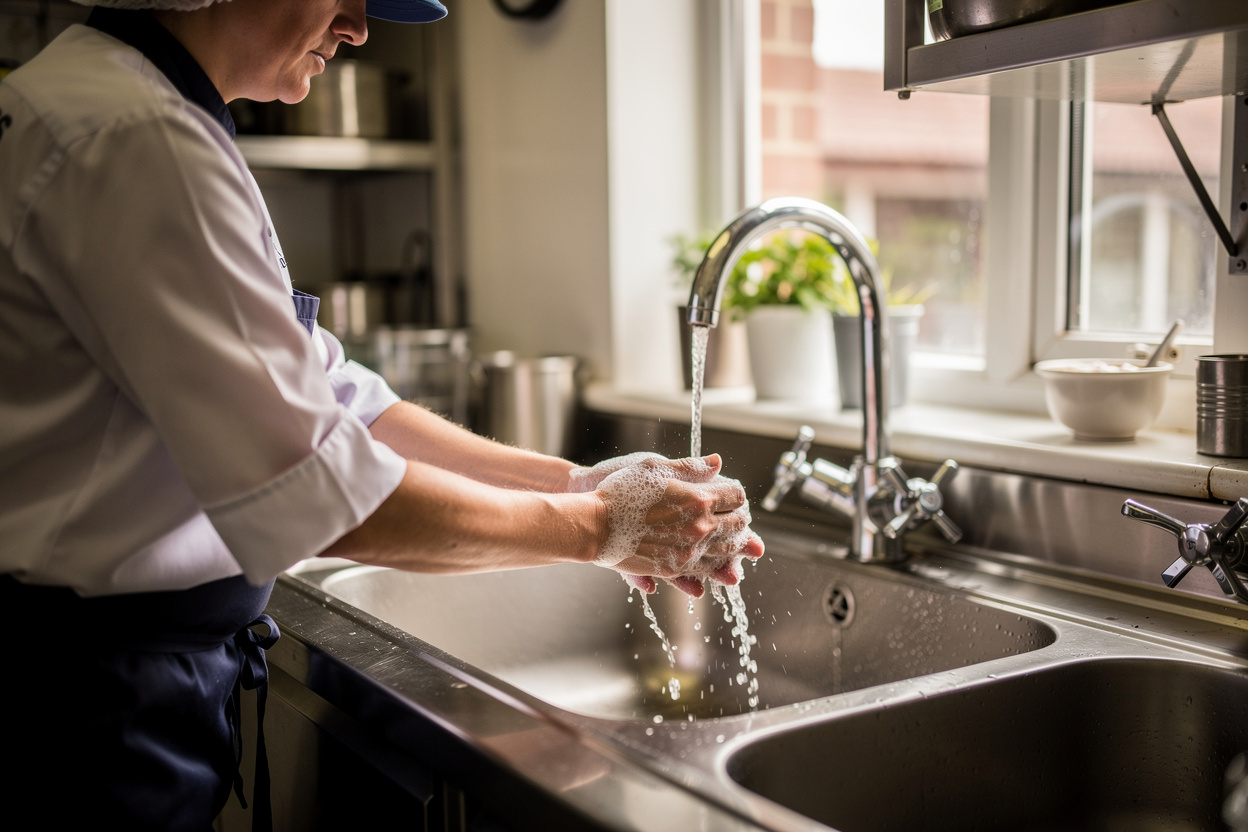
  • Follow effective cleaning techniques and good personal hygiene.
Colour-Coded Equipment

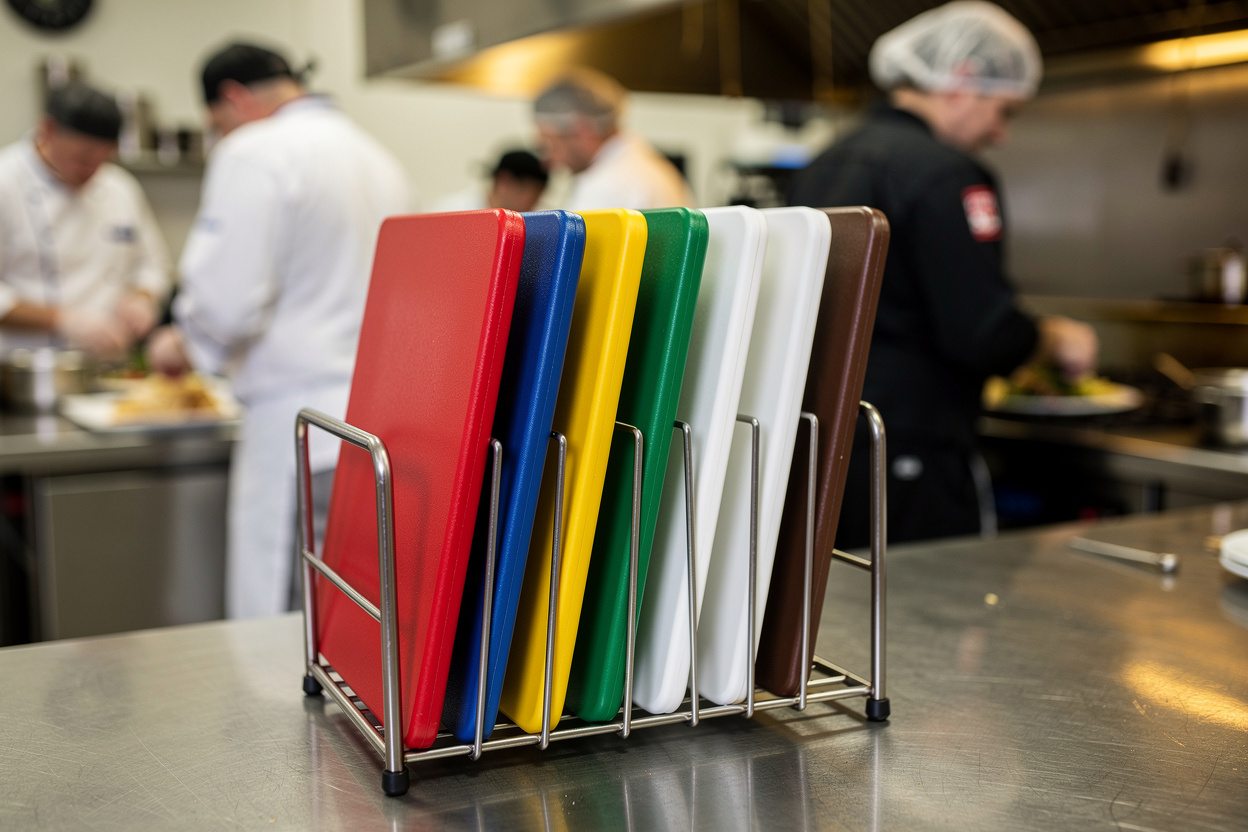
Colour-coding chopping boards and equipment is one of the simplest ways to prevent cross contamination. Your workplace decides the exact scheme, but you must stick to it every time. The common recommendations are:

  • Red: Raw meat.
  • Yellow: Cooked meat.
  • Blue: Raw fish.
  • White: Bread and dairy.
  • Green: Washed salad, fruit and vegetables.
  • Brown: Unwashed fruit and vegetables.
  • Purple: Free-from (allergen) foods.

Follow it always. Whichever system your workplace uses, follow it every time. If in doubt, ask your manager before acting.

Summary

In this module, you have learned that:

Bacteria, viruses and moulds cause food poisoning and spoilage; pathogens like campylobacter, salmonella, E. coli and listeria cannot be seen, smelled or tasted.

Bacteria need time, warmth, food and moisture; keeping food out of the 8–63°C danger zone is the key control, alongside handling high-risk foods with care.

Cross contamination is prevented by separating raw and ready-to-eat food, colour-coded equipment, good hygiene, cleaning and correct storage.

In the next module, we will build on these foundations.

Knowledge Check
Why should you never wash raw chicken before cooking it?
Select one answer, then press Check.
Washing makes the chicken cook more slowly
Washing removes flavour from the meat
It splashes bacteria such as campylobacter onto hands, surfaces and equipment
It uses too much water
Correct — washing raw chicken splashes campylobacter around the kitchen. Thorough cooking, not washing, is what makes it safe. You can now continue.
Next Module →Answer the question to unlock the next module.
Page 1 of 21