← Exit
Module 6 · Further Conditions and Workplace Incidents0% complete · 17 slides left
First Aid
First Aid
Module 6
This course contains audio. Use headphones in public places.
Introduction
Introduction

This final module covers some common conditions, such as hyperventilation, fainting, nosebleeds, sprains and strains, and some less common but serious emergencies, such as poisoning and drowning.

It also explains how first aid incidents must be recorded, and which incidents must be reported to the Health and Safety Executive, or HSE, under the Reporting of Injuries, Diseases and Dangerous Occurrences Regulations 2013, known as RIDDOR.
Hyperventilation and Panic Attacks

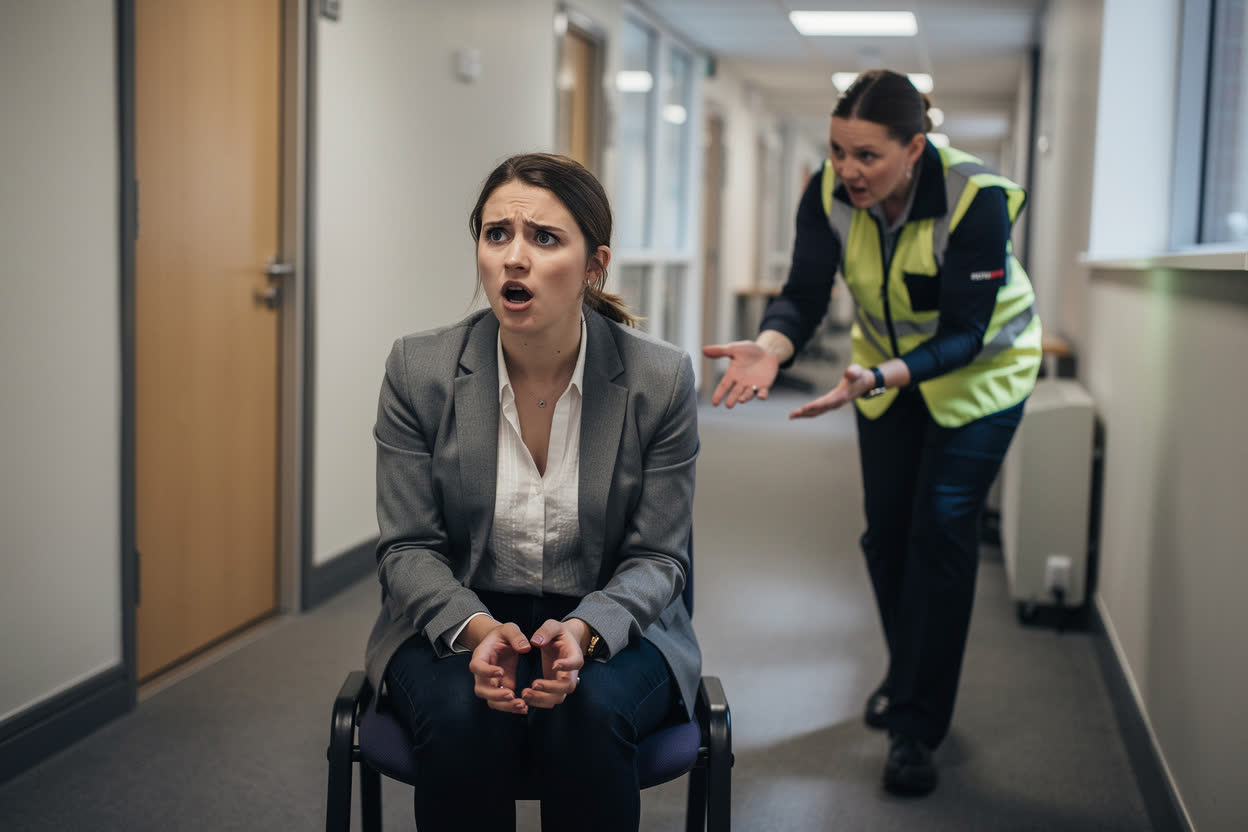
Hyperventilation means breathing too fast and too deeply. It is often triggered by anxiety, stress or a panic attack. Over-breathing upsets the balance of gases in the blood, which causes:

  • Dizziness, or feeling faint.
  • Tingling or numbness in the fingers, toes and around the mouth.
  • Cramps or stiffness in the hands and feet.
  • Trembling, sweating, a racing heart and a dry mouth.

Fast breathing can also be caused by asthma, a heart attack, diabetes or a head injury, so do not assume it is panic.

Helping Someone Who Is Hyperventilating
  • Take them somewhere quiet, away from onlookers, such as a private office or meeting room.
  • Speak calmly and firmly, and reassure them. Your own calm manner will help them settle.
  • Encourage them to breathe slowly, and to breathe along with you.
  • Do not use a paper bag.
  • Stay with them until their breathing returns to normal.

If it is the first time, it does not settle, or you are unsure of the cause, call NHS 111 for advice, or 999 in an emergency. Suggest they see their GP afterwards.

Fainting
Fainting

A faint is a brief loss of consciousness, caused by a temporary drop in the blood flow to the brain. It can be caused by pain, fright, heat, standing still for a long time, or missing a meal. Before fainting, a person may feel dizzy, sick, sweaty and pale.

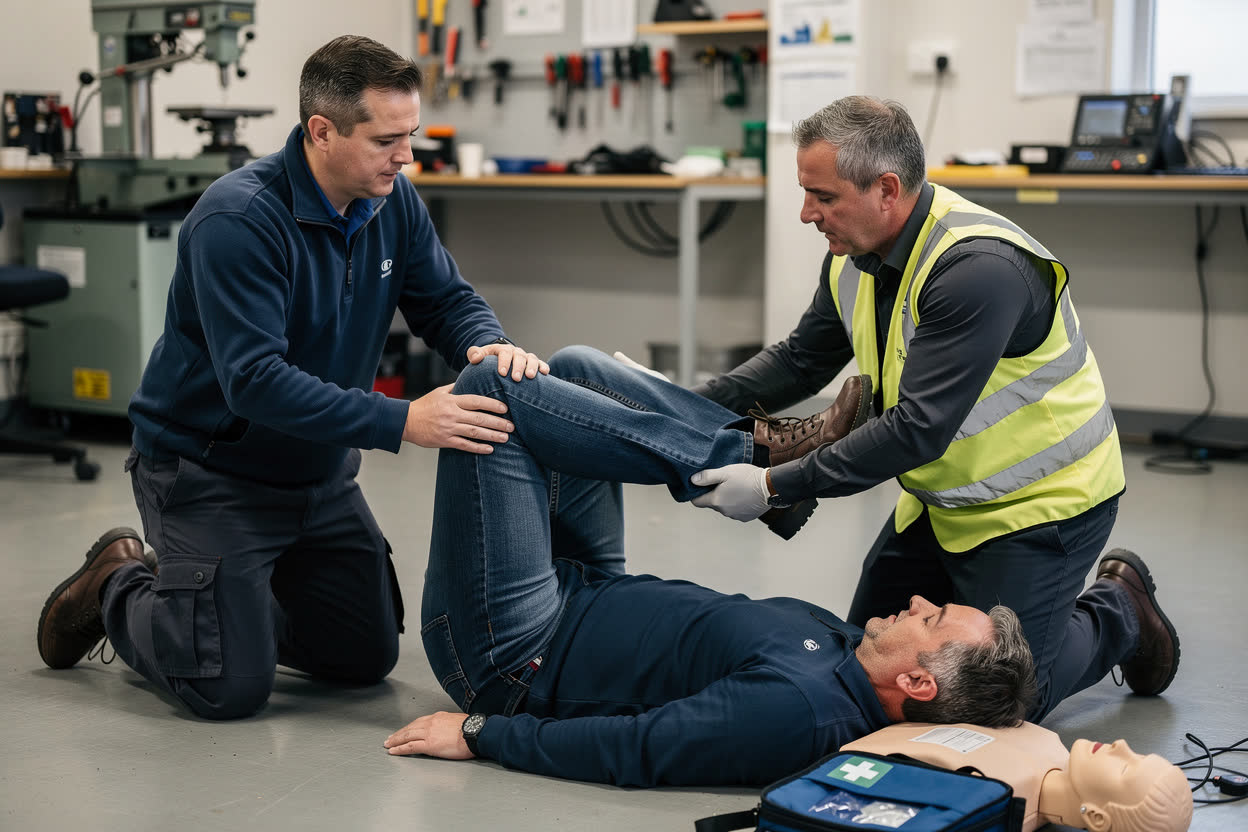
  • If they feel faint, help them to sit or lie down.
  • If they have fainted, lay them on their back, and raise and support their legs.
  • Give them fresh air, and reassure them as they recover. Help them sit up slowly.
  • If they do not come round quickly, carry out the primary survey, and call for an ambulance.
Nosebleeds
Nosebleeds

Nosebleeds are common, and usually not serious. They often happen when small blood vessels inside the nose burst, for example after a blow, a sneeze, picking or blowing the nose. Most stop within 10 to 15 minutes. In adults, they can be linked to high blood pressure or blood-thinning medicines.

Get medical help if:

  • The bleeding is heavy, or has not stopped after 20 to 30 minutes.
  • The casualty feels faint, or has difficulty breathing.
  • It follows a head injury, especially if there is a thin watery fluid, which may mean a skull fracture.
Treating a Nosebleed
  • Sit the casualty down, and ask them to lean forward, not back. This stops blood running down the throat.
  • Ask them to pinch the soft part of the nose, just below the bony bridge, and breathe through the mouth.
  • Keep pinching for 10 minutes, then release. If it is still bleeding, pinch for two further periods of 10 minutes.
  • Ask them not to talk, swallow, cough or spit if they can avoid it, and give them a cloth or bowl.
  • Once it stops, advise them not to blow their nose or exert themselves for several hours.

If nosebleeds keep happening, advise them to see their GP.

Sprains and Strains
Sprains and Strains

Sprains and strains are injuries to the soft tissues around bones and joints.

  • A sprain is a stretch or tear of a ligament, which joins one bone to another, for example when an ankle is twisted.
  • A strain is a stretch or tear of a muscle or tendon, for example in the back or leg.

Signs include pain and tenderness, swelling and bruising, difficulty moving or putting weight on the limb, and muscle spasm or cramp. They can be hard to tell apart from a fracture. If in doubt, treat the injury as a fracture.

RICE: Rest, Ice, Compression, Elevation
  • Rest: stop the activity, and support the injured part in a comfortable position.
  • Ice: hold a cold pack or ice wrapped in a cloth against the injury for up to 20 minutes. Never put ice directly on the skin.
  • Compression: support the area with a soft layer of padding and an elastic bandage. Check regularly that it is not too tight.
  • Elevation: raise the injured part, ideally above the level of the heart, to reduce swelling.

Advise the casualty to get medical help if the pain gets worse, the limb becomes numb, a fracture is possible, or it does not improve within 48 hours.

Poisoning
Poisoning

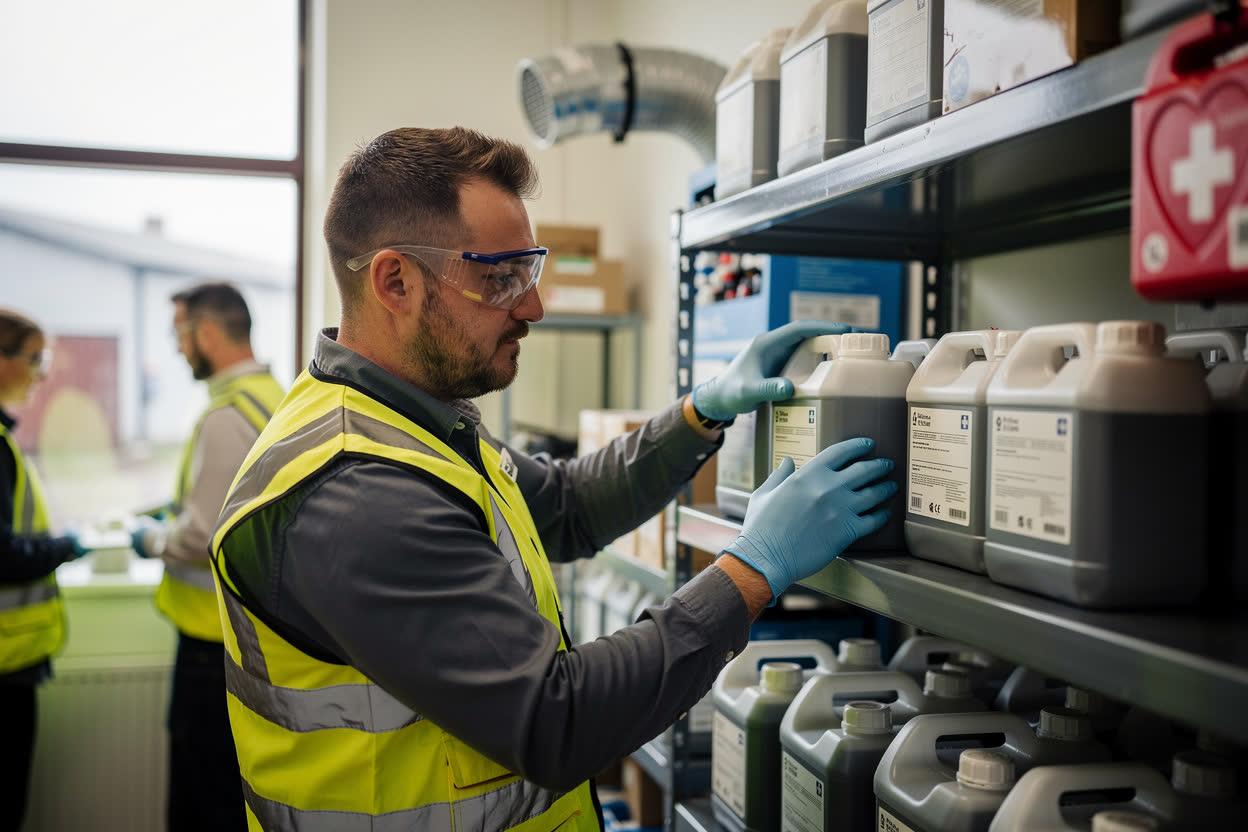
Poisoning happens when a harmful substance enters the body in a large enough amount to cause harm. A poison can be swallowed, breathed in, absorbed through the skin, or injected.

Common causes include alcohol, medicines, carbon monoxide, contaminated food, industrial chemicals and some plants. Signs depend on the poison, but may include:

  • Nausea, vomiting and stomach pain.
  • Confusion, drowsiness, seizures or becoming unresponsive.
  • Difficulty breathing, or burns around the mouth.
Treating Poisoning
Treating Poisoning
  • Make sure the area is safe. Do not enter a space filled with fumes or gas.
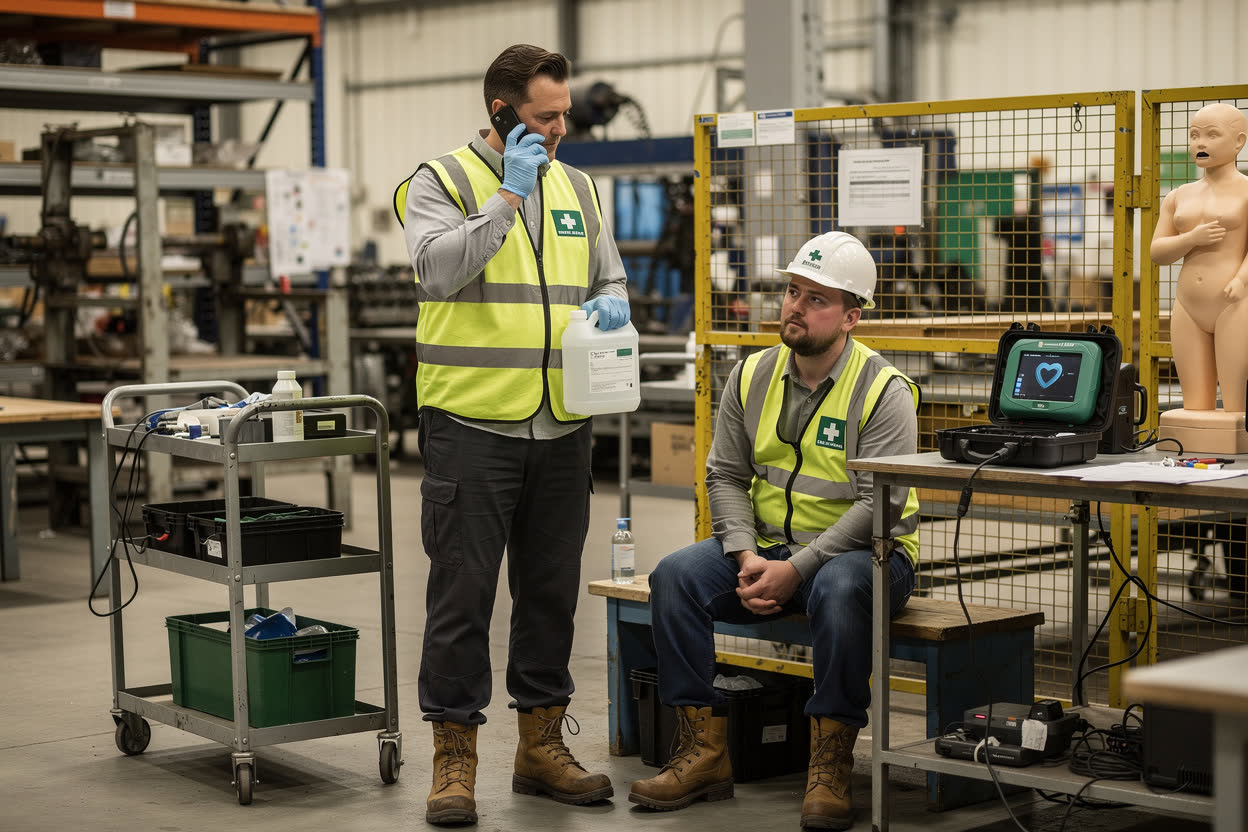
  • Find out what the substance was, how much, and when. Keep the container or safety data sheet for the ambulance crew.
  • Never make the casualty vomit, and do not give them anything to eat or drink unless you are advised to.
  • For advice, call NHS 111. Call 999 or 112 if they are drowsy, unresponsive, having seizures or struggling to breathe.
  • Monitor them closely. Use a face shield or pocket mask if you need to give rescue breaths.
Drowning
Drowning

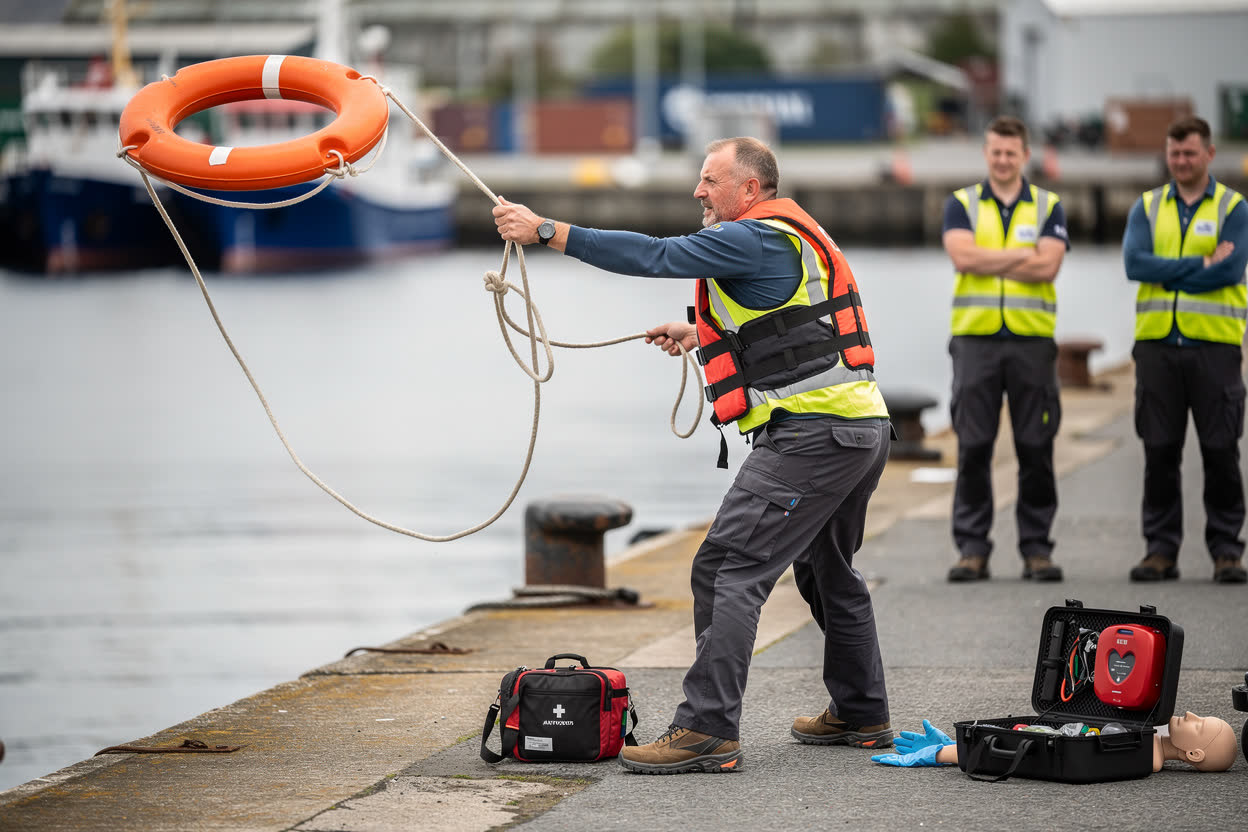
Drowning happens when a person’s airway is under water, so they cannot breathe. Your own safety comes first:

  • Do not go into the water unless you are trained. Reach out with a pole or branch, or throw a lifebuoy or rope.
  • Once the casualty is out of the water, carry out the primary survey.
  • If they are not breathing normally, give 5 rescue breaths first, then start CPR with 30 compressions to 2 breaths.
  • Call 999 or 112 as early as possible, and keep the casualty warm.

Everyone rescued from drowning must go to hospital, even if they seem to recover fully.

Recording First Aid Incidents

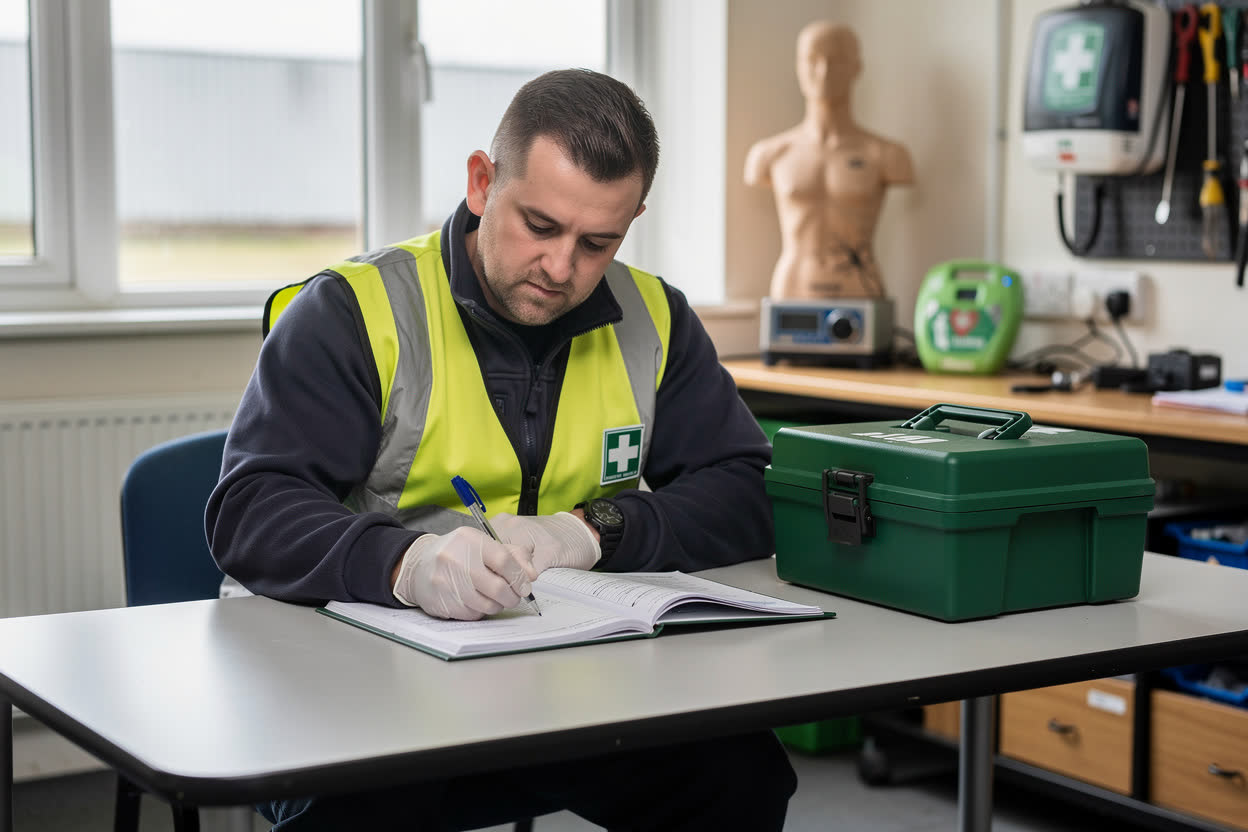
Every workplace should keep an accident book, or an equivalent record, to record every first aid incident that happens at work. HSE guidance recommends that first-aiders record every incident they attend. Each entry should include:

  • The date, time and exact place of the incident.
  • The name and job of the casualty.
  • What happened, the injury or illness, and the first aid given.
  • What happened next, for example returned to work, went home or went to hospital.
  • The name and signature of the first-aider.

Keep records confidential, in line with data protection law.

Reporting Under RIDDOR

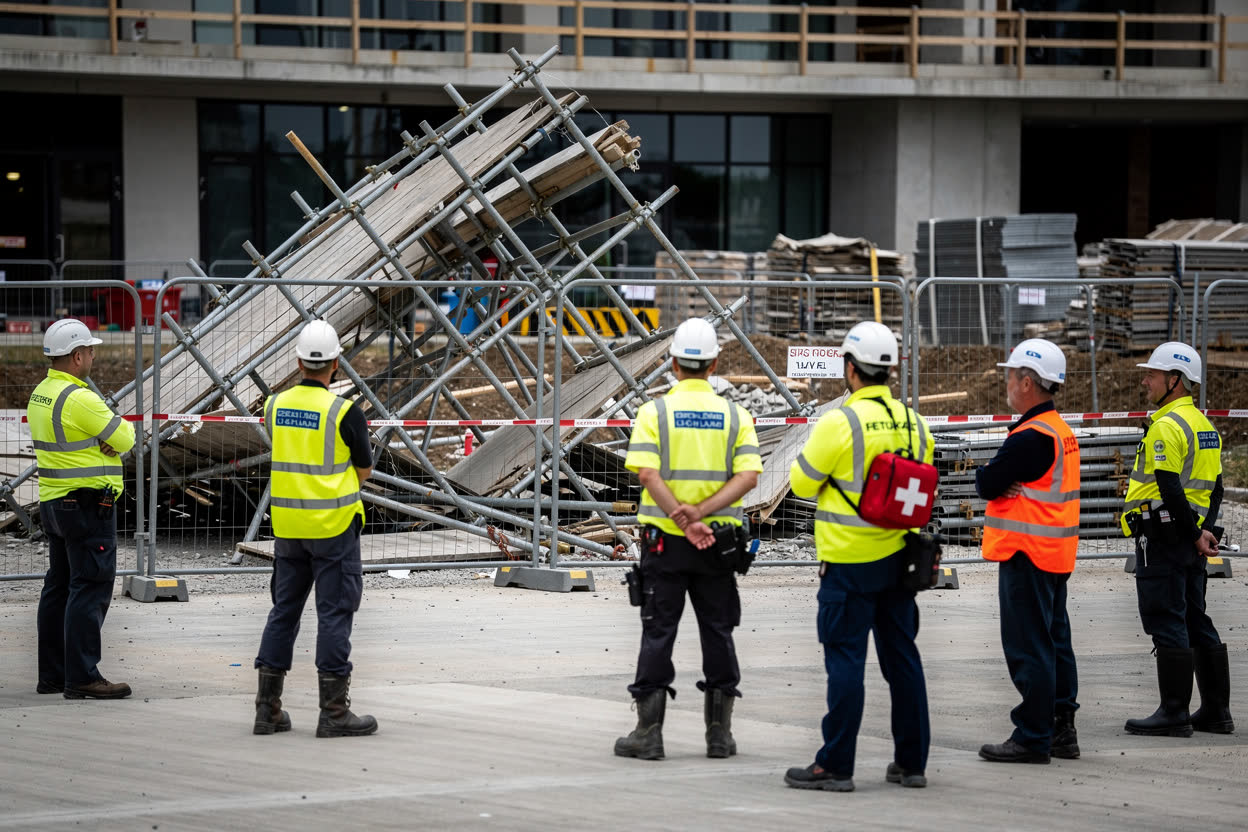
Under RIDDOR, the responsible person must report the following to the HSE:

  • Deaths and specified injuries to workers. These must be notified without delay, and reported within 10 days.
  • Injuries that stop a worker from doing their normal duties for more than 7 consecutive days, not counting the day of the accident. Report these within 15 days.
  • Injuries to members of the public that result in them being taken to hospital for treatment.
  • Certain occupational diseases, and listed dangerous occurrences.
Specified Injuries and Records

Specified injuries include:

  • Fractures, other than to fingers, thumbs and toes, and amputations.
  • Injuries likely to cause permanent loss or reduction of sight.
  • Crush injuries to the head or body causing damage to the brain or internal organs.
  • Serious burns covering more than 10 per cent of the body, or damaging the eyes, breathing or vital organs.
  • Scalpings needing hospital treatment, and loss of consciousness from a head injury or asphyxia.

Injuries causing more than 3 days of incapacity must be recorded. Keep RIDDOR records for at least 3 years.

Course Completion
Course Completion

You have now completed the learning for this course. It follows HSE guidance and current Resuscitation Council UK guidelines.

Remember, first aid is a practical skill. This online course does not replace certified practical training. To act as a first-aider at work, you need a current certificate from an appropriate course that includes practical teaching and assessment. Certificates last three years, and the HSE strongly recommends annual refresher training.

Summary

In this module, you have learned that:

For hyperventilation, move the person somewhere quiet and help them slow their breathing. For a nosebleed, lean forward and pinch the soft part of the nose for 10 minutes.

Never make a poisoned casualty vomit. After drowning, give 5 rescue breaths before CPR, and always send the casualty to hospital.

Record every first aid incident in the accident book, and report deaths, specified injuries, over-7-day injuries and dangerous occurrences under RIDDOR.

You have now completed all 6 modules. When you are ready, go to the final test.

Knowledge Check
What is an accident book used for?
Select one answer, then press Check.
Keeping track of first aid supplies
Listing the names of the first-aiders
Recording every first aid incident that happens at work
Recording the dates of fire drills
Correct. Every first aid incident at work should be recorded in the accident book. Some serious accidents must also be reported to the regulator.
Not quite. The accident book is a record of incidents and the first aid given. Try again.
Go to the Test →Answer the question to unlock the test.
Page 1 of 18