← Exit
Module 3 · Treating Specific Injuries0% complete · 19 slides left
First Aid
First Aid
Module 3
This course contains audio. Use headphones in public places.
Introduction
Introduction

This module covers the treatment of injuries you may find during the secondary survey: burns and scalds, eye injuries, head injuries, fractures, dislocations and spinal injuries.

This guidance is for emergency first aid only. If you are unsure how serious an injury is, or how to treat it, get medical help. Call NHS 111 or the GP out-of-hours service for advice, or call 999 or 112 in an emergency.

Burns and Scalds
Burns and Scalds

Burns and scalds are damage to the skin and the tissues below it, usually caused by heat.

  • Burns are caused by dry heat, such as fire, hot surfaces or the sun.
  • Scalds are caused by wet heat, such as steam or hot liquids.

Burns can also be caused by:

  • Electricity, for example from faulty equipment.
  • Chemicals, such as acids, strong cleaning agents or battery acid.
  • Radiation, including the sun.
How Deep Is the Burn?
  • Superficial burns affect only the outer layer of skin. The skin is red, sore and may swell, like mild sunburn, and usually heals well.
  • Partial thickness burns damage deeper layers of skin. They are very painful and form blisters.
  • Full thickness burns damage all the layers of skin. The skin may look pale, waxy or charred, and may not hurt, because the nerves are damaged. They always need hospital treatment.

One burn can have different depths in different places. Electrical burns can cause serious internal damage, even when the skin looks only slightly marked.

Treating Burns
Treating Burns
  • Make sure the area is safe, and move the casualty away from the source of heat.
  • Cool the burn under cool or lukewarm running water for at least 20 minutes, as soon as possible. Do not use ice.
  • While cooling, remove loose clothing and jewellery near the burn, but leave anything that is stuck to the skin.
  • Keep the casualty warm, so that they do not become too cold.
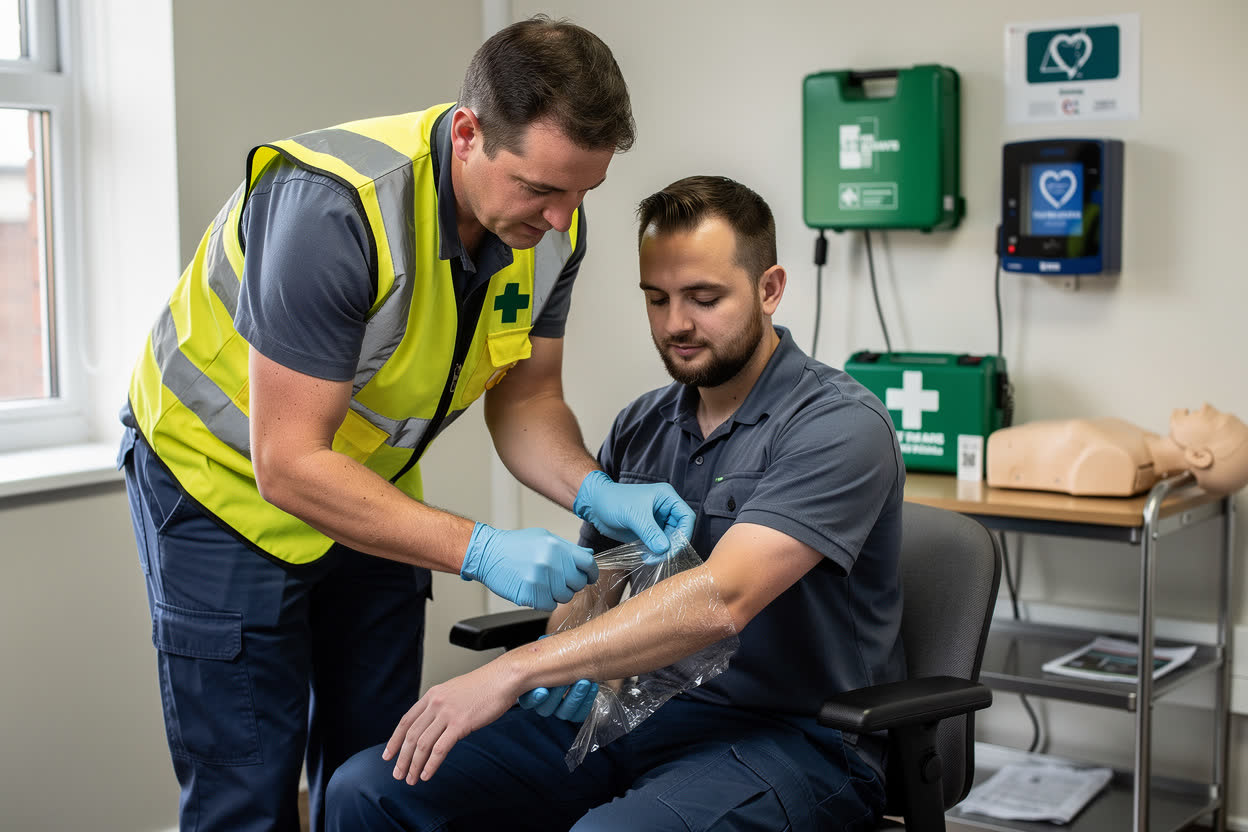
  • Cover the burn loosely with cling film laid lengthways, or a clean plastic bag on a hand.
  • Treat for shock if needed.
Burns: When to Get Help, and What Never to Do

Call 999 or 112 if the burn is large or deep, or is on the face, hands, feet, joints or genitals, or if it is an electrical or chemical burn. Never:

  • Remove clothing that is stuck to the burn.
  • Touch the burn, or burst blisters.
  • Put ice, creams, lotions, butter or ointments on the burn.
  • Use fluffy dressings or adhesive tape on the burn or the skin around it.
Chemical and Electrical Burns

For a chemical burn, protect yourself first with gloves. Brush off any dry chemical, remove contaminated clothing, and rinse the skin with plenty of running water for at least 20 minutes. Check the safety data sheet, and tell the emergency services which chemical was involved.

For an electrical burn, never touch the casualty until the power is switched off and you are sure it is safe. Then carry out the primary survey. Every electrical injury needs medical assessment, even if the casualty seems well.

If Clothing Catches Fire

If someone’s clothing catches fire, remember: stop, drop and roll.

  • Stop: do not let them run around, because running fans the flames.
  • Drop: get them to lie down on the ground.
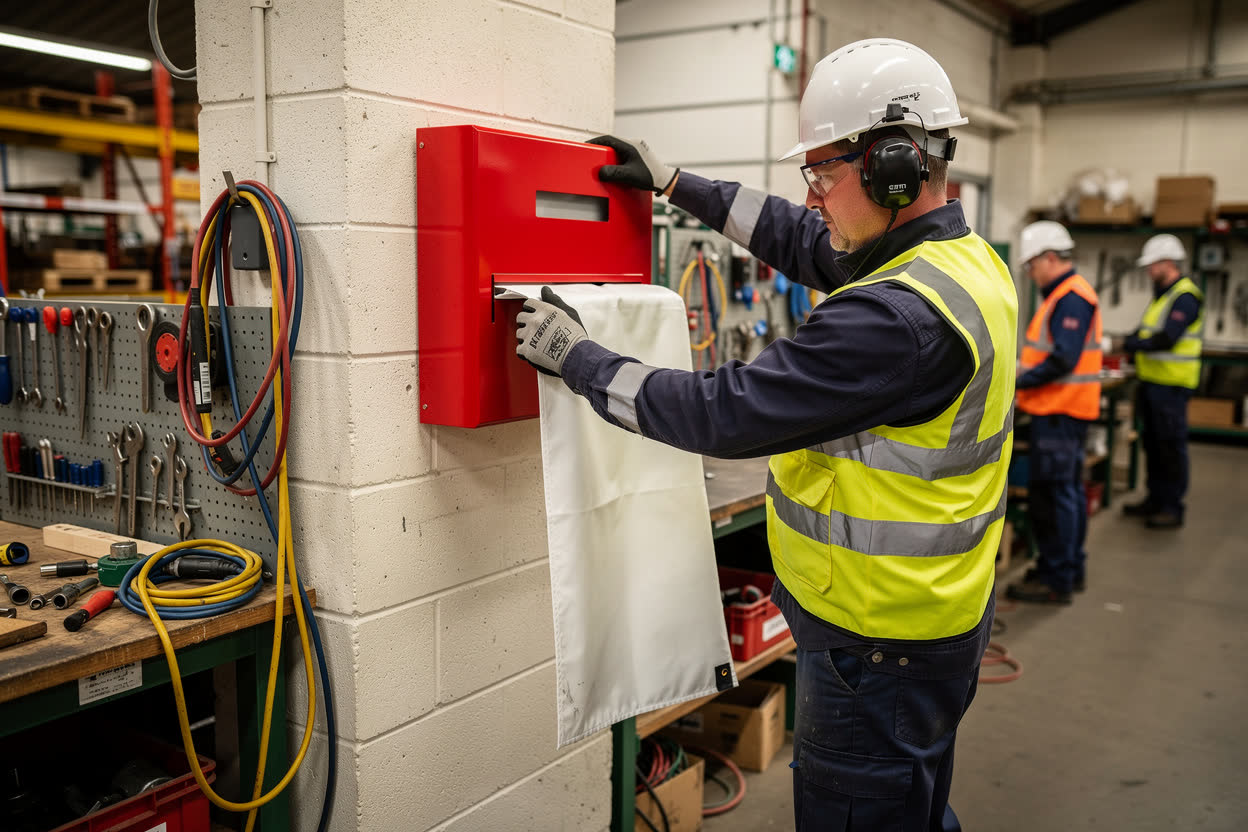
  • Roll: roll them on the ground, and smother the flames with a heavy coat, a blanket or a fire blanket.

Once the flames are out, carry out the primary survey, cool the burns, and call 999 or 112 for an ambulance.

Eye Injuries
Eye Injuries

All eye injuries are potentially serious. Without treatment, they can lead to scarring, infection or loss of sight. Common causes are:

  • Foreign objects, such as dust, grit, eyelashes or fragments of metal or glass. Small loose objects can often be washed out, but larger or embedded ones need hospital treatment.
  • Cuts and grazes, for example from glass, plastic or wood. These need hospital treatment straight away.
  • Blows to the eye from hard objects. These may need hospital treatment, depending on how serious they are.
Treating Eye Injuries

For a small loose object, sit the casualty facing the light, gently open the eyelids, and ask them to look in each direction.

Rinse the object out with clean water or sterile eyewash, from the inner corner of the eye outwards. If it is stuck, do not try to remove it. Cover the eye with a sterile pad, and get medical help.

For a chemical in the eye, wear gloves and rinse the eye with clean running water for at least 10 minutes, so the water runs away from the other eye.

Then cover it with a sterile pad, and call 999 or 112.

Wounds to the Eye
Wounds to the Eye

For a cut, a bruise or anything that has penetrated the eye:

  • Help the casualty to lie on their back, and keep their head as still as possible.
  • Never try to remove an object stuck in the eye.
  • Cover the injured eye with a sterile pad, without pressing on it.
  • Ask them to keep their good eye still, because when one eye moves, the other moves too. You may cover both eyes, but reassure them, and stay with them.
  • Call 999 or 112 straight away.
Head Injuries
Head Injuries

Head injuries range from minor to life-threatening. The main types are:

  • Concussion, a brief disturbance of the brain after a blow. Signs include dizziness, blurred vision, confusion, nausea and headache. The casualty should stop what they are doing, be watched, and be checked by a healthcare professional.
  • Cerebral compression, which is pressure on the brain from bleeding or swelling. Signs include worsening drowsiness, noisy breathing, a slow pulse, unequal pupils, weakness on one side and a severe headache. It is life-threatening and needs hospital treatment.
  • Skull fracture, a crack or break in the skull, which needs hospital treatment.
Treating Head Injuries
  • Help the casualty to sit down, and hold a cold compress, such as an ice pack wrapped in a cloth, against the injury.
  • If there is a wound, press on it with a clean pad to control the bleeding.
  • If they become drowsy, confused or unable to follow instructions, call 999 or 112.
  • If they become unresponsive, carry out the primary survey while you wait for the ambulance.

They should also go to hospital if they were knocked out, vomit, have a severe or lasting headache, memory problems or a seizure, behave strangely, have been drinking or taking drugs, or take blood-thinning medicines.

Fractures
Fractures

A fracture is a crack or break in a bone, usually caused by a fall, a blow or a twisting force. It may be closed, with the skin unbroken, or open, where there is a wound and the bone may come through the skin.

Signs of a fracture include:

  • Pain, swelling and bruising.
  • Difficulty moving the limb, or loss of strength.
  • A limb that looks shorter, twisted or bent, or moves in an unnatural way.
  • A grating sound or feeling.

Casualties with fractures often show signs of shock.

Treating Fractures
Treating Fractures
  • Tell the casualty to keep still, and support the injured part in the position you found it.
  • Cover any wound with a sterile dressing, and press around the bone, not on it, to control bleeding.
  • Support an injured arm in a sling, or with padding, if this is comfortable. For a leg, place padding around it to stop it moving.
  • Call 999 or 112, and do not move the casualty unless they are in danger.
  • Treat for shock if needed, and give nothing to eat or drink.
  • If they become unresponsive, carry out the primary survey.
Dislocations
Dislocations

A dislocation happens when a bone is forced out of its normal position at a joint. It is most common in the shoulder, but it can also affect the knee, jaw, fingers and thumb.

Signs include severe pain, swelling, bruising, a joint that looks out of shape, and being unable to move it. If a casualty has a dislocation:

  • Tell them to stay still, and support the joint in the most comfortable position, with a sling or padding.
  • Never try to put the joint back into place.
  • Call 999 or 112, or arrange for them to go to hospital.
Spinal Injuries
Spinal Injuries

The spine is made up of 33 small bones, called vertebrae, which protect the spinal cord. Damage to the spinal cord can cause paralysis below the injury.

Suspect a spinal injury after a fall from height, a heavy object falling on someone, a vehicle collision, or any heavy blow, twist or bend. Signs include:

  • Pain in the neck or back.
  • A twist or step in the line of the spine.
  • Loss of feeling or control in the limbs, or tingling.
  • Difficulty breathing.
Treating Spinal Injuries
  • Tell the casualty not to move, and reassure them.
  • Call 999 or 112 straight away.
  • Support the head in line with the body: kneel behind them, rest your elbows on the ground or your knees, and place your hands over their ears. You can also use rolled blankets on either side of the head.
  • Keep supporting the head until the ambulance crew takes over.
  • If they become unresponsive, keep the airway open with as little head movement as possible. If they stop breathing normally, start CPR. Breathing comes first.
Summary

In this module, you have learned that:

Scalds are caused by wet heat, such as steam. Cool a burn under running water for at least 20 minutes, and never remove clothing stuck to it.

Anyone with a suspected concussion should be checked by a healthcare professional. Cerebral compression and skull fractures need hospital treatment.

With a suspected spinal injury, support the casualty’s head, and stop them from moving.

In the next module, we will look at CPR and how to use a defibrillator.

Knowledge Check
If a casualty has a burn, what must you never do?
Select one answer, then press Check.
Cool the burn under cool, running water
Remove clothing that has stuck to the burn
Remove loose clothing and jewellery near the burn
Cover the burn loosely with cling film
Correct. Pulling off stuck clothing tears the damaged skin. Leave it in place, and cool the burn around it.
Not quite. Three of these are correct first aid for a burn. Which one would tear the damaged skin? Try again.
Next Module →Answer the question to unlock the next module.
Page 1 of 20