← Exit
Module 3 · Fire Risk Assessment0% complete · 20 slides left
Fire Warden / Fire Marshal
Module 3
This course contains audio. Use headphones in public places.
Introduction
Introduction

The Fire Safety Order requires the responsible person to carry out a suitable and sufficient fire risk assessment. In England and Wales, since October 2023, every fire risk assessment must be recorded in full, whatever the size of the business.

The fire risk assessment is the foundation of all fire safety in a building. It decides what precautions are needed, how many fire wardens there should be, and what the emergency plan must cover.

Fire wardens do not usually carry out the assessment, but they help to keep it accurate.
Who Carries Out the Fire Risk Assessment
Owners and responsible persons of non-domestic buildings must keep a suitable, up-to-date fire risk assessment.It is often done by experienced managers or specialist health and safety consultants.The employer stays accountable, but fire wardens can contribute their knowledge.
Who Carries Out the Fire Risk Assessment

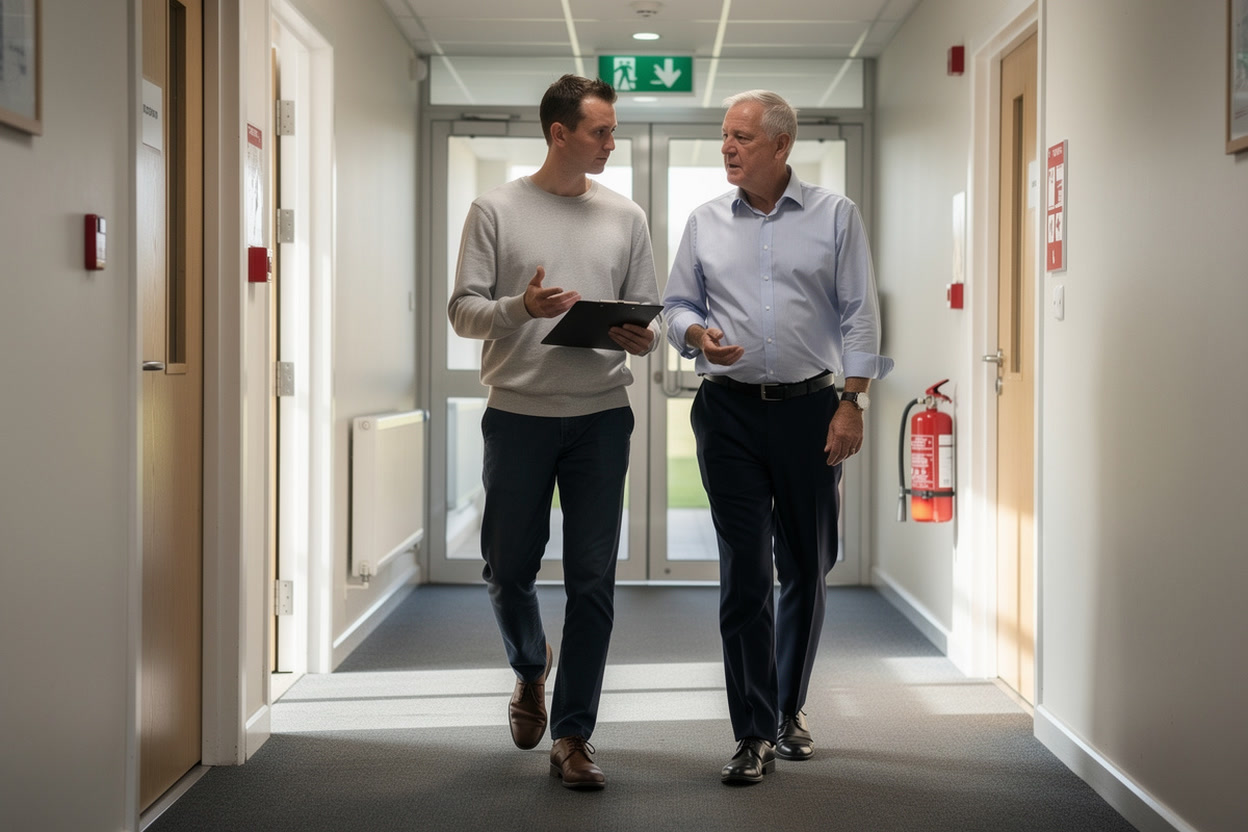
Fire safety law requires the owners and responsible persons of non-domestic buildings to keep an up-to-date and suitable fire risk assessment for their premises. It is often carried out on the employer's behalf by experienced managers or by specialist health and safety consultants, and sometimes experts also give advice, for example on the right fire detection and alarm systems for a particular workplace. The employer stays fully accountable for making sure it is done.

However, fire wardens know the premises and what really happens day to day, so they can contribute valuable information and practical suggestions. This module helps you understand the process, so you can do your own role well.

In This Module
In This Module

In this module you will learn about:

  • What a fire risk assessment is, and who carries it out.
  • The five steps of a fire risk assessment.
  • People who are especially at risk in a fire.
  • Recording the findings, and keeping the assessment up to date.
  • How fire wardens help.
What Is a Fire Risk Assessment?

A fire risk assessment is a careful look at a building and the work carried out in it, to find out what could cause a fire, who could be harmed, and whether the precautions in place are good enough.

It must be carried out by a competent person, someone with enough training, knowledge and experience to do it properly. In larger or more complex buildings, this is often a specialist fire risk assessor.

Most fire risk assessments follow five steps, which are explained on the next slides.

Key Definitions
Reasonably practicable: do what is reasonable to control risks that are more than minor, in proportion to their seriousness.Suitable and sufficient: the assessment must fit the tasks and be thorough enough to cover risks that could cause harm.Competent person: someone who knows the job and the safety measures needed.
Key Definitions

Three terms come up repeatedly in risk assessment. The first is reasonably practicable. Employers must do what is reasonable to prevent or control risks that are more than minor, and the action they take must match the seriousness of the risk. The second is suitable and sufficient. A good assessment should fit the specific tasks being carried out and be thorough enough to cover any risks that could cause harm if proper precautions are not taken.

The third is the competent person. Whoever carries out the assessment should know the job well and either know the safety measures needed or know where to find out. For most work, a manager or supervisor is the right person. For fire risk and for dangerous substances, manufacturers, suppliers and industry associations can offer advice and expertise on specific dangers and their control.

The Legal Basis and the Five Steps
Workplace risk assessment is required of every employer, and fire and dangerous-substance rules add more duties.The five steps run from identifying hazards through to review.Recording the findings is a legal duty for most employers and good practice for everyone.
The Legal Basis and the Five Steps

Every employer must carry out a workplace risk assessment, and the fire safety and dangerous substances rules add further duties on top of that. A thorough assessment involves five steps. First, recognise the hazards that arise from the tasks and activities carried out. Second, think about who might be harmed, including contractors, visitors and the public as well as employees. Third, judge how likely it is that the hazards will endanger health and safety, and decide what preventive measures are needed.

Fourth, keep a formal record of the assessment. This is a legal duty for most employers, and it is considered best practice for workplaces of every size. Fifth, review the assessment regularly. When circumstances change, for example through new processes or new staff, it must be updated to cover any new hazards.

Step 1: Identify the Fire Hazards

The assessor walks around the whole building, inside and out, looking for:

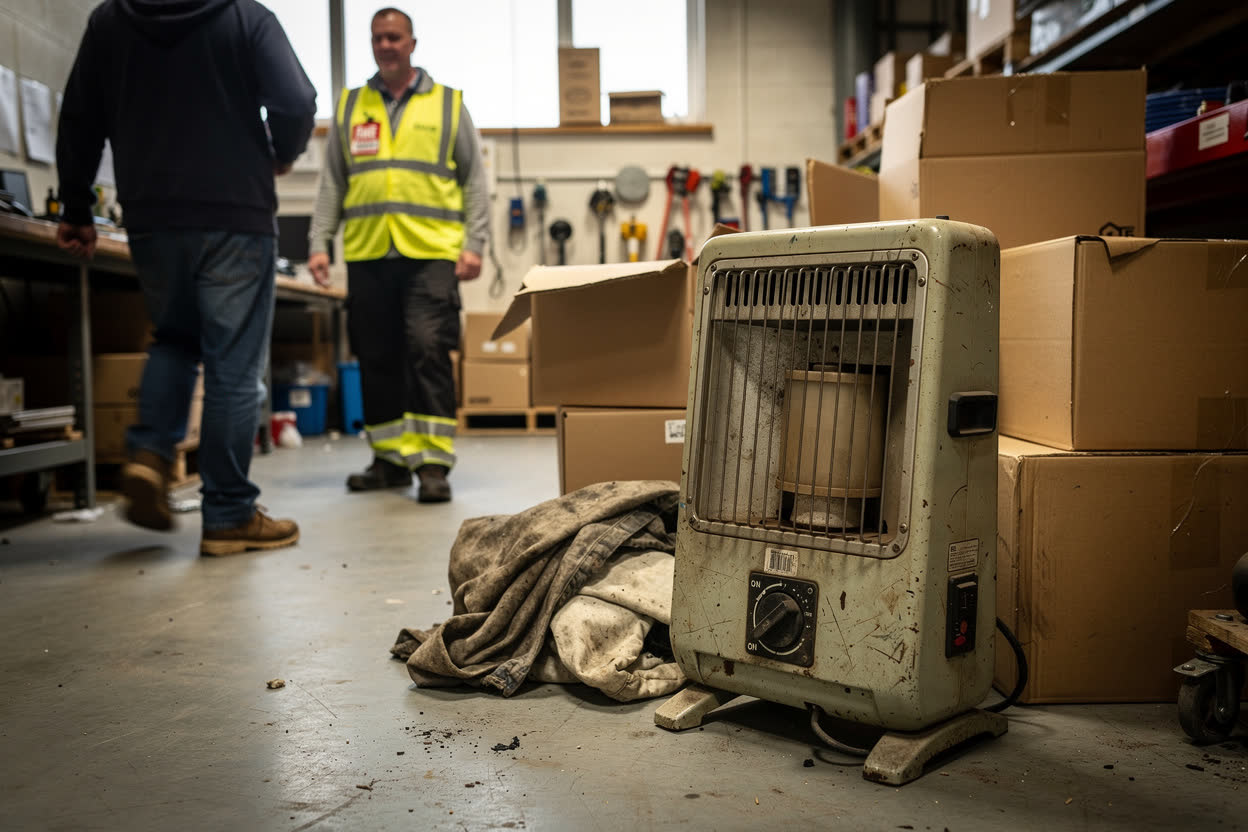
  • Sources of ignition, such as heaters, electrical equipment, hot work and smoking areas.
  • Sources of fuel, such as waste, packaging, stock, furniture and flammable substances.
  • Sources of oxygen, such as ventilation systems and oxygen cylinders.
  • Places where these three come together.

They also look at past incidents, maintenance records and the way the building is actually used, which is not always the way it was designed.

Step 1: Surveying the Workplace and Looking for Safer Alternatives
Walk the whole workplace, checking layout, access points and escape routes in every area.Consider safer alternatives, such as non-flammable cleaners instead of volatile solvents.Check arrangements for the maintenance of equipment, including fire detection and alarm systems.
Step 1: Surveying the Workplace and Looking for Safer Alternatives

The first step is to identify and record potential fire and explosion hazards, and the competent person begins by surveying the workplace. They inspect it thoroughly, looking for hazards and taking account of its layout and organisation. For example, they check that there are safe access points and escape routes in every part of the premises. They then consider whether safer alternatives could prevent a risk arising at all, such as non-flammable cleaning materials in place of volatile solvents and thinners.

They check that there are arrangements for the safe use, maintenance and repair of work equipment. That includes equipment that prevents fires, like intrinsically safe electrical equipment in paint spraying booths, and equipment for detection and response, such as fire detection and alarm systems.

Step 1: Dangerous Substances in the Assessment
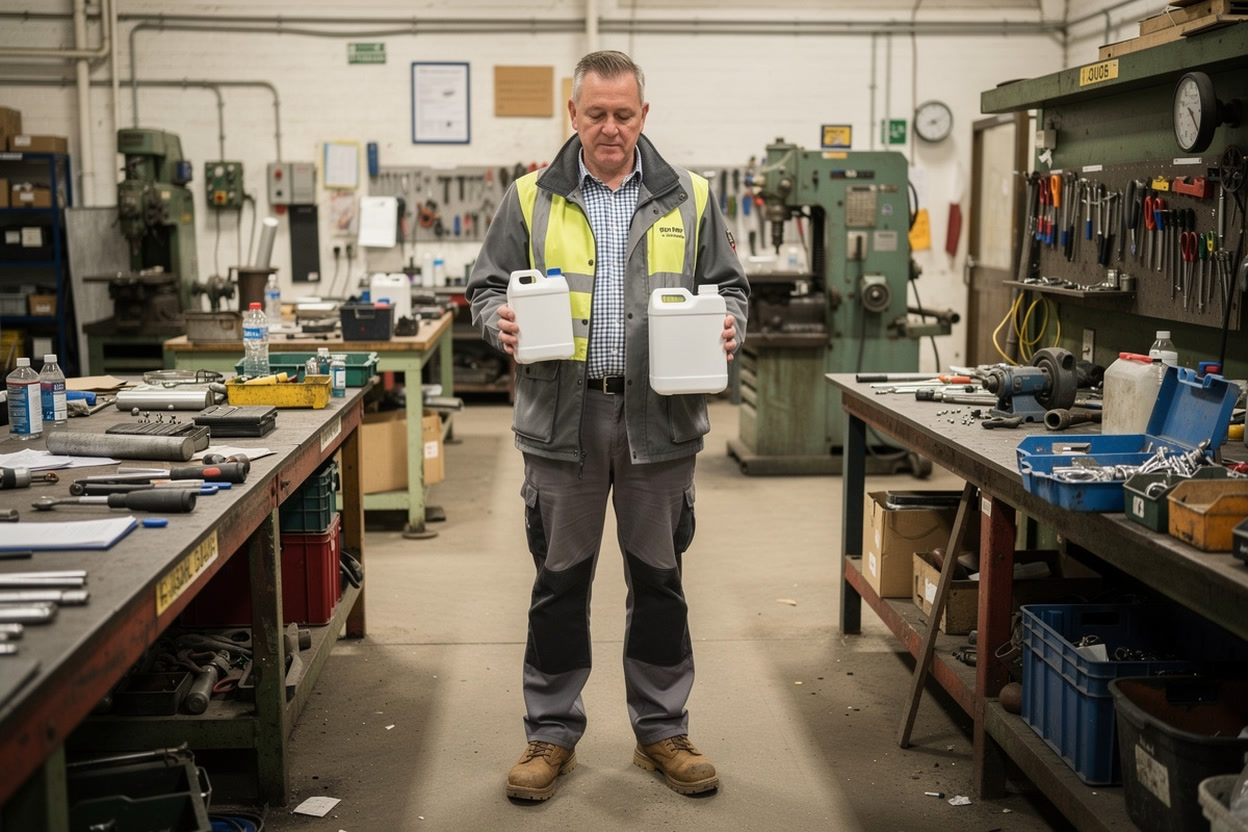
Record the hazardous properties of the substances and the supplier's safety data.Note the intended use, quantity, and any risk of substances interacting.Document safe handling, storage, control measures and employee training.
Step 1: Dangerous Substances in the Assessment

Where dangerous substances are used or stored, the assessment must identify and record them. It should set out the hazardous properties of each substance, together with the health and safety information from the supplier, including safety data sheets. It should state what each substance is used for and how much is on the premises. If different types of substance are present, it should consider the risks that arise if they interact.

The assessment must also describe the arrangements for handling, storing and transporting dangerous substances safely, and the measures in place to prevent sources of ignition and the release of substances. Finally, it should record what instruction and training has been given to employees on the risks and the controls needed. This ensures dangerous substances are fully covered in the fire risk assessment.

Step 2: Identify People at Risk

Next, the assessor considers who could be harmed, and how. This includes employees, contractors, visitors, customers and anyone else on the premises.

Some people are especially at risk, for example:

  • People who work alone, at night, or in remote parts of the building.
  • People who are unfamiliar with the building, such as visitors and new staff.
  • People with a disability, including those with impaired sight, hearing or mobility.
  • Children, older people, and anyone who may be slow to react.
  • People who are asleep, for example in hotels, hospitals and care homes.
Step 2: Who Might Be at Risk
Consider employees and anyone in or near the premises, including contractors and visitors.Think about people with particular needs: reduced mobility, hearing impairments, expectant or nursing mothers, the elderly and children.Consider direct harm such as burns and indirect harm such as smoke inhalation.
Step 2: Who Might Be at Risk

In step two, the competent person identifies who might be exposed to risk and how that harm could happen. This includes all employees and anyone in or around the premises, such as contractors and visitors. The assessment should also think about people with particular needs or vulnerabilities. People with reduced mobility may need ramps to reach escape routes, and people with hearing impairments may need visual alarm signals or personal pagers.

Other groups who may be especially vulnerable include people with disabilities, expectant or nursing mothers, and visitors or members of the public, including the elderly and children. Employers must consider how people might be harmed. Fire and explosion bring direct dangers such as burns, and indirect ones such as smoke inhalation, so everyone who could be affected in any way must be taken into account.

Step 3: Evaluate, Remove and Reduce

The assessor then decides how likely a fire is, and how serious the consequences could be. Then they decide what to do:

  • Remove hazards where possible, or replace them with something safer.
  • Reduce the risks that remain, for example by moving fuel away from heat sources.
  • Check that detection and alarms, fire fighting equipment, escape routes, lighting and signs are adequate.
  • Decide on emergency procedures, training, and the number of fire wardens needed.

The aim is to reduce the risk of fire, and to make sure that everyone can get out safely if one starts.

Step 3: Deciding What Precautions Are Needed
The law does not demand that all risk is removed, only that it is identified and managed.Review the controls already in place and decide whether more are needed.Precautions cover hazards, storage, emergency plans, detection, escape routes, lighting and signs.
Step 3: Deciding What Precautions Are Needed

Having identified who is at risk and how, the assessor decides how likely harm is and what can be done about it. Risk is part of everyday life, and the law does not demand that every risk is eliminated, only that risks are identified and managed. The HSE advises looking at the controls already in place, and then asking whether more action is needed. The precautions identified might include removing or reducing fire hazards, meaning sources of ignition, fuel and oxygen, so that the real risk of fire or explosion is lowered.

They might include better storage of combustible materials in storerooms, paints and thinners kept in locked metal cabinets, and safe handling and storage of flammable gas cylinders. And they cover well-maintained emergency plans, with detection and warning, fire-fighting equipment, clear escape routes, adequate lighting and the right signs.

Step 4: Record, Plan and Train

The findings must be recorded in full, along with the fire safety arrangements. In England and Wales, the name of the person who carried out the assessment must also be recorded.

The findings are then used to:

  • Prepare the emergency plan.
  • Inform and instruct everyone in the building about the risks and the precautions.
  • Train employees, and especially fire wardens, in what to do.
  • Share relevant information with other responsible persons who use the same building.
Step 4: Recording the Findings and Putting Controls in Place
Record the significant findings: a legal duty for most employers, and good practice for any size.Only foreseeable risks that can be controlled need to be recorded.Everyone, including part-time and temporary staff and contractors, needs fire safety information before they start work.
Step 4: Recording the Findings and Putting Controls in Place

Step four is to record the findings and review them thoroughly. In England and Wales, every responsible person under the Fire Safety Order must record the fire risk assessment in full, including all findings and fire safety arrangements, regardless of business size. Once the findings are recorded, the controls must be put in place.

Before they start work, all employees, including part-time workers, temporary staff and contractors, should receive the essential fire safety information from the assessment. That covers the controls that prevent fires, any controls specific to their own work, and the emergency procedures, including detection, alarms and means of escape. This is often done through toolbox talks or team briefings, and the assessment should describe these arrangements.

Step 5: Review and Update

A fire risk assessment is not done once and forgotten. It must be reviewed regularly, and straight away if:

  • The building is altered, extended or rearranged.
  • New work processes, equipment or substances are introduced.
  • The number or type of people using the building changes.
  • There has been a fire, a near miss, or a problem during a drill.

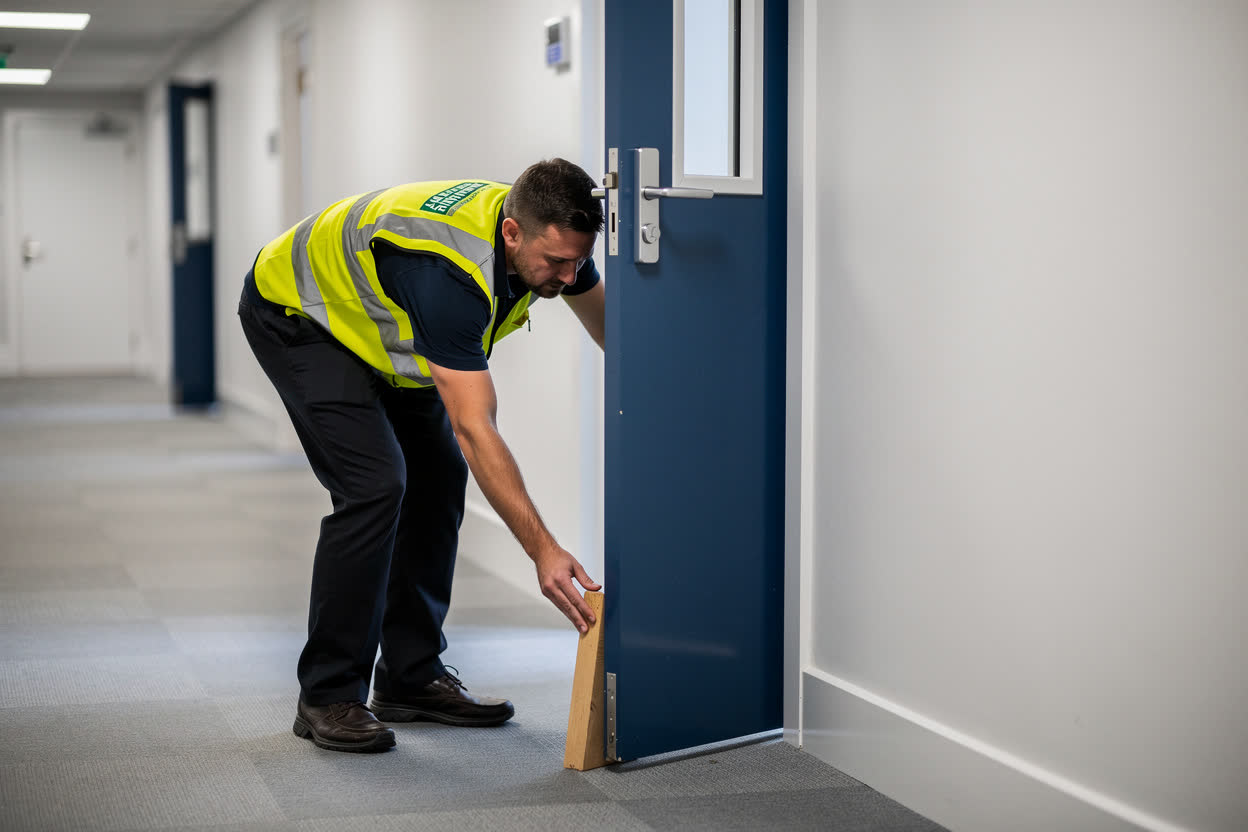
Fire wardens help by reporting changes in their area, such as new storage, blocked routes or damaged fire doors, so that the assessment stays accurate.

Step 5: Reviewing When the Workplace Changes
The responsible person regularly checks whether changes affect the assessment.Triggers include new processes, equipment or substances, new staff, incidents and changes in the law.Changes are recorded and staff are told through briefings or toolbox talks.
Step 5: Reviewing When the Workplace Changes

The final step keeps the assessment current. The responsible person regularly considers whether anything in the workplace has changed in a way that affects it. That includes new processes or equipment, possible improvements to safety measures, and new equipment or substances that need to be assessed. It includes new employees, including part-time and temporary workers, who may need information, instruction or training. It includes incidents that might call for the controls to be looked at again, and changes in legal requirements.

Staff feedback matters as well. If changes are needed, they must be written into the risk assessment, and employees should be trained about them in team briefings or toolbox talks. As a fire warden, tell the responsible person about changes you notice in your area.

How Fire Wardens Help

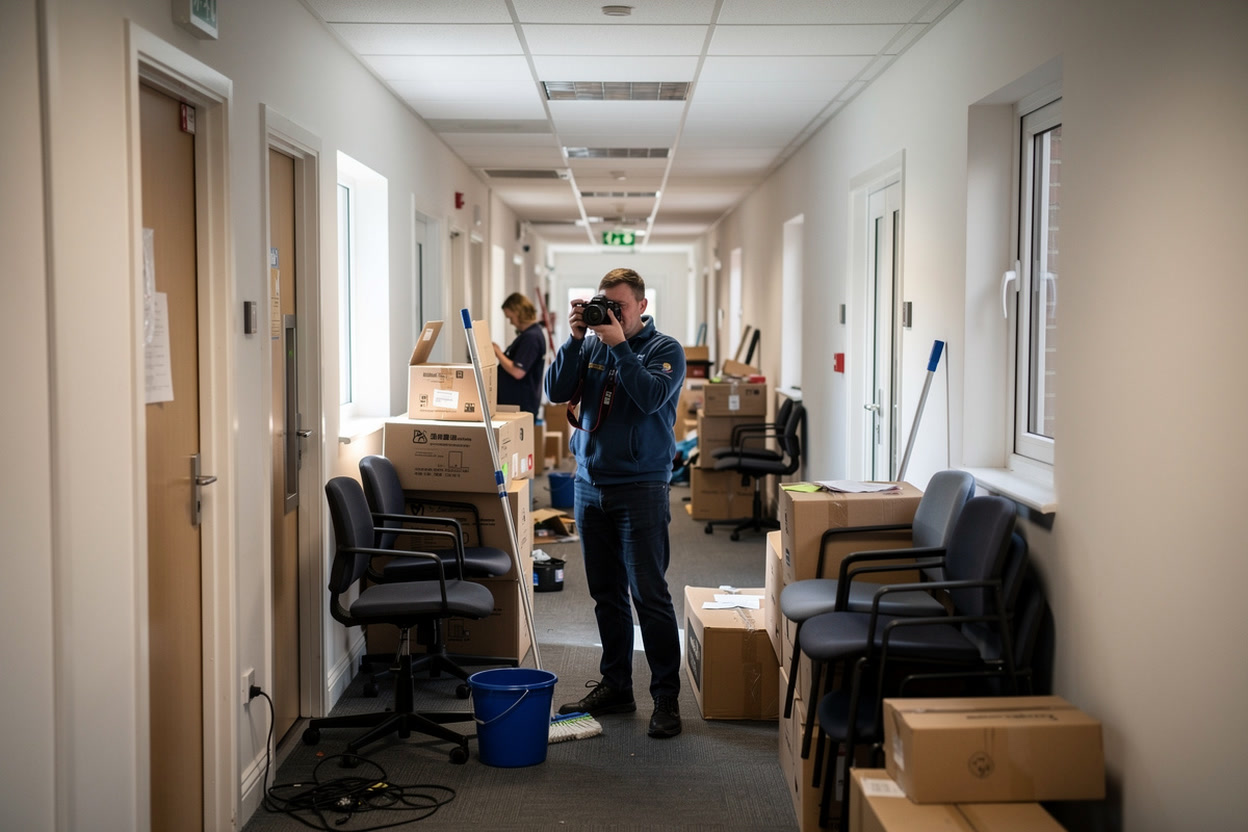
Fire wardens are the eyes and ears of fire safety in their area. During routine checks, look out for:

  • Escape routes and fire exits that are blocked, locked or cluttered.
  • Fire doors that are wedged open, damaged or not closing properly.
  • Missing or discharged extinguishers, and damaged signs or call points.
  • Rubbish building up, and combustible materials stored near heat sources.
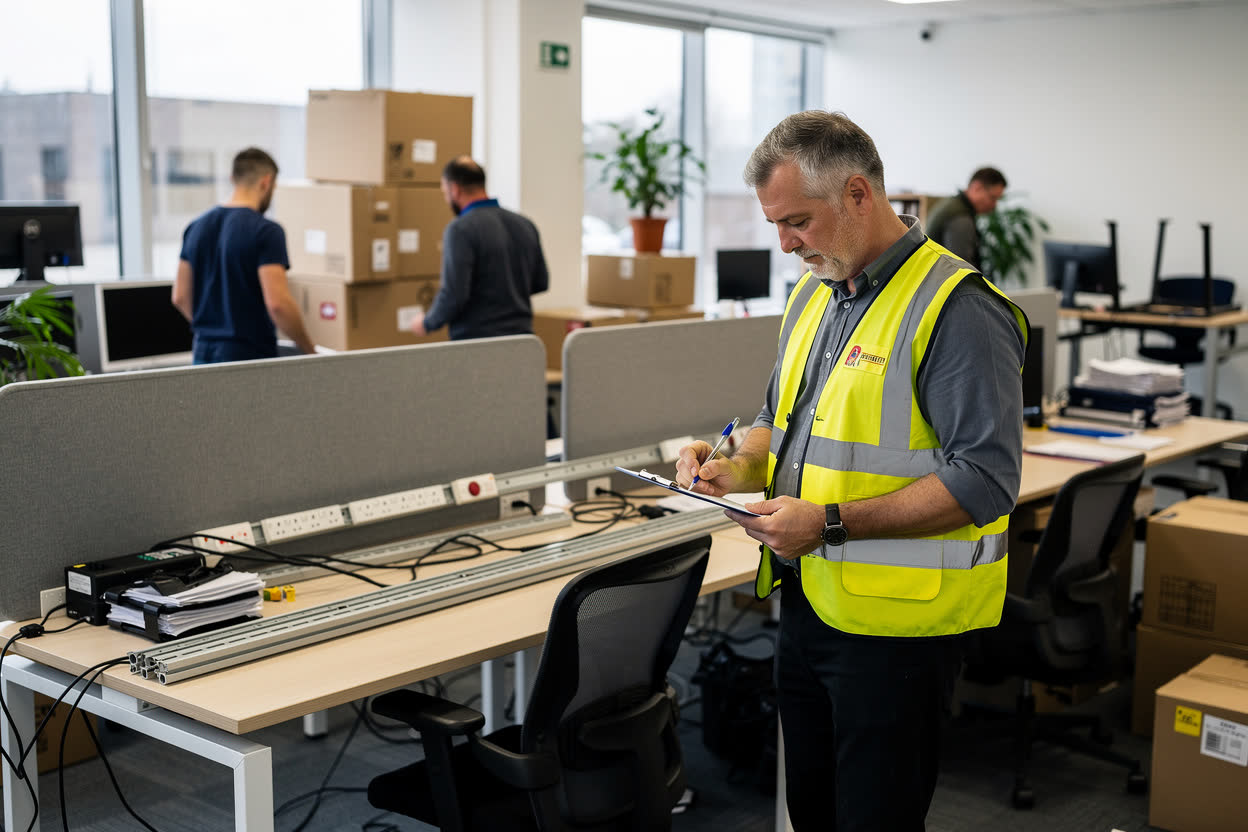
  • Overloaded sockets, damaged leads and faulty equipment.

Report what you find straight away. Many of these problems can be fixed in minutes.

Summary

In this module, you have learned that:

A fire risk assessment identifies hazards and people at risk, and decides on the precautions needed.

It follows five steps: identify hazards, identify people at risk, evaluate and act, record and train, and review.

Fire wardens keep the assessment accurate by spotting and reporting problems in their area.

In the next module, we will look at fire prevention, alarms and fire fighting equipment.

Knowledge Check
Which of these people is likely to be especially at risk in a fire?
Select one answer, then press Check.
An experienced employee who knows the building well
A visitor with impaired hearing who is new to the building
A fire warden who has just completed training
A manager working in a ground floor office near an exit
Correct. A visitor who does not know the building, and who may not hear the alarm, is especially at risk and must be considered in the assessment.
Not quite. Think about who might not know the way out, or might not hear the alarm, and try again.
Next Module →Answer the question to unlock the next module.
Page 1 of 21