← Exit
Module 1 · The Fire Warden Role0% complete · 26 slides left
Fire Warden / Fire Marshal
Module 1
This course contains audio. Use headphones in public places.
Introduction
Introduction

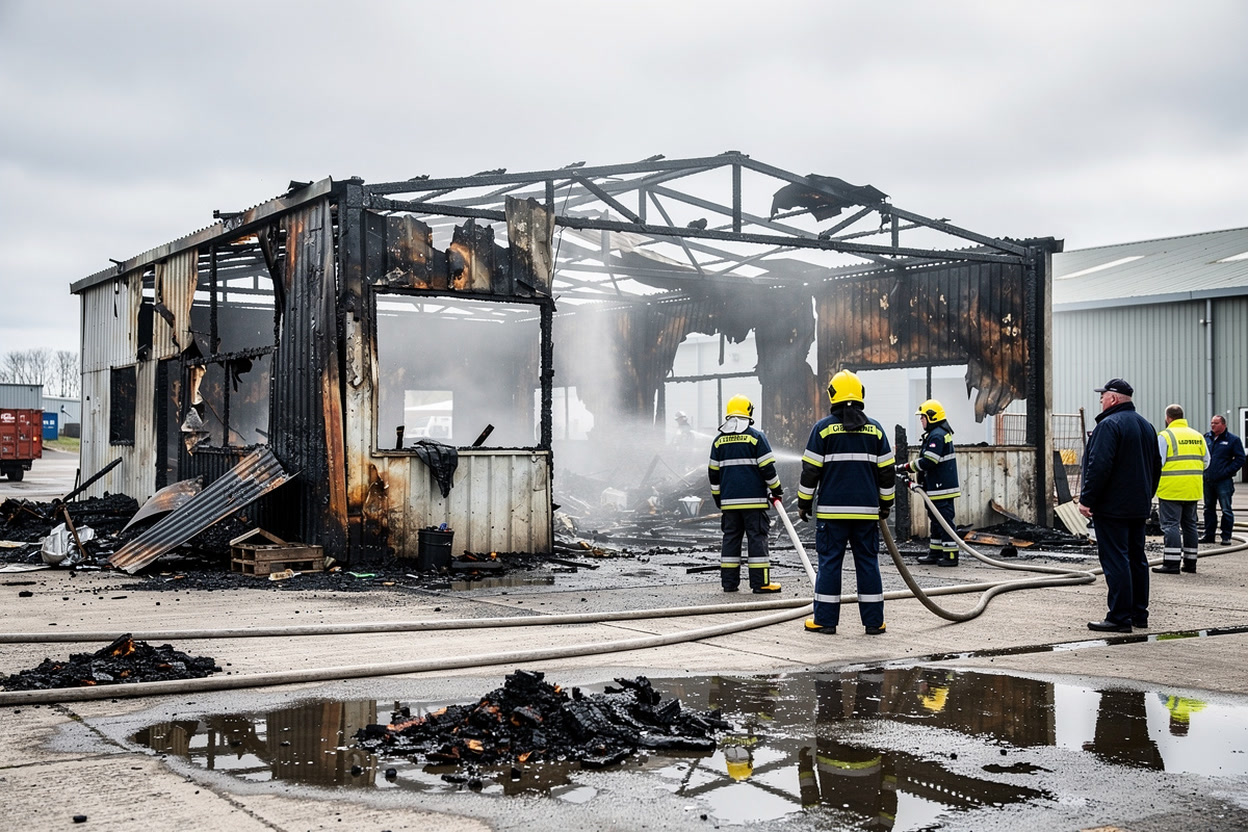
Fire can destroy a workplace in minutes. Smoke spreads faster than most people expect, and a few minutes of confusion can cost lives. Most of the people who die in fires are killed by smoke, not by flames.

That is why every workplace needs people who understand fire, who help to prevent it, and who know exactly what to do when the alarm sounds. Those people are fire wardens, also called fire marshals.

This course prepares you for that role. It covers how fire starts and spreads, how the risk is assessed and controlled, and how to lead people safely out of a building in an emergency.

Course Aims
Course Aims

By the end of this course you will be able to:

  • Describe the main fire safety laws in the UK, and the duties they place on employers and the responsible person.
  • Explain how fire starts and spreads, and identify the classes of fire.
  • Understand how a fire risk assessment is carried out, and the part you play in it.
  • Recognise fire prevention and protection measures, including alarms, extinguishers, fire doors and signs.
  • Carry out your duties as a fire warden before, during and after an evacuation.
In This Module
In This Module

Module 1 explains why fire safety matters and where the fire warden fits in. You will learn about:

  • The consequences of fire in the workplace.
  • The order in which fire risks are controlled.
  • Fire safety law in the UK, and who enforces it.
  • The duties of a fire warden, and the training you need.
  • How many fire wardens a workplace needs.
Why Fire Safety Matters

A serious fire can do far more than damage a building. It can:

  • Kill or seriously injure employees, visitors and members of the public.
  • Destroy equipment, stock and records that took years to build up.
  • Close a business for months. Many businesses never reopen after a major fire.
  • Lead to prosecution, fines and even imprisonment for those responsible.

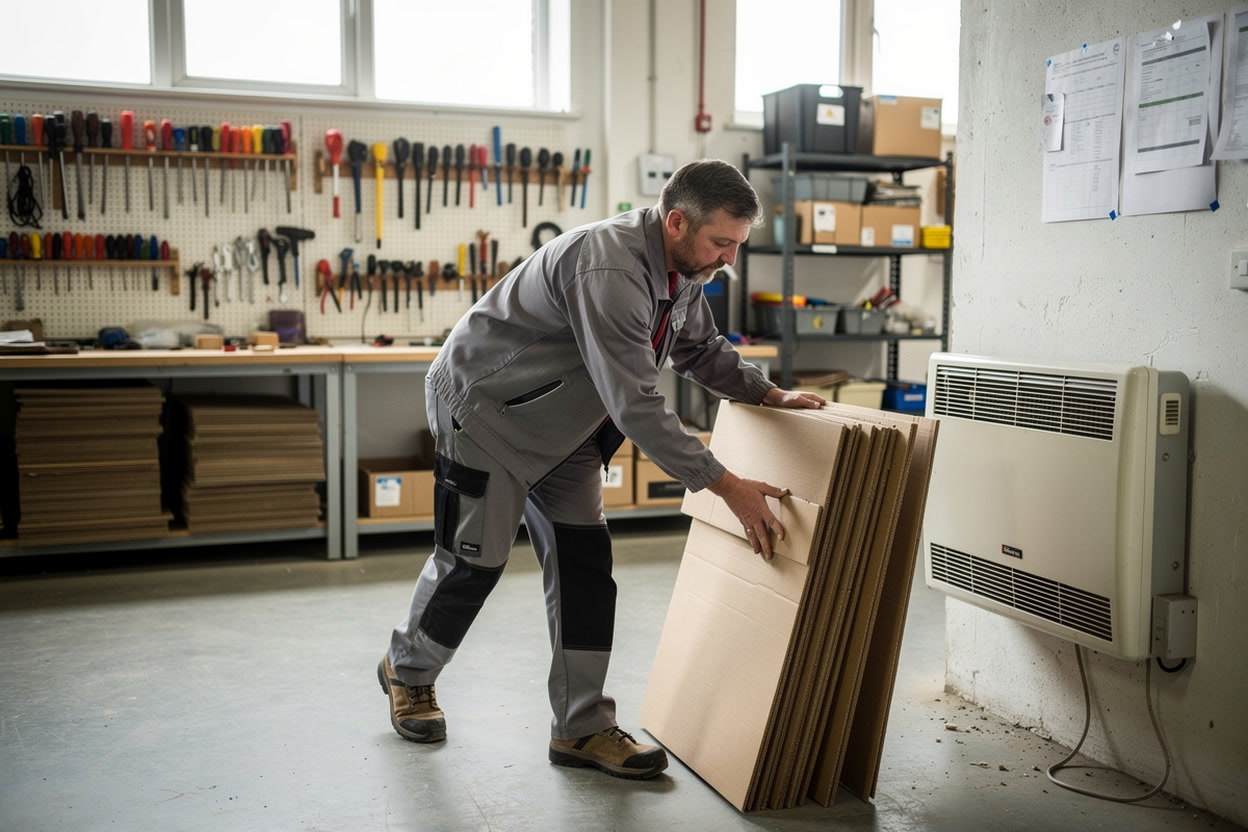
Most workplace fires are preventable. They are caused by everyday things: faulty electrics, careless smoking, poor housekeeping, hot work and deliberate fire setting. Good fire safety management deals with all of these.

Fire in the UK: The Figures
Fire and rescue services attended 38,886 building fires in England in the year to March 2024.Those fires were linked to 251 deaths and 6,339 non-fatal casualties.Industrial, retail, and food and drink premises were heavily affected.
Fire in the UK: The Figures

Fires cause serious harm in the UK every year, to businesses of every size and type, wherever they are located. Home Office fire and rescue statistics for the year ending March 2024 show that fire and rescue services in England attended 38,886 building fires. Within the wider figures for that year there were 251 fire-related deaths, and 6,339 people suffered non-fatal injuries, often burns or smoke inhalation. A large share of these incidents happened in industrial settings such as manufacturing and warehouses, in retail premises, and in food and drink businesses.

Beyond damage to buildings and harm to people, fires cost businesses production time, resources and the trust of their customers. For many, the effects of a major fire are permanent and they never fully recover.

How Fire Risk Is Controlled

Fire safety follows a simple order of priorities. Each step is used before relying on the next:

  • Avoid: remove the hazard altogether, for example by using a non-flammable product.
  • Prevent: stop fires starting, through good housekeeping, safe electrics and control of ignition sources.
  • Detect and warn: find a fire quickly and alert everyone, with smoke detectors and fire alarms.
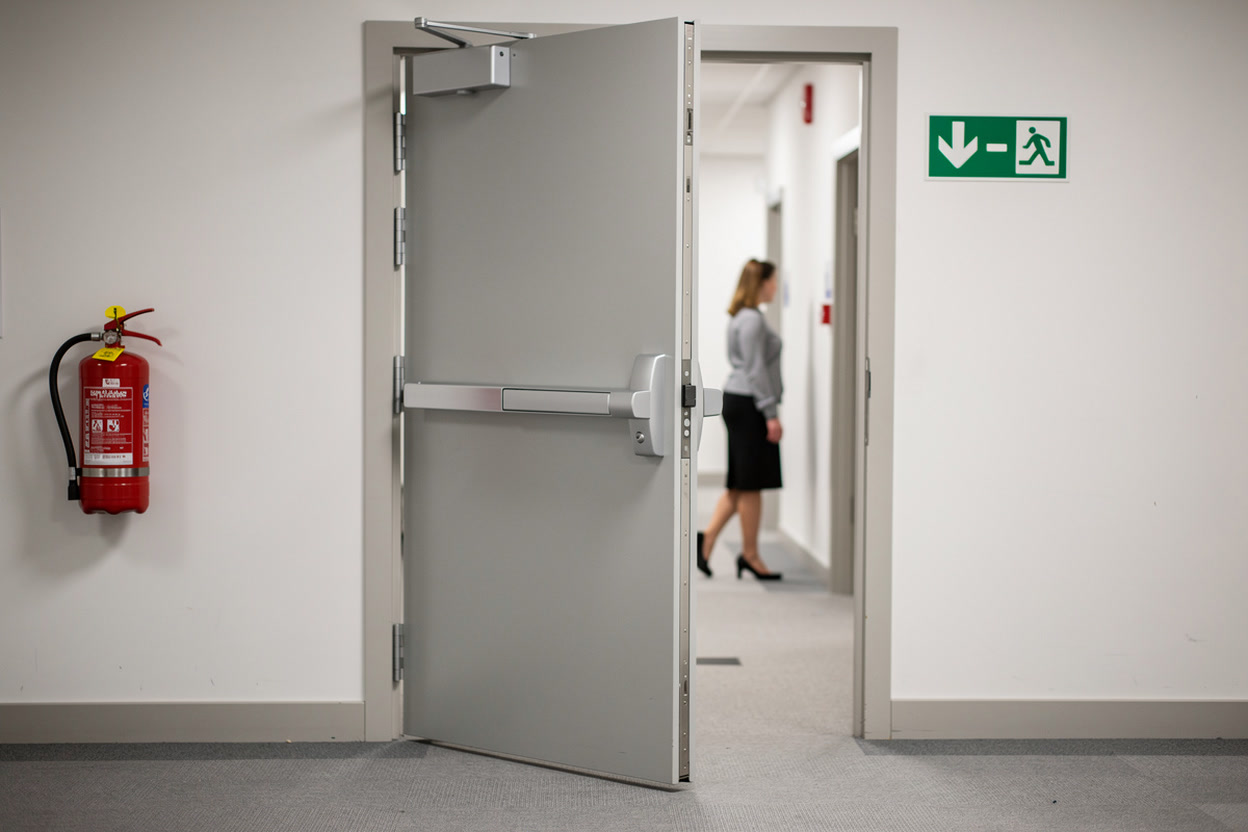
  • Contain: stop fire and smoke spreading, with fire doors and fire-resisting walls.
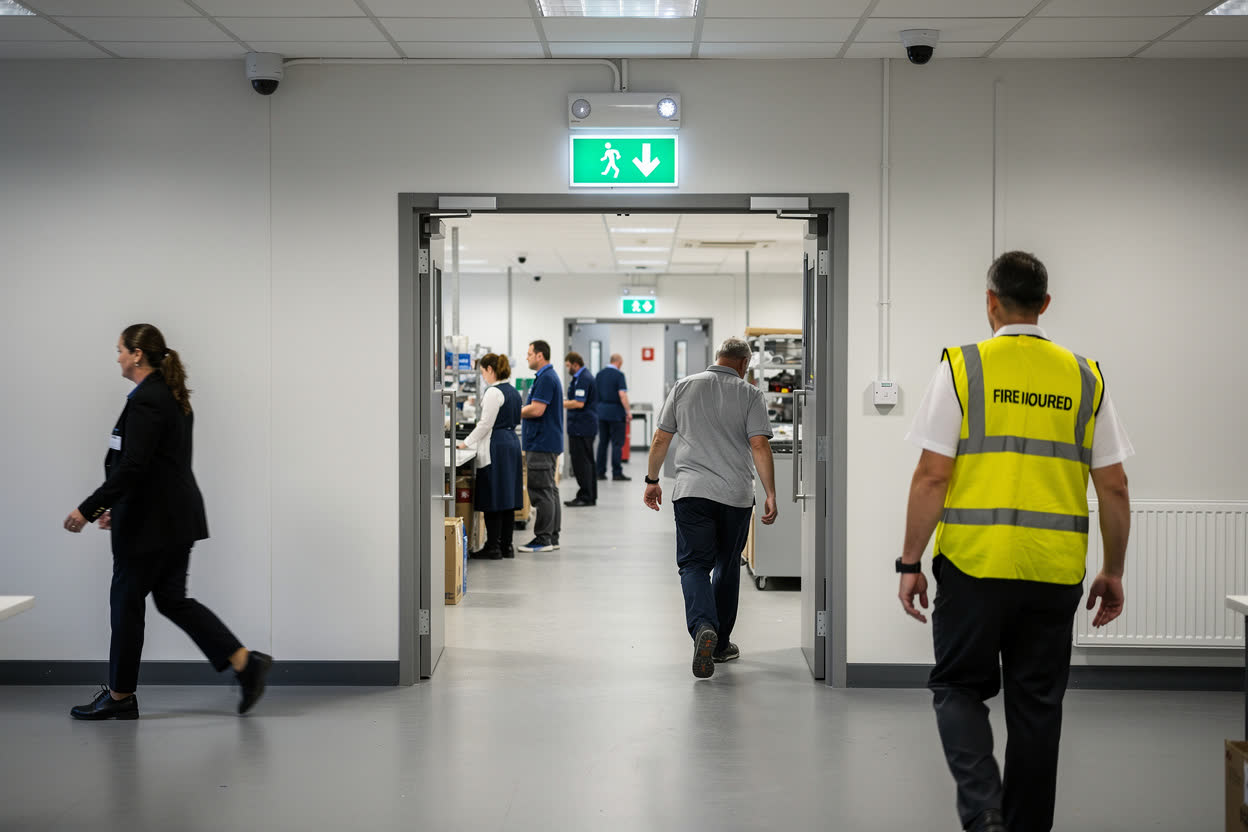
  • Escape: make sure everyone can get out safely, using clear escape routes, lighting and signs.
  • Fight: tackle a small fire only when it is safe, using the right extinguisher.
The Hierarchy of Fire Protection: Avoid and Prevent
The hierarchy sets the order in which fire safety measures should be considered.Avoid: remove work activities, equipment or other hazards that could cause a fire.Prevent: stop fires starting, for example by separating flammable materials from ignition sources.
The Hierarchy of Fire Protection: Avoid and Prevent

Fires can be hugely destructive, so preventing them in your business matters above all, and that needs a good understanding of the basic safety measures. Employers and others responsible for fire safety must know the hierarchy of fire protection, which sets the order in which fire safety measures should be considered. All of its steps are important, but following the order keeps prevention and evacuation as the main focus.

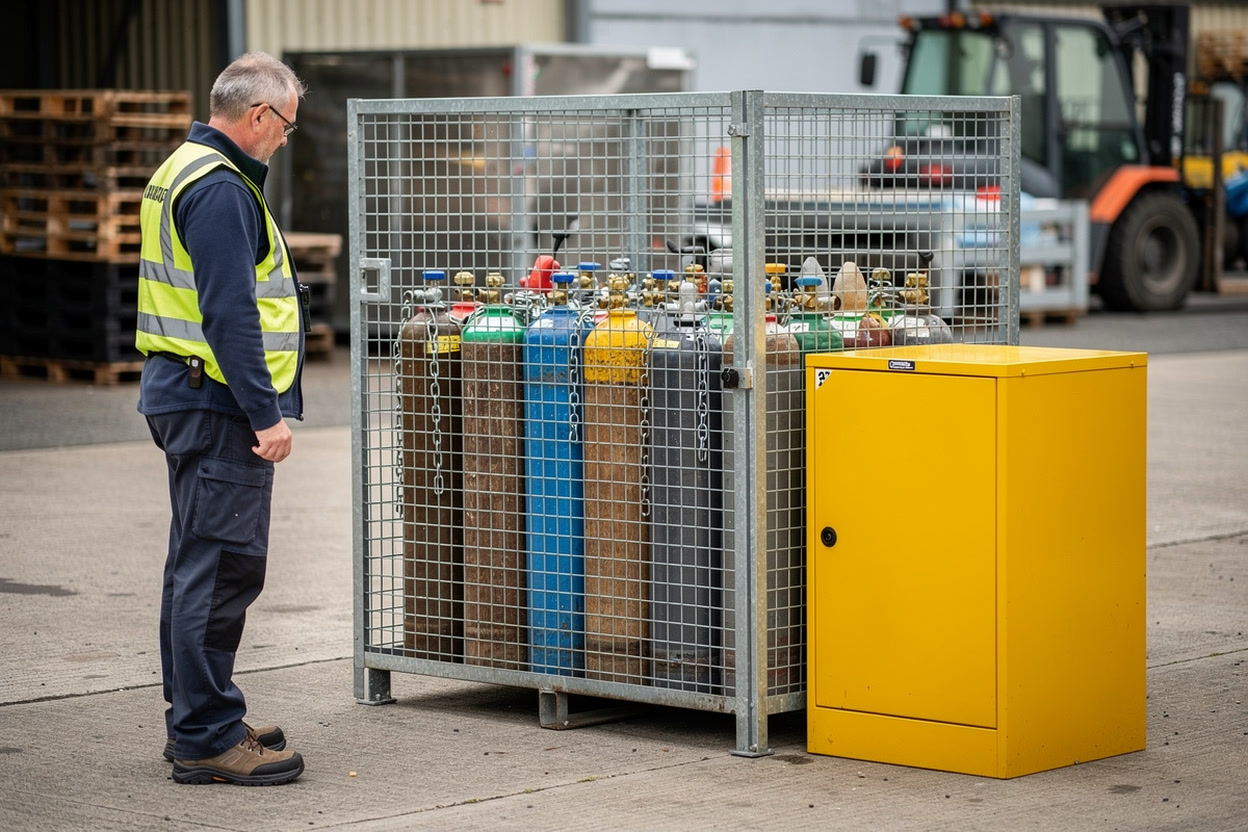
The first step is to avoid. Wherever possible, eliminate the work activities, equipment or other hazards that could lead to a fire in the first place. Where avoiding the risk entirely is not possible, the second step is to prevent. This means putting measures in place to stop fires starting, such as keeping flammable materials apart from sources of ignition.

The Hierarchy of Fire Protection: Control, Escape and Fight Fire
Control: physical measures such as fire-resistant structures and managerial measures such as safe working practices.Escape: people must be able to leave the building and reach a place of safety.Fight fire: a last resort, only when safe and only for trained people.
The Hierarchy of Fire Protection: Control, Escape and Fight Fire

The third step is control. Control measures limit the effect of a fire when one does start. They include physical controls such as fire-resistant structures, and management controls such as safe working practices for handling flammable substances. The fourth step is escape. Prevention comes first, but the ability to leave a workplace safely is fundamental, so people must be able to get out of the building and reach a place of safety.

The fifth and final step is to fight the fire. This is a last resort. It should be attempted only when it is safe to do so and by people who have been properly trained, and escaping to safety always remains the top priority. During this course we look at each step of the hierarchy and at what you can do, as a fire warden, to support it.

Fire Safety Law in the UK

The main fire safety law for workplaces in England and Wales is the Regulatory Reform (Fire Safety) Order 2005, usually called the Fire Safety Order.

  • It applies to almost all non-domestic premises, including the common parts of blocks of flats.
  • It has been strengthened by the Fire Safety Act 2021 and the Fire Safety (England) Regulations 2022, and by fire safety changes in the Building Safety Act 2022.
  • Scotland has the Fire (Scotland) Act 2005, and Northern Ireland has the Fire and Rescue Services Order 2006 and the Fire Safety Regulations 2010. The duties are very similar.

Workplace health and safety law, including the Health and Safety at Work etc. Act 1974, also applies.

Who Is a "Responsible Person"?
The same legal duties apply to employers, building owners and anyone controlling part of the premises.Landlords and owners of hotels and guest houses are included.Where several responsible persons share a building, they share the duties.
Who Is a "Responsible Person"?

The legal obligations in fire safety law are the same for every duty holder. That includes employers, building owners and anyone in control of any part of the premises. It also reaches people who accommodate paying guests or customers, such as landlords and the owners of hotels and guest houses. Under the Fire Safety Order, all of these people are known as responsible persons. If a building has more than one responsible person, they share the legal duties between them.

Duty holders must prevent or reduce fire risks in line with the hierarchy of fire protection, as far as is reasonably practicable. They must also provide and maintain safe evacuation routes so that everyone can get out in an emergency. "Reasonably practicable" has a legal meaning. Where there are risks to health and safety, the measures taken should match the level of risk, unless the risk is negligible.

The Responsible Person

The Fire Safety Order places the legal duties on the responsible person. In a workplace, this is usually the employer. It can also be the owner, or anyone else who has control of the premises.

The responsible person must make sure that:

  • A suitable fire risk assessment is carried out, recorded in full and kept up to date.
  • General fire precautions are in place and maintained.
  • There are emergency procedures, and enough competent people to put them into effect.
  • Employees receive fire safety information and training.
Premises Covered by the Fire Safety Order
The Order covers almost all premises, buildings, structures and open spaces.Examples include offices, shops, hospitals, schools, pubs, workshops and places of worship.It applies to non-domestic premises, including the common parts of blocks of flats, but not to private homes.
Premises Covered by the Fire Safety Order

The Fire Safety Order and related regulations apply to nearly every kind of premises, building, structure and open space. That includes offices and shops, hospitals and social care settings, and schools and other educational institutions. It includes hospitality premises such as pubs, bars, cafes and restaurants, as well as places of worship, community venues and sports centres. It also covers manufacturing facilities and workshops, motor vehicle repair shops, shared accommodation areas, tents and marquees, and rented properties.

There is one important limit to remember. The Order applies to non-domestic premises, including the common parts of blocks of flats, but not to the inside of a private home used solely as a dwelling. If you work in any of the workplaces on this list, the responsible person for your premises has duties under the Order.

General Fire Precautions

The measures that the law requires in every workplace are called general fire precautions. They include:

  • Measures to reduce the risk of fire starting, and of it spreading.
  • Safe escape routes and exits, kept clear and available at all times.
  • Fire detection and a way of raising the alarm.
  • Suitable fire fighting equipment.
  • Emergency procedures, including what to do if fire breaks out.
  • Training for employees, and the appointment of fire wardens.

Fire wardens play an important part in keeping these precautions working day to day.

General Fire Precautions in Practice
The responsible person must make sure general fire precautions are in place and effective.Examples: replacing solvent-based cleaners with water-based ones, fire doors, alarms and extinguishers.Employees must be given instruction and training in prevention, control and evacuation.
General Fire Precautions in Practice

The responsible person must make sure that the general fire precautions described in the Fire Safety Order are both in place and working. They cover seven areas. Fire avoidance, such as replacing solvent-based cleaners with water-based alternatives. Fire prevention, including managing flammable substances so they cannot ignite. Controlling the spread of fire, using measures such as fire-resistant partitions and fire doors to divide the building into compartments.

Safe evacuation routes out of the premises, and making sure those routes can be used safely at all times, which means keeping them clear and in working order. Means of detecting and fighting fire, such as alarms and extinguishers. And arrangements for instructing and training employees in fire prevention, fire control and safe evacuation.

Dangerous Substances and DSEAR
DSEAR 2002 covers substances that can cause or worsen fires and explosions, whatever the quantity.It applies to all work activities, in a workplace or elsewhere.Risk assessors must consider the DSEAR assessment alongside general fire precautions.
Dangerous Substances and DSEAR

The Fire Safety Order includes specific requirements for dangerous substances. The Dangerous Substances and Explosive Atmospheres Regulations 2002, known as DSEAR, apply to substances used or met at work that could cause or worsen a fire or explosion, whatever the quantity. DSEAR covers all work activities, whether they take place in a workplace or elsewhere. Anyone carrying out a fire risk assessment must consider the DSEAR assessment when they evaluate general fire precautions.

Dangerous substances fall into three groups. First, chemicals or gases that carry a fire or explosion risk. Second, substances classified as hazardous under the CLP Regulations, which show fire or explosion warnings on their labels. Third, dusts that can form explosive mixtures with air, for example the flour dust found in food industry premises such as flour mills.

What Does a Fire Warden Do?

A fire warden is appointed to help keep their area of the workplace safe from fire. The role has two sides.

Day to day, a fire warden:

  • Keeps an eye on fire risks, such as blocked exits, wedged fire doors, poor housekeeping or damaged equipment.
  • Reports problems to the person in charge of fire safety.
  • Helps with fire drills, alarm tests and checks.

In an emergency, a fire warden:

  • Makes sure the alarm has been raised.
  • Helps everyone in their area to leave quickly, checks that the area is clear, and reports to the assembly point.
The Duties of a Fire Warden
Watch for problems with general fire precautions in your area and know how to raise the alarm and call the emergency services.Help colleagues use the escape routes, giving extra support to those who need it.Report anyone unable to leave, keep people out of the building after evacuation, and help run fire drills.
The Duties of a Fire Warden

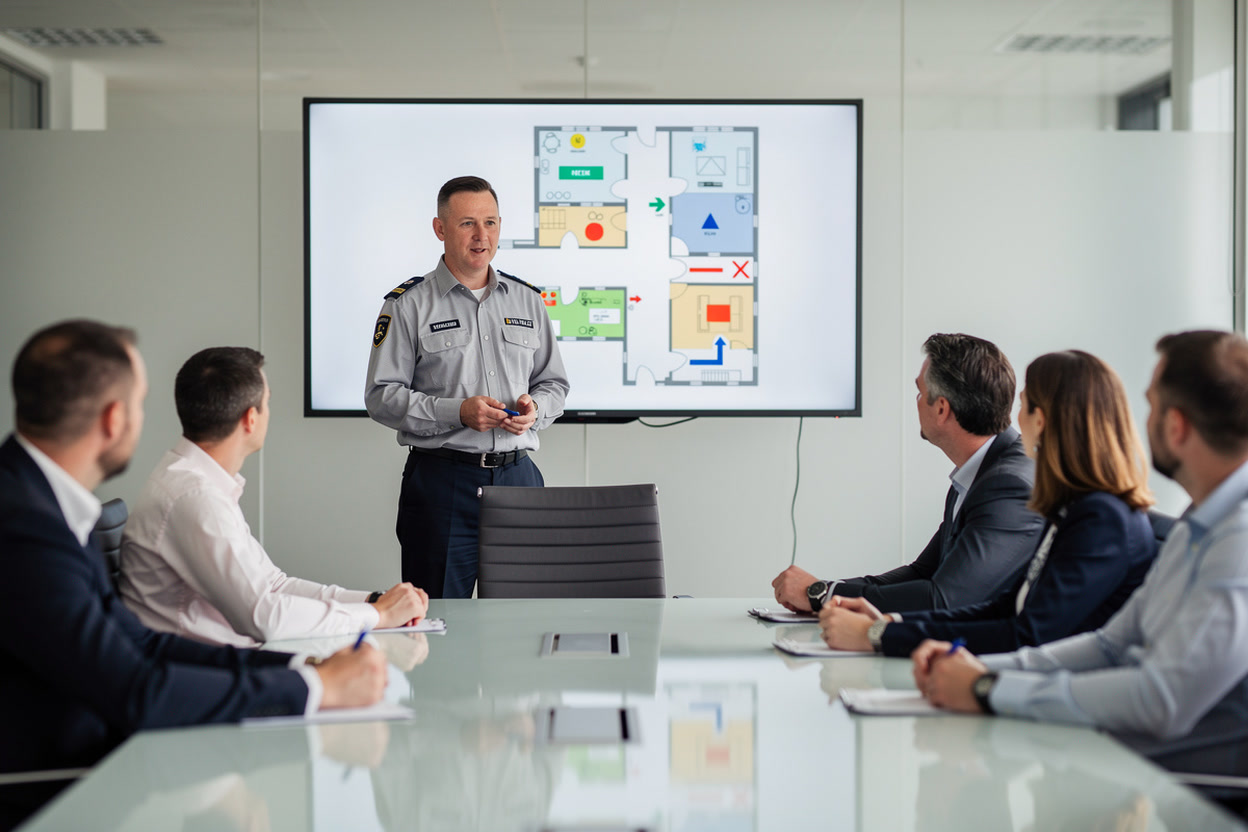
Fire wardens play an important part in keeping a workplace safe. You must stay alert to problems with the general fire precautions in your area and know how to react quickly if a fire breaks out there. You need a thorough understanding of the escape routes for your area, so that you can help colleagues use them safely. You must know how to raise the fire alarm, and when and how to contact the emergency services.

If anyone cannot leave the building, you must tell management or the emergency services without delay so that their rescue is prioritised, and you must make sure colleagues with disabilities or other needs get the support they need to escape. At the assembly point you stop people from your area going back inside until it is safe. You also organise and run fire drills to practise and improve evacuation.

Training for Your Role

This course gives you the knowledge every fire warden needs. As well as completing it, you should also receive training from your employer on:

  • Your own area: its escape routes, exits, alarm call points, extinguishers and assembly point.
  • The emergency plan for your building, including how people with disabilities will be helped out.
  • Your exact duties during an evacuation, and who you report to.
  • Hands-on practice with fire extinguishers, if your employer’s policy is for wardens to tackle small fires.

Training should be refreshed regularly, and whenever the building, the work or the emergency plan changes.

Training Specific to Your Area
Your employer should give training tailored to your area of the workplace.It should cover evacuation procedures, emergency response and the location of fire-fighting equipment.It should also cover health and safety issues, fire hazards unique to the premises and the layout of your area.
Training Specific to Your Area

In addition to this course, you should receive training and instruction from your employer, or the person in control of the premises, that focuses on your own area. It should explain the evacuation procedures that are specific to your workplace and how to respond to emergencies in your area. You should be shown where the fire-fighting equipment is and what types there are, including extinguishers.

It should address health and safety issues in your area that relate to fire safety, and the fire hazards unique to your premises, such as flammable liquids, solids, gases or dusts and how to manage them safely. You should also learn the layout of the area, including every evacuation route and exit. If your workplace is large or complex and has several fire wardens, make sure you understand your own area thoroughly.

How Many Fire Wardens?

There is no fixed number in law. The number of fire wardens is decided through the fire risk assessment, taking into account:

  • The size and layout of the building, and the number of floors.
  • How many people are in the building, including visitors and members of the public.
  • The level of fire risk from the work being carried out.
  • Shift patterns, part-time work, holidays and sickness, so that there is always cover.
  • Any people who will need help to escape.

Every area, on every shift, should have a fire warden available, with a named deputy.

What Decides the Number of Fire Wardens
The employer's risk assessment decides how many fire wardens are needed.Factors include number of buildings and floors, occupants, shifts and the nature of the work.Most workplaces should have more than one warden to cover holidays and sickness.
What Decides the Number of Fire Wardens

The number of fire wardens a business needs depends on several factors, and your employer must carry out a risk assessment to judge them. They look at how many buildings and floors the workplace has, and at how many people occupy it and what kind of people they are. They consider the number of shifts, and they must allow for holiday and sickness absence. They take into account the type, size and complexity of the workplace, the amount of combustible and flammable material on site, the sources of ignition and the structure of the building.

The nature of the work carried out by staff matters too. In most cases a workplace should have more than one fire warden, so that cover is still available when a warden is on holiday or off sick.

Who Enforces Fire Safety?

In most premises, the Fire Safety Order is enforced by the local fire and rescue authority. Other bodies enforce it in some places, for example the Health and Safety Executive on many construction sites.

Inspectors can issue alteration, enforcement and prohibition notices, and can stop premises being used until they are made safe.

Breaking the law can lead to unlimited fines and, in the most serious cases, imprisonment.

Who Enforces Fire Safety
In most premises, the local fire and rescue authority enforces fire safety law.The HSE oversees fire precautions on construction sites.They can visit, advise and take enforcement action.
Who Enforces Fire Safety

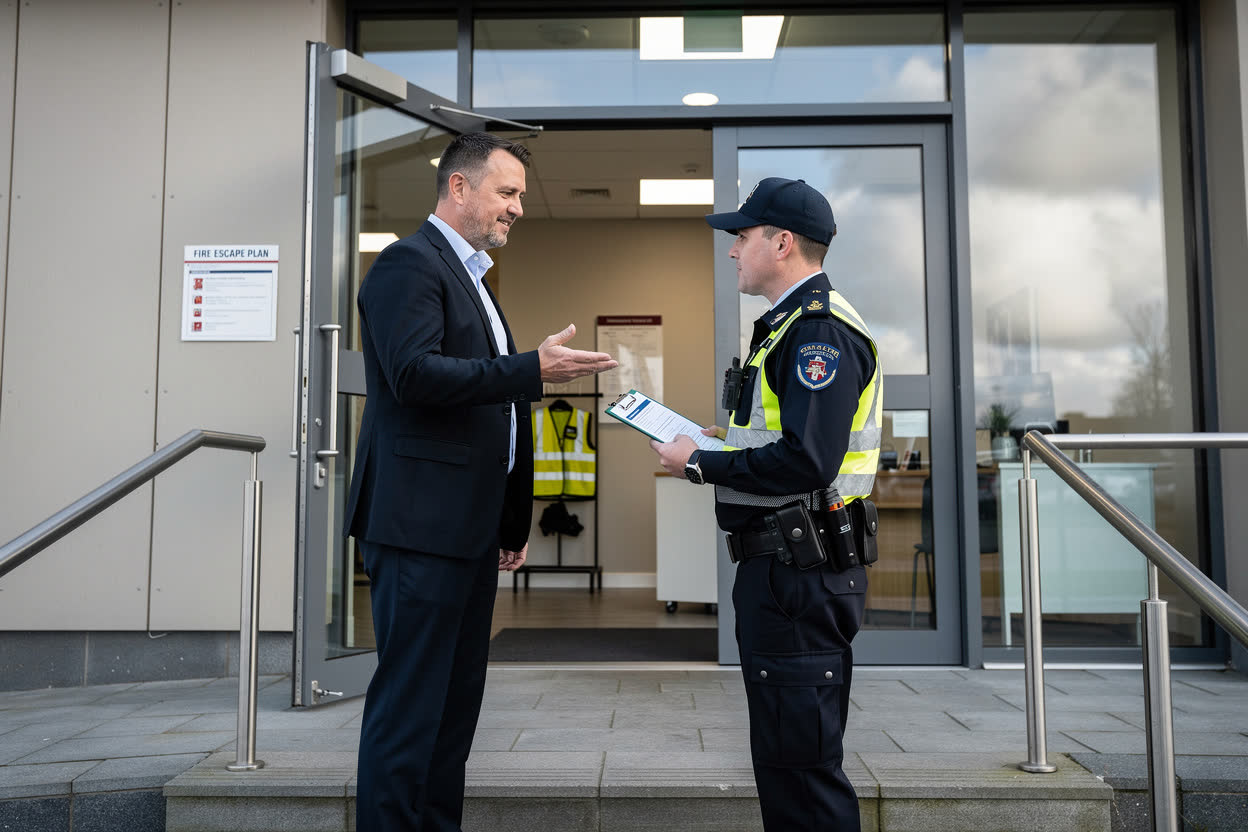
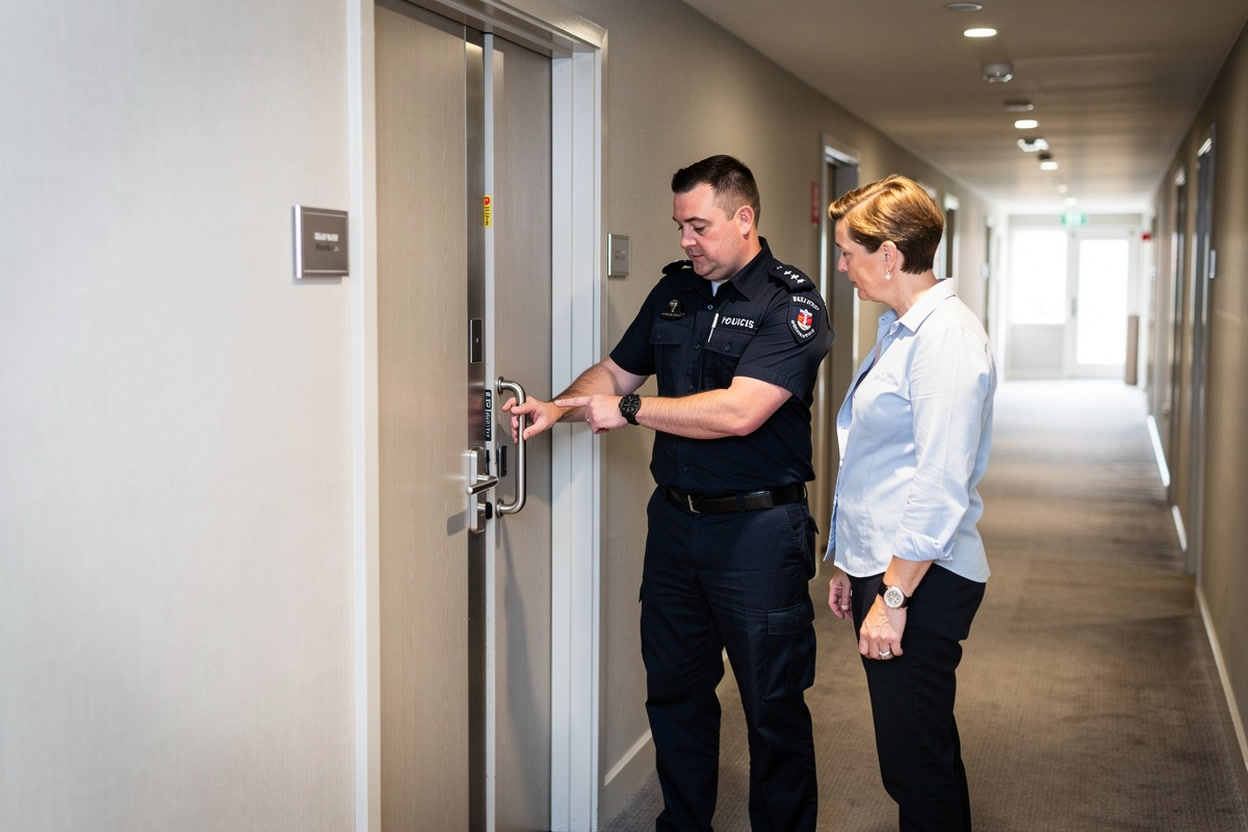
Responsibility for enforcing fire safety is divided between authorities, depending on the type of premises. In most premises, the local fire and rescue authority enforces the law and the duties it places on businesses. The Health and Safety Executive, the HSE, is in charge of general and process fire precautions on construction sites. Both can visit work premises to check whether fire risk assessments and fire prevention measures are adequate.

During these routine visits they may give businesses advice on what the law requires and how to comply. They also have the power to take enforcement action if they decide that the fire safety measures in your workplace are inadequate or break the regulations.

Enforcement Notices and Penalties
Authorities can issue notices, require improvements and even close premises.Compliance notices set out the improvements needed and their deadlines.Breaches can lead to unlimited fines and up to two years in prison.
Enforcement Notices and Penalties

Authorities responsible for fire safety can issue enforcement and prohibition notices, demand improvements and, if necessary, close a business. Notices come in several forms. Alterations notices go to premises with a high safety risk, either now or because of planned changes. Enforcement notices go to businesses that fail to manage significant risks, and they set out the improvements required and when they must be made. Where the fire and rescue authority or an HSE inspector judges a risk to be severe, a prohibition notice can be issued, restricting access to the premises straight away.

Failing to comply with fire safety law can lead to prosecution. Offences can be punished with an unlimited fine, and the most serious with up to two years in prison. A workplace that keeps up adequate precautions should avoid these consequences.

Summary

In this module, you have learned that:

The responsible person has legal duties under the Fire Safety Order and related laws.

Fire risk is controlled in order: avoid, prevent, detect and warn, contain, escape, and only then fight.

A fire warden helps prevent fire day to day and leads people out safely in an emergency.

In the next module, we will look at how fire starts and spreads, and the different classes of fire.

Knowledge Check
What is the first priority in controlling fire risk?
Select one answer, then press Check.
Buying more fire extinguishers
Avoiding or removing the hazard altogether
Running more fire drills
Fitting more exit signs
Correct. The best fire safety measure is to remove the hazard altogether, so a fire cannot start in the first place.
Not quite. Think about the order of priorities: avoid, prevent, detect and warn, contain, escape, and only then fight. Try again.
Next Module →Answer the question to unlock the next module.
Page 1 of 27