← Exit
Module 4 · Fire Detection and Suppression0% complete · 14 slides left
Fire Risk Assessment
Module 4
This course contains audio. Use headphones in public places.
Introduction
Introduction

Even with the best prevention, a fire can still start. Detecting it early, warning everyone quickly, and being able to tackle a small fire are what save lives and limit damage.

Detection and warning systems give people the time they need to escape. Suppression equipment, from sprinklers to extinguishers, can put out or hold back a fire in its early stages.

This module explains detection and warning systems, sprinklers, fire blankets and the different types of fire extinguisher.
In This Module
In This Module

You will learn about:

  • Detection and warning systems.
  • Testing and maintaining fire alarms.
  • Sprinklers.
  • Fire blankets.
  • Classes of fire, and types of fire extinguisher.
  • Using and maintaining fire fighting equipment.
Detection and Warning Systems

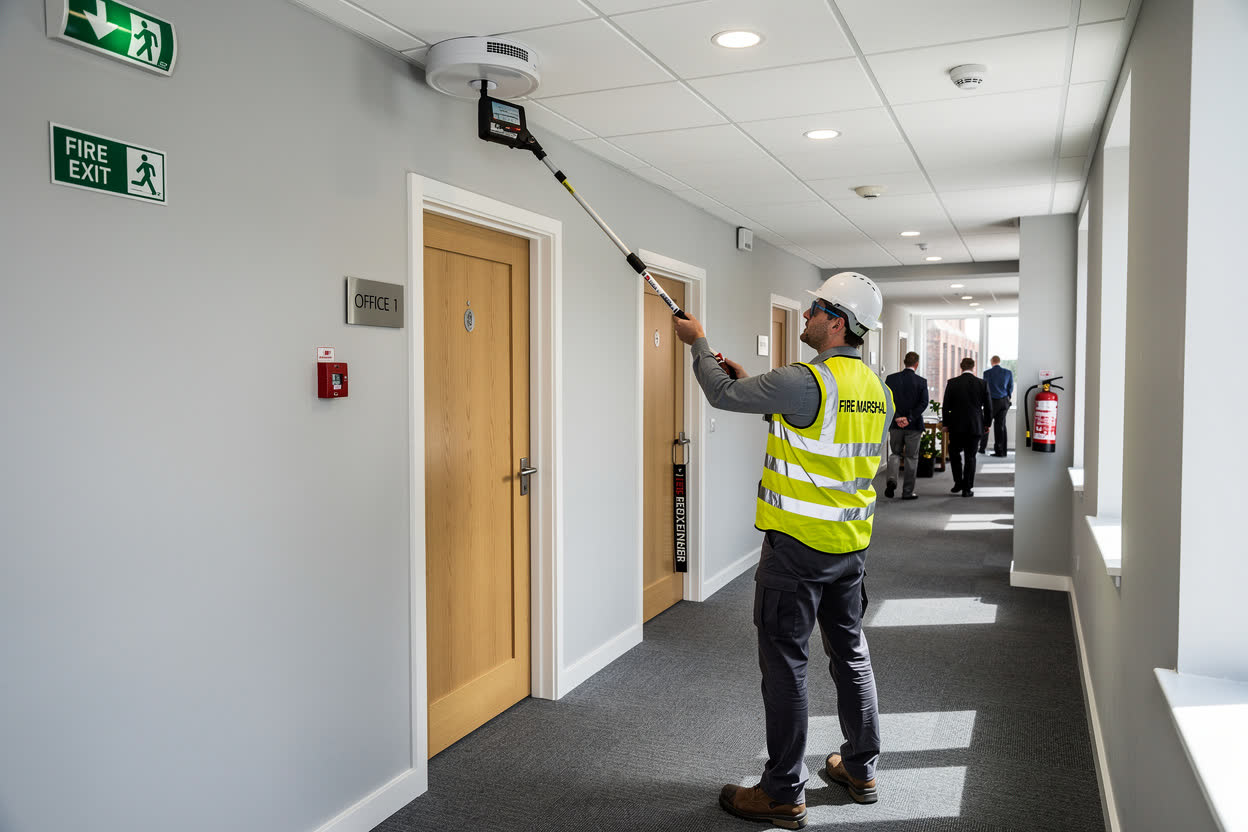
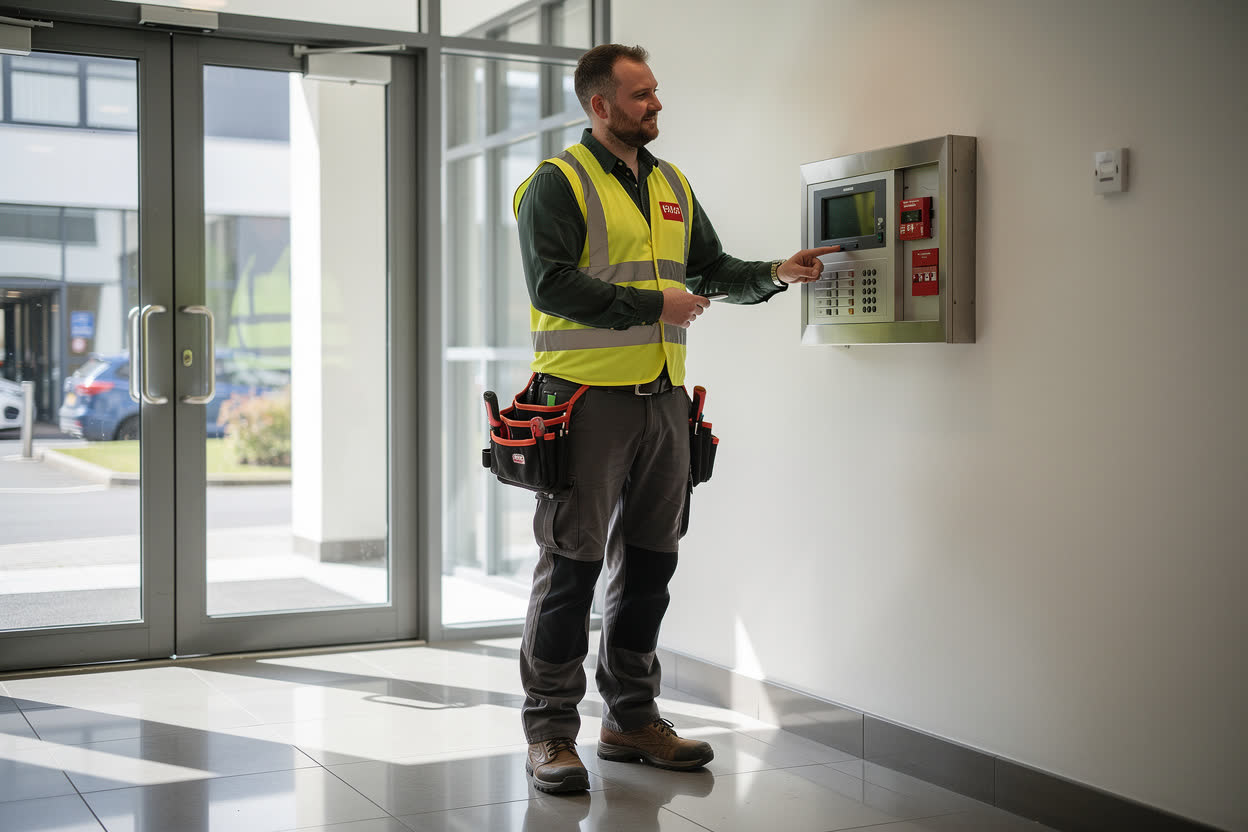
A fire detection and warning system must detect a fire as early as possible, and warn everyone so they can escape. The system you need depends on the size, layout and use of the premises.

  • Small, simple premises may only need a shout of ‘Fire!’ or a manual alarm.
  • Most workplaces need an electrical alarm system, with manual call points by the exits.
  • Automatic detection is needed where people might not notice a fire, such as sleeping areas or large buildings.
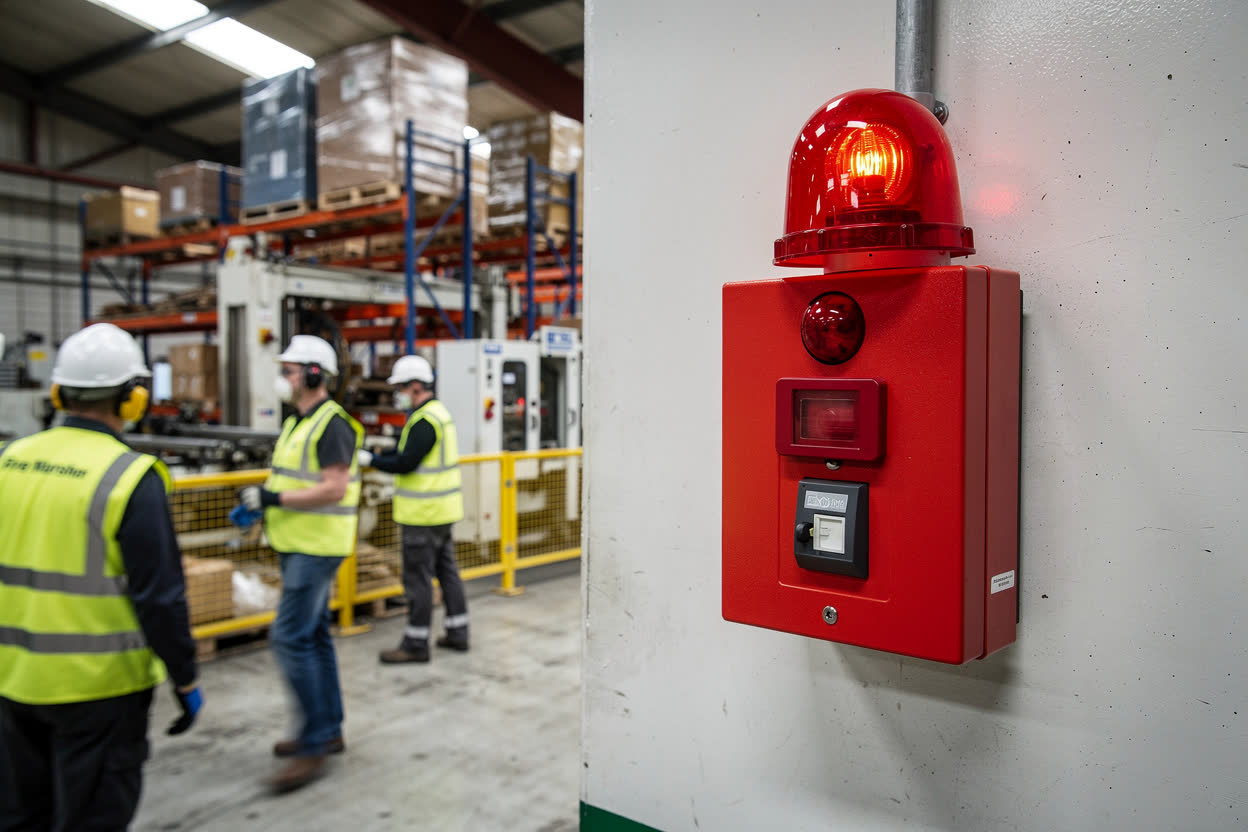
  • Alarms must be heard everywhere. Visual beacons may be needed for people who cannot hear, or in noisy areas.

Systems should be designed, installed and maintained to the British Standard, BS 5839.

Types of Detector
Types of Detector

Automatic detection relies on devices that sense the early signs of fire. The right detector depends on the area, and the type of fire likely to start there:

  • Smoke detectors, either optical or ionisation, give the earliest warning of most fires, and suit escape routes and most rooms.
  • Heat detectors respond to a rise in temperature. They are used where smoke detectors would cause false alarms, such as kitchens or dusty areas.
  • Multi-sensor detectors combine smoke and heat sensing, for fast, reliable detection with fewer false alarms.
  • Carbon monoxide fire detectors sense gases produced by a fire, and are useful in some situations.
Maintaining Alarm Systems

A fire alarm system must be kept in good working order at all times:

  • Daily: check that the control panel shows normal operation, and investigate any fault promptly.
  • Weekly: test the system from a different manual call point each week, so that over time every call point is tested. Record each test.
  • Periodically: have the system serviced by a competent person, normally every six months, in line with BS 5839.
  • Make sure staff recognise the alarm, and know the difference between the weekly test and a real alarm.

Keep a logbook of all tests, services, faults and false alarms. Inspectors will expect to see it.

Sprinklers
Sprinklers

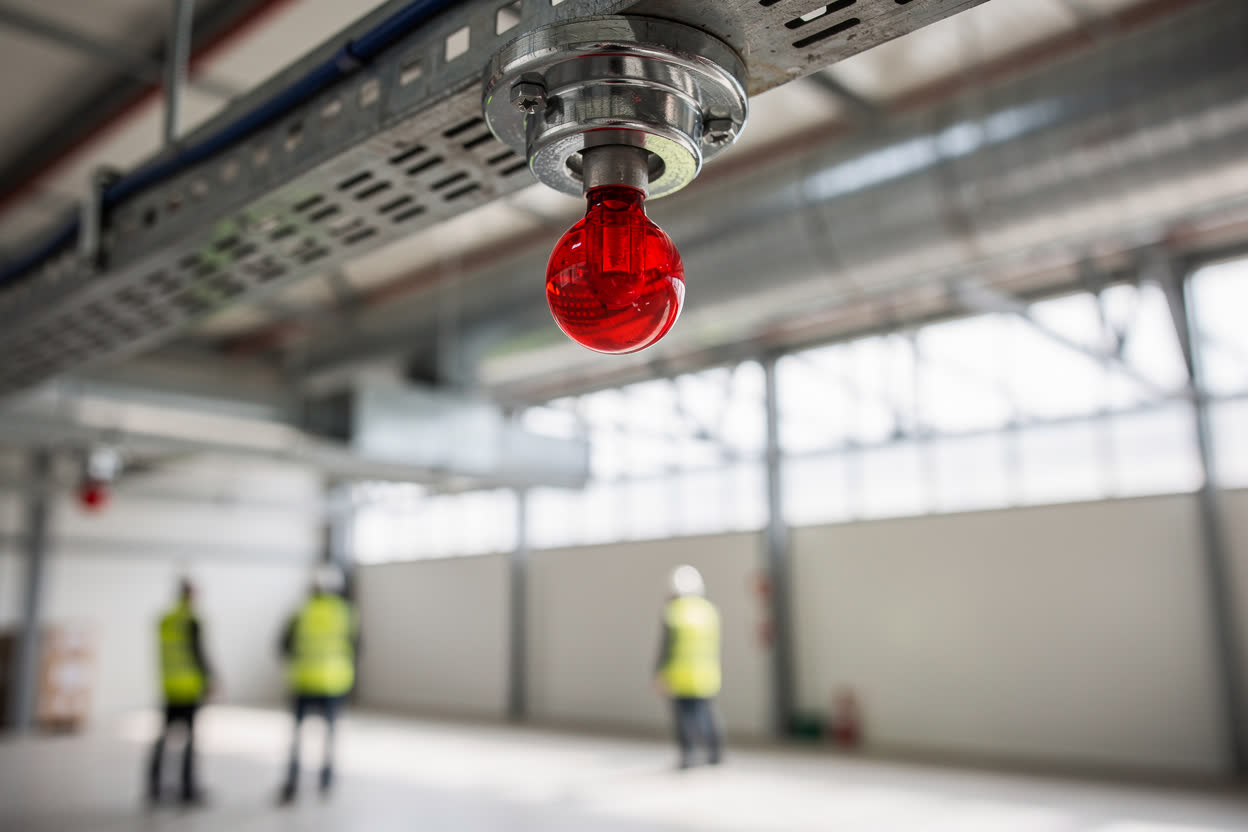
Sprinkler systems are one of the most effective forms of automatic fire suppression. They detect and tackle a fire automatically, often controlling it before the fire service arrives.

Each sprinkler head contains a heat-sensitive glass bulb or link. When heat from a fire reaches the head, the bulb bursts, and water is released onto the fire below.

Contrary to a common myth, the sprinklers do not all go off at once. Only the heads directly affected by the heat of the fire operate, so water damage is limited, and far less than the damage an uncontrolled fire would cause. Sprinklers must be properly maintained.

Fire Blankets
Fire Blankets

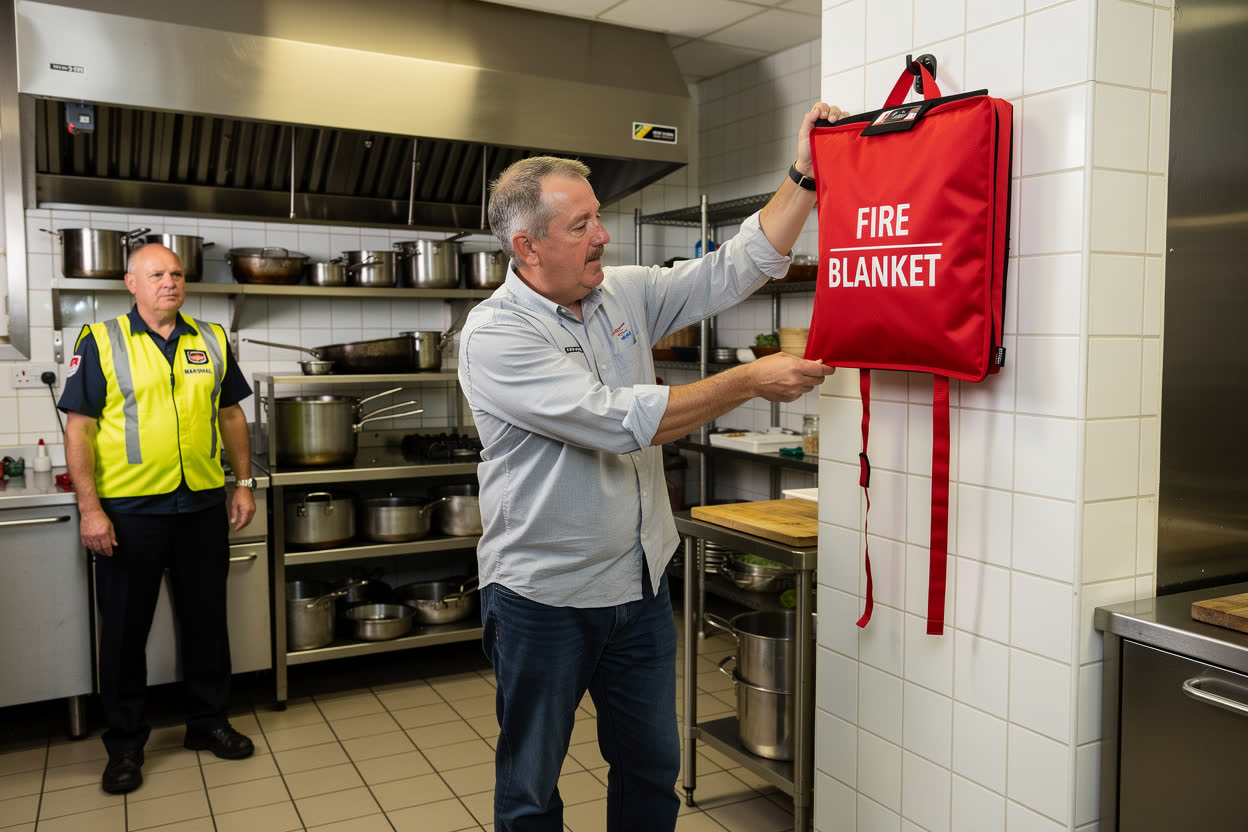
A fire blanket is a sheet of fire-resistant material used to smother a small fire by cutting off its oxygen. Fire blankets are especially useful in kitchens, for example on a small pan fire, or to wrap around a person whose clothing is on fire.

To use one, pull the tapes to release it, hold it with your hands protected behind it, and place it gently over the fire. Turn off the heat source if it is safe, and leave the blanket in place.

Never use water on burning oil or fat. If a fire is too big, do not tackle it. Raise the alarm and get out.

Classes of Fire
Classes of Fire

Different fires need different extinguishers. Fires are grouped into classes according to what is burning:

  • Class A: solid materials, such as wood, paper and textiles.
  • Class B: flammable liquids, such as petrol, oil and paint.
  • Class C: flammable gases, such as propane and butane.
  • Class D: combustible metals, such as magnesium.
  • Class F: cooking oils and fats.

Fires involving live electrical equipment are not a separate class, but need particular care. Each extinguisher is marked with the classes of fire it can safely be used on.

Types of Fire Extinguisher

In the UK, extinguishers are red, with a coloured band or label showing the type:

  • Water, red: for Class A fires. Never use water on electrical equipment or burning liquids.
  • Foam, cream: for Class A and B fires. It forms a blanket over burning liquids.
  • Carbon dioxide, black: for electrical fires and Class B fires. It leaves no residue.
  • Dry powder, blue: for Class A, B and C fires and electrical fires. It is not ideal indoors, because it makes it hard to see and breathe.
  • Wet chemical, yellow: for Class F cooking oil and fat fires, and Class A fires.

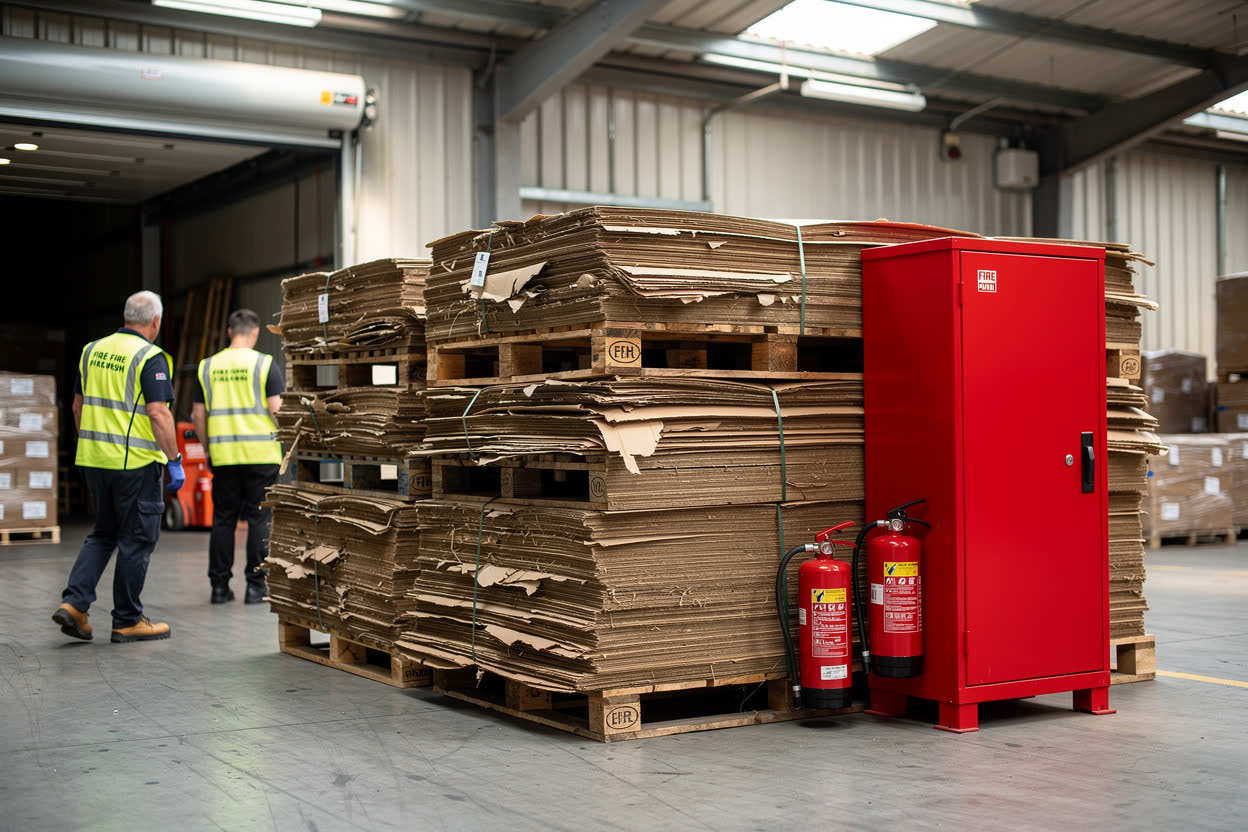
Site extinguishers on escape routes near exits, and sign them clearly.

Should You Tackle a Fire?

Only tackle a fire if all of these are true:

  • The fire is small, and the alarm has been raised.
  • You are trained, and you have the right extinguisher for the type of fire.
  • Your escape route is clear, behind you.
  • You are confident you can put it out.

If you are in any doubt, do not tackle the fire. Get out, and close the doors behind you. Never let a fire get between you and your exit, and never go back into a building to fight a fire once you have left.

The PASS Technique
The PASS Technique

The simple way to remember how to use most extinguishers is PASS:

  • Pull the safety pin.
  • Aim the nozzle or horn at the base of the fire, not the flames.
  • Squeeze the handle to release the extinguishing agent.
  • Sweep from side to side across the base of the fire until it is out.

Keep a safe distance, and watch the area after the fire seems to be out, in case it reignites. If the fire does not go out quickly, leave immediately.

Maintaining Fire Fighting Equipment

Fire blankets and extinguishers must be ready to work the moment they are needed:

  • Check them visually every month: each unit is in its place, unobstructed and undamaged, and the pressure gauge, where fitted, reads correctly.
  • Have extinguishers serviced every year by a competent person, in line with BS 5306, and recharged or replaced after any use.
  • Make sure equipment is mounted at the right height, signed, and located on escape routes near exits.
  • Record all checks and services in the fire safety logbook.

Missing, used or out-of-date equipment gives a false sense of security in an emergency.

Summary

In this module, you have learned that:

Detection and warning systems give people time to escape. Alarms are tested weekly, and serviced by a competent person.

Sprinklers operate automatically, and only the heads over the fire go off.

Extinguishers must match the class of fire, be used with the PASS technique, and be checked monthly and serviced every year.

In the next module, we will look at evacuation strategies, escape routes, fire doors, signs and emergency lighting.

Knowledge Check
Which type of fire extinguisher must never be used on a fire involving live electrical equipment?
Select one answer, then press Check.
Carbon dioxide, black
Dry powder, blue
Water, red
Correct. Water conducts electricity, so a water extinguisher must never be used on live electrical equipment.
Not quite. Carbon dioxide and dry powder can both be used on electrical fires. Try again.
Next Module →Answer the question to unlock the next module.
Page 1 of 15