← Exit
Module 5 · Control and Mitigation Measures0% complete · 12 slides left
DSEAR
DSEAR
Module 5
This course contains audio. Use headphones in public places.
Introduction
Introduction

Once the risks have been assessed, DSEAR requires measures to control them: first to prevent a fire or explosion, and then to reduce the harm if one still happens.

This module covers the order of control, controlling substances and ignition sources, hazardous area zoning, suitable equipment, and mitigation.

Prevent First, Then Mitigate

Control follows a clear order:

  • First, reduce the quantity of dangerous substance, and prevent an explosive atmosphere from forming.
  • Next, avoid ignition sources.
  • Then, put measures in place to reduce the harmful effects if a fire or explosion still happens.

Prevention is always better than mitigation, but both are needed for a robust defence.

Eliminate or Substitute

The best control is to remove the dangerous substance altogether, or replace it with a safer one. For example:

  • Using water-based paints, inks or cleaners instead of solvent-based ones.
  • Choosing a liquid with a higher flash point.
  • Buying materials as pastes, pellets or granules instead of fine powders.
  • Changing the process, so that less substance is needed.
Controlling the Substance

Where a dangerous substance is still needed, prevent an explosive atmosphere from forming:

  • Keep the quantity present to a minimum.
  • Prevent or control releases of vapour, gas or dust.
  • Use closed systems, and proper sealed containers.
  • Use ventilation to keep concentrations below the lower explosive limit, or LEL.
  • Contain and collect dust at source, and do not let it build up.
  • Clean up spills quickly, and dispose of contaminated materials safely.
Controlling Ignition Sources

Where an explosive atmosphere could form, remove sources of ignition:

  • Use only equipment certified as suitable for the zone.
  • Control static electricity through earthing and bonding.
  • Prohibit smoking and naked flames, and control hot work with a permit.
  • Maintain equipment, to prevent sparks and hot surfaces.
  • Use non-sparking tools where required.
  • Do not take mobile phones or other ordinary electronic devices into zones, unless they are approved.
Hazardous Area Zoning: Gases and Vapours

Places where an explosive atmosphere may occur are classified into zones, based on how often, and for how long, an explosive atmosphere is likely to be present. For gases, vapours and mists:

  • Zone 0: present continuously, or for long periods, such as inside a fuel tank.
  • Zone 1: likely to occur occasionally in normal operation, such as around a filling point.
  • Zone 2: not likely in normal operation and, if it does occur, present only briefly.
Hazardous Area Zoning: Dusts

Combustible dusts have an equivalent set of zones:

  • Zone 20: a dust cloud present continuously, or for long periods, such as inside a silo or a dust collector.
  • Zone 21: likely to occur occasionally in normal operation, such as around a bag-emptying point.
  • Zone 22: not likely in normal operation and, if it does occur, present only briefly.

Layers of settled dust must also be considered, because they can be thrown into the air.

Equipment for Hazardous Areas

Only equipment and protective systems suitable for the zone may be used in a hazardous area. This means ATEX-rated equipment, certified under the 2016 equipment regulations so that it will not ignite the atmosphere, and marked with the Ex symbol.

  • Category 1 equipment can be used in zones 0 and 20.
  • Category 2 equipment can be used in zones 1 and 21.
  • Category 3 equipment is suitable only for zones 2 and 22.
Checks Before First Use

Before a workplace with hazardous zones is used for the first time, its overall explosion safety must be checked by a competent person.

Hazardous area equipment must then be installed, inspected and maintained by people trained in that type of equipment, because a missing bolt, a damaged seal or the wrong cable gland can turn safe equipment into an ignition source. Ordinary tools and equipment must not be brought into a zone unless the permit allows it.

Mitigation: Reducing the Harm

If an event still happens, mitigation measures reduce the harm:

  • Explosion relief venting, which releases the pressure safely, and explosion suppression systems.
  • Fire and gas detection, and alarm systems.
  • Fire-resisting walls, and keeping different substances apart.
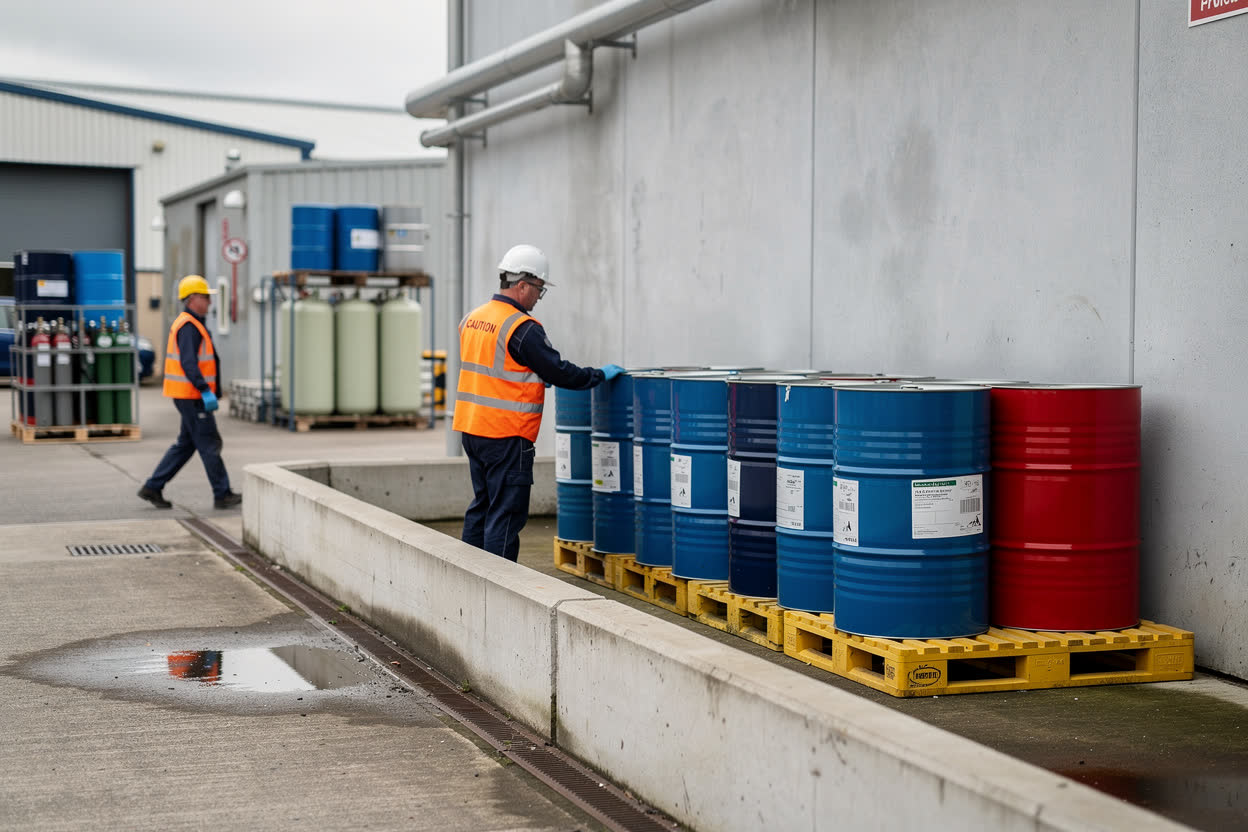
  • Spill containment, called bunding, and control of drainage.
  • Emergency shutdown and isolation of equipment.
  • Plant that can withstand an explosion, and safe escape routes.
Summary

In this module, you have learned that:

The first priority is to reduce the quantity of dangerous substance and prevent an explosive atmosphere forming, then to control ignition sources, including static.

Hazardous areas are classified into zones 0, 1 and 2 for gases, and 20, 21 and 22 for dusts, and only suitable ATEX-rated equipment may be used.

Mitigation, such as explosion relief venting, detection, separation and bunding, reduces the harm if an event still happens.

In the next module, we will look at roles, responsibilities and emergency arrangements.

Knowledge Check
In hazardous area zoning, which zone is a place where an explosive gas atmosphere is present continuously or for long periods?
Select one answer, then press Check.
Zone 2
Zone 22
Zone 0
Zone 21
Correct. Zone 0 is where an explosive gas atmosphere is present continuously or for long periods, such as inside a fuel tank.
Not quite. Zones 20 to 22 are for dusts, and Zone 2 is where an atmosphere is unlikely. Try again.
Next Module →Answer the question to unlock the next module.
Page 1 of 13