← Exit
Module 3 · Assessing the Risks Before Entry0% complete · 32 slides left
Working in Confined Spaces
Module 3
This course contains audio. Use headphones in public places.
Introduction: Turn Hazards Into a Workable Plan

Under the Health and Safety at Work etc. Act 1974 and the Management of Health and Safety at Work Regulations 1999, employers need to identify hazards and manage risks to workers and other people affected by their work. For a confined space, the assessment must take account of the physical enclosure, the task being proposed, changes that might occur, and the ability to get someone out safely. A form completed away from the job cannot substitute for understanding the actual place.

Here you will work through the important parts of a suitable assessment for entry and work. The aim is to understand what evidence to gather, who should be involved, which outcomes require action, and how the findings translate into controls that the team can use. In particular, the assessment must address:

  • Foreseeable specified risks, such as a hazardous atmosphere, fire, flooding, or engulfment, as well as other site hazards
  • A safe system setting out the order of preparation, entry, work, and exit, with responsibilities assigned
  • Rescue, first aid, communication, and the action to take if an emergency develops
  • Training and clear instructions suited to the people, equipment, and location involved

A person preparing or approving the assessment needs competence for the specific activity. Where knowledge is missing, seek specialist assistance before work begins. The examples in this course support learning but cannot replace a site-specific assessment by the people responsible for the job.
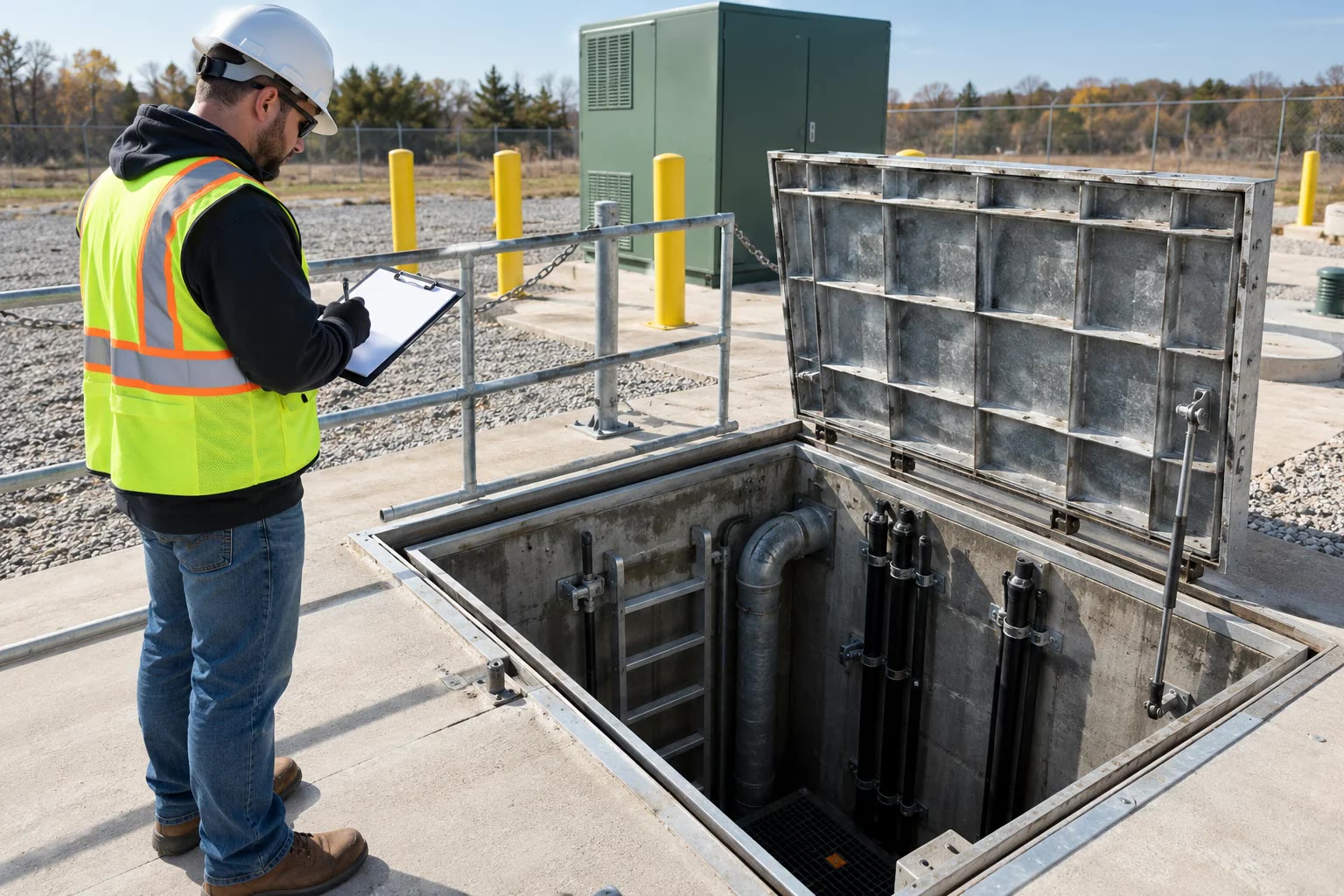
The Assessment Roadmap

This module breaks the process into connected stages. Each stage must consider the actual confined area and the task to be performed, using the applicable workplace duties and guidance in Great Britain. The questions are practical: what can harm someone, who is exposed, and which precautions will prevent that harm?

  • Meaning of risk assessment: identifying hazards, judging the risk, and deciding how to remove or control it
  • Useful terms: hazard, risk, control, dutyholder, competence, and reasonably practicable action
  • Information needed for this particular space: drawings, contents, services, past work, entry route, and surrounding activities
  • Step 1 — find hazards already present and hazards introduced by the job or the environment
  • Step 2 — identify the people who could be affected and explain the possible mechanism of harm
  • Step 3 — evaluate severity and likelihood, then choose effective controls beginning with avoiding entry
  • Step 4 — record the significant findings and put the chosen measures into operation
  • Step 5 — revisit the assessment when anything changes or evidence suggests a control is failing

Use the sequence as a working method, not a paperwork exercise. Consultation with the entry team and checking conditions at the location make the assessment more reliable.

What Does a Risk Assessment Do?

The Health and Safety at Work etc. Act 1974 and the Management of Health and Safety at Work Regulations 1999 requires employers to consider the hazards associated with their work and protect people who may be affected. Confined-space assessments must connect the general duties to the enclosure, its previous and current use, the planned activity, and the people involved.

The process starts by finding a source of harm, considering how likely and how serious the harm could be, and deciding what should be changed before the job proceeds. It must lead to real precautions rather than a list of unaddressed hazards.

A useful five-stage sequence is:

  • Find the hazards. Consider the contents and condition of the space, atmospheric risks, connected services, the work activity, and hazards brought in by tools or substances. A space may change classification because of the job itself.
  • Identify who may be harmed. Entrants are not the only people at risk: attendants, maintenance teams, contractors, rescuers, nearby workers, and the public may be affected by the operation.
  • Evaluate risks and select precautions. Give priority to avoiding entry or eliminating the source. Where entry is unavoidable, choose controls that are effective together and can be checked while the work continues.
The Five Stages, Continued

The sequence continues:

  • In Great Britain, employers with five or more people must record significant risk-assessment findings; a written record helps smaller teams too. Record the important findings, who will act, the current precautions, and anything still needed. Then verify the agreed actions were actually completed before entry.
  • Review the assessment when the task, people, plant, atmosphere, or outside conditions change, following an incident or near miss, or when monitoring shows a control is no longer reliable.

This sequence makes the reasoning traceable. The final decision must still be made for the specific space; no generic template can prove a location is safe.

Terms You Will Use
Terms You Will Use

The employer’s duty under the Health and Safety at Work etc. Act 1974 and the Management of Health and Safety at Work Regulations 1999 is to organise work so that foreseeable risks are found and effectively controlled. This includes risks to the people doing the task and to others who might be affected by an entry, a release, or a rescue.

The duty applies to large and small employers. A narrow hatch, an oxygen-deficient atmosphere, or unexpected inflow can have severe consequences regardless of the organisation’s size. The work method must reflect the hazard rather than the amount of paperwork a business normally uses.

Before applying the five-stage method, make sure the terms on the following slide are understood consistently. The team must distinguish a hazard from the chance of harm and know what it means for a person to be competent for this particular assessment.

Definitions That Guide Decisions

These expressions are commonly used while planning work in a confined space. Apply each one to the real job; a dictionary definition alone will not identify the hazard or show that a control works.

Reasonably Practicable

Choose precautions by considering the scale of the risk and the effort, time, and cost of avoiding it. A potentially fatal exposure requires careful attention and cannot be put aside simply because an effective safeguard is inconvenient.

The approach is reflected in the general workplace duties under the Health and Safety at Work etc. Act 1974 and the Management of Health and Safety at Work Regulations 1999. It supports a reasoned decision, beginning with ways to remove the need to enter.

Suitable and Sufficient

An assessment should be both:

  • Suitable for the particular enclosure, previous contents, operation, equipment, and changing conditions found at the location.
  • Sufficiently detailed to identify foreseeable serious outcomes and the practical measures needed to prevent them; it must also identify what has not yet been verified.

Use the Management of Health and Safety at Work Regulations 1999 and the confined-spaces guidance as part of the applicable legal framework, then check the result against the task rather than copying a generic document.

Who Counts as a Competent Person?

Competence means the person has the relevant training, knowledge, practical experience, and ability to recognise when more expertise is needed.

Depending on the task, that person may be:

  • An experienced employer or supervisor who understands this type of confined space
  • A trained occupational safety practitioner with the appropriate technical background
  • An authorised team member familiar with the operation, its safeguards, and the entry equipment

For unusual atmospheres, complex isolations, structural questions, or difficult rescues, bring in specialists. The competent assessor must still understand the results and translate them into a safe working method.

Gather Evidence About the Space

Begin with information specific to the enclosure and its surroundings. Check whether records describe the current situation and speak to the people who operate or maintain the equipment. A drawing can miss an alteration made years later.

Helpful sources include:

  • Engineering drawings showing connections, isolation points, dimensions, and access openings
  • Site plans that show neighbouring operations, drainage, roads, and emergency access
  • Previous inspection, cleaning, maintenance, testing, and incident records
  • Ground or structural reports where an excavation or underground chamber is involved

Each source can point to hazards before work begins; verify crucial facts at the location rather than assuming older records are complete.

Examine the space and the intended task together. Look at:

  • The state of walls, floors, platforms, corrosion, debris, and any slippery residue
  • Width, height, obstacles, openings, and room for equipment or a rescue stretcher
  • Products or gases that were once stored, generated, or circulated in connected plant
  • Possible contamination or inflow from services, adjacent processes, soil, water, or ventilation outlets
Talk to the People Who Know the Space

Consult the people who know the location and those who will carry out the work. Their direct experience may reveal:

  • A previous problem, leak, alarm, or unplanned change in conditions
  • A practical difficulty with the proposed access or equipment
  • An activity nearby that could undermine an isolation or safe atmosphere

Use this information to improve the assessment and brief everyone affected. The aim is an accurate picture of what can happen before and during the job.
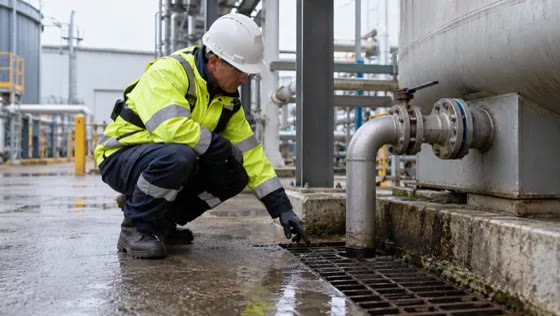
Step 1 — Identify Every Source of Harm

Inspect the enclosure before deciding how to enter. Hazards may already be present, may arrive through connected services, or may be created by the work itself. The assessment should describe the mechanism rather than simply ticking a hazard name.

Contents and condition of the area

Possible evidence to look for:

  • Residual oils, cleaning products, process chemicals, or deposits on walls
  • Sludge, corroded metal, accumulated scale, and unstable debris
  • Animal or human waste left by previous use of the chamber

Residues can release harmful gases when disturbed. They may also conceal openings or leave the floor too slippery for a secure footing.

Services, machinery, and isolation

A worker can be struck, crushed, burned, or engulfed if a supply or machine becomes active. Confirm each source of energy, material, and movement can be isolated and verified.

Examples of equipment to trace:

  • Agitators, conveyors, and mixing paddles that could restart without warning
  • Steam lines, pressurised gas, liquids, or pipes connected to a running process
  • Any other moving part or stored mechanical, hydraulic, or electrical energy

An untested isolation can fail even when a switch appears to be off. Include the method for proving that the equipment cannot move or discharge.

What the Work and the Surroundings Can Add

The planned work and equipment

The task can create hazards that did not exist when the space was empty. Assess each tool, substance, and step in the proposed work sequence.

For example:

  • Welding or grinding may introduce heat, sparks, fumes, and an ignition source
  • Cleaning agents or coatings may release vapours in the restricted atmosphere
  • Powered tools can add heat, electrical danger, noise, or a possible source of ignition

Check whether the work changes the atmospheric classification or requires a different control and monitoring plan.

What can enter from outside?

The assessment must also follow connections and nearby activities beyond the walls of the space.

Possible external sources include:

  • A liquid or loose product such as sand or grain released from a neighbouring system
  • Runoff, drainage changes, or rising water during adjacent work
  • Steam, fumes, or vapours driven in by pressure or airflow

Trace and control these pathways before entry. Sudden flooding, engulfment, or a contaminated atmosphere may leave too little time for an entrant to escape.

Step 1 — Check How Conditions Could Change

A useful assessment considers what is inside the enclosure now and how that picture could change during cleaning, maintenance, or another task. Document the evidence for each decision, especially where a hazard is not visible.

Previous use and remaining material

Ask what passed through or was stored in the chamber and whether cleaning actually removed residues from seams, low points, and connected pipework.

Examples to investigate:

  • Flammable liquid film or chemical residue in a former storage vessel
  • Sewage sludge or corrosion products that can disturb air quality
  • Biological matter from water or waste processes

Disturbing these substances may release gas, affect breathing, or make a surface slippery. Include sampling or specialist advice where their composition is uncertain.

Control of energy and supplies

Questions for the team:

  • Could a mixer, conveyor, or pump start under remote or automatic control?
  • Can hot steam, gas, or pressurised product enter through a connected line?
  • Are rotating components or moving mechanisms still able to trap someone?

Record how each line is drained, locked, blinded, disconnected, or otherwise made safe. A verbal assurance alone does not verify an isolation.

The Task and the Surroundings

Hazards introduced by the task

Review what the tools and work sequence add to the space after entry starts.

Examples to test against the assessment:

  • Hot work can ignite vapour and produce dangerous welding fumes
  • Solvent, coating, or cleaning product can change the atmosphere
  • Electrical work and powered tools can add heat, sparks, or stored energy

Recheck the controls when one task changes to another; a permit for inspection does not automatically cover grinding or painting.

Surrounding processes and environment

A nearby plant may introduce a hazard through a shared pipe, drain, ventilation system, or open channel.

Examples to trace:

  • Grain, sand, or another flowing product from a silo or connected hopper
  • Water from weather, cleaning, fire systems, or maintenance upstream
  • Gas or vapour entering from a neighbouring operation or service

The safe system must address what changes outside the space while people are inside and who has authority to stop those external operations.

Step 1 — Physical and Organisational Hazards

Specified risks deserve priority, but other features of an enclosure can still injure workers or defeat an otherwise sound rescue plan. Inspect the surfaces, the route through the area, and the arrangements around the entry point.

Dangerous footing or working surfaces

A floor may appear firm even though it is wet, uneven, unstable, or coated with product. Look at what happens if a person slips while carrying tools or wearing a harness.

Examples include:

  • Smooth drainage surfaces that stay wet and become difficult to grip
  • Loose pellets or grain concealing a void or allowing a person to sink
  • Slopes, recesses, or narrow ledges where someone could become trapped

A fall can lead to secondary harms such as drowning, engulfment, or a delayed rescue. The control plan should protect the whole access and working route.

Movement, Escape, and Emergency Readiness

Restricted movement and difficult egress

Possible problems:

  • Pipes, beams, and internal components that the entrant may strike
  • An exit obstructed by hoses, tools, or another worker
  • A body position that allows someone to enter but makes retrieval difficult

Plan how people will move, communicate, and be recovered. A restricted opening can significantly increase the consequences of a medical event.

Emergency readiness

A foreseeable emergency needs a specific and workable response, with access to help and equipment before the task begins.

Warning signs include:

  • No location-specific procedure for raising the alarm or rescuing an entrant
  • Missing or unsuitable retrieval, breathing, or first-aid equipment
  • Rescue personnel unavailable at the time the work takes place

Do not assume someone nearby can improvise a safe rescue. Check rescue methods, competence, communication, and equipment against the space and hazard.

How to Find Less Obvious Hazards

Use several sources of evidence. A walk-through, work-method review, and examination of external connections each reveals something the others may miss.

Observe the site and inspect records

Look from safe positions, examine drawings and maintenance history, and establish what the area once contained. Observation should not require a person to enter before entry controls are ready.

For example:

  • A tank or silo may previously have held a flammable or toxic product
  • Natural decay and industrial processes can each produce a harmful atmosphere
  • A residue can remain in a seam, a low point, or behind internal equipment

Compare what people report with what can be confirmed by testing and inspection.

Examine the proposed task

Review the order of work, equipment, and materials with the people who will use them.

Questions to ask:

  • Could any stage create one of the six specified risks or increase one already present?
  • Will heat, dust, gas, solvent vapour, or an ignition source be introduced?
  • Are the tools suitable for the space, atmosphere, and available power supply?

Keep the Module 1 risk categories in view when the work changes or additional equipment arrives.

Look Beyond the Opening

Look beyond the opening

Hazards can cross the boundary of a confined space through the atmosphere, a pipe, a drain, or movement of material.

Examples to check:

  • Exhaust from a generator or vehicle close enough to be drawn into the entry area
  • Gas, liquid, or solid product that could arrive from a neighbouring vessel
  • Rainfall, flooding, runoff, or a connected system that can change conditions

Isolate or control the external source where possible and assign someone to watch for change.

External inflow still matters

Treat the area around the space as part of the system being assessed.

Examples of pathways:

  • A gravity-feed hopper releasing loose material into an enclosed space
  • A drain or adjacent excavation filling after heavy rain or maintenance
  • Steam or fumes travelling through connected ducting or pipework

The key question is what could arrive unexpectedly while someone is inside, and whether the planned controls would prevent or detect it in time.

Step 2 — Who Could Be Harmed?

Once the hazards are understood, identify every group that could encounter them, then describe exactly how an incident could affect that group. A control may protect an entrant but leave an attendant, nearby worker, or rescuer exposed.

Identify the people exposed

Start with the entrants, then work outward to surveyors, standby attendants, contractors, cleaning teams, maintenance teams, and people passing the opening. Account for who is present during preparation as well as during the entry itself.

Explain the mechanism of harm

Describe what could happen: for instance, a release could displace breathable air, an unexpected inflow could trap a person, or a poorly planned rescue could expose another worker to the same atmosphere.

Common groups to consider include:

  • Planners and surveyors who might approach or enter the area before controls are fully established.
  • Entrants undertaking cleaning, repair, inspection, installation, or other tasks within the space.
  • Specialist contractors measuring the atmosphere, isolating plant, or installing ventilation and rescue systems.
  • Temporary staff, part-time employees, young workers, and self-employed people who may know less about this site and require clear briefings or extra supervision.

The examples on the next slide show why the place and the people need to be considered together. Assign measures to the specific exposure route rather than assuming everyone faces the same risk.

Different Locations, Different People at Risk

People who plan, inspect, enter, supervise, or rescue may face different hazards in a single location. Review the actual dimensions, previous contents, nearby processes, and access arrangement for each job.

Examples across industry include:

  • Excavations, tunnels, boreholes, and trenches: Below-ground work may combine unstable ground, water ingress, difficult egress, and weak natural ventilation. Check the classification and controls for the actual excavation.
  • Water and wastewater sites: Sewage chambers, treatment tanks, and sewers may have hazardous gas, biological contamination, flow changes, or incoming water; maintenance staff and contractors can both be exposed.
  • Large fabrication and manufacturing plant: Work inside fabricated structures or equipment housings can involve hot work, residual energy, fumes, and internal obstructions.
  • Coating and refurbishment areas: Spray booths and enclosed construction spaces may accumulate coating mist or solvent vapour, especially after ventilation is disrupted.
  • Tanks, drums, and process vessels: Past products can leave vapours, residues, or deposits even when the vessel seems empty. Cleaning and testing must reflect the known history.
  • Machine interiors and equipment casings: Access for repair can expose a technician to moving parts, electrical energy, sharp components, restricted vision, or a narrow exit.
More Places to Check

More examples include:

  • Sumps and inspection pits: A pit beneath a vehicle or piece of plant may receive vapour, drainage, or spilled liquid while providing little room to turn around.
  • Freight containers, cargo spaces, and ballast compartments: These large volumes can still be substantially enclosed; products, fumigation, corrosion, or poor air exchange may change the atmosphere.
  • Product stores and hoppers: Wood pellets, grain, or other loose materials may release gas, create dust, or move suddenly and engulf a person.
  • Plant rooms and basement service areas: Consider heat, electrical equipment, gas releases, and connected services as well as the arrangement of entrances and exits.
  • Cold stores and other rooms with poor ventilation: Reduced-oxygen or altered atmospheres can develop where air exchange is limited or a suppression system operates.

The examples are prompts for inspection, not automatic classifications. Apply the enclosure and specified-risk tests, then tailor the assessment to the people and activity at the specific location.

Who Is at Risk When Information Is Uncertain?

An assessment is weaker when it rests on missing records or assumptions about how a space behaves. Identify the uncertainty, decide who may be exposed while it remains unresolved, and gather more evidence before authorising entry.

Are drawings or records incomplete? A pipe connection, former chemical, or previous incident may be absent from the information provided. Check with maintenance staff and inspect from outside where it is safe to do so.

Has the shape, use, or access changed since the last assessment? A new partition, different product, or changed work sequence may alter the atmosphere, the rescue route, or the people who could be affected.

Have fans, ducts, and other safety systems been maintained? Blocked or defective ventilation can allow fumes or gas to collect. Review service records and confirm performance for the proposed task.

Does monitoring still suit the hazard? Where a harmful atmosphere could develop during work, specify who will monitor, where readings will be taken, and what triggers a stop and evacuation.

Key point:

Missing evidence is itself a reason to pause. Resolve uncertainties that could affect a serious risk before deciding the controls are adequate, and communicate the result to everyone involved.

Step 3 — Judge the Risk and Choose Controls

Once you know the hazard and the people exposed, consider how harm could occur and what would make it more or less likely. Include the worst credible consequence, the duration of exposure, changes during the job, and the reliability of existing measures.

Some exposures are subject to specific legal limits or requirements. Where an airborne contaminant has an occupational exposure limit, obtain the applicable limit and a suitable sampling method; a reading below a limit does not remove other confined-space hazards.

Use the Hierarchy of Control

Prefer controls that remove the hazard or keep people away from it. Work down the hierarchy only where a more effective measure is not practicable, and check that several measures work together during the task.

  • 1. Eliminate — change the task so the dangerous entry is unnecessary. Remote inspection, mechanical cleaning from outside, or redesign of an access point may achieve the required result.
  • 2. Substitute — replace a hazardous chemical, method, or process with a safer one while checking whether the replacement creates a different risk.
  • 3. Engineer the hazard out — use isolation, designed ventilation, guarding, or equipment changes that act independently of a worker remembering a warning.
  • 4. Organise the work — provide a clear sequence, supervision, communication, atmospheric checks, restricted access, and a permit where one is needed.
  • 5. Protect the individual — select suitable PPE or respiratory equipment for the remaining risk and train people to use and maintain it correctly.

PPE cannot compensate for an uncontrolled atmosphere, an unverified isolation, or the absence of a rescue plan. Record why the selected combination is suitable for this specific job.

Step 3 — First Consider Avoiding Entry

The Confined Spaces Regulations 1997 places avoiding unnecessary entry at the start of the decision. Ask whether the intended result can reasonably be achieved from outside using different tools, access, or work methods.

Who has responsibilities?

The decision involves people and organisations with control over the job, including:

  • The employer planning or directing the task
  • A self-employed specialist carrying out the work
  • Those controlling the premises or connected plant, who must coordinate information and precautions

The decision in practice

If a safe and reasonably practicable external method exists, adopt it and avoid putting a person into the space.

  • A person responsible for the work should not enter merely because entry seems familiar or quicker.
  • Do not require a contractor or other worker to enter without first examining a workable alternative.

At every new task, repeat the question: could the result be achieved with remote inspection, long-reach tools, an external cleaning point, or a change to the process?

Where entry remains necessary, the assessor must explain why, identify the hazards, and establish the safe system and rescue plan before anyone goes in.

Assess Each Specified Risk

The decision to avoid entry remains the starting point. If entry is necessary, assess the defined serious risks in the context of this particular enclosure, its contents, and the proposed work.

The six categories are a useful checklist, but one can trigger another: oxygen enrichment increases fire danger, and flooding may also block an exit.

Where any category is present or reasonably foreseeable, select measures that remove or control it and check they remain effective during the work.

Consider these six outcomes:

  • Fire or explosion: Flammable liquids, gases, dust, oxygen enrichment, and ignition sources can combine to cause serious injury. Consider hot work and sources outside the opening too.
  • Excessive body temperature: A hot enclosure, demanding physical effort, and protective clothing may combine to cause collapse or loss of consciousness. Specify exposure time, breaks, and monitoring.
  • Gas, fume, or vapour: Harmful atmospheres may poison or overcome workers. Residue, processes, vehicles, or the task itself can be the source; testing must suit the expected substance.
Assess Each Specified Risk, Continued

The remaining three are:

  • Too little oxygen: An inert purge, displacement by another gas, corrosion, or biological activity can reduce breathable oxygen without a warning smell.
  • Drowning in liquid: Liquid present or flowing in can overwhelm an entrant. Trace drainage, upstream operations, weather, and any line that might discharge into the area.
  • Free-flowing solid material: Grain, pellets, sand, or another loose material can flow over someone and block breathing or escape. Prevent movement before considering entry.
Step 3 — Test Whether the Controls Work

Proposed safeguards are only useful when they address the actual hazard and remain in place throughout the activity. Examine old arrangements and new ones against conditions on the day.

Questions for the assessor:

  • Will the selected precautions prevent exposure, or does this location need further action?: Could a neighbouring process, altered machinery, or another team’s work change the access or release a hazard after entry?
  • Are the controls serviceable?: Inspect, maintain, and verify ventilation, gas-testing instruments, communication devices, isolation hardware, and retrieval equipment.
  • Is each item suitable for this task?: A fan or detector may work as designed but be wrong for the gas, the length of ducting, the atmosphere, or the shape of the enclosure.
  • Has anything been overlooked?: Use operating instructions, product safety data, installation details, maintenance records, and competent advice to look for missing precautions.
  • Is there newer information?: Check whether a supplier, manufacturer, regulator, or recent incident has identified a hazard or revised the way the equipment should be used.

The outcome should state what is already in place, what must be improved, who will do it, and how the team will know the controls remain effective.

Step 4 — Record and Put the Findings Into Action

In Great Britain, employers with five or more people must record significant risk-assessment findings; a written record helps smaller teams too. For confined-space work, a clear task-specific record is particularly valuable because workers, supervisors, contractors, and rescuers must share the same plan.

Keep the record focused on what matters to the job rather than filling pages with minor observations.

Capture hazards where:

  • Serious harm is foreseeable if the precaution fails, and
  • A clear measure can prevent or control the exposure.

A practical assessment record can show at least two columns:

  • The precautions currently provided and how they were verified
  • Further actions, the person responsible, and completion before entry

Use the findings to build or revise the safe system of work. It should:

  • Follow the risks identified for this space and activity, rather than a generic checklist
  • Be revised when information, people, equipment, or surrounding conditions change
  • Be explained to every person whose work depends on the controls
  • Be supported by training and instruction for the actual equipment and procedures

The written result should show:

  • How each significant risk was judged and the evidence used
  • Who is responsible for isolation, testing, communication, supervision, and rescue
  • Which effective safeguards are present before entry, and how they will be maintained
Step 5 — Review When the Job Changes

A risk assessment describes a particular set of conditions. Review it when those conditions change, when a control is found to be weak, or when new evidence suggests a hazard was missed.

Useful triggers include:

  • A new process, different tool, altered entry method, or modification to plant or layout
  • A worker or contractor who has not yet received the information and training needed for this site
  • Feedback from the team about a near miss, a difficult step, or a precaution that cannot be followed as planned

Stop and reassess before continuing if one of these changes affects a significant risk. A permit signed for the original task does not authorise a different one.

After a review:

  • Record what changed, why the previous decision no longer applies, and which measure now controls the risk.
  • Brief affected people and confirm understanding; a short toolbox talk may help, but it must convey the actual changes and responsibilities.
Step 5 — Keep the Assessment Current

Even without an obvious incident, set a review interval that reflects the hazards and rate of change. A routine annual review may be useful, but it cannot replace checking conditions immediately before each entry.

Review sooner when:

  • The dimensions, openings, internal structures, or normal contents have changed.
  • The wider premises or connected processes are used differently and can affect the enclosure.
  • New evidence identifies a hazard or a more effective way to control it.
  • Monitoring or inspection shows that ventilation, isolation, communication, or another safeguard no longer performs as intended.
  • A competent assessor, rescue team member, supervisor, or other key person changes role or leaves.
  • An incident or near miss reveals a weakness that needs corrective action before another entry.
Summary

A useful assessment follows a logical sequence and is carried out by a person competent for the particular enclosure, work method, and hazards.

Step 1 — identify hazards in the enclosure, from connected services, from the surrounding site, and from the work. Check for all six specified risks and for other factors that affect entry or rescue. Step 2 — identify entrants, attendants, planners, contractors, rescuers, visitors, and others who might be harmed. Describe the route by which each person could be exposed.

Step 3 — evaluate consequences and likelihood, test current safeguards, and choose effective precautions. Begin by asking whether entry can be avoided, then work through the hierarchy of control. Step 4 — In Great Britain, five or more employees trigger the legal duty to record significant findings; smaller teams benefit from a written record too. Put the findings into a task-specific safe system, assign actions, and brief the people affected before work begins.

Step 5 — review whenever conditions, equipment, people, or information change, after incidents, and at suitable planned intervals. Recheck the actual space before each entry. Before the next module, try explaining each stage to a colleague: what could cause harm, who might be exposed, how the hazard is controlled, what must be recorded, and what would trigger a fresh assessment.

In the next module, we will turn the findings of the assessment into control measures.

Knowledge Check
A team plans to enter a tank. What must the risk assessment consider first?
Select one answer, then press Check.
Which personal protective equipment to buy
Whether the work can be done without anyone entering
How long the permit should last
Who will sign the record at the end
Correct. Avoiding entry comes first; only if entry is unavoidable do you plan controls for it.
Not quite. Think about the first question the law asks before any entry, and try again.
Next Module →Answer the question to unlock the next module.
Page 1 of 33