← Exit
Module 4 · Safety Management Frameworks0% complete · 19 slides left
COMAH
COMAH
Module 4
This course contains audio. Use headphones in public places.
Introduction
Introduction

Every COMAH operator must take all measures necessary to prevent major accidents, and to limit their consequences for people and the environment. The operator must also be able to show the Competent Authority that it is doing so.

In this module, you will learn how major hazards are assessed, what goes into a Major Accident Prevention Policy, how a safety management system puts it into practice, and how to plan for emergencies and respond after a major accident.

Risk Assessment
Risk Assessment

Under the Management of Health and Safety at Work Regulations 1999, every employer must assess the risks of their work activities, so that they can decide how to control them.

The main steps are:

  • Identify the hazards.
  • Decide who might be harmed, and how.
  • Evaluate the risks, and decide on control measures.
  • Record the findings, and put the controls in place.
  • Review the assessment, and update it when needed.

This assessment is the foundation of the Major Accident Prevention Policy.

Assessing Major Hazards

A major hazard risk assessment goes beyond everyday personal injury hazards. It must examine every credible way a major accident could happen, including:

  • Releases of toxic or flammable substances.
  • Fires and explosions.
  • Escalation, where one event spreads to other equipment or neighbouring sites.

For each scenario, the assessment looks at the barriers that prevent it, and those that limit the consequences, such as alarms, trips, relief systems, bunds and emergency response. It considers effects on people and the environment, both on and off the site.

HAZOP Studies
HAZOP Studies

A Hazard and Operability study, or HAZOP, is a widely used way of identifying hazards in chemical and process industries. Its purpose is to explore, systematically, how a process could deviate from its design intention, and what the consequences could be.

It is carried out by a small multidisciplinary team of competent people, such as process engineers, operators, maintenance and instrument specialists and a safety adviser, led by an experienced chairperson. The team works through the process one section at a time.

How a HAZOP Works
How a HAZOP Works

For each section of the process, the team applies guide words, such as more, less, no and reverse, to parameters such as flow, pressure, temperature and time. For example:

  • More pressure, less pressure, or no pressure, as in a vacuum.
  • Too much time, too little time, or steps in the wrong order.

For each deviation, the team asks what could cause it, what the consequences would be, and whether the existing safeguards are enough. Where they are not, it recommends further measures to reduce the risk.

ALARP
ALARP

It is not possible to remove every risk, and COMAH recognises this. Instead, the measures taken must be proportionate, reducing the risk to as low as reasonably practicable. This is known as ALARP.

ALARP means that a measure must be taken unless its cost, in time, trouble and money, is grossly out of proportion to the risk reduction it would achieve. The greater the risk, the more must be done.

This gives operators flexibility to choose controls that suit their site, rather than one fixed approach for everyone.

The Major Accident Prevention Policy

Every COMAH establishment, lower tier and upper tier, must have a written Major Accident Prevention Policy, known as a MAPP. It must be available to the Competent Authority on request.

The MAPP is a statement of the operator’s commitment to high standards in controlling major hazards. It sets out the overall aims and principles for preventing major accidents, and must address the risks of major accidents to both people and the environment.

It is needed before an accident, not after one, and it must be proportionate to the hazards of the site.

What the MAPP Contains

The MAPP does not need to be long. For most sites, it can be short and simple, and it can even form part of an existing health, safety and environmental policy. But it must contain:

  • The policy: the operator’s objectives and principles for preventing major accidents.
  • An outline of the safety management system that will achieve those objectives.

The level of detail must match the hazards. A site with greater hazards will need a more detailed MAPP.

Essential Areas to Cover

The safety management system described in the MAPP must cover these areas:

  • Organisation and personnel: who is responsible, and how they are trained and shown to be competent.
  • Identification and evaluation of major hazards: the findings of the risk assessment.
  • Operational control: safe procedures for operation and maintenance, including permits to work.
  • Management of change: how changes are planned and controlled.
  • Planning for emergencies: foreseeable emergencies, the procedures, and how they are tested.
  • Monitoring performance, and audit and review, to keep the policy and system up to date.
Keeping the MAPP Up to Date

The MAPP must be reviewed regularly, at least every five years, and updated when needed. Review it, and the way it is put into practice, whenever changes could make it less effective, for example:

  • Changes to the site, plant or processes.
  • Changes to the type or quantity of dangerous substances.
  • Changes to how substances are processed or stored.
  • After any incident or near miss.

Reviews help to update the controls, so that incidents and near misses do not happen again.

The Safety Management System

Once the MAPP is written, it has to be put into practice. This is done through a safety management system, or SMS.

The safety management system must:

  • Be proportionate to the hazards, the activities and the complexity of the organisation.
  • Be based on the risk assessment.
  • Form part of the overall management system, including the organisation, responsibilities, practices, procedures, processes and resources for putting the MAPP into effect.

The MAPP does not replace the safety management system. They work together.

What the SMS Must Do

In practice, the safety management system must:

  • Set out the roles and responsibilities of everyone involved in managing major hazards.
  • Identify the training and competence each role needs, and make sure it is provided.
  • Make sure workers know the hazards, and the duties of key people.
  • Include safe procedures for operation and maintenance, alarm management and temporary stoppages.
  • Control the design of new installations, processes and storage.
  • Prepare for emergencies.
  • Monitor performance, and audit and review the system.
Management of Change

Many major accidents have followed changes that were not properly assessed. Management of change makes sure that technical and organisational changes are assessed before they can undermine existing controls. This includes:

  • Changes to plant, equipment, materials or processes.
  • Changes to staffing, shift patterns or responsibilities.
  • Temporary changes, which need the same authorisation as permanent ones.

Before a change is made, the hazards are assessed, and it is approved by a competent person. Drawings, procedures and training are updated, and the change is checked once it is in place.

Planning for Emergencies

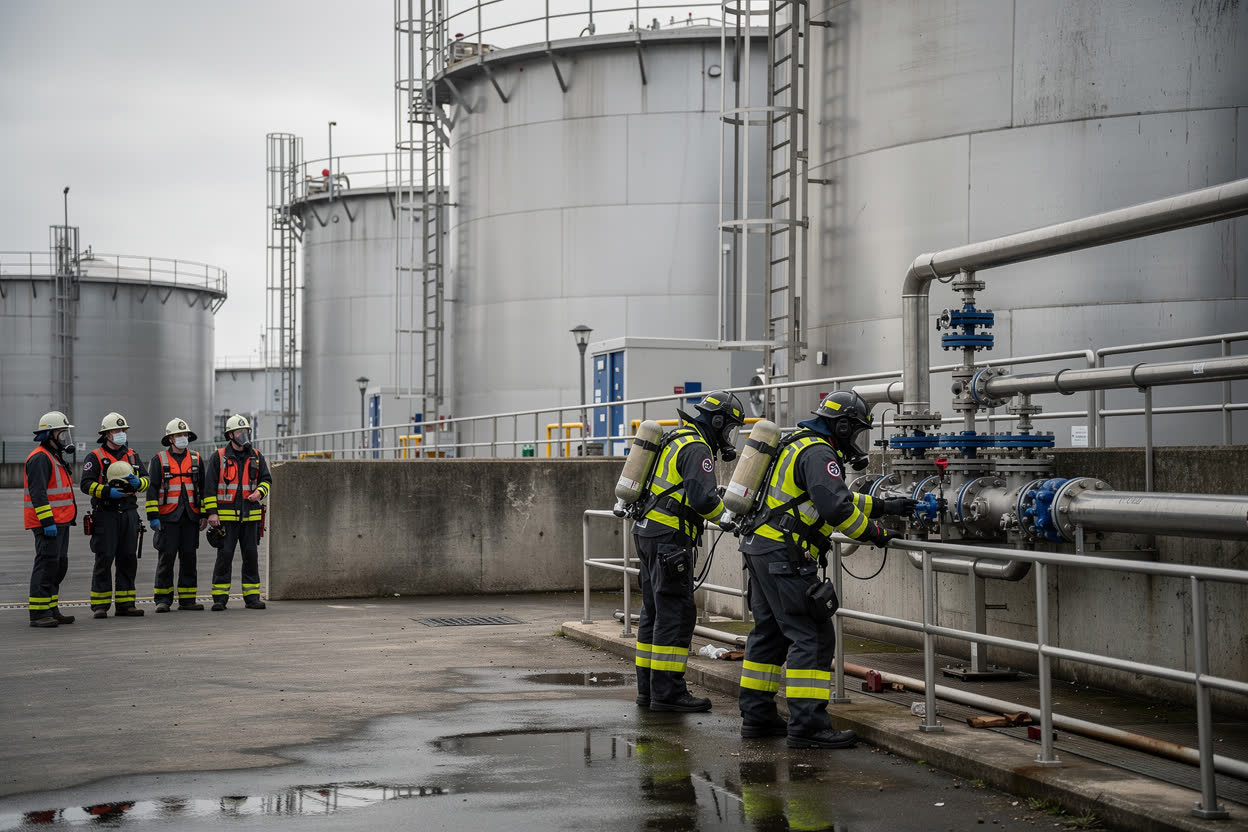
Even with good prevention, an accident could still happen. Good emergency planning limits the harm to people and the environment.

Emergency planning must be based on the major accident scenarios identified in the safety assessment, not on a generic plan or the cheapest exercise.

Lower tier establishments do not need a separate emergency plan document, but emergency procedures are an essential part of the MAPP. Upper tier establishments must prepare an on-site emergency plan, and review, test and update it at least every three years.

Emergency Arrangements

The emergency section of your MAPP should cover:

  • Who is authorised to start the emergency procedures.
  • The foreseeable events that could lead to a major accident, and the actions to limit their consequences.
  • The emergency equipment needed, and who is trained to use it.
  • How the alarm is raised.
  • How the emergency services are called, and how the public will be warned if they could be affected.
  • How staff are trained, and how often the procedures are tested.
After a Major Accident

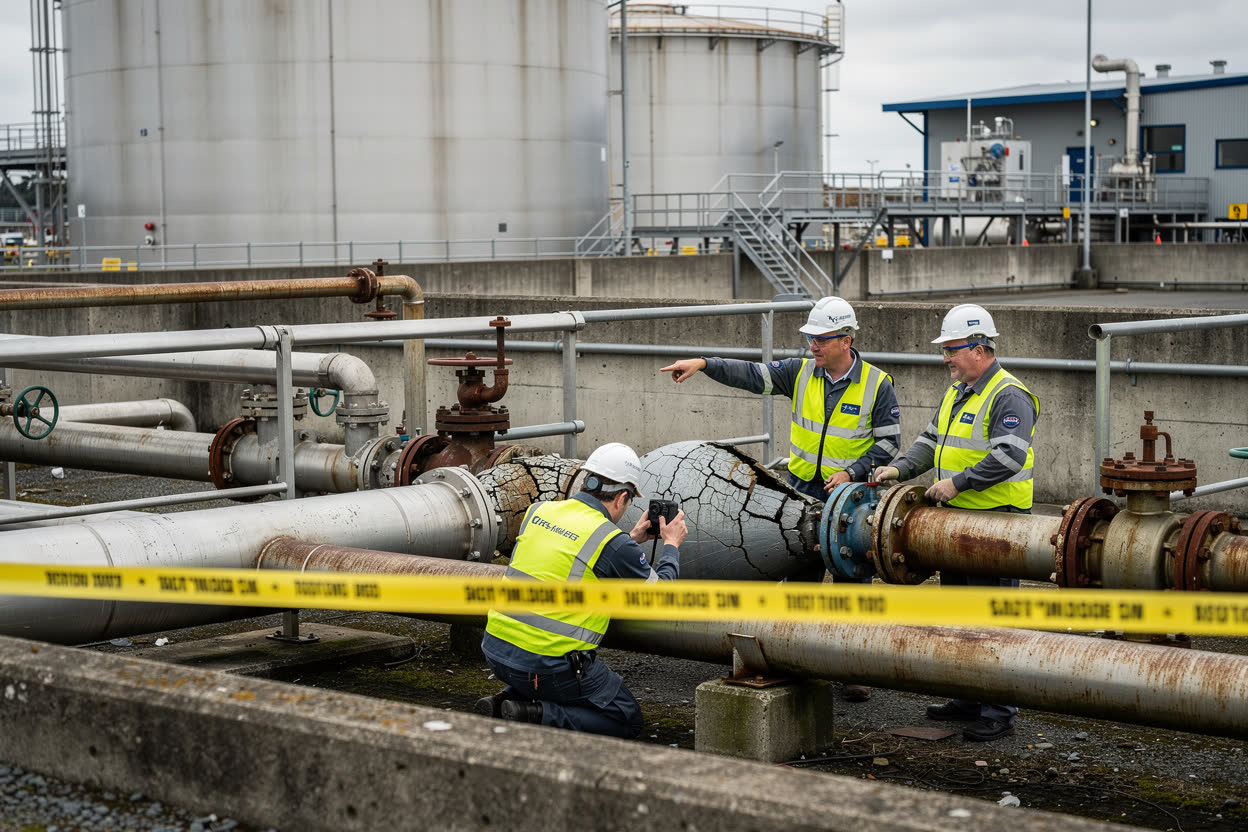
If a major accident happens, the operator must inform the Competent Authority as soon as practicable, and provide, as soon as it is available:

  • The circumstances of the accident.
  • The dangerous substances involved.
  • Information to assess the effects on people, the environment and property.
  • The emergency measures taken.
  • The actions planned to limit the consequences, and to prevent it happening again.

People likely to be affected must be told what happened, and what is being done. In Great Britain, the local authority has a legal duty to inform them, using information from the operator.

Investigating and Learning

Once an accident is under control, do not simply restart. The important next steps are to:

  • Preserve evidence where it is safe to do so, including equipment, records and data.
  • Investigate thoroughly, to find the root causes, not just the immediate cause.
  • Put corrective actions in place, proportionate to the harm caused and the remaining risk.
  • Verify that the actions work, and share the lessons.

The Competent Authority will check that the corrective actions have been completed.

Summary

In this module, you have learned that:

A major hazard risk assessment examines credible release, fire, explosion and escalation scenarios, and their barriers. A HAZOP explores process deviations with a multidisciplinary team.

Every establishment needs a written, proportionate MAPP, put into practice through a safety management system, including management of change.

Emergency planning is based on the major accident scenarios. After an accident, preserve evidence, investigate root causes and verify corrective actions.

You have now completed all 4 modules. When you are ready, go to the final test.

Knowledge Check
Which statement about the Major Accident Prevention Policy is correct?
Select one answer, then press Check.
It is a written policy required for every COMAH establishment, and should be proportionate to its hazards
It is needed only after a major accident
It replaces the safety management system
It is prepared by the emergency services
Correct. Every COMAH establishment needs a written MAPP, in proportion to its hazards, put into practice through the safety management system.
Not quite. The MAPP is the operator’s own written policy, needed before any accident happens. Try again.
Go to the Test →Answer the question to unlock the test.
Page 1 of 20