← Exit
Module 3 · The Seveso Framework0% complete · 18 slides left
COMAH
COMAH
Module 3
This course contains audio. Use headphones in public places.
Introduction
Introduction

The COMAH Regulations 2015 put most of the European Seveso III Directive into law in Great Britain. Before 2015, COMAH was based on the earlier Seveso II Directive, which has now been replaced.

In this module, you will learn where the Seveso Directives came from, what changed under Seveso III, how chemicals are classified and labelled under the CLP Regulation, what information must be made public, and what the domino effect means for neighbouring sites.

The Seveso Disaster
The Seveso Disaster

In the 1970s, several serious industrial accidents happened in Europe. The best known was at Seveso, near Milan in Italy, in July 1976.

At a small chemical plant, a reaction went out of control and released a cloud containing dioxin, a highly toxic substance, over the surrounding area. Local people were told not to eat locally grown food, thousands of animals died, and the area closest to the plant was evacuated.

Seveso showed that industrial accidents can have serious consequences far outside the site, for the public and the environment.

The Seveso Directives

These accidents, and the different safety standards across Europe, led the European Community to adopt the first Seveso Directive in 1982. Its approach still applies today:

  • Identify the sites that hold dangerous substances.
  • Prevent major accidents.
  • Limit the consequences of any accident that does happen.

The Directive was revised in 1996, as Seveso II, which led to the first COMAH Regulations in 1999, and again in 2012, as Seveso III. Its requirements continue in British law after the United Kingdom left the European Union.

Why Seveso III Was Needed

Whether Seveso applies to a site depends on how its chemicals are classified. In June 2015, the European system for classifying chemicals changed: the CLP Regulation fully replaced the older system, known in Great Britain as the CHIP Regulations.

The Seveso Directive therefore had to be updated, and Seveso III applied from 1 June 2015. The COMAH Regulations 1999 were replaced by the COMAH Regulations 2015 from the same date. The core duties stayed the same, but there were several important changes, especially to the way dangerous substances are classified.

What Changed Under Seveso III

The main changes include:

  • The list of dangerous substances was updated, and aligned with CLP.
  • Some definitions and terms changed.
  • Transitional arrangements were made for safety reports.
  • There are new requirements for authorities to co-operate when testing external emergency plans.
  • Public information duties are stronger, and now include lower tier establishments.
  • The domino effect duties were widened.
  • Inspection requirements for the Competent Authority are stricter.
  • People likely to be affected must be informed after a major accident.
From CHIP to CLP
From CHIP to CLP

One of the biggest changes under Seveso III was the move from classifying substances under the CHIP Regulations to classifying them under CLP.

Before June 2015, chemicals were classified under a mix of European and national rules, known as CHIP, which most people recognised from the orange and black hazard symbols on containers.

The Classification, Labelling and Packaging Regulation, known as CLP, brought one consistent approach to classifying and labelling chemicals. This consistency was the reason for the change.

The Globally Harmonised System

CLP is based on the Globally Harmonised System of Classification and Labelling of Chemicals, known as the GHS.

The GHS is a United Nations system. It provides a common international basis for classifying chemical hazards, and for communicating them with standard labels, pictograms and safety data sheets. This means a chemical should carry the same hazard warnings wherever it is made or sold.

The GHS is not itself a workplace law. Regional laws, such as CLP, put its approach into effect.

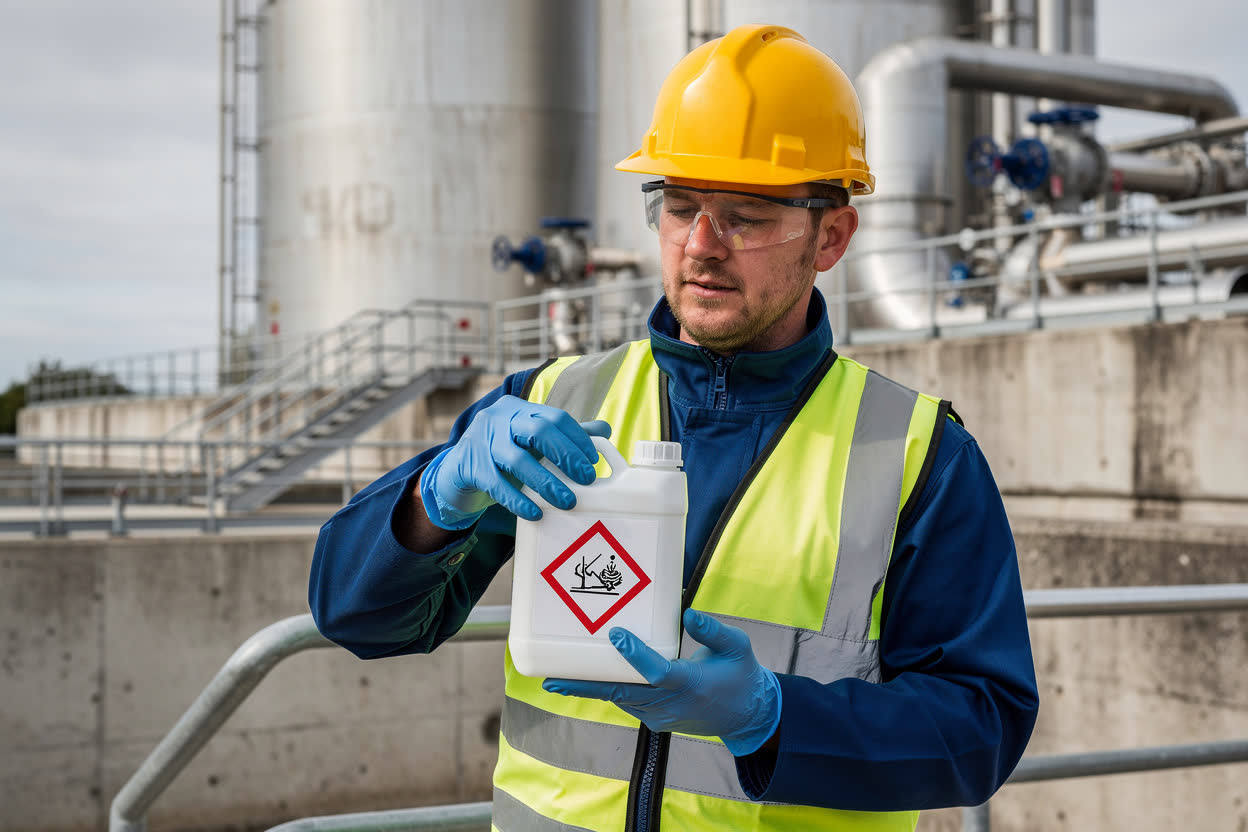
CLP Labels
CLP Labels

In Great Britain, the GB CLP Regulation governs substances and mixtures placed on the British market. Northern Ireland continues to apply the European CLP Regulation. A CLP label includes:

  • The product identity, and the supplier’s details.
  • Hazard pictograms.
  • A signal word, either Danger or Warning.
  • Hazard statements, which describe the hazard.
  • Precautionary statements, which say how to use the product safely.

The safety data sheet gives fuller information for workplace use.

Hazard Pictograms: Explosive, Flammable and Oxidising

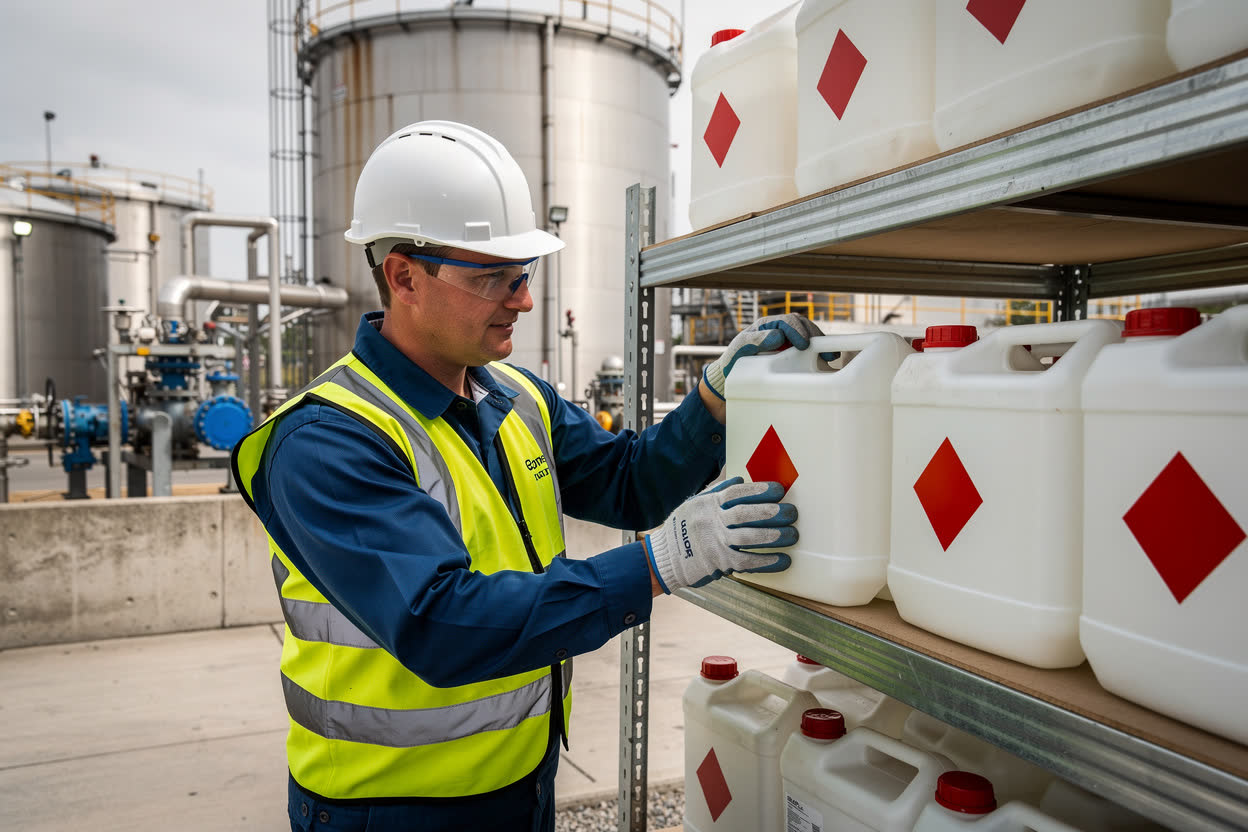
There are nine CLP hazard pictograms. Each is a black symbol on a white background, inside a red diamond. A product may carry more than one.

  • Exploding bomb, for explosives: may explode when exposed to fire, heat, shock or friction.
  • Flame, for flammable gases, liquids, solids and aerosols: they can catch fire easily, and some ignite in air or give off flammable gas in contact with water.
  • Flame over a circle, for oxidisers: they can cause or intensify a fire. Store them away from flammable materials, and do not confuse the two similar symbols.
Hazard Pictograms: Gas, Corrosive and Toxic
  • Gas cylinder, for gases under pressure: compressed, liquefied or dissolved gas, which may explode if heated. Refrigerated gases can cause cold burns.
  • Corrosion, for corrosive substances: they can cause severe skin burns and eye damage, and may corrode metals.
  • Skull and crossbones, for acute toxicity: even small amounts swallowed, breathed in or in contact with the skin can be fatal or toxic.

Products with these pictograms need careful storage and handling, and the right personal protective equipment.

Hazard Pictograms: Health and Environment
  • Exclamation mark: less serious health effects, such as skin, eye or airway irritation, drowsiness or dizziness, skin allergy, or being harmful if swallowed. It is also used for substances hazardous to the ozone layer.
  • Health hazard, a figure with a star on the chest: serious, long-term health effects, such as cancer, damage to organs, harm to fertility, or asthma and breathing problems if inhaled. Some may be fatal if swallowed and they enter the airways.
  • Environment, a dead tree and fish: toxic to aquatic life, with immediate or long-term effects.
When a Classification Changes

Classifications are not permanent. A substance can be reclassified under CLP, for example when new information about its hazards is found, or a supplier changes a mixture.

When this happens, the operator should:

  • Review the inventory, and check which hazard category each substance now falls into.
  • Recalculate the COMAH threshold and aggregation figures.
  • Notify the Competent Authority if the establishment comes into scope or changes tier.
  • Update labels, safety data sheets, risk assessments and procedures.
Using Chemicals Safely

A pictogram is a warning, not a complete risk assessment. Before you handle a chemical, read the label and the safety data sheet, and follow the site risk assessment and procedures for storage, handling, protective equipment and exposure controls.

If a container is unlabelled or damaged, or the instructions are unclear, stop and ask your supervisor.

If a chemical is spilled, or someone may have been exposed, follow the site emergency procedure: raise the alarm and keep others away. Do not attempt a clean-up or first aid unless you are trained and the procedure says it is safe.

Public Information
Public Information

Information about every COMAH establishment must be permanently available to the public, including online. In Great Britain, operators supply it through the HSE system, where anyone can search by name or postcode. It includes:

  • The name of the operator and the address of the establishment.
  • Confirmation that COMAH applies, and that the notification has been made.
  • A simple description of the activities, and the main hazards of the dangerous substances, in plain language.
  • How the public will be warned, and what to do in an accident.
  • The date of the last site visit.

Upper tier establishments publish more, and send it to people who could be affected without being asked.

The Domino Effect
The Domino Effect

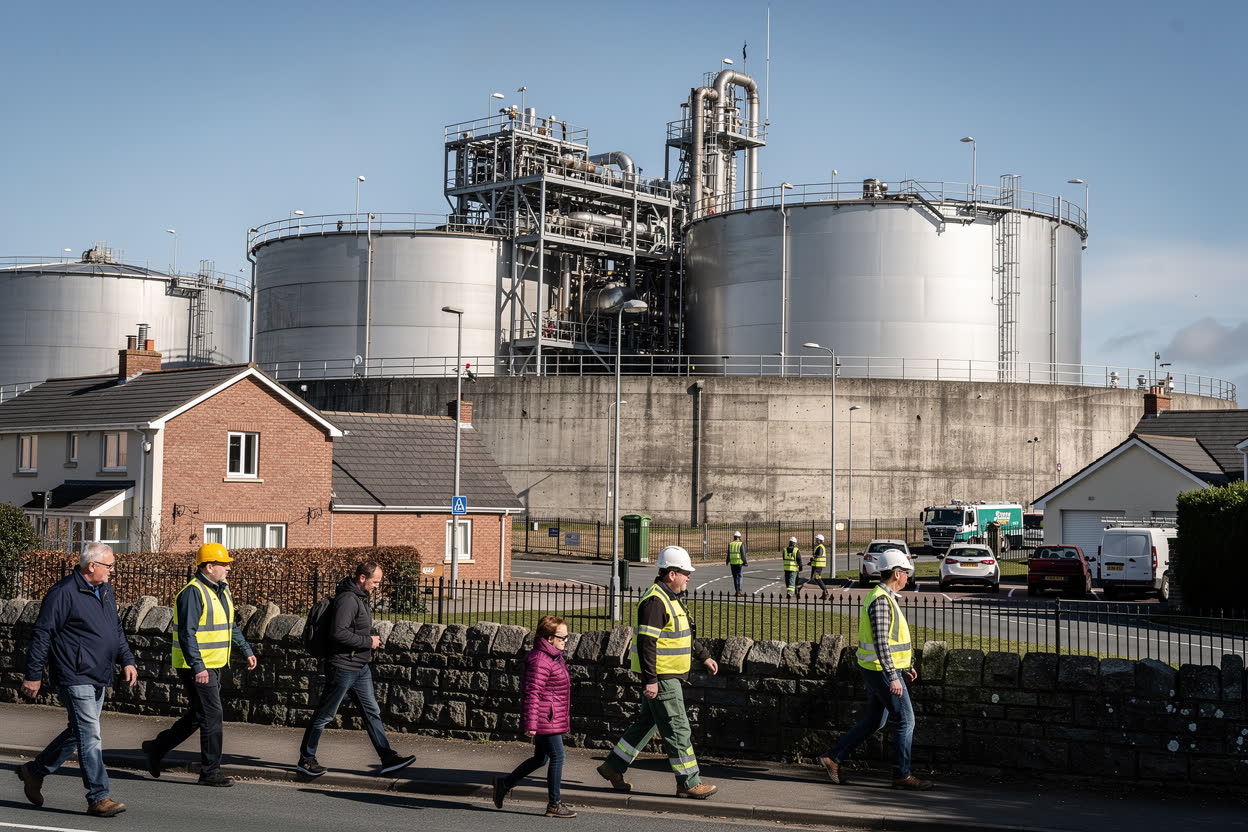
Seveso III puts more emphasis on the domino effect. This is where a major accident at one establishment could cause, or make worse, a major accident at a neighbouring establishment, because they are so close together.

A neighbouring establishment is one located so close to another that it increases the likelihood or the consequences of a major accident.

The Competent Authority identifies groups of establishments where this could happen, called domino groups, and tells each operator in the group about the others.

Working with Neighbours

Operators in a domino group must exchange information with each other, so that each can take account of the others in its Major Accident Prevention Policy, safety management system and emergency arrangements.

They must also co-operate in informing the public and nearby sites that are not covered by COMAH, such as schools, hospitals and shops, about the possible effects on them.

Your notification should include neighbouring sites that could cause or worsen a major accident. For example, a nearby furniture store or tyre depot could matter in a fire.

Summary

In this module, you have learned that:

The Seveso accident showed that industrial accidents can have serious consequences far beyond the site, and led to the Seveso Directives.

CLP is based on the GHS, a common international basis for classifying chemical hazards. Labels carry hazard pictograms and hazard statements.

The domino effect is where neighbouring establishments can increase the likelihood or consequences of a major accident, so they must co-operate.

In the next module, we will look at risk assessment, the Major Accident Prevention Policy, safety management systems and emergency planning.

Knowledge Check
What colours are the hazard pictograms used under the GHS and CLP?
Select one answer, then press Check.
Orange and black
Red, white and black
Black, yellow and white
Correct. CLP pictograms show a black symbol on a white background inside a red diamond. The old orange and black symbols have been replaced.
Not quite. Orange and black were the colours of the old symbols. Try again.
Next Module →Answer the question to unlock the next module.
Page 1 of 19