← Exit
Module 2 · Asbestos Awareness0% complete · 24 slides left
Asbestos Awareness
Asbestos Awareness
Module 2
This course contains audio. Use headphones in public places.
Introduction
Introduction

Because asbestos is still present in so many buildings, the law sets out clear duties for everyone involved: the people who own or manage buildings, the employers whose staff might disturb asbestos, and the workers themselves.

In Great Britain these duties are enforced by the Health and Safety Executive, the HSE, and by local authorities. Their inspectors can stop dangerous work and prosecute those who break the law.

Knowing the basics helps you understand why procedures exist, and what you can expect from your employer.

In This Module
In This Module

In this module you will learn about:

  • The Control of Asbestos Regulations 2012 and its Approved Code of Practice.
  • How asbestos must be managed in workplaces and other non-domestic buildings.
  • Asbestos surveys, the asbestos register and the management plan.
  • Risk assessments and plans of work.
  • Licensed and non-licensed work, and training.
  • Your own duties as an employee.
The Legal Framework in Great Britain

Two main pieces of law apply:

  • The Health and Safety at Work etc. Act 1974, which places general duties on employers, employees and the self-employed.
  • The Control of Asbestos Regulations 2012, which set out the specific rules for managing asbestos and for any work that could expose people to it.

The Regulations are supported by an Approved Code of Practice, known as L143, and by HSE guidance. Following them is the clearest way to show that the law is being met.

Licensed and Non-Licensed Work

The Regulations divide asbestos work into three groups, depending on the risk:

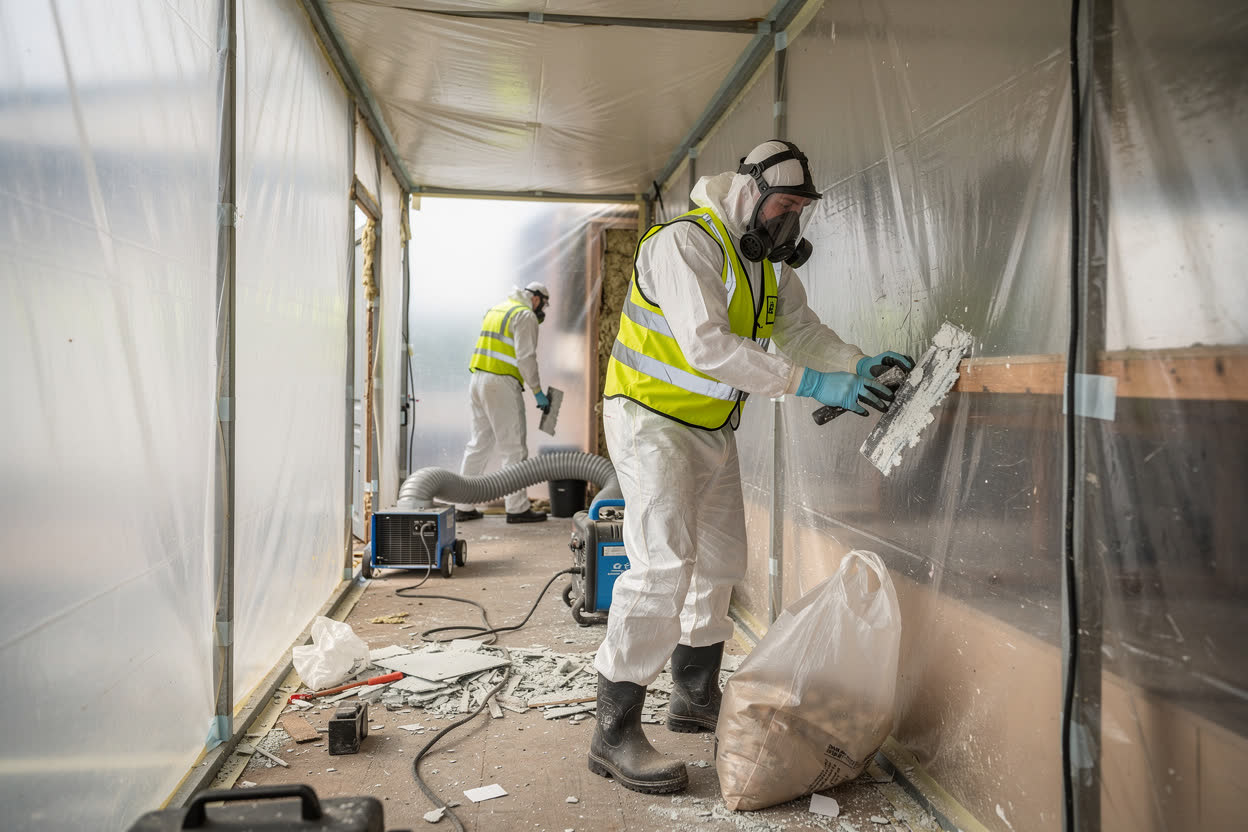
  • Licensed work, the highest-risk jobs, such as removing sprayed coatings, lagging and most asbestos insulation board. Only contractors holding an HSE licence may do it, and it must be notified to the enforcing authority 14 days in advance.
  • Notifiable non-licensed work, which must be notified before it starts, with medical checks and records kept for the workers.
  • Non-licensed work, lower-risk short jobs, which still needs a risk assessment, trained workers and the right controls.

Awareness training does not cover any of these jobs. If you suspect asbestos, do not disturb it.

The Duty to Manage
The Duty to Manage

Regulation 4 of the Control of Asbestos Regulations places a duty to manage asbestos on whoever is responsible for maintaining or repairing non-domestic premises, including the common parts of blocks of flats.

The duty holder must:

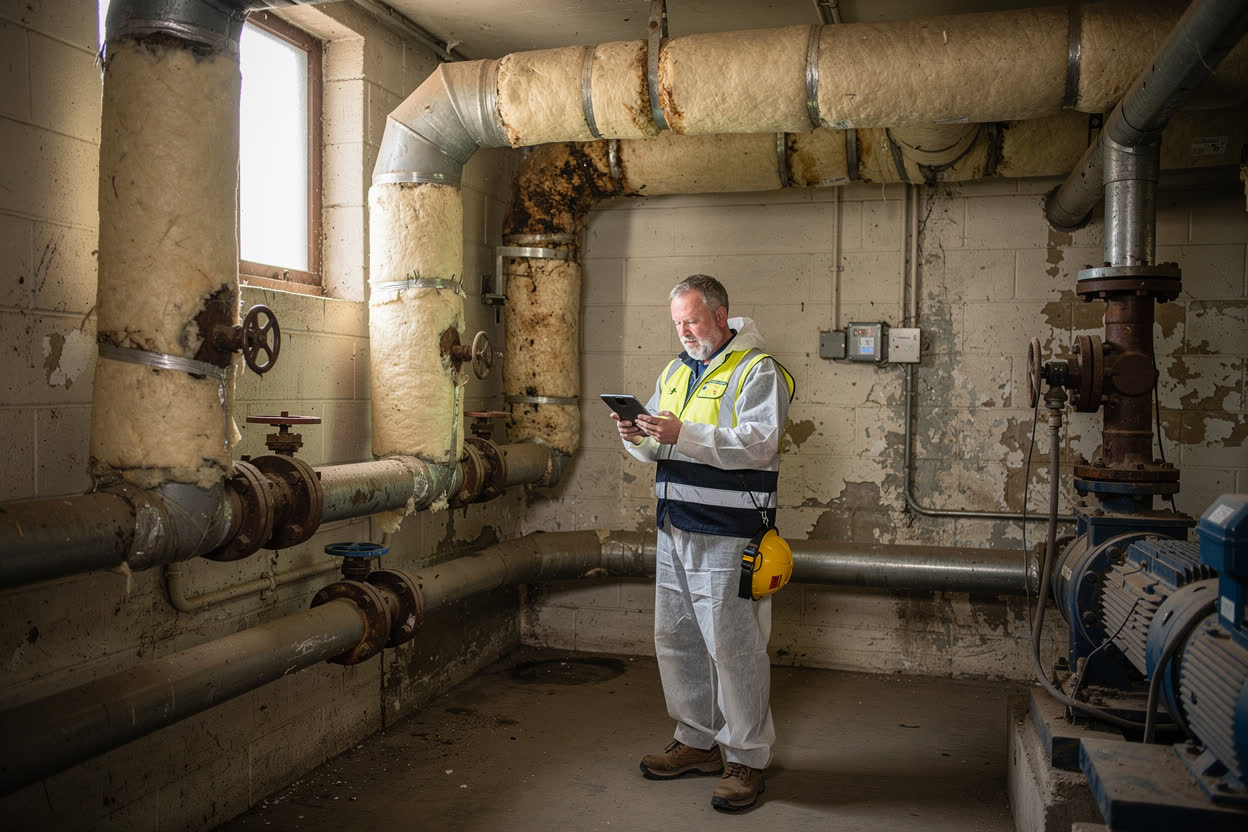
  • Find out whether asbestos is present, and where, through a survey.
  • Assess its condition and the risk it poses.
  • Record the findings in an asbestos register.
  • Put a management plan in place, and share the information with anyone who may disturb it.
Who Controls the Premises?
Find the person responsible for repairsDuties can be shared by agreementCoordinate with employers and tenants
Who Controls the Premises?

Responsibility for asbestos management follows control of maintenance and repair, and can be shared across owners, landlords, tenants or managing organisations. A contract may assign particular duties, but people still need to know who holds the relevant information and who can arrange action. A worker arriving at a site should be able to identify the contact who can provide the register, explain restrictions and authorise a pause when the plan is unclear.

Employers should coordinate with the building’s responsible person before work starts, and the person in control of the building should make useful asbestos information available to contractors whose work could disturb it. A chain of vague assumptions is unsafe: the landlord thinks the tenant has checked, the tenant thinks the contractor has checked, and the contractor finds no record. Agree the roles in writing, including who updates the record after works, who monitors materials and how urgent defects are escalated.

Asbestos Surveys
Asbestos Surveys

A survey is carried out by a competent, trained surveyor, who inspects the building and takes samples for laboratory analysis. There are two main types:

  • A management survey, which finds asbestos that could be disturbed during normal use and routine maintenance of the building.
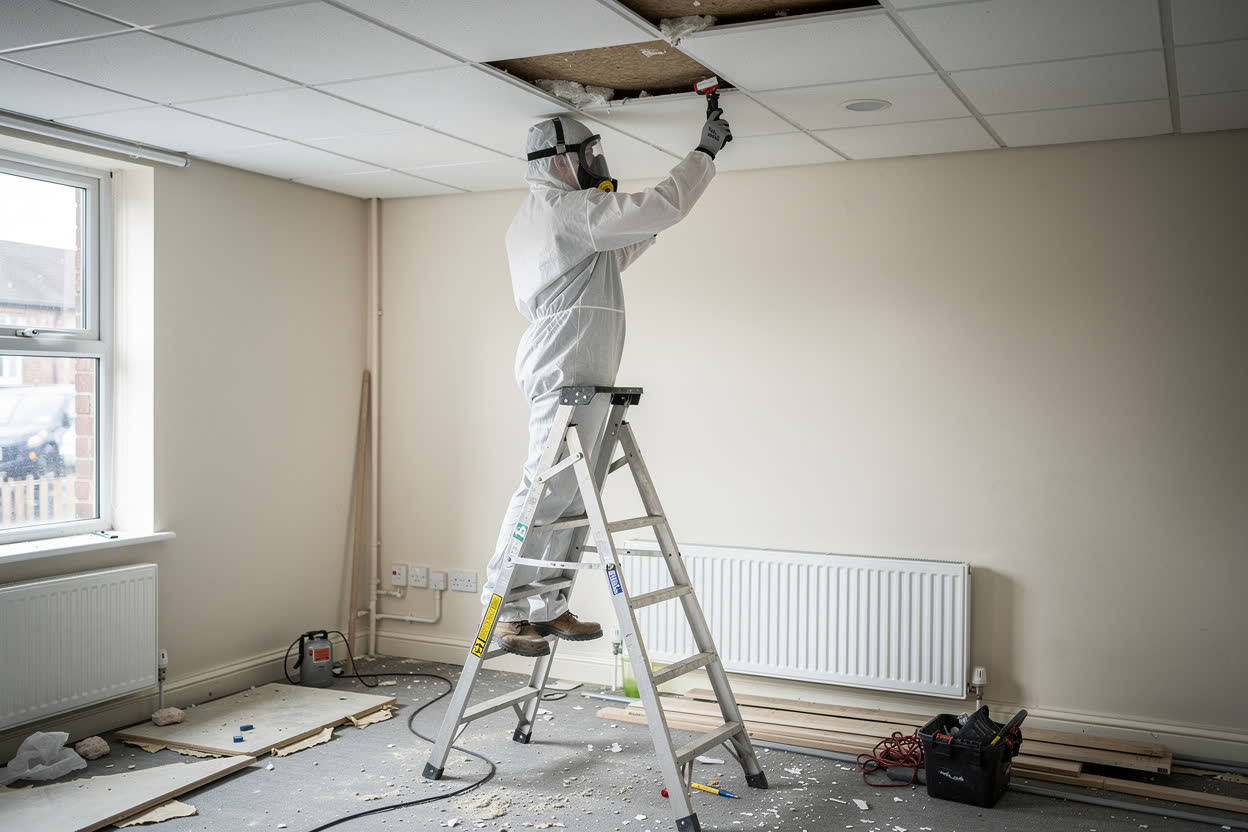
  • A refurbishment and demolition survey, which is needed before any building work. It is intrusive, so the surveyor may lift floors, open walls and break into the structure to find hidden asbestos.

Where a material has not been sampled, it should be presumed to contain asbestos until proven otherwise.

What a Survey Can and Cannot Tell You
Read the scope and access limitationsMatch survey type to planned workPresume inaccessible areas contain asbestos
What a Survey Can and Cannot Tell You

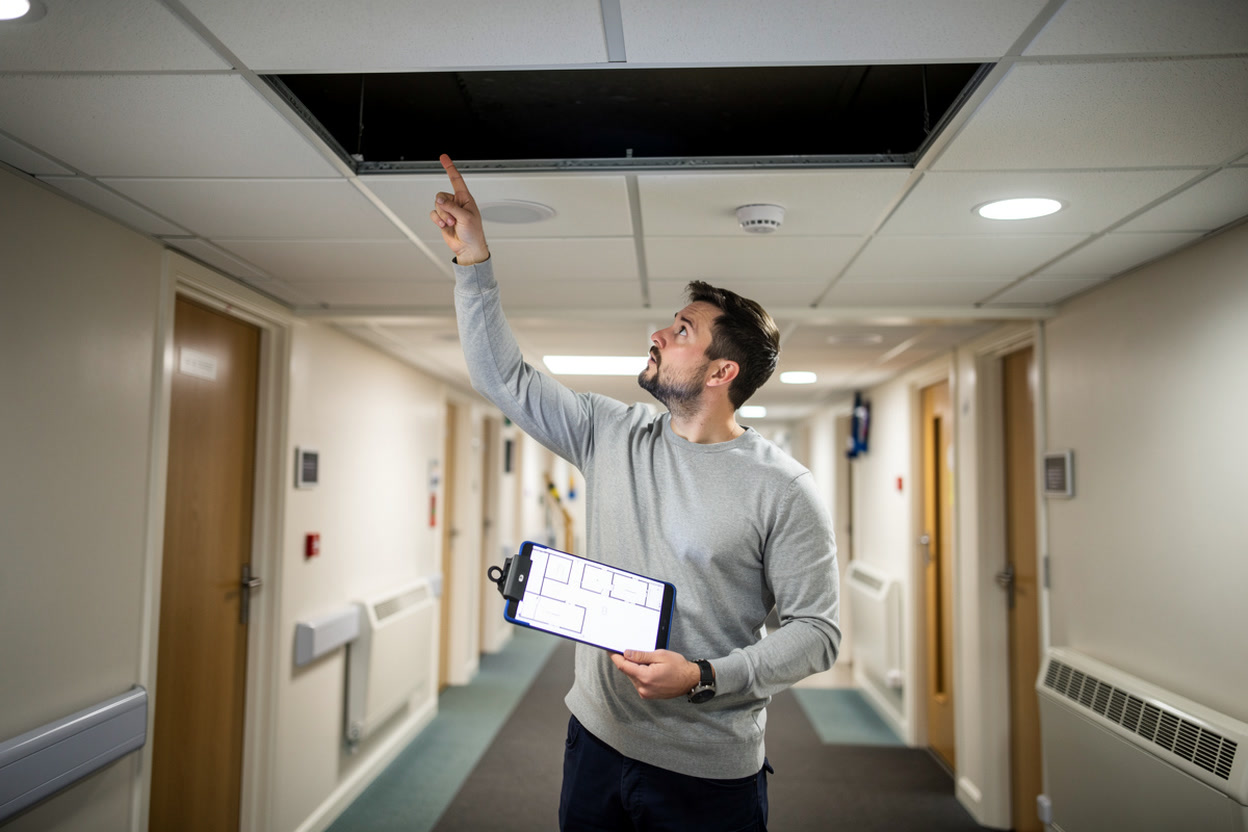
A survey report is useful only when its limits are understood. Check the buildings, rooms, surfaces and equipment it covers, the date of inspection, and whether areas were inaccessible or excluded. An uninspected ceiling void is not cleared just because the room below was surveyed. The report should identify sampled materials, presumed materials, locations, condition and any restrictions that affected inspection. A management survey supports normal occupation and routine maintenance.

Work that will disturb the structure generally needs a refurbishment or demolition survey that reaches concealed materials in the work area. These surveys can involve destructive inspection, so the area must be managed appropriately while the survey is carried out. Do not stretch an old report to cover a new scope, another building or a deeper opening. Where the information is incomplete, the person in control of the building must arrange further investigation or manage the material as presumed asbestos. Ask a competent surveyor to explain unclear findings before work is authorised.

The Asbestos Register and Management Plan

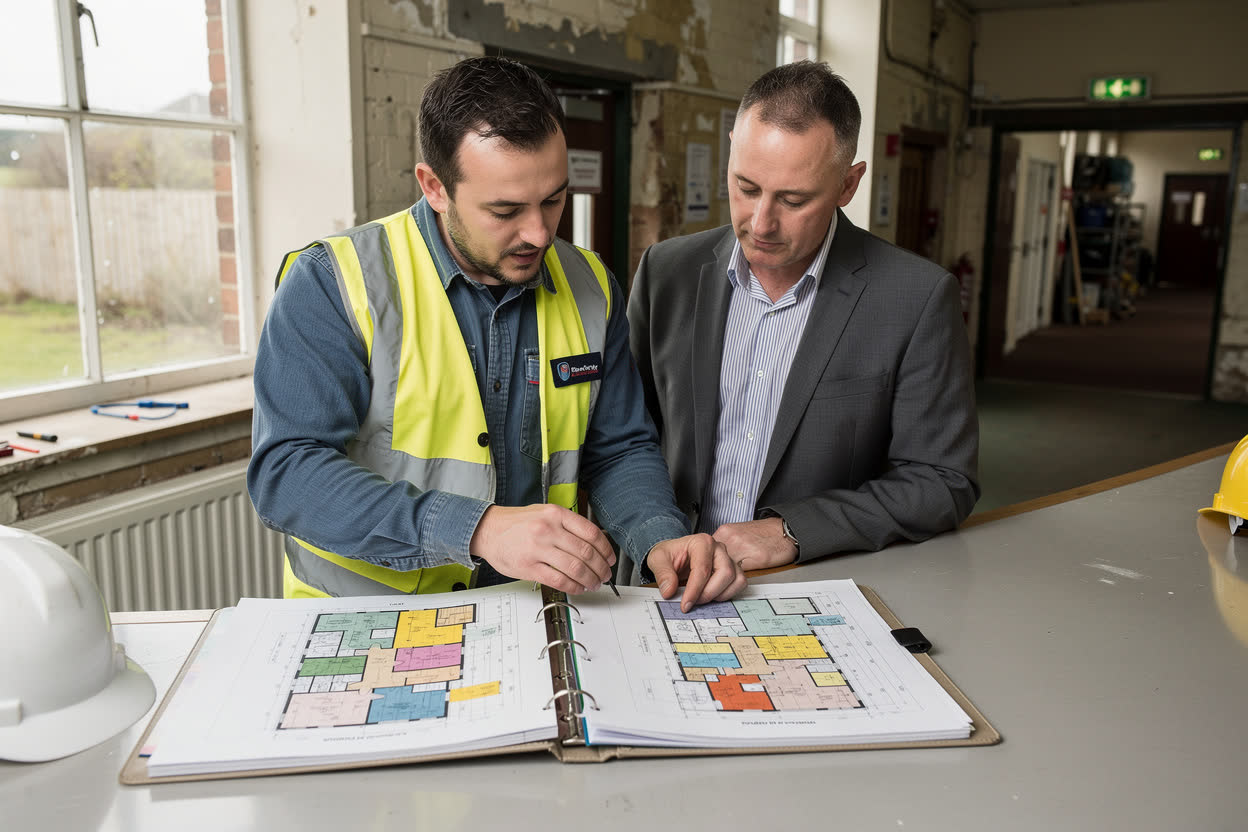
The asbestos register is a record of every known and presumed asbestos material in the building: what it is, where it is, how much there is and what condition it is in. Locations are often marked on floor plans and photographs.

The management plan explains what will be done about each item, for example leaving it in place and checking it regularly, sealing it, or arranging for its removal.

Before you start any job that involves drilling, cutting or opening up the building, you are entitled to see the relevant part of the register. If nobody can show it to you, do not start work until you get it.

Keeping the Register Useful on Site
Record location, condition and accessMake information easy to retrieveUpdate after inspection or removal
Keeping the Register Useful on Site

A register should help a worker make a decision at the point of work. A room label alone may be too vague for a large building. Useful records connect a clear location to a plan, photograph or other landmark, describe the material and its condition, and state whether it is confirmed or presumed. They should also explain any access restriction or instruction that affects the area. The record needs to be available to the people who plan and carry out maintenance, including contractors who may only visit once.

After a survey, repair, enclosure or removal, the relevant information must be checked and updated so the register reflects the building as it now stands. Keep superseded drawings from being mistaken for the current version, and make sure electronic access works for people without an office login while on site. Where several organisations share a building, agree how changes are passed between them.

Monitoring Materials Left in Place
Inspect condition at planned intervalsAct when damage or change appearsRecord what the inspection found
Monitoring Materials Left in Place

Leaving an asbestos-containing material in place can be a sound management decision when it is in good condition and unlikely to be disturbed. That decision depends on keeping track of its condition. The responsible person should set out who checks each item, how the area can be accessed safely and what changes require action. An inspection should look for new cracks, impact damage, water ingress, flaking coatings, exposed edges or signs that equipment or building use has changed.

If a material deteriorates, restrict access as needed and arrange competent advice on repair, enclosure or removal. Do not touch or probe the surface to test it. Record the date, location, observations and action taken, then update the management information so the next contractor sees the current position. Monitoring is particularly important after leaks, building alterations or repeated contact from doors, stored goods or moving plant.

Identify Before You Work

Before any demolition, maintenance or refurbishment work, Regulation 5 requires the employer to find out whether asbestos is present, by checking the register, a suitable survey or other information from the building owner.

If there is any doubt, the material must be treated as asbestos and the work planned on that basis.

This duty protects you. If you arrive at a job and nobody has checked for asbestos, stop and raise it with your supervisor before you begin.

Risk Assessment
Risk Assessment

Under Regulation 6, before any work that may expose people to asbestos, the employer must assess the risk. The assessment must cover:

  • The type and condition of the asbestos involved.
  • The nature and duration of the work, and how much dust it could create.
  • The steps that will be taken to prevent or reduce exposure.
  • The protective equipment needed, and how waste will be handled.

The assessment must be reviewed regularly, and immediately if the work changes or there is reason to think it is no longer valid.

Review the Assessment When the Job Changes
Reassess changed tasks or conditionsInclude people beyond the work teamPause when controls no longer fit
Review the Assessment When the Job Changes

A risk assessment is tied to a particular task, material, place and method. It cannot safely be reused without checking those details. The job may expand from one fitting to a row of penetrations, reveal a different board behind the first panel, or require work in a room occupied by others. A change in access, ventilation, duration, tools or nearby activity may alter how dust could spread. The supervisor should make sure workers know how to raise these changes and who can approve a revised method.

If the planned controls cannot be used, stop until an adequate alternative is agreed. An assessment should also consider people who are not doing the task, including building users and other contractors, and the route by which they might enter the area. The aim is to prevent exposure, not merely to complete a form. Clear communication between the client, employer and work team helps the assessment describe what will actually happen on site.

Plan of Work
Plan of Work

Under Regulation 7, any work with asbestos must be carried out to a written plan of work, prepared before the job begins.

The plan sets out how the work will be done safely, including:

  • What the work is, where it is, and how long it will take.
  • The methods and equipment used to keep dust to a minimum.
  • The protective equipment to be worn, and how workers will be decontaminated.
  • How the area will be cleaned and checked, and how the waste will be removed.

Where possible, asbestos should be removed before any major demolition or refurbishment starts.

A Plan of Work Must Match the Site
Explain sequence, controls and boundariesName who supervises each stageBrief the team before starting
A Plan of Work Must Match the Site

A written plan of work should translate the risk assessment into a sequence people can follow. It identifies the location and material, describes the work method and equipment, sets out how access will be controlled, and explains how workers will prevent or limit dust. It should cover personal protection, decontamination, waste handling and the response if conditions differ from expectations. The people doing the work need a briefing they can understand, including their individual responsibilities and the person to contact if a control fails.

A plan prepared for another room or another material may not suit the job in front of the team. Check that the site layout, access route and available facilities match what is written. If the material is more damaged than expected, the enclosure cannot be maintained or the work would exceed the agreed scope, pause and seek competent review. A signed document is not a substitute for controls that work in practice.

Notifying the Authorities

Licensed asbestos work must be notified to the HSE, or the local authority, at least 14 days before it starts. Notifiable non-licensed work must also be notified before it begins.

For both, the employer must keep a record of the work and of the workers involved, and arrange regular medical examinations for those workers.

The HSE only grants licences to contractors who can prove they have the competence, training and equipment to do the work safely.

Understanding the Work Categories
The requirements depend on the task and the materialDecide what applies before the work startsGet specialist advice when in doubt
Understanding the Work Categories

The legal category is determined by the nature of the work and the likely exposure, not simply by the job title or a label on the product. Work may be licensable, notifiable non-licensed or non-licensed. The middle category has extra requirements, including notification, medical surveillance and record keeping. Some activities on lower-risk materials may be non-licensed, but they still require a suitable assessment, appropriate controls and workers with the right training.

A material commonly associated with licensed work can sometimes be handled under different arrangements only where the specific task and exposure criteria justify that conclusion. Never decide the category by guessing from a photograph or because a previous contractor used a certain method. The employer should obtain competent advice where classification is uncertain and verify whether the contractor has the required licence. Awareness training alone does not prepare a person to carry out asbestos work.

Information, Instruction and Training

Regulation 10 requires employers to give asbestos training to anyone liable to disturb asbestos while they work. For most tradespeople, that means asbestos awareness training. Refresh awareness as necessary to maintain knowledge; a full formal awareness course is not legally required every year.

Training should cover:

  • The health risks of asbestos, and the effect of smoking.
  • The materials likely to contain asbestos, and where they are found.
  • Safe working practices, control measures and protective equipment.
  • Emergency procedures if asbestos is disturbed.
Training Must Fit the Work
Awareness training helps avoid disturbanceWork tasks need additional preparationKnow when your competence ends
Training Must Fit the Work

Asbestos awareness is designed to help people recognise suspect materials and avoid disturbing them. It does not qualify a worker to sample, repair, seal or remove asbestos. A person assigned to asbestos work needs training and instruction suited to the task, the material, the controls and the equipment involved. Practical preparation may be needed for using respiratory protection, decontamination and controlled work methods. Training should also explain emergency arrangements, including how to stop work and raise an alarm after an accidental disturbance.

Employers need to consider whether workers have understood and can apply the instruction, rather than relying only on a course certificate. Where the task changes or a worker has not used a method before, the supervisor should address the gap before work proceeds. Refreshing awareness should reflect the person’s role and the work they encounter; HSE guidance does not require every worker to repeat a formal course on a fixed annual cycle.

Your Duties as an Employee

The law also places duties on you. As an employee you must:

  • Take reasonable care of your own safety, and that of anyone affected by your work.
  • Follow the training, instructions and safe systems of work you have been given.
  • Use protective equipment correctly, and report any defects.
  • Never knowingly disturb asbestos, or a material you suspect contains asbestos.
  • Report suspect materials, damaged asbestos and dangerous situations to your supervisor straight away.

If you are not sure whether something is safe to work on, stop and ask.

Reporting Defects and Stopping Unsafe Work
Raise damage as soon as you see itShare information with the next teamDo not work beyond your instruction
Reporting Defects and Stopping Unsafe Work

Workers help protect one another by reporting damage, missing labels, inaccurate plans and unsafe access arrangements promptly. A small defect may grow if a door repeatedly strikes an enclosure or if a leak washes away a coating. Tell the supervisor what you observed and where, using a plan reference or photograph from a safe position if that helps. Do not make your own repair or move a warning label to make the area look tidy.

If the information supplied for a task does not match the material on site, stop and ask for clarification. Employers should make sure relevant findings are passed to other people who may be affected, including a later shift or a contractor arriving the next day. This handover is especially important in shared buildings where several organisations control different areas. Reporting is part of safe work, not an admission that someone has failed.

Summary

In this module, you have learned that:

Asbestos law in Great Britain is set by the Control of Asbestos Regulations 2012, enforced by the HSE and local authorities.

Workplaces built before 2000 need a survey, an asbestos register and a management plan, shared with anyone who may disturb asbestos.

Work near asbestos needs a risk assessment and a written plan, and you must never knowingly disturb it.

In the next module, we will look at how asbestos harms health, and how exposure is kept to a minimum.

Knowledge Check
You are asked to drill into a wall in a building built in 1985. Nobody has shown you any asbestos information. What should you do?
Select one answer, then press Check.
Drill a small test hole and look at the dust
Start work, but wear a dust mask
Stop, and ask your supervisor to check the asbestos register before you begin
Spray the wall with water and carry on
Correct. Before drilling into a building built before 2000, you must know whether asbestos is present. Check the register first.
Not quite. Never test or start work on a material that might contain asbestos. Check the asbestos register first, then try again.
Next Module →Answer the question to unlock the next module.
Page 1 of 25