← Exit
Module 2 · Risk Assessment0% complete · 14 slides left
Abrasive Wheels Course
Module 2
This course contains audio. Use headphones in public places.
Introduction
Assess → control → review
Introduction

Employers have a legal duty to make sure that the risks in the workplace are identified, assessed, controlled and kept under review, so that employees and anyone else affected by the work stay safe from harm. In Great Britain this duty comes from the Health and Safety at Work etc. Act 1974 and the Management of Health and Safety at Work Regulations 1999, which require every employer to carry out a suitable and sufficient risk assessment.

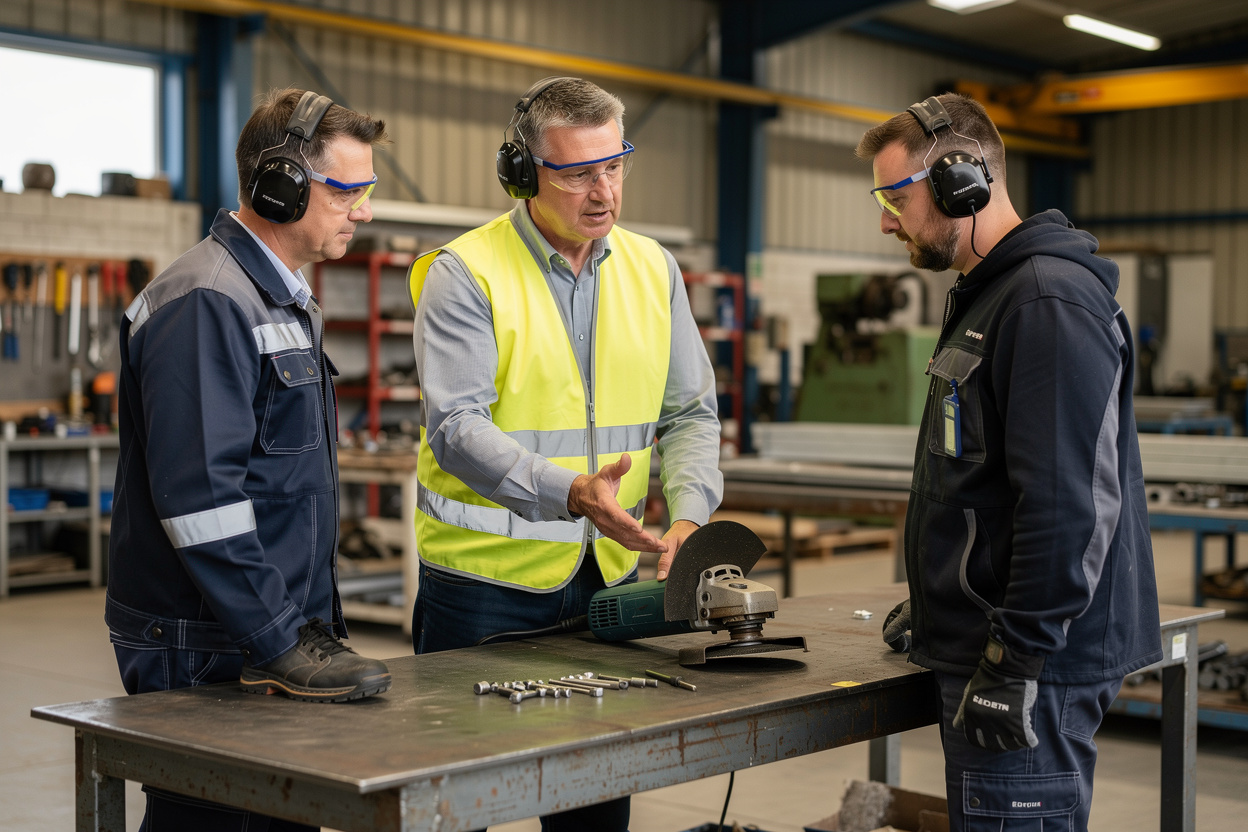
This module gives you an overview of how to carry out a thorough risk assessment for the safe use of abrasive wheels. The risk assessment for abrasive wheels must be available to, and explained to, everyone who is involved with abrasive wheels: the people who store them, mount them, dress them, use them and maintain the machines.

If you are responsible for carrying out risk assessments in your workplace, or for managing and supervising people at work, you should also complete a dedicated risk assessment course. This module covers the method as it applies to abrasive wheels; it is not a substitute for full risk assessment training.
Topics to be Covered

The topics covered in this module are:

  • What a risk assessment is, and why the law requires one
  • Who should carry out a risk assessment
  • Step one: identifying the hazards
  • Step two: deciding who might be harmed, and how
  • Step three: evaluating the risks and deciding on controls
  • Step four: recording the findings
  • Step five: reviewing and updating the assessment

Each step is illustrated with abrasive wheel examples, so that by the end of the module you can look at a grinding or cutting task in your own workplace and see where the risks really are.

Who Should Carry Out a Risk Assessment?
Competent person: training + skills + experience + knowledgeInvolve the people who do the work
Who Should Carry Out a Risk Assessment?

Employers have the overall responsibility for making sure that risk assessments are carried out, either by themselves or by another competent person acting on their behalf.

A competent person is someone who has sufficient training, skills, experience and knowledge to carry out the assessment properly. For abrasive wheels that means understanding the machines, the wheels, the marking system and the way the work is actually done.

In practice, experienced and knowledgeable managers and supervisors are usually in the best position to carry out risk assessments, helped where necessary by specialists: the wheel or machine supplier, an occupational hygienist for dust or noise, or a health and safety adviser.

When preparing the risk assessment, involve the people who will do the work. Their knowledge of how the job is really done, and of the short cuts that creep in, is often the most valuable information you will get.

What is a Risk Assessment?
1 Identify hazards2 Who might be harmed3 Evaluate & control4 Record5 Review
What is a Risk Assessment?

By law, every employer must manage the health and safety risks in the workplace. A risk assessment is simply a careful examination of what, in your work, could cause harm to people, so that you can decide whether you have taken enough precautions or need to do more. If you are carrying out the assessment, there are five steps:

  • Identify the hazards in your workplace and your work activities, and think about the environment the abrasive wheel is used in — for example wheel breakage, sparks, dust and the manual handling of heavy wheels.
  • Think about who might be harmed: not only employees, but also contractors, visitors and members of the public. A visiting contractor who is unfamiliar with the work is at greater risk than a regular operator.
  • Decide how likely it is that each hazard will cause harm, and what you are going to do about it. Choose the controls that reduce the risk — for example, storing wheels correctly reduces stress on them and prevents breakage.
  • Write down your findings. In Great Britain, employers with five or more employees must record the significant findings of the risk assessment, as required by Regulation 3 of the Management of Health and Safety at Work Regulations 1999. Recording it is good practice for everyone.
  • Review and update the assessment regularly so that it stays effective. Things change: new or altered processes, new machines, new employees. The assessment must be reviewed so that it still gives a thorough picture of the risks in your workplace.
Step One: Identifying Hazards
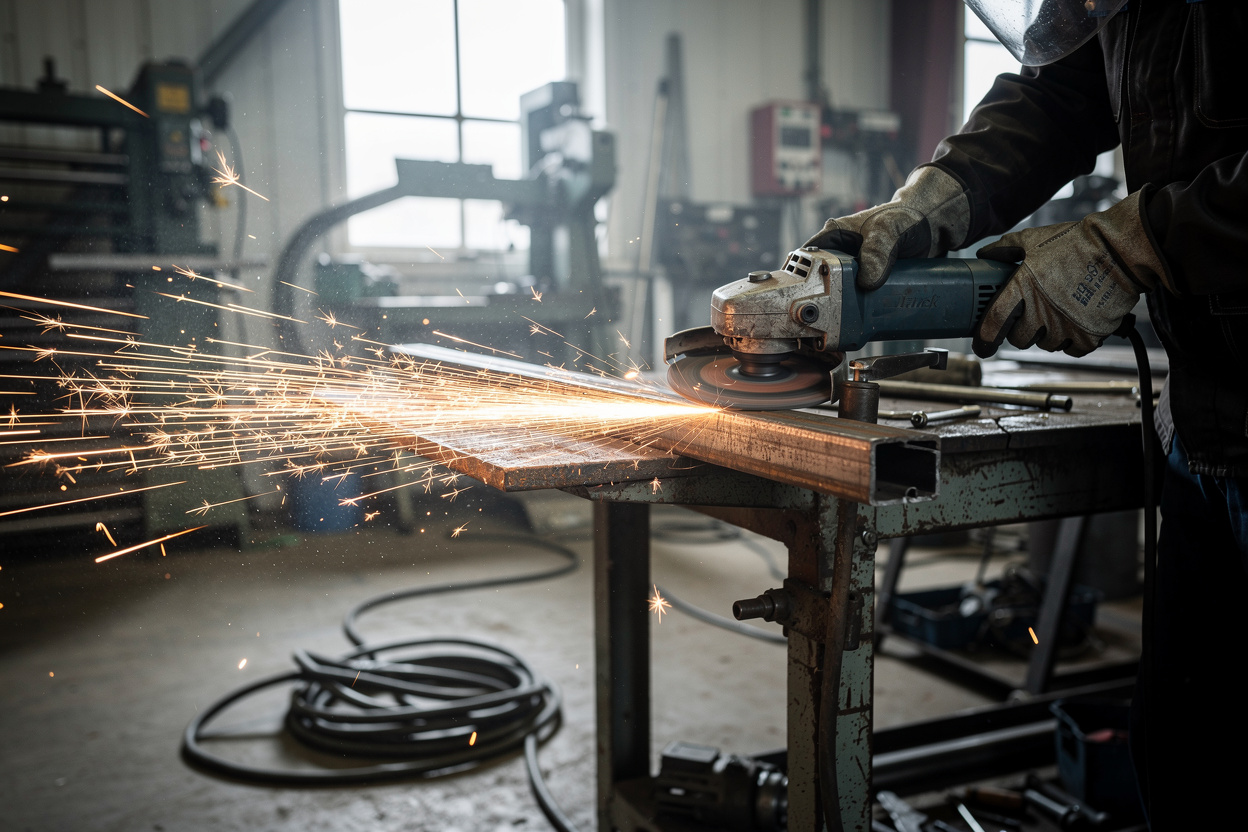
Bursting wheelSparks → fireDamaged cable → electricalDust · noise · vibration
Step One: Identifying Hazards

Using abrasive wheels can be very hazardous. The first step in the risk assessment process is to identify the hazards that are present, so that you can put control measures in place.

Hazards from using abrasive wheels include:

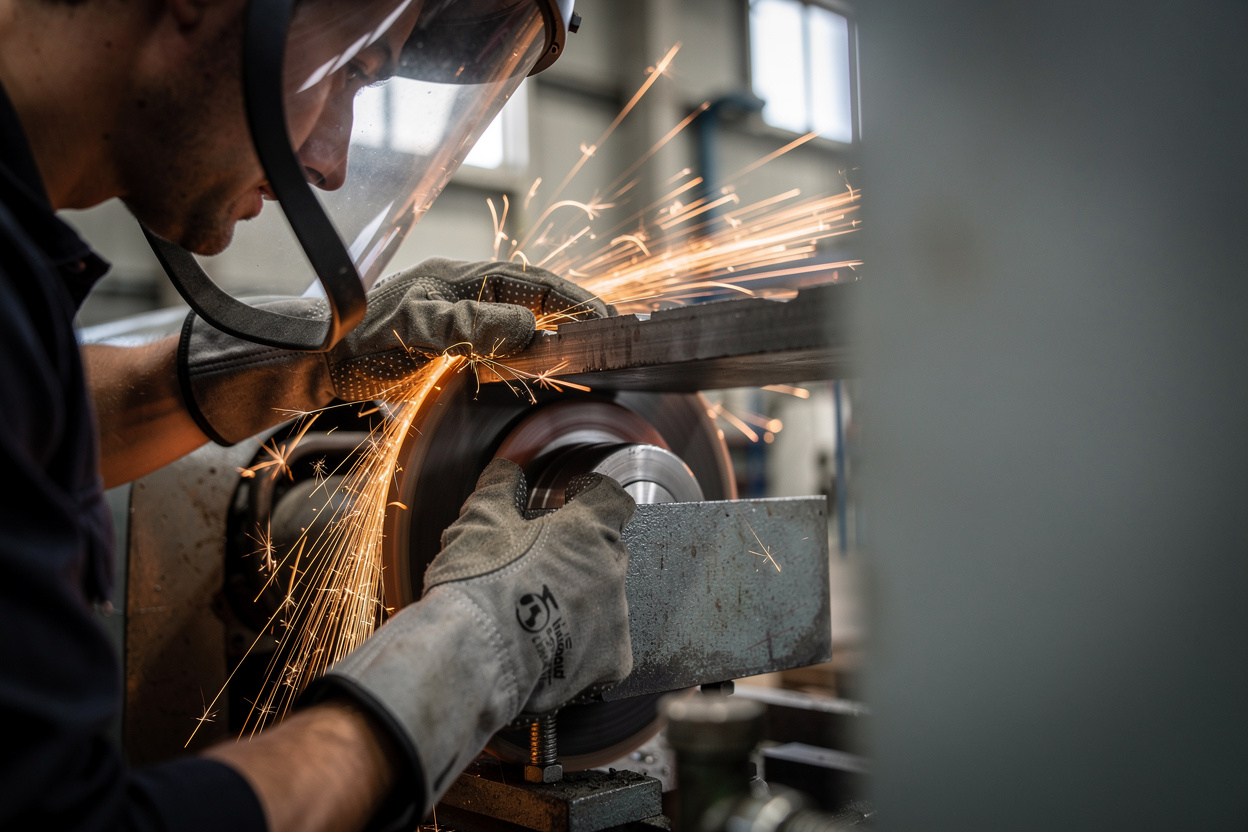
  • Bursting or disintegrating wheels.
  • Trapping, or grazing parts of the body or clothing, in moving mechanical parts.
  • Contact with the rotating wheel.
  • Electrical hazards from damaged cables, plugs and switches.
  • Fire, from sparks landing on flammable or combustible material.
  • Noise exposure.
  • Exposure to hazardous fluids, dusts and fumes.
  • Hand-arm vibration from hand-held machines.
  • Manual handling of heavy wheels and workpieces.

You need a good understanding of the processes and work activities in your workplace to identify the hazards in it. The next slide gives you some practical ways of doing that.

Step One: How to Find the Hazards

Walk around the workplace and think about the hazards that are in it. For abrasive wheels, look at the position of the grinding and cutting machines and processes, so that there is no hazard from sparks or dust reaching other people or flammable materials. Also consider how wheels are stored, the lighting, the access ways and the condition of the floor. Make a written record of what you find.

Think about the people who work with abrasive wheels. Who carries out grinding and cutting? Are they trained? Who mounts and dresses the wheels? They must have received training for those tasks. Include the people who only occasionally use abrasive wheel machines, and the people who maintain them.

Look at the accident and near-miss records in your workplace. They may show previous abrasive wheel incidents and the actions that were taken.

Remember to think about the long-term health issues as well as the immediate ones: noise, dust and hand-arm vibration from hand-held machines all cause harm that builds up slowly.

Step Two: Decide Who Might be Harmed and How
Who mounts the wheelWho uses itWho is nearby
Step Two: Decide Who Might be Harmed and How

There are two questions at this step: who might be harmed by each hazard (most often employees, but always consider who else may be nearby at any time), and how they might be harmed.

The two groups of people most affected by the use of abrasive wheels are:

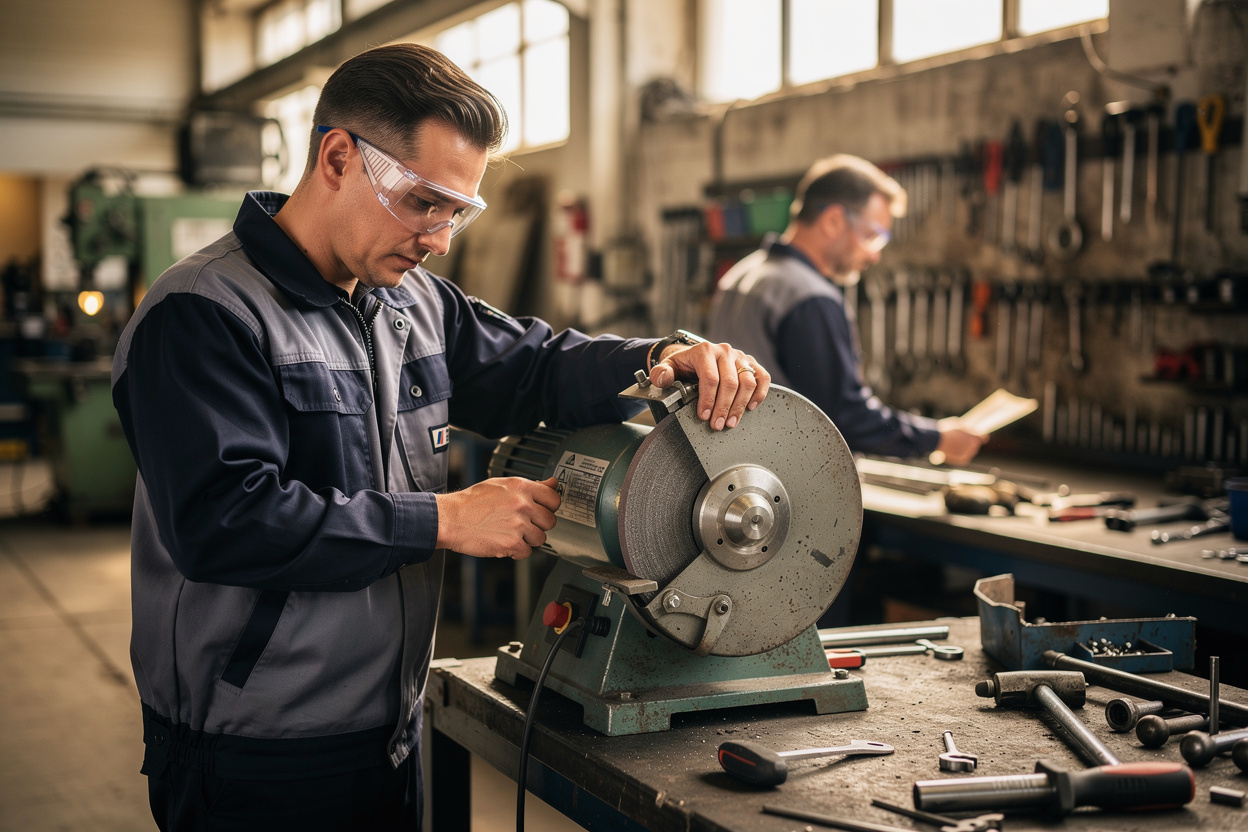
  • The people who fit or mount abrasive wheels on the equipment.
  • The people who use the abrasive wheels.

Sometimes the same person mounts, uses, dresses and cleans the equipment. But that is not always the case, so you must identify and train everyone who mounts, dresses, cleans or uses abrasive wheels.

You should also consider the people nearby. Because a wheel bursting is a foreseeable event, anyone working in the area around the machine is also at risk, and so is a visitor walking past.

Step Two: How People are Harmed
Trap point: wheel ↔ work restVibration into the hands
Step Two: How People are Harmed

Both safety and health can be harmed by abrasive wheel equipment. People working with or around abrasive wheels may be harmed through:

  • Contact with the rotating abrasive wheel.
  • Impact injuries from a bursting wheel, which can be fatal.
  • Cutting and crushing injuries from being trapped between the wheel and the work rest.
  • Fire and explosion from poor control of grinding dust containing aluminium, magnesium or similar metals.
  • Eye injuries from not wearing eye protection or not using protective screens.
  • Injury from the unsafe handling of heavy abrasive wheels.
  • Skin problems from exposure to metalworking fluids.
  • Lung damage from inhaling harmful dust or fumes.
  • Vibration from hand-held or hand-fed grinding machines, which can cause hand-arm vibration syndrome and permanent damage to the hands and arms.
  • Hearing damage from the noise of the grinding operation itself.

This is not an exhaustive list. The competent person carrying out the assessment must consider the specific hazards and risks of their own workplace.

Step Three: Evaluate the Risks
Already in place: guard, eye shield, work restWhat else is needed?
Step Three: Evaluate the Risks

Having identified who may be harmed by each hazard and how, you now need to decide how likely it is that harm will actually occur, and what can be done about it.

Risk is part of daily life, and the law does not expect you to eliminate every risk. It does expect you to know about the main risks and to take reasonable steps to manage them.

The HSE advises that you consider two things at this stage:

  • What are you already doing to control the risk?
  • Is there anything else that you need to do?

Most workplaces already have some controls in place. For the safe use of abrasive wheels, the existing controls usually include good storage that avoids stressing the wheels, regular maintenance of the machines, guards, and training in the correct mounting, dressing and use of wheels.

Step Three: Are the Controls Good Enough?
Screens keep sparks and fragments in
Step Three: Are the Controls Good Enough?

For each hazard, look at the existing arrangements for controlling the risk, and then ask:

  • Are the controls suitable and sufficient to prevent or minimise the risk?
  • Are the controls in good condition? For example, are the machines maintained, and are the users actually trained?
  • What might be missing? Are all the guards in place? Check the manufacturer's handbook and make sure the guards it shows are fitted and correctly adjusted.
  • Is there more information on the hazard? All abrasive wheel equipment is supplied with detailed health and safety guidance. That guidance must be kept in the workplace and taught to every person involved with abrasive wheels.

It is also important to keep the use of abrasive wheels separate from other work activities as far as possible, or at the very least to use screens and barriers to protect the people nearby from sparks, dust and fragments.

Step Four: Record the Findings
Hazard · Who · Existing controls · Action · Date
Step Four: Record the Findings

At this stage you record your significant findings. You do not need to write down every conceivable hazard, only those where there is a foreseeable risk of harm that can be controlled.

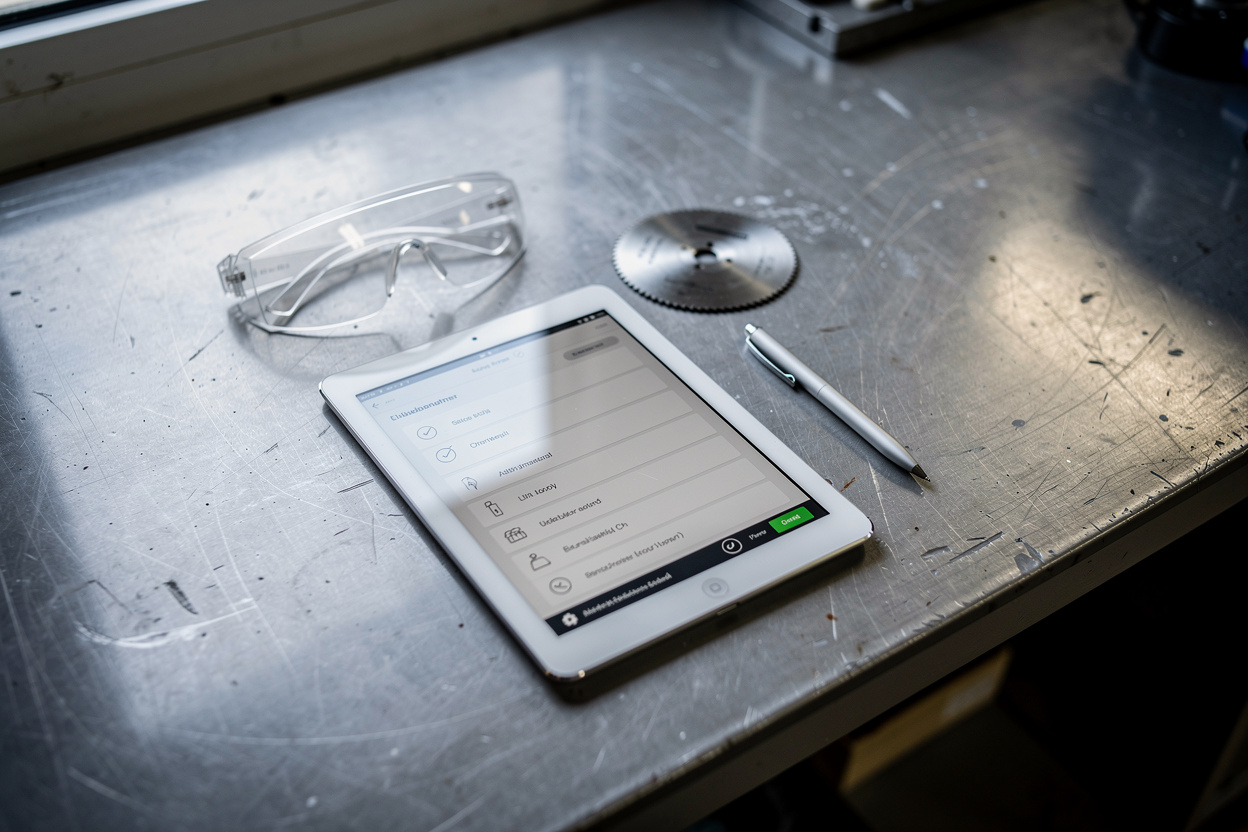
A simple risk assessment form works well. For each hazard, record:

  • The hazard and the task it relates to (for example: wheel burst, bench grinder, tool sharpening).
  • Who might be harmed and how.
  • The controls already in place.
  • Any further action needed, who is responsible for it, and the date it is due.
  • The date the assessment was done and when it will be reviewed.

The written assessment must be brought to the attention of the employees affected by it, and a copy kept where it can be found. Modules 3 and 4 explain the methods of reducing the risks from abrasive wheels, so that by the end of the course you will be able to judge both the existing controls in your workplace and the further controls you need.

Step Five: Review and Update
Review at least yearly — and after any change or incident
Step Five: Review and Update

The final step is to check, on a regular basis, whether anything in the workplace has changed that could affect your risk assessment. For example:

  • Are there any improvements that still need to be made?
  • Have you asked the employees for feedback on how the controls work in practice?
  • Has any new machinery or equipment been introduced that brings new hazards?
  • Have new systems of work or new processes been introduced?
  • Do new processes bring additional considerations, such as a new piece of plant or extra workstations?
  • Are there new employees who need training?
  • Has there been an accident, a near miss or a wheel failure?

Any new findings must be recorded and the new controls put in place, so that the risk assessment stays up to date. Review it at least once a year, and immediately after any significant change or incident.

Finally, the risk assessment must be communicated effectively to every person who will be affected by it. An assessment that sits in a folder and is never explained protects no one.

Summary

In this module you have learnt that:

Workplace risk assessments should be carried out by a competent person who understands the workplace. Specialist help may be needed for particular risks, and the people who do the work should be involved.

Step one is identifying the hazards: wheel bursts, trapping, contact, eye injuries, fire, electricity, and exposure to dust, noise and vibration.

Step two is deciding who may be harmed and how. For abrasive wheels this includes anyone who mounts, dresses, cleans or uses the machines, and anyone working nearby.

Step three is evaluating the risks: what controls already exist, and what else is needed? Step four is recording the significant findings, which is a legal requirement for employers with five or more employees. Step five is reviewing the assessment at least once a year and whenever a process, machine or person changes, or after any incident. In the next module we look at the safe practices that control these risks.

Knowledge Check
Which of the following is a way of identifying the hazards in your workplace?
Select one answer, then press Check.
Only include the people who use abrasive wheels every day as their main job
Walk around the workplace, look at where machines are positioned and check the accident records
Wait until an accident happens and then assess the task
Ask the wheel supplier to complete the risk assessment for you
Correct — well done. You can continue.
Not quite. Think about what you have just learnt in this module, and try again.
Next Module →Answer the question to unlock the next module.
Page 1 of 15